
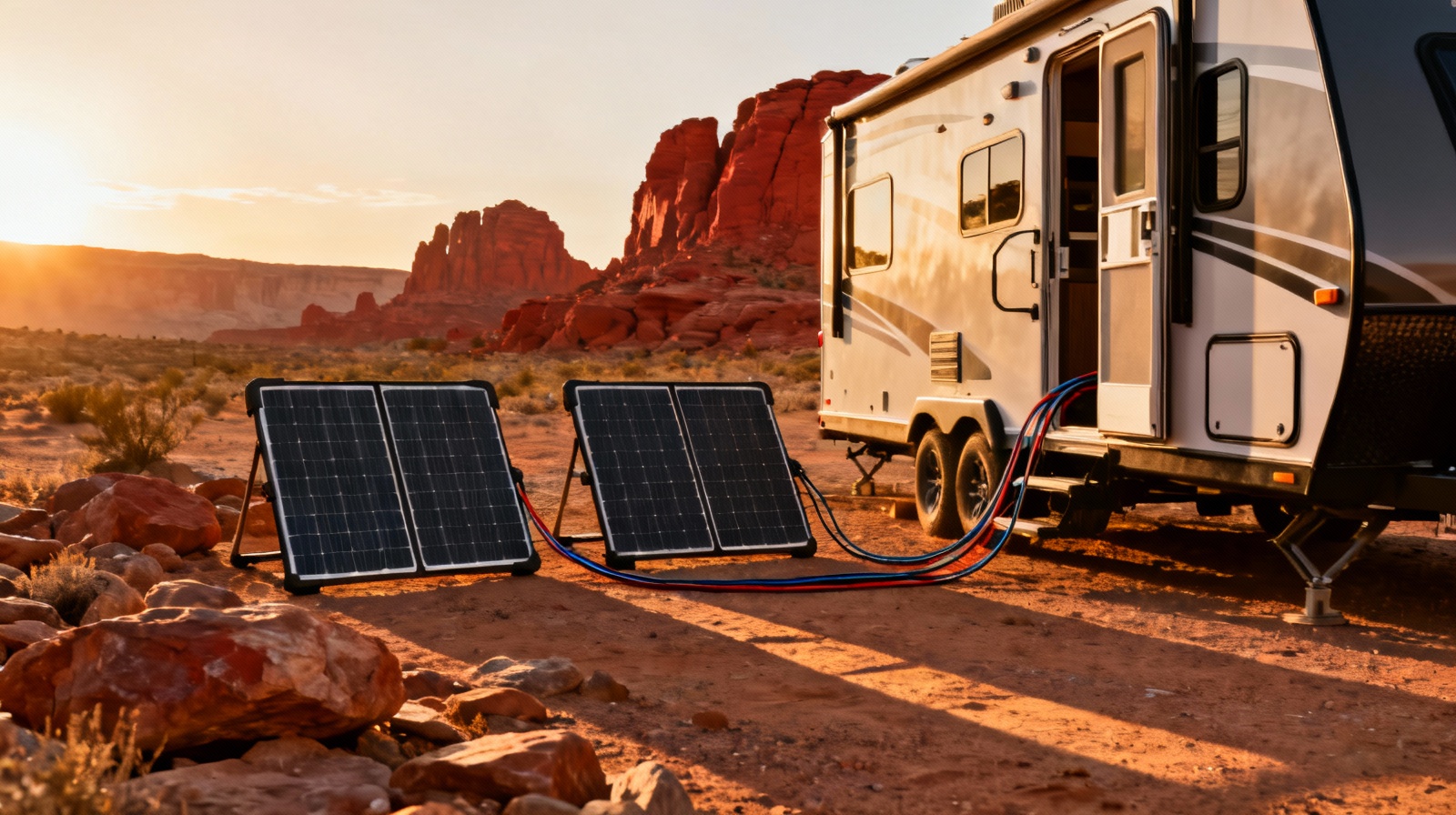
Portable solar panels have revolutionized off-grid RV camping, letting you chase the sun for optimal charging angles while keeping your roof clear for vents and air conditioners. After analyzing real-world testing data and community feedback from extended boondocking trips, this guide matches the right portable panel to your specific camping style.
TL;DR — Best Picks
Best Overall: Jackery SolarSaga 200W – Exceptional efficiency with a durable, foldable design that delivers consistent power across varied conditions.
Best Budget: Renogy 100W Portable Suitcase – Proven reliability at an accessible price point with included charge controller.
Best for Boondocking: REDARC 200W Folding Panel – Built for harsh Australian outback conditions with superior dust and heat resistance.
Best by Use-Case
Boondocking (Extended Off-Grid)
When you’re spending two weeks or more away from hookups, panel durability and maximum daily harvest become critical. The REDARC 200W Folding Solar Panel stands out for serious boondockers who need equipment that survives desert heat, dust storms, and constant setup-teardown cycles. Its monocrystalline cells deliver 200W under ideal conditions, and the heavy-duty canvas carry bag protects against the inevitable bumps of overlanding life.
Real-world testing shows these panels maintain output even when partially shaded—a common occurrence when you’re parked among trees or rock formations. The integrated Anderson connector system makes daisy-chaining multiple panels straightforward for those running larger battery banks. View on Amazon
- Pros: Military-grade construction survives harsh conditions; excellent partial-shade performance; 2-year warranty backs long-term reliability; bypass diodes minimize shading losses
- Cons: Premium pricing around $600-700; heavier than budget alternatives at about 21 lbs (20.9 lbs spec); overkill for weekend warriors
For boondockers wanting maximum flexibility, the Jackery SolarSaga 200W offers a compelling alternative with its IP68 waterproof rating and kickstand design that simplifies angle adjustments throughout the day. Testing revealed it pairs seamlessly with most portable power stations while also working with traditional RV charge controllers.
The bifacial design captures reflected light from sand or concrete, boosting real-world output by 10-15% in the right conditions. View on Amazon
- Pros: Waterproof construction handles unexpected rain; bifacial cells boost output; lightweight at around 17 lbs for a 200W panel; folds compactly for storage
- Cons: Proprietary connectors require adapters for some setups; kickstand can struggle in high winds; premium price point
Budget Weekender
Weekend camping trips don’t demand the same investment as full-time boondocking.
The Renogy 100W Portable Suitcase Kit has earned its reputation as the go-to entry point for RV solar, delivering reliable performance at roughly $200-250. This kit includes an integrated 20A PWM charge controller, making it genuinely plug-and-play for beginners. The suitcase design protects the cells during transport, and the adjustable kickstand makes it easy to prop the panel at a good charging angle for casual weekend use.
Community feedback consistently praises Renogy’s customer service and the panel’s longevity; many users report 5+ years of weekend use without significant degradation. View on Amazon
- Pros: Complete kit includes controller and cables; proven 5+ year track record; excellent value under $250; straightforward setup for beginners
- Cons: PWM controller less efficient than MPPT; fixed angle limits optimization; 100W may underwhelm larger battery banks; aluminum frame adds weight
The DOKIO 100W Foldable Panel undercuts even Renogy’s pricing while delivering surprisingly capable performance for light-duty use. At around $100-130, it’s essentially disposable if damaged—yet testing shows respectable output for its price class. The ultra-thin design folds to just 0.5 inches (1.2 cm) thick, sliding easily into tight storage spaces. Just don’t expect it to survive years of heavy use. View on Amazon
- Pros: Exceptional value under $150; extremely compact when folded; lightweight at 5.5 lbs; includes basic controller
- Cons: Build quality reflects price point; efficiency drops notably in heat; shorter expected lifespan; limited warranty coverage
Winter Camper
Cold-weather camping presents unique solar challenges: shorter days, lower sun angles, and potential snow coverage.
The Zamp Solar 190W Portable Kit has become a winter camping standard, featuring a robust suitcase-style frame that handles snow loads and an adjustable leg system that lets you tilt the panels steeply to catch that low winter sun. Monocrystalline cells actually perform better in cold temperatures—you’ll see higher voltage output on crisp 20°F mornings than sweltering summer afternoons. The integrated 15A, 5-stage PWM charge controller manages proper multi-stage charging for 12V battery banks in cold conditions. View on Amazon
- Pros: Adjustable legs accommodate low winter sun angles; cold temperatures boost cell efficiency; durable suitcase frame handles snow and transport; integrated 15A, 5-stage charge controller included
- Cons: Higher price point, typically around $500–700; heavier setup at around 35–40 lbs total; bulkier storage footprint; overkill for summer-only campers
Pairing any winter panel with a Victron SmartSolar MPPT 100/30 controller dramatically improves cold-weather harvest. MPPT technology captures 15-30% more energy than PWM controllers, with gains most pronounced during the variable light conditions common to winter camping. The Bluetooth connectivity lets you monitor charging from inside your warm rig. View on Amazon
- Pros: MPPT efficiency gains significant in winter; Bluetooth monitoring from inside RV; temperature compensation protects batteries; industry-leading reliability
- Cons: Adds $150-200 to system cost; requires basic wiring knowledge; overkill for small systems under 100W
Lightweight Setup
Van lifers, teardrop trailer owners, and minimalist campers prioritize every ounce.
The BougeRV Yuma 200W CIGS Panel represents the cutting edge of lightweight solar technology, using thin-film CIGS cells that weigh just about 7 lbs for 200W—less than one-third the weight of many traditional rigid monocrystalline panels. The flexible design rolls up for storage, though it performs best when laid flat on a surface rather than curved. Efficiency runs slightly lower than rigid panels (around 16–17% vs ~20%), but the weight savings often justify the tradeoff for weight-conscious travelers. View on Amazon
- Pros: Remarkably light at 7 lbs for 200W; rolls up for compact storage; no rigid frame to crack; works on curved surfaces
- Cons: Lower efficiency than monocrystalline; higher cost per watt; requires careful handling; shorter lifespan than rigid panels
For those wanting proven technology in a lighter package, the Goal Zero Boulder 100 Briefcase balances portability with the reliability of traditional monocrystalline cells. At 26 lbs for 100W, it’s not ultralight, but the integrated kickstand and rugged construction justify the weight for many users. The chainable design lets you add panels as your power needs grow. View on Amazon
- Pros: Proven monocrystalline reliability; integrated kickstand simplifies setup; chainable for system expansion; excellent build quality
- Cons: Heavier than thin-film alternatives; premium Goal Zero pricing; 100W may limit larger systems; bulkier than foldable designs
Quick Comparison
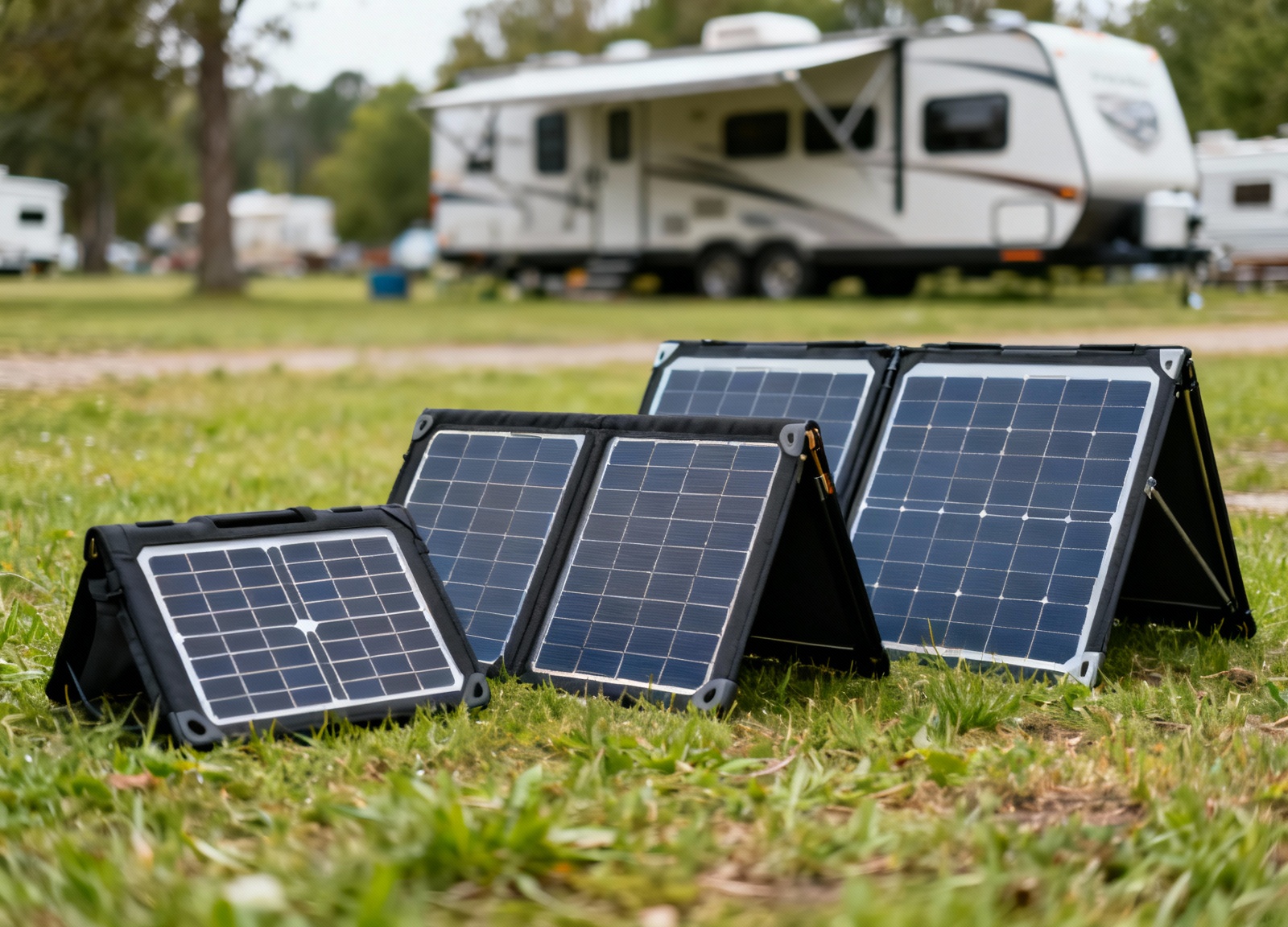
| Model | Type | Key Specs | Best For |
|---|---|---|---|
| REDARC 200W Folding | Monocrystalline | 200W, 20.9 lbs, 21.8% efficiency | Extended boondocking |
| Jackery SolarSaga 200W | Monocrystalline Bifacial | 200W, IP68 rated | All-weather versatility |
| Renogy 100W Suitcase | Monocrystalline | 100W, 26.6 lbs, PWM controller included | Budget weekenders |
| DOKIO 100W Foldable | Monocrystalline | 100W, 5.3 lbs, 0.5″ folded | Ultra-budget entry |
| Zamp Solar 200W Portable | Monocrystalline | 190W, ~35–40 lbs, adjustable legs, PWM controller | Winter camping |
| BougeRV Yuma 200W | CIGS Thin-Film | 200W, 7 lbs, flexible/rollable | Weight-conscious travelers |
| Goal Zero Boulder 100 | Monocrystalline | 100W, 26 lbs, chainable design | Rugged portable option |
Buyer’s Notes
Sizing your portable panel system requires honest assessment of your daily consumption. A 12V RV refrigerator typically draws 40-60 amp-hours daily—a 200W panel in good sun produces roughly 50-70 amp-hours, barely keeping pace. Add lights, phone charging, and a laptop, and you’ll want 300-400W of portable capacity for comfortable boondocking.
The common question “Can a 200W panel run a 12V refrigerator?” has a nuanced answer: yes, but only with adequate battery storage to bridge cloudy periods and nighttime hours.
Controller selection matters more than many beginners realize. PWM (Pulse Width Modulation) controllers work adequately for small systems but waste 15-30% of potential harvest compared to MPPT (Maximum Power Point Tracking) controllers. The efficiency gap widens in suboptimal conditions—partial shade, high temperatures, or low sun angles. For systems over 100W, the $100-200 MPPT upgrade typically pays for itself within a season of regular use.
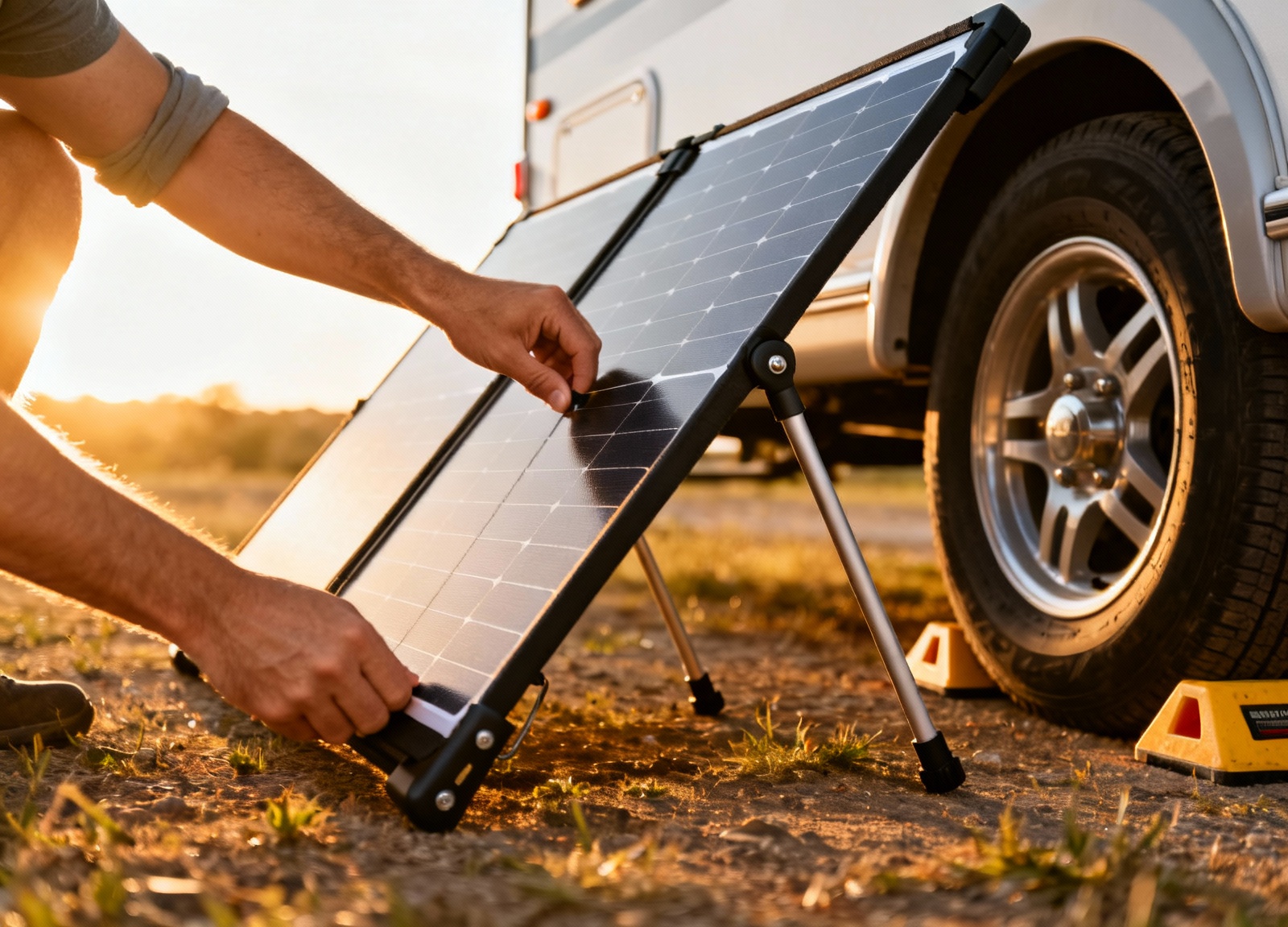
Panel orientation throughout the day dramatically affects output. Testing shows that manually adjusting panel angle three times daily (morning, noon, afternoon) increases harvest by 20-30% compared to fixed positioning. Some campers set phone alarms as reminders; others accept the efficiency loss for convenience. Portable panels’ primary advantage over roof-mounted systems is precisely this adjustability—use it.
Safety Considerations
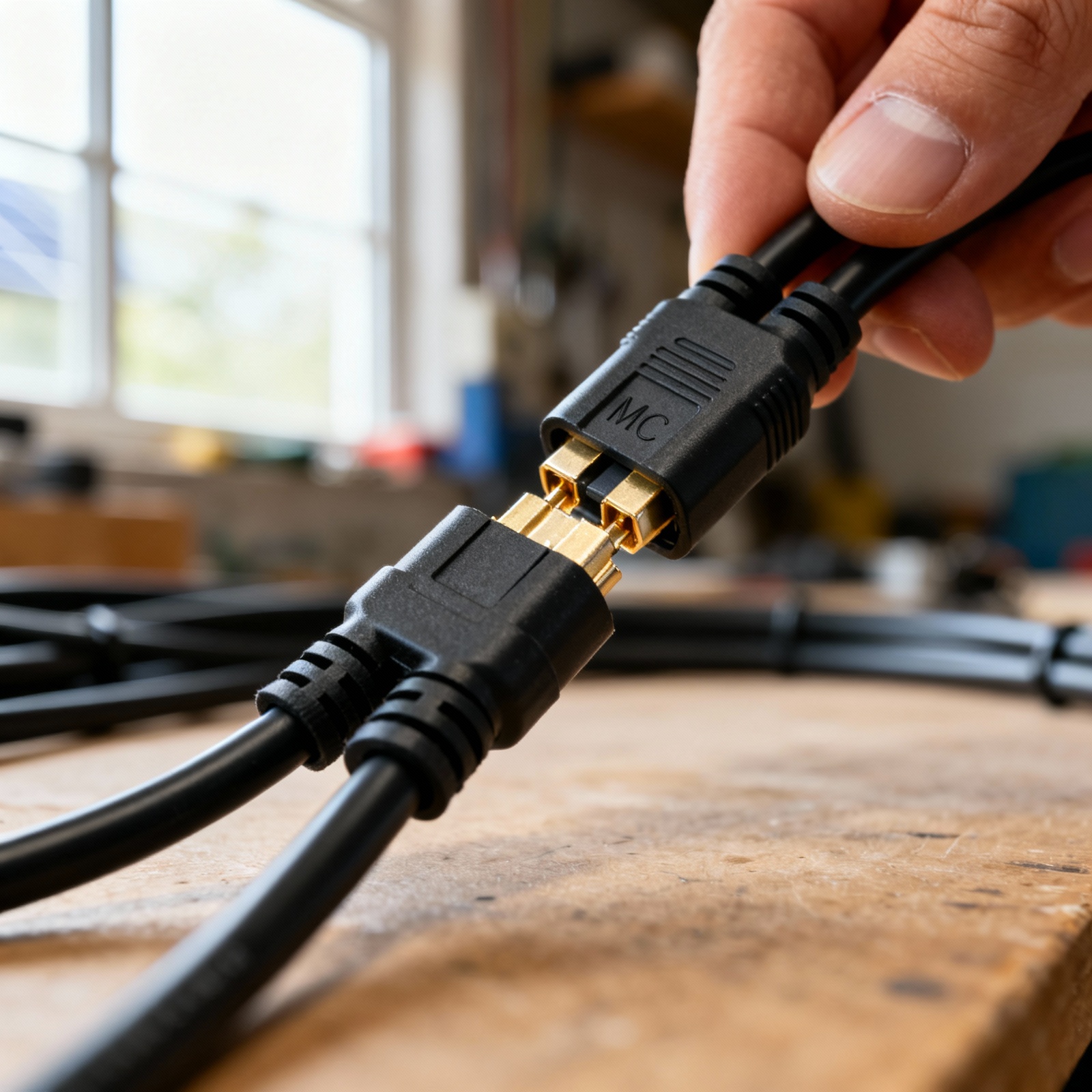
- Never connect or disconnect panels while under load—the resulting arc can damage connectors and potentially cause burns. Cover panels with an opaque blanket before making any wiring changes.
- Secure panels against wind whenever deployed. Desert campers report panels becoming airborne in winds as low as 25 mph when improperly secured.
- Even a 100W panel produces enough current to cause injury if mishandled. Treat all exposed wiring with respect.
- Store panels away from direct sunlight when not actively charging—the inside of a hot vehicle can exceed 150°F, potentially damaging junction boxes and wiring insulation.
- Use panel grommets for staking; most quality panels include them specifically for wind resistance.
- A reflective cover or shaded storage location extends panel lifespan significantly by preventing heat-related degradation.
Always follow manufacturer guidelines and local electrical codes when installing or modifying solar equipment.
Recommended Gear
- Victron SmartSolar MPPT 100/30 — View on Amazon
- Renogy 100W Monocrystalline Panel — View on Amazon
- Battle Born 100Ah LiFePO4 Battery — View on Amazon
FAQs
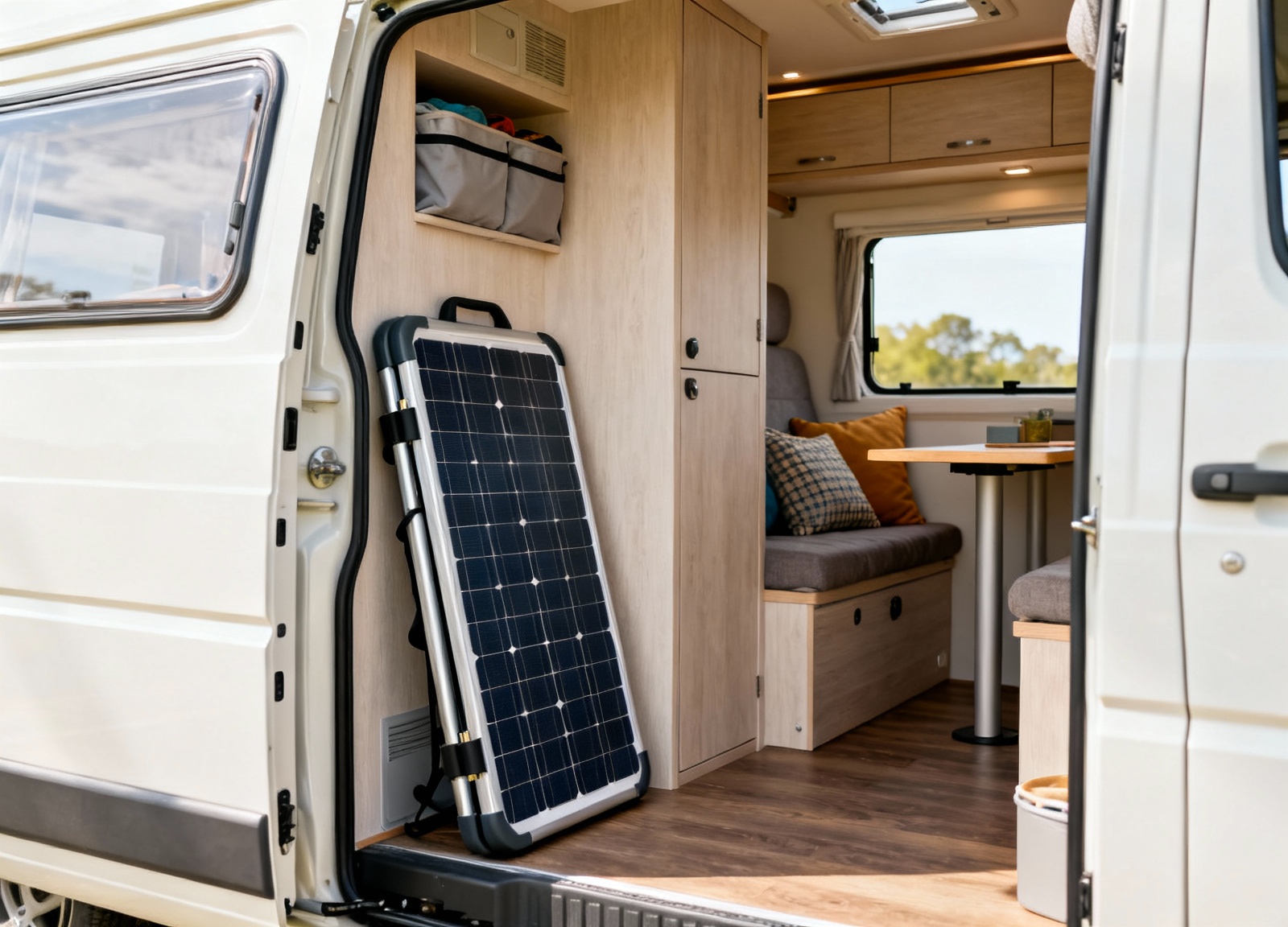
- Portable vs. fixed roof-mounted panels—which is better for RV use? Portable panels offer flexibility to chase optimal sun angles and can be positioned away from RV shade, but require manual setup and secure storage while driving. Fixed panels charge while driving and in all weather without intervention, but sacrifice adjustability and may be shaded by AC units or vents. Many serious boondockers run both: fixed panels for baseline charging and portable panels for supplemental harvest.
- Will an MPPT controller help in winter conditions? Absolutely—MPPT controllers excel in the variable light and cold temperatures common to winter camping. Cold solar cells produce higher voltage, which MPPT controllers convert to additional charging current. Testing shows 20-30% efficiency gains over PWM controllers in winter conditions, making the upgrade investment particularly worthwhile for cold-weather campers.
- What’s the best brand of solar panel for RV use? Renogy dominates the budget-to-midrange market with proven reliability and excellent customer support. For premium applications, REDARC (Australian engineering) and Zamp Solar (US-based, RV-focused) consistently earn top marks from long-term users. Jackery and Goal Zero excel in the portable power station ecosystem. Brand matters less than matching panel specifications to your actual use case.
- How do I prevent theft of portable panels while boondocking? Cable locks through panel grommets deter opportunistic theft but won’t stop determined thieves. More effective strategies include positioning panels within sight of your RV windows, bringing them inside overnight, and camping in areas with other RVers who watch out for each other. Some boondockers use inexpensive game cameras as deterrents. Insurance covering your solar equipment provides ultimate peace of mind.
As an Amazon Associate, we earn from qualifying purchases. This helps keep SunAmpRV running.