
Choosing a 400-watt solar panel kit for your RV isn’t just about wattage—it’s about matching the right system to how you actually camp. A weekend warrior parking at developed campgrounds has vastly different needs than a full-time boondocker chasing sunsets across BLM land, and the “best” kit depends entirely on your lifestyle, budget, and installation preferences.
TL;DR — Best Picks
Best Overall: Renogy 400W 12V Monocrystalline Solar RV Kit – Complete system with proven reliability, excellent efficiency, and comprehensive warranty coverage for serious off-gridders.
Best Budget: ECO-WORTHY 400W 12V Premium Solar Panel Kit – Delivers solid performance at roughly half the price of premium competitors without sacrificing essential features.
Best for Full-Time Van Life: Rich Solar 400W Kit – Lightweight panels with sleek aesthetics and flexible mounting options ideal for space-conscious builds.
Best by Use-Case
Boondocking & Off-Grid
If you’re a boondocker who measures success by how many consecutive days you can stay off-grid, your solar kit needs to deliver maximum harvest under real-world conditions—not just laboratory ratings. Extended dry camping demands panels that perform in partial shade, controllers that squeeze every available watt from low-angle sun, and construction tough enough to survive washboard roads and desert dust storms.
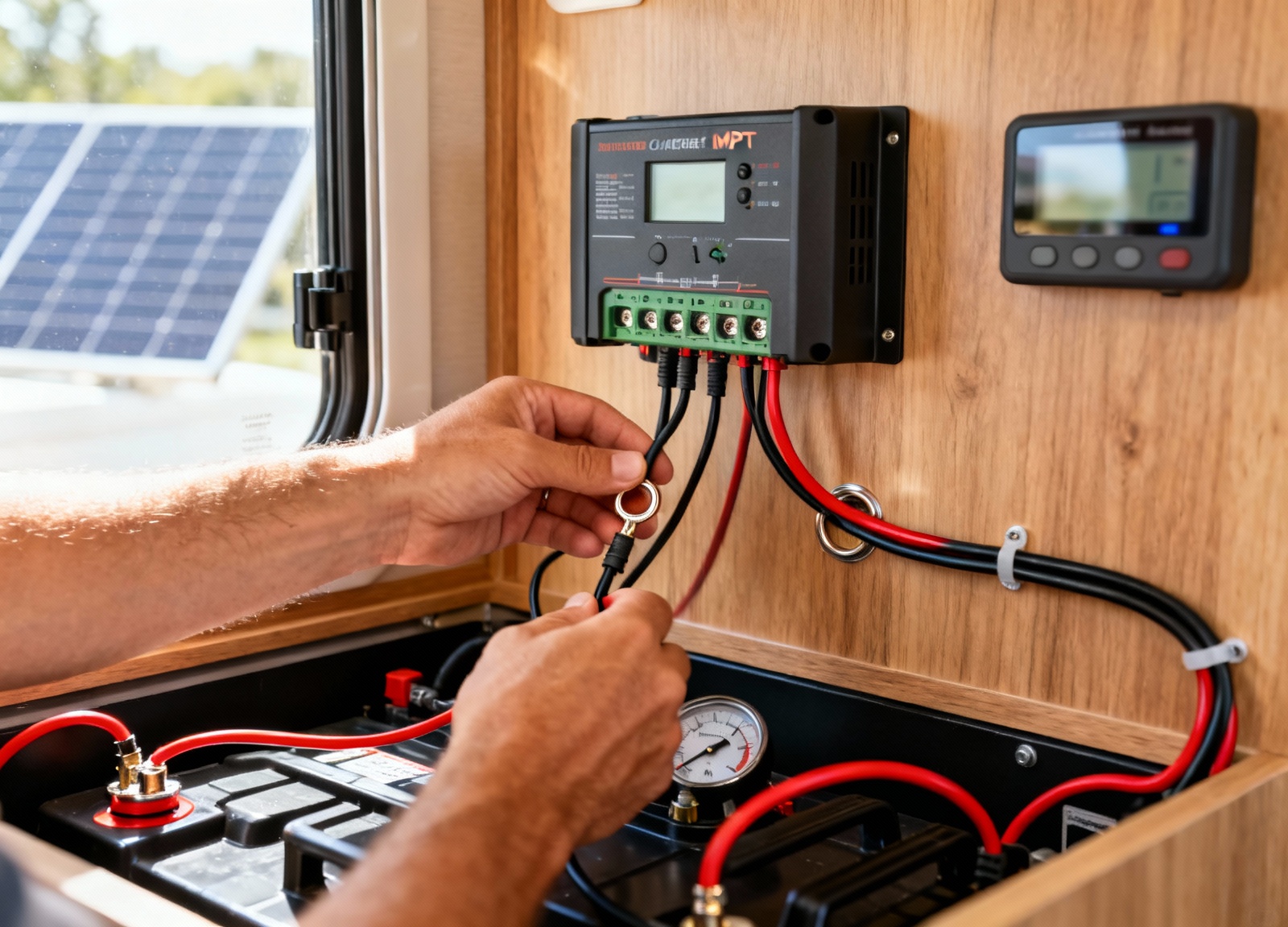
The Renogy 400W 12V Solar Starter Kit with 40A MPPT Charge Controller stands out as the go-to choice for serious off-gridders. This complete system includes four 100W monocrystalline panels, a 40A Rover MPPT charge controller, mounting hardware, and the cabling needed for a standard roof install The MPPT controller alone can boost harvest by 15-25% compared to PWM alternatives, which translates to meaningful extra amp-hours when you’re running a 12V compressor fridge around the clock. View on Amazon
- Pro: Complete system eliminates compatibility guesswork
- Pro: 40A MPPT controller provides headroom for future expansion
- Pro: Corrosion-resistant aluminum frames withstand harsh conditions
- Pro: Long-term Renogy warranty coverage
- Con: Premium pricing versus budget kits
- Con: Rigid roof panels add weight and consume roof space
For boondockers who want even more robust construction, the Go Power! Solar Elite 400W Charging System offers commercial-grade build quality with panels designed specifically for RV roof mounting. The integrated tilt brackets allow angle adjustment for winter sun optimization, and the system includes a 30A PWM controller with digital display.
While the PWM controller sacrifices some efficiency compared to MPPT, the overall system reliability and customer support make it popular among full-timers.
- Pro: RV-specific design with pre-drilled mounting holes
- Pro: Excellent customer support and US-based warranty service
- Pro: Integrated tilt brackets included
- Con: PWM controller less efficient than MPPT
- Con: Higher price point for the feature set
Budget Weekender
If you’re an occasional camper who hits developed campgrounds most weekends with the occasional off-grid adventure, spending $700+ on a premium solar kit doesn’t make financial sense. You need reliable power for lights, phone charging, and maybe a small fan—not a system designed for running air conditioning off-grid for weeks at a time.
The ECO-WORTHY 400W 12V Premium Solar Panel Kit delivers impressive value for budget-conscious RVers. This kit includes four 100W monocrystalline panels, a 40A MPPT charge controller plus a Bluetooth module, mounting Z-brackets, and MC4 connectors with extension cables. At roughly $350-400, it costs nearly half what premium competitors charge while still providing legitimate 400W capacity. The panels use A-grade monocrystalline cells with 21% efficiency ratings, and the included controller handles basic charging duties adequately for moderate use. View on Amazon
- Pro: Exceptional price-to-wattage ratio
- Pro: Complete kit with all mounting hardware included
- Pro: Straightforward installation for DIYers
- Pro: 60A controller provides headroom for future expansion
- Con: Heavier kit adds roof load
- Con: Shorter warranty period than premium brands
- Con: Customer support can be inconsistent
Weekend warriors should also consider whether they actually need 400W. If your camping style involves mostly shore power with occasional overnight dry camping, a 200W kit might serve you better at lower cost and weight. However, if you anticipate growing into more off-grid adventures, buying 400W now prevents the hassle of upgrading later.
Winter Camper
Cold-weather camping presents unique solar challenges that many RVers underestimate. Shorter days, lower sun angles, and frequent cloud cover can slash solar production by 50% or more compared to summer conditions.
There’s a silver lining: solar panels actually operate more efficiently in cold temperatures, producing higher voltage that MPPT controllers can convert into additional charging current.
For winter camping, the Renogy 400W 12V Solar Starter Kit with 40A MPPT Charge Controller earns top marks again because the included MPPT controller can harvest more energy in cold, low-angle conditions. When panel voltage climbs in cold weather (potentially reaching 22-24V per panel versus the rated 18V), an MPPT controller captures that extra voltage and converts it to usable amperage. PWM controllers simply waste this cold-weather bonus. The included 40A Rover MPPT controller captures that extra cold-weather voltage and converts it into usable charging current. View on Amazon
- Pro: MPPT controller maximizes cold-weather efficiency gains
- Pro: Monocrystalline cells perform better in low-light conditions
- Pro: Robust frame construction handles snow loads
- Con: Fixed mounting limits angle adjustment for low winter sun
- Con: Snow accumulation requires manual clearing
Winter campers should also consider supplementing fixed roof panels with a portable ground-deployed panel. Ground panels can be angled directly at the low winter sun and positioned in sunny spots while your RV sits in shade. This hybrid approach often outperforms a larger fixed-only system during winter months.
Lightweight / Minimalist
Van lifers, teardrop trailer owners, and minimalist campers face a constant battle against weight and space constraints. Every pound on the roof affects handling and fuel economy, and every square foot of panel competes with roof vents, fans, and air conditioners. For these builds, panel efficiency and weight-per-watt matter more than raw cost savings.
The Rich Solar 400W Kit appeals to weight-conscious builders with panels that tip the scales at approximately 13 lbs each—roughly 15% lighter than comparable Renogy panels. The kit includes four 100W monocrystalline panels with sleek black frames that complement modern van builds aesthetically. Rich Solar’s panels use half-cut cell technology that improves shade tolerance and reduces hot-spot risk, both valuable features for van roofs with irregular shading from roof racks and accessories.
- Pro: Lighter weight panels reduce roof load
- Pro: Half-cut cell technology improves partial shade performance
- Pro: Black frames offer cleaner aesthetic
- Pro: Competitive pricing for the feature set
- Con: Less established brand than Renogy or Go Power!
- Con: Controller quality varies by kit configuration
Minimalists should also evaluate flexible panels, though these come with tradeoffs. Flexible panels weigh roughly half as much as rigid panels and conform to curved van roofs, but they typically cost more per watt, run hotter (reducing efficiency), and have shorter lifespans. For most van builds, lightweight rigid panels offer the best balance of weight savings and longevity.
Buyer’s Notes
Beyond matching a kit to your camping style, several factors deserve consideration before purchasing.
Warranty coverage varies dramatically between brands—Renogy offers 25 years on panels and 5 years on controllers, while budget brands may offer only 1-2 years. For a system you’ll rely on for years, warranty matters.
Controller upgrades often make sense even with complete kits. Many budget kits include PWM controllers that leave 15-25% of potential harvest on the table. Purchasing a kit for its panels and mounting hardware, then upgrading to a standalone MPPT controller, can deliver better long-term value than buying the cheapest complete system.
Expansion compatibility deserves attention if you might add panels later. Check that the included controller can handle additional wattage—a 30A controller maxes out around 400W on a 12V system, leaving no room for growth. The 40A and 60A controllers in some kits provide meaningful expansion headroom.
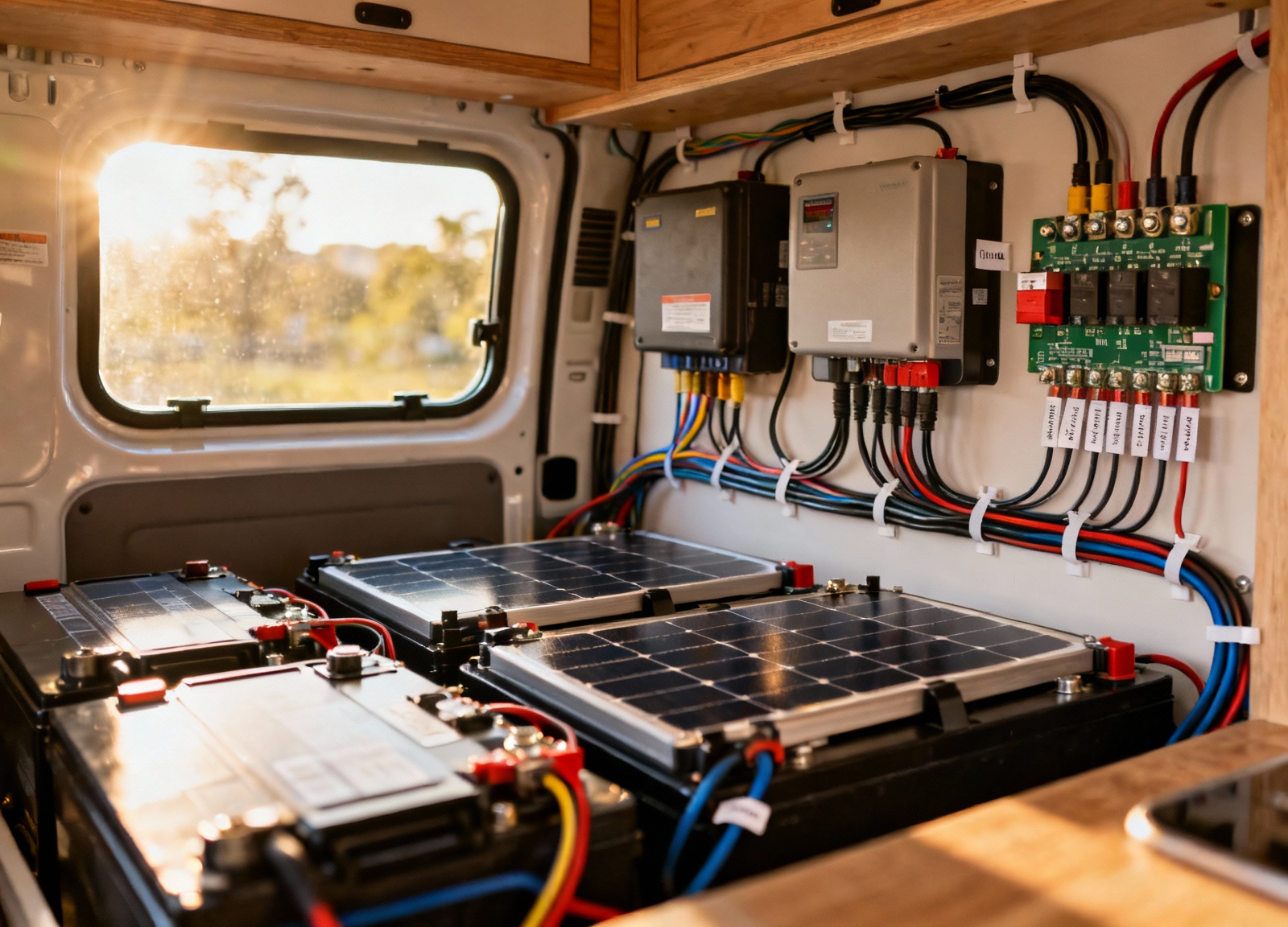
Finally, consider your battery bank. A 400W solar array can theoretically produce 30+ amps in ideal conditions, but that power needs somewhere to go. Undersized battery banks will hit absorption voltage quickly, causing the controller to throttle production. Most 400W systems pair well with 200-400Ah of lithium capacity or 400-600Ah of lead-acid.
Comparison Table

| Model | Type | Key Specs | Best For | Pros | Cons |
|---|---|---|---|---|---|
| Renogy 400W 12V Solar Starter Kit (40A MPPT) | Complete Kit | 400W (4×100W), 40A Rover MPPT, roof-mount hardware + cabling | Boondocking, Winter | Complete system, excellent MPPT, strong warranty coverage | Premium price, heavier panels |
| Go Power! Solar Elite 400W | Complete Kit | 400W, 30A PWM, tilt brackets included | Full-time RVers | RV-specific design, great support, tilt brackets | PWM less efficient, higher cost |
| ECO-WORTHY 400W Premium Kit | Complete Kit | 400W, 40A MPPT + Bluetooth module, 21% (listing) | Budget Weekenders | Excellent value, complete hardware, expansion headroom | Heavier kit, Warranty/support varies by seller |
| Rich Solar 400W Kit | Complete Kit | 400W, half-cut cells, 13 lbs/panel | Van Life, Minimalists | Lightweight, shade tolerant, sleek aesthetics | Less established brand |
| HQST 400W Solar Panel Kit | Complete Kit | 400W, 30A PWM, budget-friendly | Entry-level users | Very affordable, decent quality | Basic controller, limited support |
| Newpowa 400W Kit | Complete Kit | 400W, 40A PWM, polycrystalline option | Budget boondockers | Good mid-range value, reliable panels | Poly cells less efficient, heavier |
Which One Should You Buy?

Your ideal 400W solar kit depends entirely on how you camp and what you prioritize.
If you’re a boondocker who needs maximum independence and values long-term reliability, invest in the Renogy 400W Kit with MPPT controller—the premium price pays dividends in efficiency, durability, and warranty coverage over years of use.
Weekend warriors on a budget should grab the ECO-WORTHY 400W Kit. It covers the basics without overspending, and the money saved can go toward batteries or other upgrades. Just understand you’re trading some efficiency and warranty coverage for that lower price point.
Cold-weather campers need MPPT technology to capture cold-weather voltage gains, making the Renogy kit the clear choice again. Pair it with a portable ground panel for maximum winter flexibility.
Van lifers and minimalists prioritizing space and weight should consider the Rich Solar 400W Kit. The lighter panels and half-cut cell technology address the specific challenges of van builds, and the aesthetic appeal matters when your vehicle is also your home.
Safety & Common Mistakes
No matter which kit you choose, proper installation prevents damage, fire risk, and voided warranties:
- Install a correctly sized fuse close to the battery positive terminal—typically 40-60A for a 400W system on 12V.
- Choose wire gauge for the expected current and run length; target ≤3% voltage drop. For 400W at 12V with a 20-foot run, 8 AWG is typically minimum.
- Use proper battery and array disconnects; de-energize before any work on the system.
- Double-check polarity before connecting—reversed polarity can instantly destroy charge controllers.
- Secure all cables with strain relief and UV-resistant conduit where exposed to sunlight.
- Seal all roof penetrations with self-leveling lap sealant designed for RV roofs.
Always consult manufacturer instructions and local electrical codes. When in doubt, hire a qualified installer.
Recommended Gear
- Victron SmartSolar MPPT 100/30 — View on Amazon
- Renogy 100W Monocrystalline Panel — View on Amazon
- Battle Born 100Ah LiFePO4 Battery — View on Amazon
FAQs
- Is a 400 watt solar panel enough for RV? For most RVers, 400W provides solid baseline power for lights, electronics, fans, and a 12V compressor refrigerator. Full-time boondockers running air conditioning, residential refrigerators, or multiple high-draw appliances typically need 600-1000W or more. Calculate your actual daily watt-hour consumption before deciding.
- Portable vs fixed panels — which is better? Portable panels offer flexibility and work great for renters or occasional campers who can’t modify their RV roof. Fixed panels charge while driving, handle all weather without setup time, and can’t be stolen from your campsite. Most serious off-gridders prefer fixed panels with a small portable supplement for flexibility.
- Will MPPT help in winter? Absolutely. MPPT controllers convert higher cold-weather voltage into usable current, typically yielding 15-25% more power than PWM in winter conditions. This efficiency gain often justifies the $50-100 price premium over PWM controllers, especially for year-round campers.
- Can I mix different panel brands in my system? It’s possible but not ideal. Mismatched panels with different voltage and current characteristics can cause the system to underperform, as production gets limited by the weakest panel. If mixing brands, ensure similar voltage specifications and use an MPPT controller, which handles mismatches better than PWM.
- How do I know if my solar system is big enough? Calculate your daily watt-hour usage by listing all devices and their runtime, then size panels to produce 1.2-1.5× that amount to account for inefficiencies, cloudy days, and seasonal variation. A kill-a-watt meter or battery monitor makes tracking actual consumption much easier than guessing.
- Who makes the best solar panels for RVs? Renogy dominates the RV solar market with proven reliability and excellent warranty support. Go Power! offers premium quality with US-based customer service. Rich Solar and HQST provide solid budget alternatives. Avoid no-name brands with suspiciously low prices—panel quality directly affects longevity and actual power output.
As an Amazon Associate, we earn from qualifying purchases. This helps keep SunAmpRV running.