
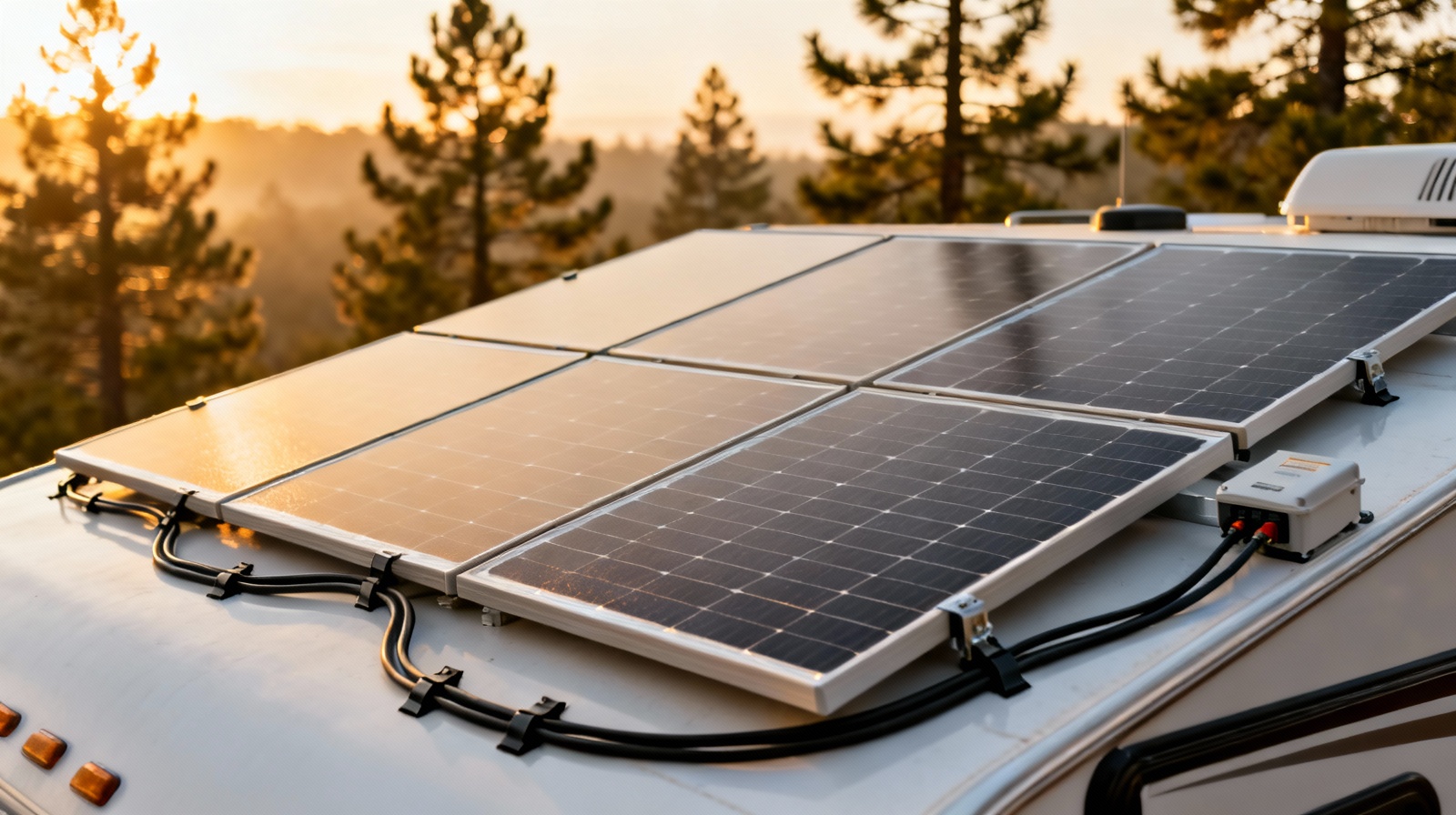
Choosing an 800W solar panel kit for your RV isn’t just about wattage—it’s about matching the system to how you actually travel. Whether you’re chasing remote desert sunsets for weeks or just topping off batteries during weekend getaways, the right kit makes all the difference between energy abundance and frustrating shortfalls.
TL;DR — Best Picks
Best Overall: Renogy 800W 12V Solar Premium Kit – Complete system with MPPT controller, proven reliability, and excellent documentation for serious off-gridders.
Best Budget: Rich Solar 800W 12V Solar Kit – Delivers solid performance at a lower price point, perfect for cost-conscious campers.
Best for Winter Camping: Go Power! 800W All-Electric Kit – Optimized charge controller settings and robust construction handle cold-weather challenges exceptionally well.
Best by Use-Case
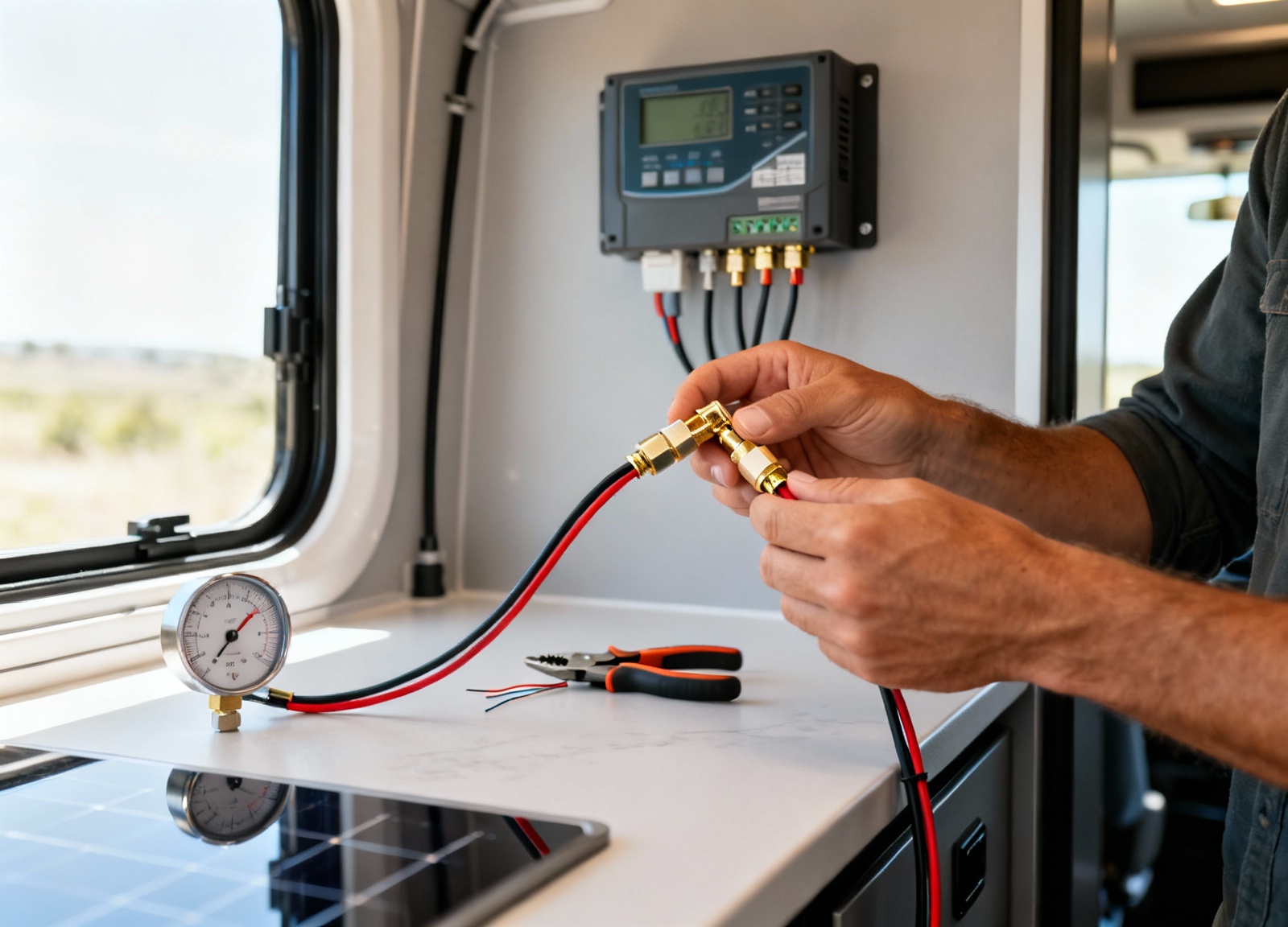
Boondocking & Off-Grid
If you’re the type who measures success by how many days you can stay off-grid without firing up a generator, your solar kit needs to be a workhorse. Extended dry camping in remote locations demands maximum energy harvest, bulletproof reliability, and components that won’t leave you stranded when the nearest auto parts store is 100 miles away.
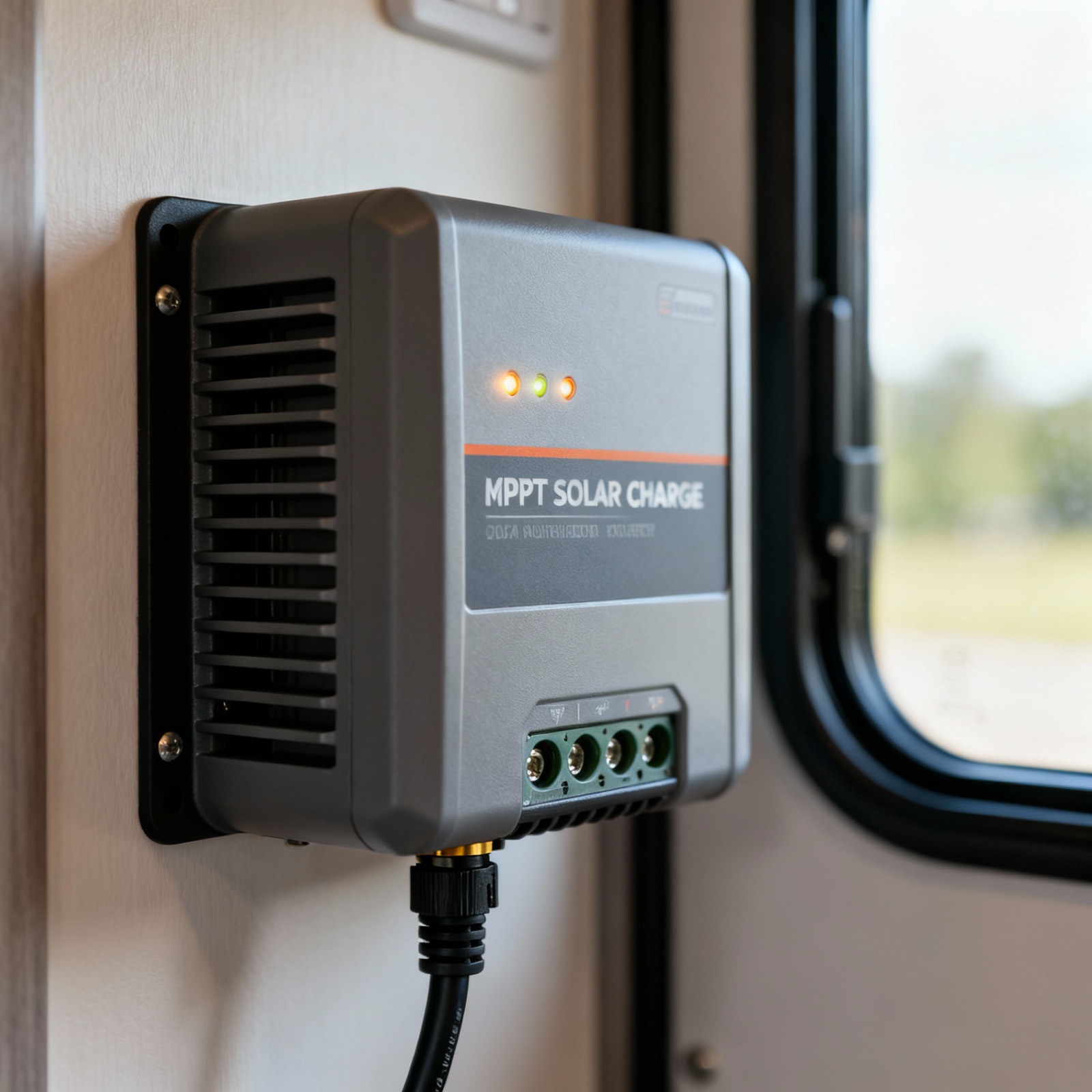
The Renogy 800W 12V Solar Premium Kit stands as the gold standard for serious boondockers. This comprehensive package includes eight 100W monocrystalline panels, a 60A MPPT charge controller (the Rover series), and all necessary mounting hardware and cabling. The MPPT controller alone can boost your actual harvest by 15-30% compared to PWM alternatives—critical when you’re running a residential refrigerator, laptop, and CPAP machine simultaneously. View on Amazon
- Pro: Complete system with premium MPPT controller included
- Pro: Excellent low-light performance for early morning and late afternoon charging
- Pro: Strong brand-backed warranty coverage
- Con: Higher upfront investment than budget alternatives
- Con: More roof footprint and mounting hardware than larger-panel setups
For those wanting even more charging flexibility, consider the SunGoldPower 800W RV Solar Kit as an alternative. This system pairs well with larger battery banks and includes bypass diodes on each panel to minimize shading losses—a real advantage when trees or roof-mounted AC units cast partial shadows. Key specs include 800W total output, monocrystalline cells, and compatibility with both 12V and 24V battery configurations.
- Pro: Superior shade tolerance with bypass diode design
- Pro: Flexible voltage configuration options
- Con: Controller sold separately on some configurations
Budget Weekender
Not everyone needs a system designed for month-long desert expeditions. If your RV adventures consist of long weekends at state parks with occasional hookups, spending top dollar on premium components doesn’t make financial sense.
The Rich Solar 800W 12V Solar Kit delivers impressive value for occasional campers. This kit bundles four 200W monocrystalline panels with a 60A MPPT charge controller, mounting brackets, and wiring. With an MPPT controller included, you get strong harvest efficiency without paying premium-brand pricing. For weekend warriors who primarily camp in sunny conditions and have shore power available between trips, this value-focused setup makes perfect sense. View on Amazon
- Pro: Exceptional price-to-wattage ratio
- Pro: Straightforward installation with clear instructions
- Pro: Solid build quality despite lower price
- Con: Value-tier components versus premium alternatives
- Con: Documentation and support can be less consistent
Another budget-friendly contender is the ECO-WORTHY 800W Complete Solar Panel Kit. This system includes an MPPT controller despite its competitive pricing, bridging the gap between budget and premium categories. You’ll get four 195W monocrystalline panels, a 60A MPPT controller, and mounting hardware. The panels feature an aluminum frame with pre-drilled holes for easy installation. View on Amazon
- Pro: MPPT controller included at near-PWM pricing
- Pro: Lightweight aluminum frames
- Con: Less established brand reputation than Renogy or Rich Solar
- Con: Customer support can be slower
Winter Camper
Cold-weather camping presents unique solar challenges. Shorter days, lower sun angles, and potential snow coverage all conspire against your energy harvest.
However, there’s a silver lining: solar panels actually operate more efficiently in cold temperatures, producing higher voltage that the right controller can convert into usable charging current.
The Go Power! 800W All-Electric Kit earns its reputation among winter camping enthusiasts. Designed specifically for RV applications, this system features panels with enhanced cold-weather performance and a sophisticated MPPT controller with temperature compensation. The controller automatically adjusts charging parameters based on ambient temperature, protecting your batteries from overcharging in cold conditions while maximizing harvest. Key specs: 800W total output, 19.8% panel efficiency, operating temperature range of -40°F to +185°F.
- Pro: Temperature-compensated charging protects batteries in extreme cold
- Pro: Panels rated for heavy snow loads
- Pro: Excellent low-angle sun performance
- Con: Premium pricing reflects specialized design
- Con: May be overkill for warm-weather-only campers
The Renogy 800W 12V Solar Premium Kit with 60A MPPT Rover also performs admirably in winter conditions. While not specifically marketed for cold weather, the Rover MPPT controller includes temperature sensing capabilities and the monocrystalline panels maintain strong output even at low sun angles. This kit represents a solid middle ground between specialized winter gear and general-purpose systems. View on Amazon
- Pro: Versatile four-season performance
- Pro: Strong brand support and parts availability
- Con: Requires separate temperature sensor purchase for optimal cold-weather charging
Lightweight / Minimalist
Van lifers, truck campers, and minimalist travelers face a constant battle against weight and space constraints. Every pound matters when you’re already pushing payload limits, and roof real estate is precious.
The BougeRV 800W Flexible Solar Panel Kit addresses these concerns directly. Featuring thin-film flexible panels that weigh roughly 60% less than rigid alternatives, this system can conform to curved van roofs and fiberglass surfaces where traditional panels won’t fit. The 800W kit includes four 200W flexible panels (each weighing approximately 6 lbs versus 25+ lbs for rigid equivalents) and a compact MPPT controller. Total system weight comes in under 30 lbs—a dramatic reduction from the 100+ lb weight of comparable rigid systems.
- Pro: Dramatically reduced weight (under 30 lbs total)
- Pro: Flexible design conforms to curved surfaces
- Pro: Low profile reduces wind resistance
- Con: Shorter lifespan than rigid panels (typically 10-15 years vs 25+)
- Con: More susceptible to heat buildup without air gap
- Con: Higher cost per watt than rigid alternatives
For those who want weight savings without sacrificing longevity, the HQST 800W Lightweight Monocrystalline Kit offers a compromise. These panels use thinner aluminum frames and optimized cell layouts to reduce weight by approximately 20% compared to standard rigid panels while maintaining the durability and lifespan advantages of traditional construction.
- Pro: Weight reduction without sacrificing durability
- Pro: Standard 25-year output warranty
- Con: Still heavier than flexible alternatives
- Con: Requires flat mounting surface
Buyer’s Notes
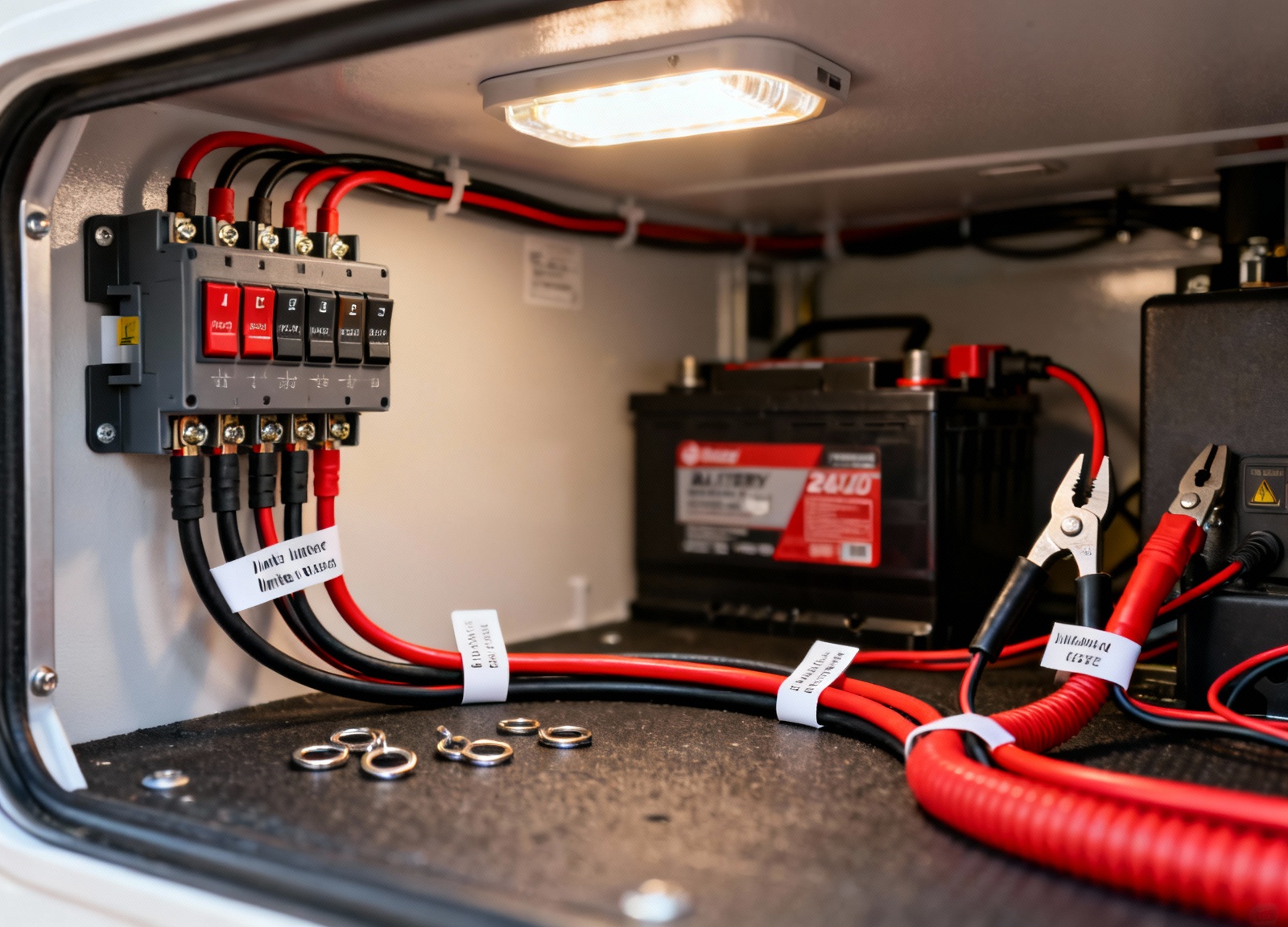
Beyond matching a kit to your camping style, several factors deserve consideration before purchasing:
Warranty coverage varies significantly. Premium brands like Renogy and Go Power! typically offer 25-year panel output warranties and 5-year controller warranties. Budget options may provide shorter coverage periods—sometimes just 1-2 years on controllers. For full-time RVers, that extended warranty protection justifies the premium.
Controller compatibility matters. If you plan to expand your system later, ensure your charge controller can handle additional panels. A 60A MPPT controller paired with 800W of panels has headroom for future expansion; a 40A controller may already be near capacity.
Battery bank sizing is critical. An 800W solar array can produce 3,200-4,000Wh daily under ideal conditions. Your battery bank should be sized to store at least one full day’s harvest—typically 300-400Ah of lithium or 600-800Ah of lead-acid capacity.
Roof space requirements. Four 200W rigid panels typically require approximately 28-32 square feet of mounting area. Measure your available roof space carefully, accounting for vents, AC units, and antenna clearances.
Comparison Table
| Model | Type | Key Specs | Best For | Pros | Cons |
|---|---|---|---|---|---|
| Renogy 800W 12V Solar Premium Kit | Rigid Monocrystalline | 800W, 60A MPPT (Rover), 8×100W panels | Boondocking | Complete system, excellent warranty | Higher price, heavier panels |
| SunGoldPower 800W RV Kit | Rigid Monocrystalline | 800W, bypass diodes, 12V/24V compatible | Shaded installations | Superior shade tolerance | Controller sometimes sold separately |
| Rich Solar 800W 12V Kit | Rigid Monocrystalline | 800W, 60A PWM controller | Budget weekenders | Excellent value, easy install | Value-tier components vs premium |
| ECO-WORTHY 800W Complete Kit | Rigid Monocrystalline | 4×195W panels, 60A MPPT controller | Value-conscious buyers | MPPT at budget pricing | Less established brand |
| Go Power! 800W All-Electric Kit | Rigid Monocrystalline | 800W, 19.8% efficiency, -40°F to +185°F | Winter camping | Temperature compensation, snow load rated | Premium pricing |
| BougeRV 800W Flexible Kit | Flexible Thin-Film | 800W, under 30 lbs total, MPPT included | Van life / minimalists | Ultra-lightweight, curves to surfaces | Shorter lifespan, heat concerns |
| HQST 800W Lightweight Kit | Rigid Monocrystalline | 800W, 20% weight reduction | Weight-conscious travelers | Durable with weight savings | Still heavier than flexible |
Which One Should You Buy?

Your ideal 800W solar kit depends entirely on how you use your RV:
If you’re a dedicated boondocker who measures trips in weeks rather than days, invest in the Renogy 800W 12V Solar Premium Kit. The premium MPPT controller, comprehensive warranty, and proven reliability justify the higher cost when your comfort depends on consistent power generation.
Weekend warriors and occasional campers should grab the Rich Solar 800W Kit. It covers the essentials without overspending, and the PWM efficiency trade-off barely matters when you’re plugging into shore power every few days anyway.
Cold-weather enthusiasts need the Go Power! 800W All-Electric Kit. Temperature-compensated charging and cold-rated components prevent the battery damage and underperformance that plague generic systems in freezing conditions.
Van lifers and minimalists prioritizing weight and space should choose the BougeRV 800W Flexible Kit. The weight savings are dramatic, and the ability to mount on curved surfaces opens installation options that rigid panels simply can’t match.
Safety & Common Mistakes
- Install a correctly sized fuse (typically 60-80A for 800W systems) within 12 inches of the battery positive terminal to protect against short circuits.
- Choose wire gauge appropriate for expected current and run length; for 800W systems, 8 AWG is minimum for runs under 10 feet, with 6 AWG preferred for longer distances. Target ≤3% voltage drop.
- Use proper battery and array disconnects; always de-energize the system completely before performing any maintenance or modifications.
- Double-check polarity before connecting any component—reversed polarity can instantly destroy charge controllers and other electronics.
- Secure all cables with strain relief and UV-resistant conduit where exposed to sunlight; unsecured wiring causes chafing failures and fire hazards.
- Never cover panels during installation without first disconnecting them; even partial sunlight generates enough voltage to cause shocks.
Always consult a qualified electrician if you’re uncertain about any aspect of your installation.
Recommended Gear
- Victron SmartSolar MPPT 100/30 — View on Amazon
- Renogy 100W Monocrystalline Panel — View on Amazon
- Battle Born 100Ah LiFePO4 Battery — View on Amazon
FAQs
- What can an 800 watt solar system actually run? An 800W system produces approximately 3,200-4,000Wh daily under good conditions. This comfortably powers a residential refrigerator (1,200-1,500Wh/day), laptop charging (200-400Wh/day), LED lighting (100-200Wh/day), phone charging, water pump, and entertainment systems. With careful management, you can also run a CPAP machine, small microwave (limited use), and 12V accessories indefinitely off-grid.
- Is there actually an 800W single solar panel? Currently, single panels max out around 400-450W for residential/RV applications. An “800W kit” consists of multiple panels—typically four 200W units or two 400W panels. Single high-wattage panels exist for commercial installations but are too large and heavy for RV roofs.
- Will MPPT controllers help in winter conditions? Absolutely. Cold temperatures increase panel voltage output significantly. MPPT controllers convert this higher voltage into usable charging current, typically yielding 15-30% more power than PWM controllers in winter conditions. This efficiency gain is most pronounced on cold, clear days when panels operate well below their rated temperature.
- Can I mix different panel brands in my 800W system? It’s technically possible but not recommended. Mismatched panels with different voltage and current characteristics force the system to operate at the lowest common denominator, reducing overall output. If you must mix panels, ensure they have similar Vmp (voltage at maximum power) ratings and use an MPPT controller, which handles variations better than PWM.
- How do I know if 800W is enough for my RV? Calculate your daily watt-hour consumption by listing all devices and their usage times. Multiply device wattage by hours used daily, then sum everything. Your solar system should produce 1.2-1.5× your daily consumption to account for cloudy days, inefficiencies, and seasonal variations. If your daily usage exceeds 2,500-3,000Wh, consider a larger system.
- Portable versus fixed panels—which works better for 800W systems? Fixed roof-mounted panels charge while driving, require no setup time, and handle all weather conditions automatically. Portable panels offer flexibility—you can park in shade while positioning panels in sunlight—and work well for renters who can’t modify their RV. For 800W systems, most users prefer fixed mounting due to the hassle of repeatedly deploying and securing four large portable panels.
As an Amazon Associate, we earn from qualifying purchases. This helps keep SunAmpRV running.