
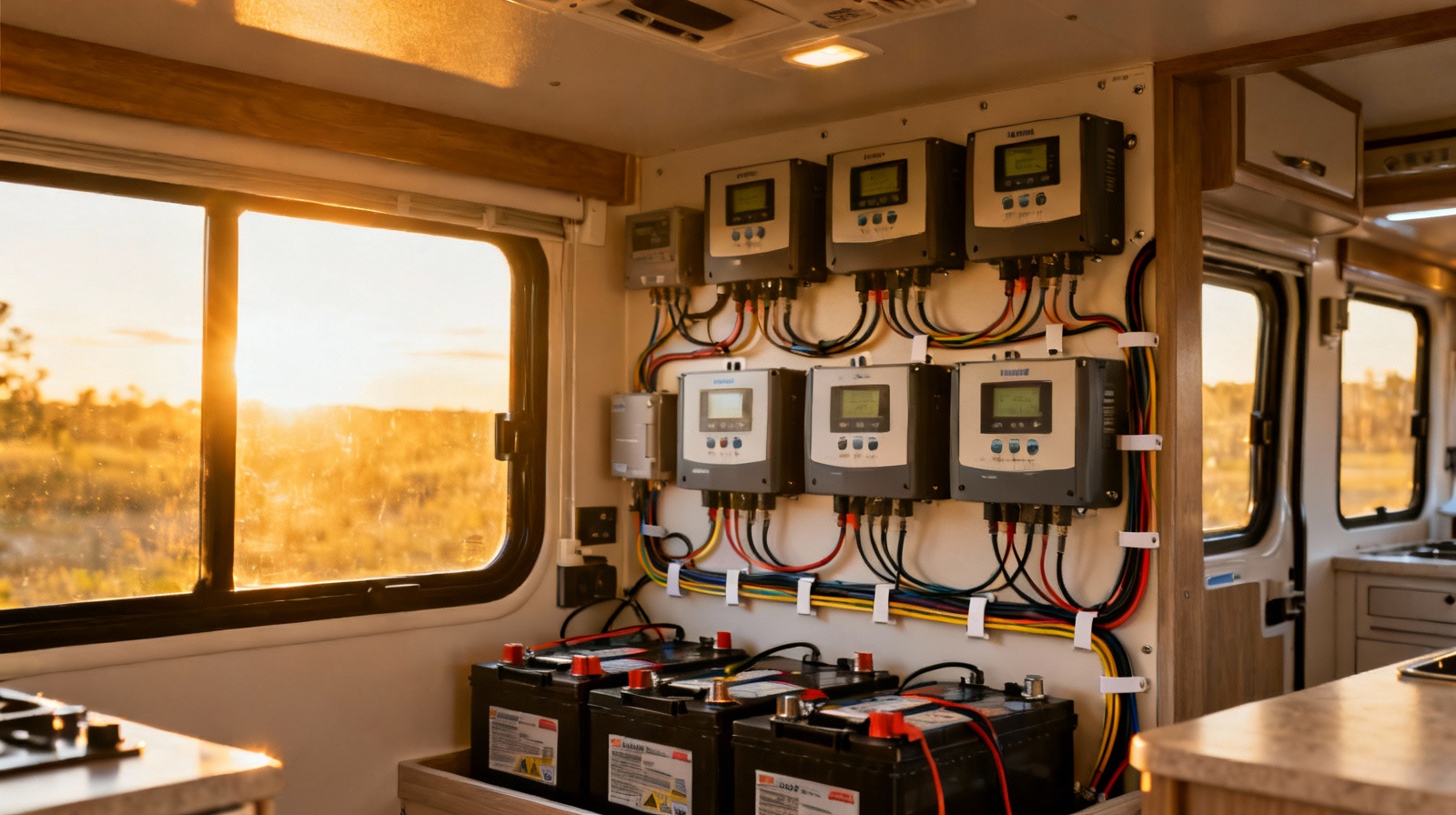
After spending countless hours researching charge controllers and talking with fellow RVers about their solar setups, I’ve learned that the charge controller you choose can make or break your off-grid experience. It’s the brain of your solar system—the component that determines whether you’re harvesting every available watt from your panels or leaving energy on the table.
Whether you’re a weekend warrior with a modest 100W panel or a full-timer running a 600W array, picking the right MPPT controller is one of the most important decisions you’ll make for your RV solar setup.
TL;DR — Best Picks
Best Overall: Victron SmartSolar MPPT 100/30 – Exceptional build quality, Bluetooth monitoring, and proven reliability that full-timers swear by.
Best Budget: Renogy Rover 40A MPPT – Solid performance and features at roughly half the price of premium competitors.
Best for Large Systems: Victron SmartSolar MPPT 150/60 – Handles high-voltage arrays and large battery banks with ease for serious off-grid setups.
Best RV MPPT Solar Charge Controllers
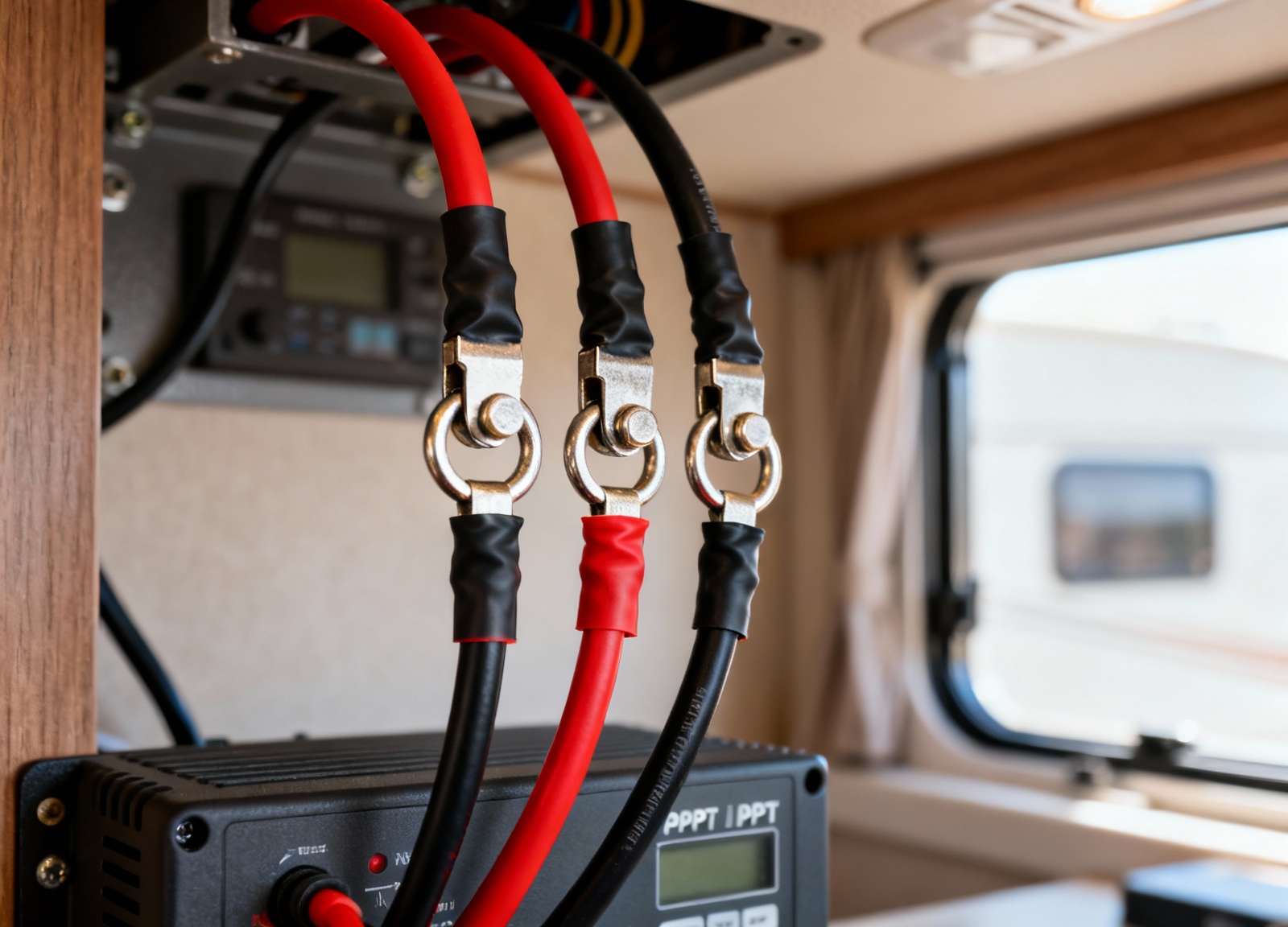
Victron SmartSolar MPPT 100/30 — Best Overall
If there’s one controller that consistently earns praise across RV forums and solar communities, it’s the Victron SmartSolar 100/30. This Dutch-engineered unit has become the gold standard for serious RVers, and after seeing it perform in countless setups, I understand why.
The build quality is immediately apparent—this isn’t a flimsy plastic box but a solid aluminum housing designed to handle the vibrations and temperature swings of RV life. The integrated Bluetooth connectivity lets you monitor your system from your phone without drilling holes for display cables, and the VictronConnect app provides genuinely useful data about your harvest, battery state, and historical performance. View on Amazon
Key Specs: 100V max PV input, 30A charge current, high efficiency, compatible with 12V/24V systems.
- Pro: Industry-leading tracking algorithm captures more energy in partial shade and variable conditions
- Pro: Bluetooth monitoring with excellent free app—no additional display purchase required
- Pro: Exceptional build quality with strong warranty backing it up
- Pro: Programmable load output for managing DC loads directly
- Con: Premium price point—roughly 40-50% more than budget alternatives
- Con: No built-in display; you’ll need your phone or optional display accessory
Renogy Rover 40A MPPT — Best Budget
For RVers who want genuine MPPT performance without the premium price tag, the Renogy Rover 40A hits a sweet spot that’s hard to argue with. This controller has quietly built a loyal following among budget-conscious solar enthusiasts, and the reason is simple: it works well and doesn’t cost a fortune.
The built-in LCD screen shows you everything you need to know at a glance, and the optional Bluetooth module (sold separately) adds app connectivity if you want it. I’ve seen these units running reliably in rigs across the country, handling everything from desert heat to mountain cold without complaint. View on Amazon
Key Specs: 100V max PV input, 40A charge current, 12V/24V auto-detect, LCD display.
- Pro: Excellent value—delivers 90%+ of premium controller performance at half the cost
- Pro: Built-in LCD display shows real-time data without needing your phone
- Pro: 40A capacity handles larger arrays than many competitors in this price range
- Con: Tracking algorithm isn’t quite as refined as Victron in rapidly changing conditions
- Con: Bluetooth module costs extra; not integrated like premium options
Victron SmartSolar MPPT 150/60 — Best for Large Systems
When you’re running a serious solar array—think 600W or more—you need a controller that can handle the voltage and current without breaking a sweat. The Victron 150/60 is the workhorse that full-timers and serious boondockers reach for when they need maximum capability.
The 150V input voltage means you can wire panels in series for longer runs with thinner wire, reducing both cost and voltage drop. This is the controller I recommend for anyone building a system they plan to expand over time. View on Amazon
Key Specs: 150V max PV input, 60A charge current, 12V/24V/48V compatible, ultra-fast MPPT tracking.
- Pro: High voltage input allows efficient series wiring of large arrays
- Pro: 60A output supports battery banks up to 800Ah without paralleling controllers
- Pro: Same excellent Bluetooth app and monitoring as smaller Victron units
- Pro: Future-proof for system expansion
- Con: Significant investment—overkill for systems under 400W
- Con: Larger physical footprint requires more mounting space
EPEVER Tracer 4215BN — Best Value for Mid-Size Systems
EPEVER has carved out a niche as the go-to brand for RVers who want solid performance without paying for a premium name. The Tracer 4215BN represents their sweet spot—enough capacity for a 400W+ system at a price that won’t make you wince.
The controller uses a proven tracking algorithm and includes a remote temperature sensor for accurate battery charging in varying conditions. It’s not as polished as Victron, but it gets the job done reliably. View on Amazon
Key Specs: 150V max PV input, 40A charge current, 12V/24V auto-detect, MT50 display compatible.
- Pro: High voltage input (150V) at a budget-friendly price point
- Pro: Includes remote temperature sensor for accurate charging
- Pro: Compatible with optional MT50 display for detailed monitoring
- Con: Build quality noticeably below premium brands
- Con: Customer support can be challenging to reach
Go Power! GP-RVC-MPPT-30 — Best for Plug-and-Play Simplicity
Go Power! has been in the RV solar game longer than most, and their MPPT-30 reflects that experience with a focus on simplicity and reliability. This controller is designed specifically for RV applications, with pre-programmed battery profiles that work right out of the box.
If you’re not interested in tweaking settings or diving into app configurations, this straightforward approach is refreshing. The company’s North American support is also a significant plus for RVers who want help when they need it. View on Amazon
Key Specs: 30A charge current, 12V system, pre-set battery profiles.
- Pro: Designed specifically for RV applications with appropriate default settings
- Pro: Excellent North American customer support
- Pro: Simple installation with clear documentation
- Con: Limited customization options compared to competitors
- Con: 12V only—won’t work for 24V systems
RICH SOLAR Bravo Flush 40 — Best Budget Alternative
Rich Solar has emerged as a legitimate competitor in the budget MPPT space, offering controllers that punch above their weight class. The 40A unit provides solid performance for RVers building their first solar system or those who simply don’t want to spend premium prices.
The built-in display is clear and informative, and the controller handles the basics well. It’s not going to win any awards for innovation, but it charges batteries reliably—which is ultimately what matters. View on Amazon
Key Specs: 40A charge current, 12V/24V auto-detect, LCD display.
- Pro: Aggressive pricing makes solar accessible for tight budgets
- Pro: Clear LCD display with useful real-time information
- Pro: Decent build quality for the price point
- Con: Less refined tracking than established brands
- Con: Limited long-term reliability data compared to proven options
Victron SmartSolar MPPT 75/15 — Best for Small Systems
Not everyone needs a massive controller.
If you’re running a single 100W panel for weekend trips, the Victron 75/15 gives you premium quality in a compact package. You get the same excellent app, the same reliable tracking algorithm, and the same build quality as the larger Victron units—just sized appropriately for smaller systems. It’s the controller I recommend for RVers who want to start small but want quality from day one. View on Amazon
Key Specs: 75V max PV input, 15A charge current, 12V/24V compatible, Bluetooth integrated.
- Pro: Premium Victron quality at an accessible price point
- Pro: Compact size fits easily in tight RV electrical compartments
- Pro: Same excellent app and monitoring as larger units
- Con: Limited to smaller arrays—maxes out around 200W on 12V systems
- Con: Still pricier than budget 15A alternatives
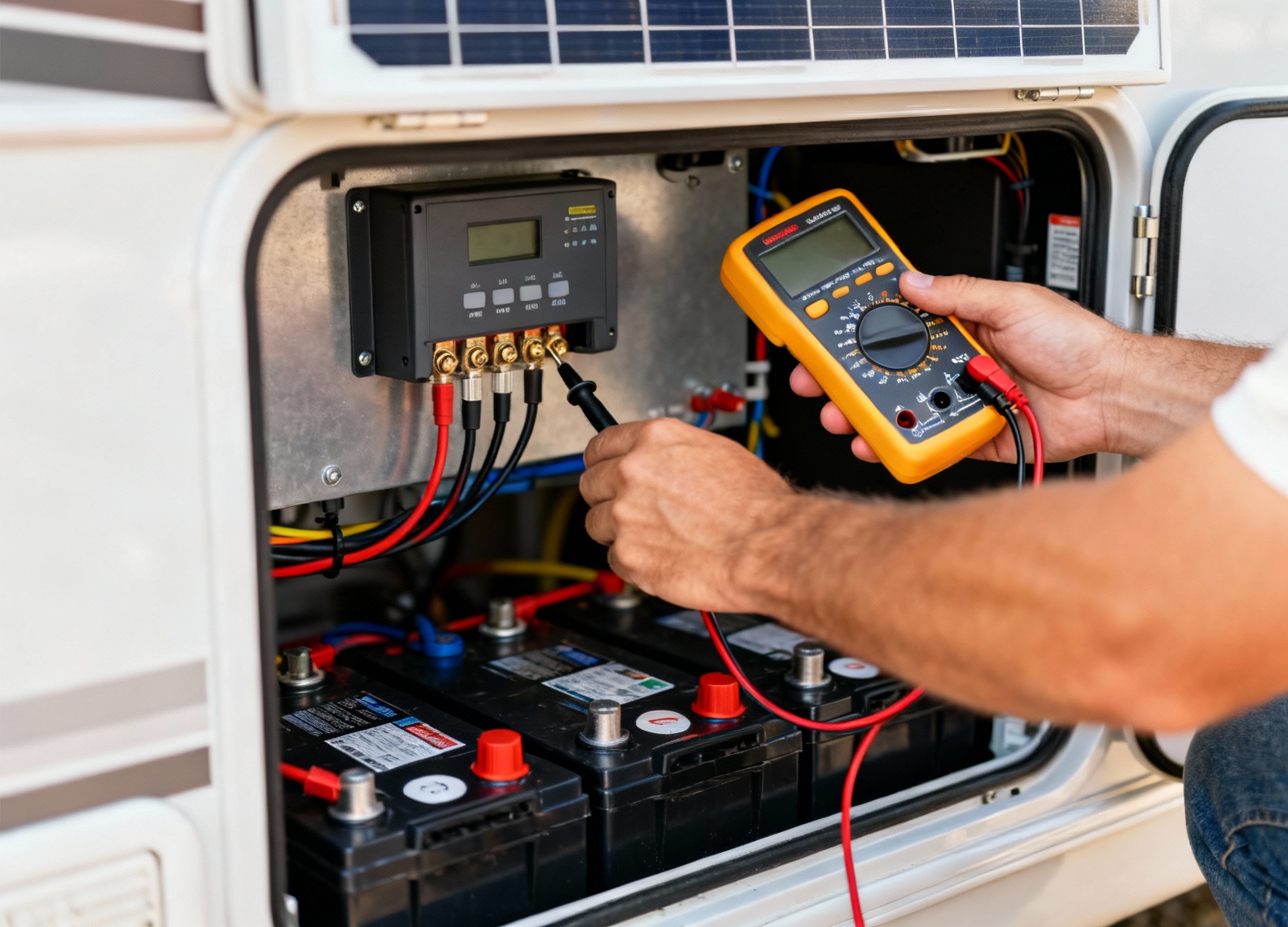
Comparison Table
| Model | Type | Key Specs | Best for | Pros | Cons |
|---|---|---|---|---|---|
| Victron SmartSolar 100/30 | MPPT | 100V/30A, 12V/24V, Bluetooth | Most RVers seeking reliability | Excellent tracking, great app, strong warranty | Premium price, no built-in display |
| Renogy Rover 40A | MPPT | 100V/40A, 12V/24V, LCD display | Budget-conscious buyers | Great value, built-in display, 40A capacity | Bluetooth costs extra, less refined tracking |
| Victron SmartSolar 150/60 | MPPT | 150V/60A, 12V/24V/48V, Bluetooth | Large systems, full-timers | High capacity, series wiring flexibility, expandable | Expensive, overkill for small systems |
| EPEVER Tracer 4215BN | MPPT | 150V/40A, 12V/24V, temp sensor | Mid-size systems on a budget | High voltage input, includes temp sensor | Lower build quality, support challenges |
| Go Power! GP-RVC-MPPT-30 | MPPT | 30A, 12V only, pre-set profiles | Plug-and-play simplicity | RV-specific design, great support | Limited customization, 12V only |
| RICH SOLAR Bravo Flush 40 | MPPT | 40A, 12V/24V, LCD display | Entry-level budget builds | Low price, decent display | Less proven reliability, basic tracking |
| Victron SmartSolar 75/15 | MPPT | 75V/15A, 12V/24V, Bluetooth | Small systems, single panels | Compact, premium quality, great app | Limited capacity, still premium priced |
Which One Should You Buy?
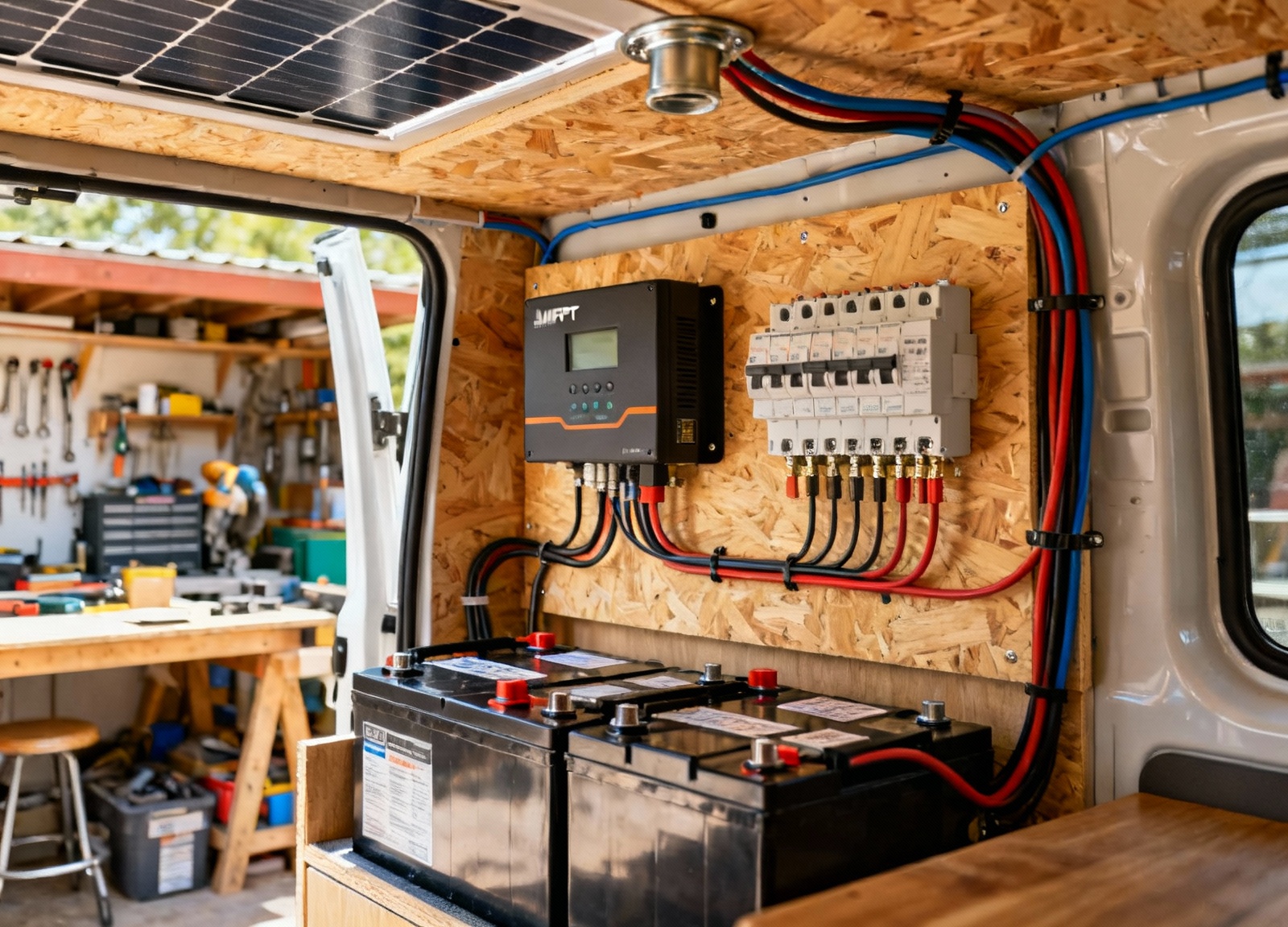
Your ideal controller depends on your system size, budget, and how much you value monitoring features. Here’s my straightforward advice based on real-world scenarios:
Weekend campers with 100-200W systems: The Victron SmartSolar 75/15 gives you premium quality without overspending on capacity you won’t use. If budget is tight, the Renogy Rover 20A (smaller sibling of the 40A) works well too.
Part-time RVers with 200-400W systems: This is where the Victron SmartSolar 100/30 shines. It handles typical RV arrays beautifully and leaves room for a modest expansion. If you’re watching your budget, the Renogy Rover 40A delivers solid performance at a friendlier price point.
Full-timers and serious boondockers with 400W+ systems: Invest in the Victron SmartSolar 150/60. The higher voltage input simplifies wiring on large arrays, and the 60A capacity means you won’t need to parallel controllers as your system grows. The premium price pays dividends in reliability and performance over years of daily use.
First-time solar installers who want simplicity: The Go Power! GP-MPPT-30 takes the guesswork out of setup with RV-specific defaults and excellent documentation. You’ll pay a slight premium for that convenience, but the peace of mind is worth it for many RVers.
Safety & Common Mistakes
Before installing your MPPT controller, keep these safety essentials in mind to protect both yourself and your equipment:
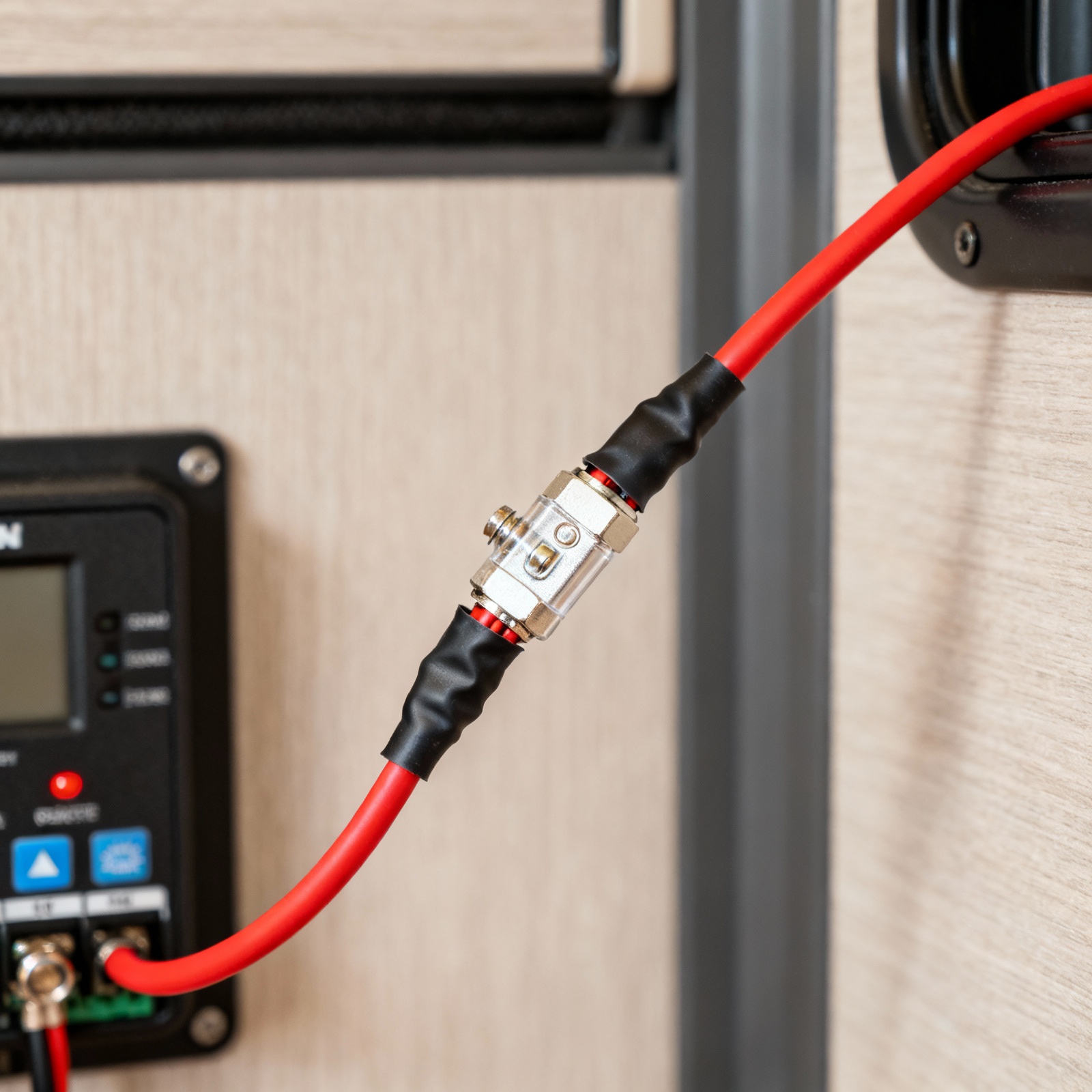
- Install a correctly sized fuse within 18 inches of the battery positive terminal—this protects against catastrophic shorts in the wiring between battery and controller.
- Choose wire gauge based on both current and run length; aim for ≤3% voltage drop to maximize efficiency and prevent overheating.
- Use proper battery and array disconnects; always de-energize the system before working on connections.
- Wear appropriate PPE (safety glasses, insulated gloves) when working with batteries—even 12V systems can deliver dangerous short-circuit currents.
- Double-check polarity before connecting—reversed connections can instantly destroy your controller and void the warranty.
- Mount the controller in a ventilated location; MPPT controllers generate heat during charging and need airflow to maintain efficiency.
Always consult a qualified electrician if you’re unsure about any aspect of your installation.
Recommended Gear
- Victron SmartSolar MPPT 100/30 — View on Amazon
- Renogy 100W Monocrystalline Panel — View on Amazon
- Battle Born 100Ah LiFePO4 Battery — View on Amazon
FAQs
- How many watts of solar can my MPPT controller handle? Multiply your controller’s amp rating by your battery voltage for a rough maximum. A 30A controller on a 12V system handles approximately 400W of panels, while the same controller on 24V handles around 800W. Always check the manufacturer’s specific recommendations, as input voltage limits also factor in.
- Which is better, a PWM or MPPT solar charge controller? MPPT controllers are significantly more efficient, typically harvesting 15-30% more energy than PWM controllers—especially in cold weather or when panels operate above their nominal voltage. The efficiency gains usually justify the higher cost for any system over 100W, and MPPT is essential when using higher-voltage panels designed for grid-tie applications.
- Do I need lithium-compatible settings on my controller? Absolutely—if you’re using LiFePO4 batteries, your controller must support their specific charge profile (typically 14.2-14.6V absorption for 12V systems). Using lead-acid settings on lithium batteries can cause undercharging or trigger the BMS to disconnect. All controllers on this list support lithium profiles, but always verify settings before connecting.
- Will an MPPT controller help in winter conditions? Yes, and this is where MPPT really shines. Cold temperatures boost panel voltage significantly—sometimes 20% or more above rated specs. MPPT controllers convert that extra voltage into usable charging current, while PWM controllers simply waste it. Expect 10-25% better energy harvest in cold, variable conditions compared to PWM.
- Can I use multiple MPPT controllers on one battery bank? Yes, multiple MPPT controllers can charge the same battery bank simultaneously. Each controller operates independently, tracking its own array’s maximum power point. This approach is often more practical than buying one massive controller, and it provides redundancy—if one controller fails, the others keep charging.
- How do I know if my controller is working properly? Monitor your daily harvest (amp-hours or watt-hours) and compare it to expected output based on your panel wattage and sun hours. A healthy system should harvest roughly 4-6 watt-hours per watt of panels on a good summer day. Sudden drops in harvest—without weather changes—indicate potential issues with panels, wiring, or the controller itself.
As an Amazon Associate, we earn from qualifying purchases. This helps keep SunAmpRV running.