
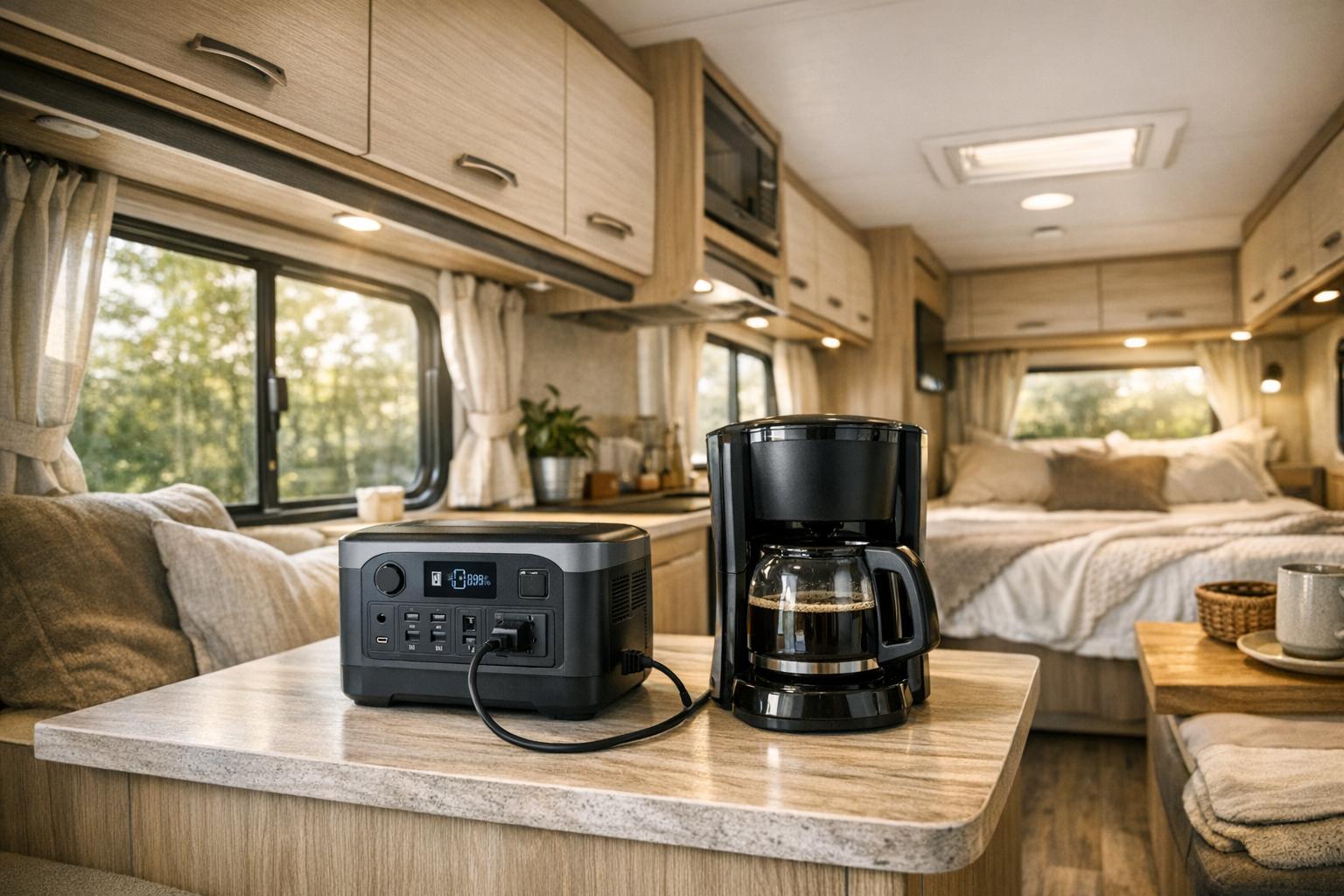
Choosing the right portable power station for your RV isn’t about finding the “best” unit—it’s about matching the right capacity, weight, and features to how you actually camp. A weekend warrior at developed campgrounds has vastly different needs than a boondocker chasing solitude in the desert for two weeks straight.
TL;DR — Best Picks
Best Overall: EcoFlow DELTA 2 Max – Massive 2,048Wh expandable capacity with 2,400W output handles nearly any RV appliance while charging remarkably fast.
Best Budget: Jackery Explorer 500 – Reliable 518Wh capacity at an accessible price point perfect for occasional campers running basic electronics.
Best for Extended Boondocking: Bluetti AC200MAX – 2,048Wh base capacity expandable to 8,192Wh with modular batteries makes it ideal for off-grid independence.
Best by Use-Case
Boondocking & Off-Grid
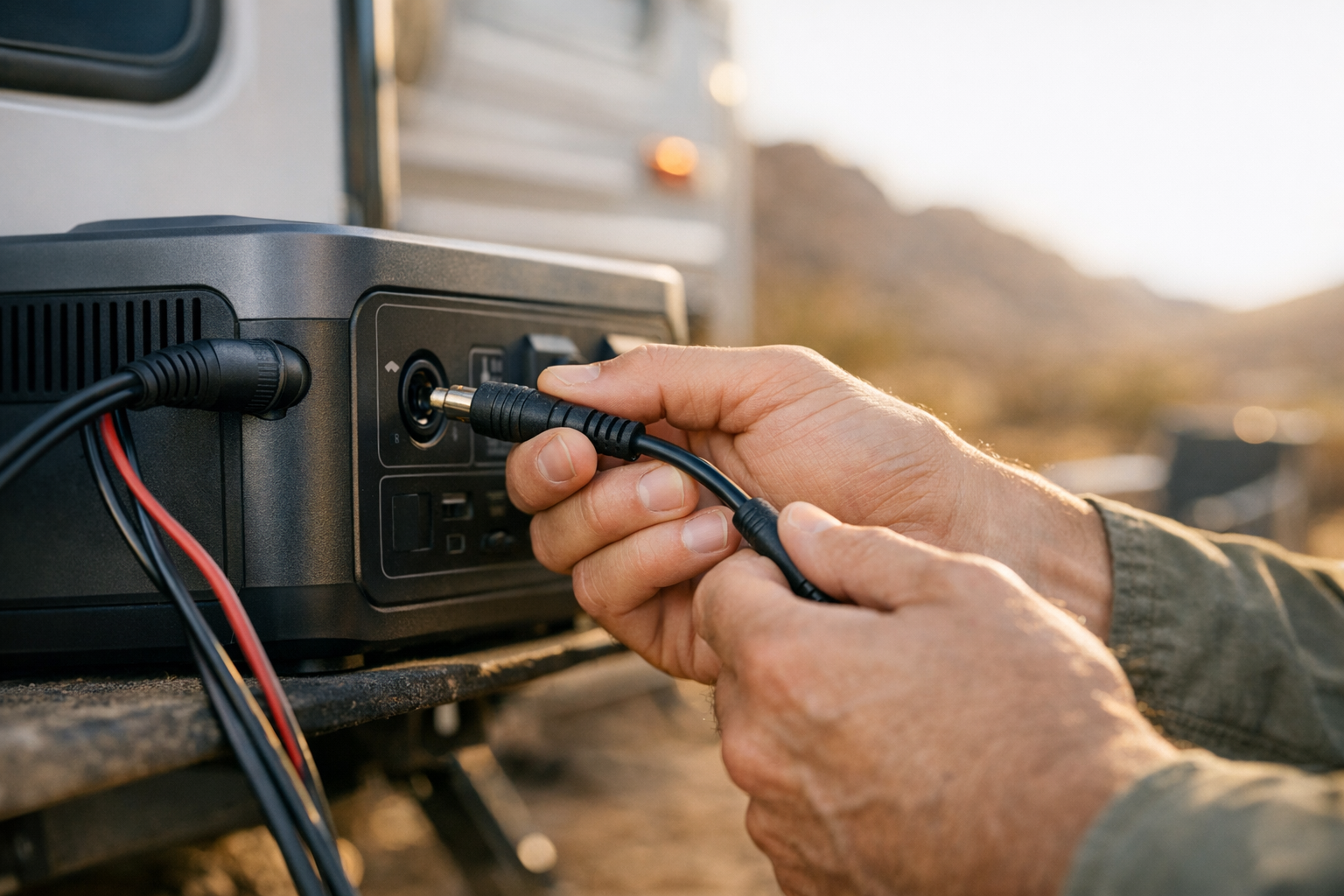
If you’re a boondocker who measures trips in weeks rather than nights, your power station becomes the heart of your electrical system. You need serious capacity, robust solar input capability, and the reliability to run day after day without shore power.
The Bluetti AC200MAX delivers exactly this with its 2,048Wh LiFePO4 battery, expandable to a staggering 8,192Wh with additional B230 or B300 expansion batteries. Its 900W solar input means you can realistically replenish significant capacity even on partly cloudy days. View on Amazon
- Pro: LiFePO4 chemistry offers 3,500+ cycles—roughly 10 years of daily use
- Pro: Dual charging capability lets you combine solar and AC simultaneously
- Pro: 2,200W continuous output runs most RV air conditioners
- Con: Base unit weighs 61.9 lbs, requiring two people to move comfortably
- Con: Premium pricing reflects professional-grade build quality
For boondockers who want slightly more portability without sacrificing capability, the EcoFlow DELTA 2 Max offers 2,048Wh capacity with expansion potential to 6,144Wh. Its X-Boost technology pushes output to 2,400W, handling demanding appliances that would trip lesser units. Up to 1,000W solar input can recharge the battery quickly under ideal conditions. View on Amazon
- Pro: Industry-leading charge speed—0-80% in 65 minutes via AC
- Pro: Smart app control lets you monitor and adjust settings remotely
- Con: LFP battery adds weight compared to older lithium-ion models
Budget Weekender
If you’re hitting developed campgrounds most weekends with occasional dry camping mixed in, you don’t need a power station that could run a small apartment.
The Jackery Explorer 500 hits the sweet spot with 518Wh capacity—enough to charge phones, run a CPAP machine, power a small fan, and keep your camera batteries topped off for an entire weekend. At roughly 13 lbs, it’s genuinely portable and won’t dominate your storage compartment. View on Amazon
- Pro: Intuitive interface requires zero learning curve
- Pro: Proven reliability with thousands of positive long-term reviews
- Pro: Compatible with Jackery’s affordable SolarSaga panels
- Con: 500W continuous output won’t run high-draw appliances
- Con: Older lithium-ion chemistry means fewer total cycles than LiFePO4
Stepping up slightly, the Anker 757 PowerHouse offers 1,229Wh capacity with LiFePO4 longevity at a mid-range price point. Its 1,500W output handles blenders, small heaters, and most kitchen appliances. The InfiniPower technology and 5-year warranty provide peace of mind for campers who want budget-friendly reliability without sacrificing too much capability. View on Amazon
- Pro: LiFePO4 battery rated for 3,000 cycles
- Pro: HyperFlash technology enables rapid recharging
- Con: 43.9 lbs makes it less portable than smaller units
Winter Camper
Cold-weather camping introduces challenges that catch many RVers off guard. Lithium batteries lose capacity in freezing temperatures, and some won’t charge at all below 32°F (0°C) without risking permanent damage.
If you’re chasing snow or camping through shoulder seasons, you need a power station designed for the cold. The Bluetti AC200P can run winter essentials, but follow the manufacturer’s low-temperature charging limits to avoid battery damage. Its 2,000Wh capacity runs electric blankets, heated mattress pads, and space heaters that make winter camping comfortable rather than merely survivable. View on Amazon
- Pro: Strong cold-weather performance when operated within the manufacturer’s temperature limits
- Pro: 700W solar input maximizes harvest during short winter days
- Pro: 2,000W output handles electric heating appliances
- Con: 60.6 lbs requires planning for placement and transport
- Con: Older model lacks some smart features of newer units
The EcoFlow DELTA Pro represents the premium winter camping solution with its 3,600Wh capacity and sophisticated battery management. It’s designed for cold-weather use, and the unit can be paired with EcoFlow’s Smart Generator for hybrid power during extended storms when solar harvest drops to near zero. View on Amazon
- Pro: Expandable to 25kWh for serious off-grid capability
- Pro: 3,600W output runs virtually any RV appliance
- Con: Premium price point reflects professional-grade specifications
Lightweight / Minimalist
Van lifers, teardrop trailer owners, and minimalist campers face a fundamental constraint: every pound matters, and every cubic inch of storage is precious.
If you’re running a simple setup—phone charging, laptop work, LED lighting, maybe a small 12V fridge—you don’t need a 60-pound behemoth. The Goal Zero Yeti 500X packs 505Wh into a compact 12.9 lb package with a footprint smaller than a shoebox. Its MPPT charge controller guide maximizes solar efficiency, and the tank-like build quality has made Goal Zero a favorite among overlanders who demand reliability in rough conditions. View on Amazon
- Pro: Exceptional build quality with aluminum housing
- Pro: Chainable with Yeti expansion batteries if needs grow
- Pro: Integrated MPPT controller optimizes solar charging
- Con: Lower capacity limits high-draw appliance use
- Con: Premium pricing compared to similar-capacity competitors
For the ultimate in portability, the Jackery Explorer 300 Plus weighs just 8.27 lbs while delivering 288Wh of LiFePO4 power. It’s small enough to toss in a backpack for dispersed camping or keep permanently mounted in a teardrop’s limited storage. The 300W output handles all essential electronics without the bulk of larger units. View on Amazon
- Pro: Ultra-portable at under 9 lbs
- Pro: LiFePO4 chemistry provides 3,000+ cycle lifespan
- Con: Limited capacity requires conservative power management
Buyer’s Notes
Beyond capacity and output, several factors deserve consideration before purchasing.
Battery chemistry matters significantly. LiFePO4 (lithium iron phosphate) batteries cost more upfront but deliver 3,000-3,500 cycles compared to 500-800 cycles for standard lithium-ion. For daily users, this translates to roughly 10 years versus 2-3 years of service life.
Solar input capacity determines how quickly you can replenish your battery. A 2,000Wh station with only 200W solar input will take all day to recharge, while the same capacity with 500W+ input can recover from heavy use by early afternoon. Match your solar panels to your station’s maximum input for optimal performance.
Consider pass-through charging capability if you plan to use the station while connected to shore power or solar. Not all units handle this gracefully, and some will cycle the battery unnecessarily, reducing lifespan. Premium units like the EcoFlow DELTA series and Bluetti AC200 line manage this intelligently.
Warranty terms vary dramatically across manufacturers. Jackery and EcoFlow typically offer 2-year warranties extendable to 5 years, while Bluetti provides 4 years standard on many models. Goal Zero backs their products with 2 years but has an exceptional customer service reputation. Factor warranty coverage into your total cost of ownership calculation.
Comparison Table
| Model | Capacity | Output | Weight | Best For | Key Advantage |
|---|---|---|---|---|---|
| Bluetti AC200MAX | 2,048Wh (exp. to 8,192Wh) | 2,200W | 61.9 lbs | Extended boondocking | Massive expandability |
| EcoFlow DELTA 2 Max | 2,048Wh (exp. to 6,144Wh) | 2,400W | 50 lbs | All-around performance | Fastest charging speed |
| Jackery Explorer 500 | 518Wh | 500W | 13.3 lbs | Budget weekenders | Proven reliability, great price |
| Anker 757 PowerHouse | 1,229Wh | 1,500W | 43.9 lbs | Mid-range value | LiFePO4 at budget price |
| Bluetti AC200P | 2,000Wh | 2,000W | 60.6 lbs | Winter camping | Cold-weather charging |
| EcoFlow DELTA Pro | 3,600Wh (exp. to 25kWh) | 3,600W | 99 lbs | Premium off-grid | Highest capacity/output |
| Goal Zero Yeti 500X | 505Wh | 300W | 12.9 lbs | Minimalist/overlanding | Rugged build quality |
| Jackery Explorer 300 Plus | 288Wh | 300W | 8.27 lbs | Ultra-light camping | Maximum portability |
Which One Should You Buy?
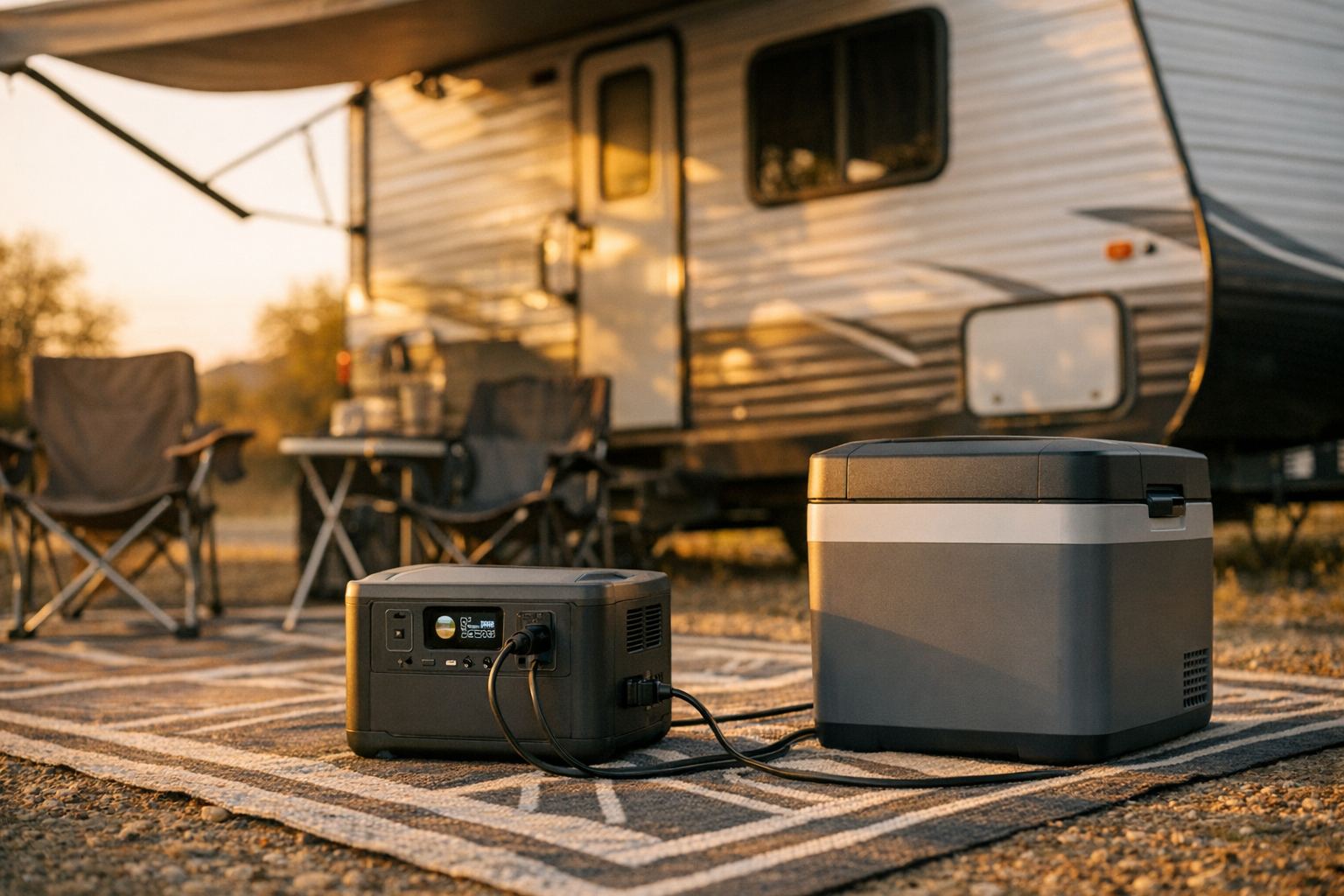
Your camping style should drive your decision more than any spec sheet comparison.
If you’re a dedicated boondocker who measures success by days without hookups, invest in the Bluetti AC200MAX—its expandability means your system grows with your ambitions, and the LiFePO4 chemistry will outlast your RV.
Weekend warriors and occasional dry campers should grab the Jackery Explorer 500 without overthinking it. It handles the basics reliably, costs less than a tank of diesel, and has proven itself across millions of camping trips. Sometimes the best gear is the gear you’ll actually use.
Cold-weather enthusiasts need the Bluetti AC200P’s self-heating battery management—there’s simply no substitute when temperatures drop below freezing. Damaging a lithium battery by charging in the cold is an expensive lesson you only want to learn once.
Van lifers and minimalists prioritizing every ounce should choose the Goal Zero Yeti 500X for its unmatched build quality in a portable package, or the Jackery Explorer 300 Plus if absolute minimum weight trumps all other considerations.
Safety & Common Mistakes
- Never charge lithium batteries below 32°F (0°C) unless your unit has built-in cold-weather protection—permanent capacity loss results from cold charging.
- Store your power station between 30-80% charge for long-term storage; fully charged or depleted batteries degrade faster.
- Use only manufacturer-approved solar panels and cables; mismatched voltage can damage the internal charge controller.
- Keep ventilation clear during heavy use—power stations generate heat, and blocked vents can trigger thermal shutdowns or reduce lifespan.
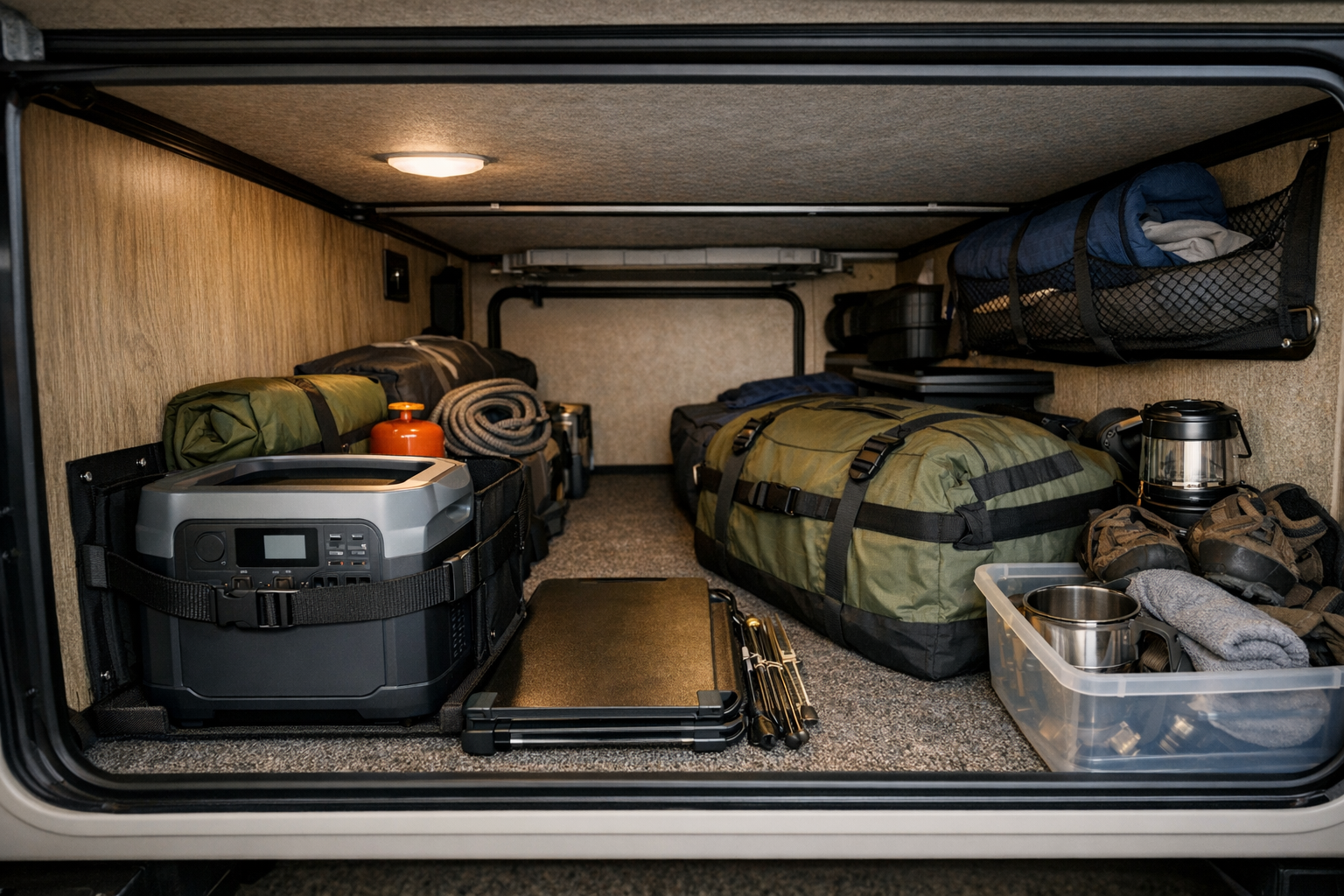
- Secure your power station during travel; a 60-pound unit becomes a dangerous projectile in a sudden stop.
Always consult your specific unit’s manual for operating temperature ranges and charging specifications.
Recommended Gear
- Victron SmartSolar MPPT 100/30 — View on Amazon
- Renogy 100W Monocrystalline Panel — View on Amazon
- Battle Born 100Ah LiFePO4 Battery — View on Amazon
FAQs
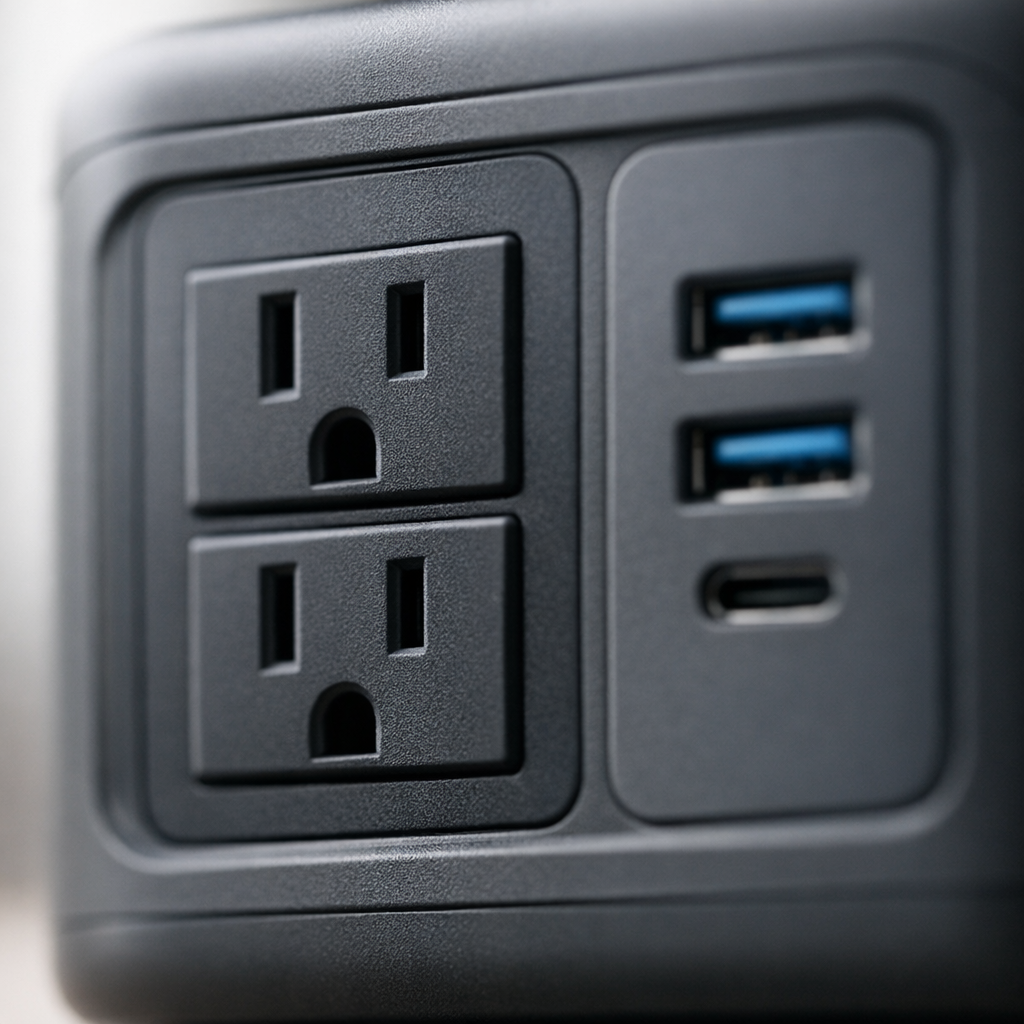
- Can I plug my RV into a portable power station? Yes, but with limitations. Most portable power stations output 120V AC through standard household outlets, not 30A or 50A RV plugs. You can use an adapter to connect smaller RVs, but you’ll be limited to the station’s continuous wattage—typically 1,500-3,600W. This works for lights, electronics, and small appliances but won’t run rooftop air conditioners on most units.
- How big of a power station do I need for my RV? Calculate your daily watt-hour consumption first. A typical RV running LED lights, phone charging, a laptop, and a 12V fridge uses 500-800Wh daily. Add a CPAP machine (150-300Wh), TV (100-200Wh), or coffee maker (single use: 100-150Wh) as needed. Choose a station with 1.5-2x your daily usage to avoid deep discharges that reduce battery lifespan.
- Are portable power stations worth it for camping? Absolutely, especially for RVers who boondock or camp at sites without hookups. They’re quieter than generators, require no fuel storage, produce no emissions, and need minimal maintenance. The upfront cost is higher than a basic generator, but the convenience, silence, and longevity make them worthwhile for most camping styles.
- How long will a portable power station run my RV refrigerator? A typical 12V compressor fridge draws 30-50W while running, cycling on roughly 30-40% of the time. This translates to approximately 300-500Wh per day. A 1,000Wh power station would run most RV fridges for 2-3 days; a 2,000Wh unit extends this to nearly a week with moderate solar input supplementing the battery.
- Can I charge a portable power station while driving my RV? Yes, most power stations accept 12V DC input through a car charging cable. However, charging rates are typically limited to 100-200W through this method, meaning a full charge could take 10-20+ hours of driving. For faster mobile charging, consider a DC-DC charger or dedicated alternator charging setup for serious boondockers.
As an Amazon Associate, we earn from qualifying purchases. This helps keep SunAmpRV running.