
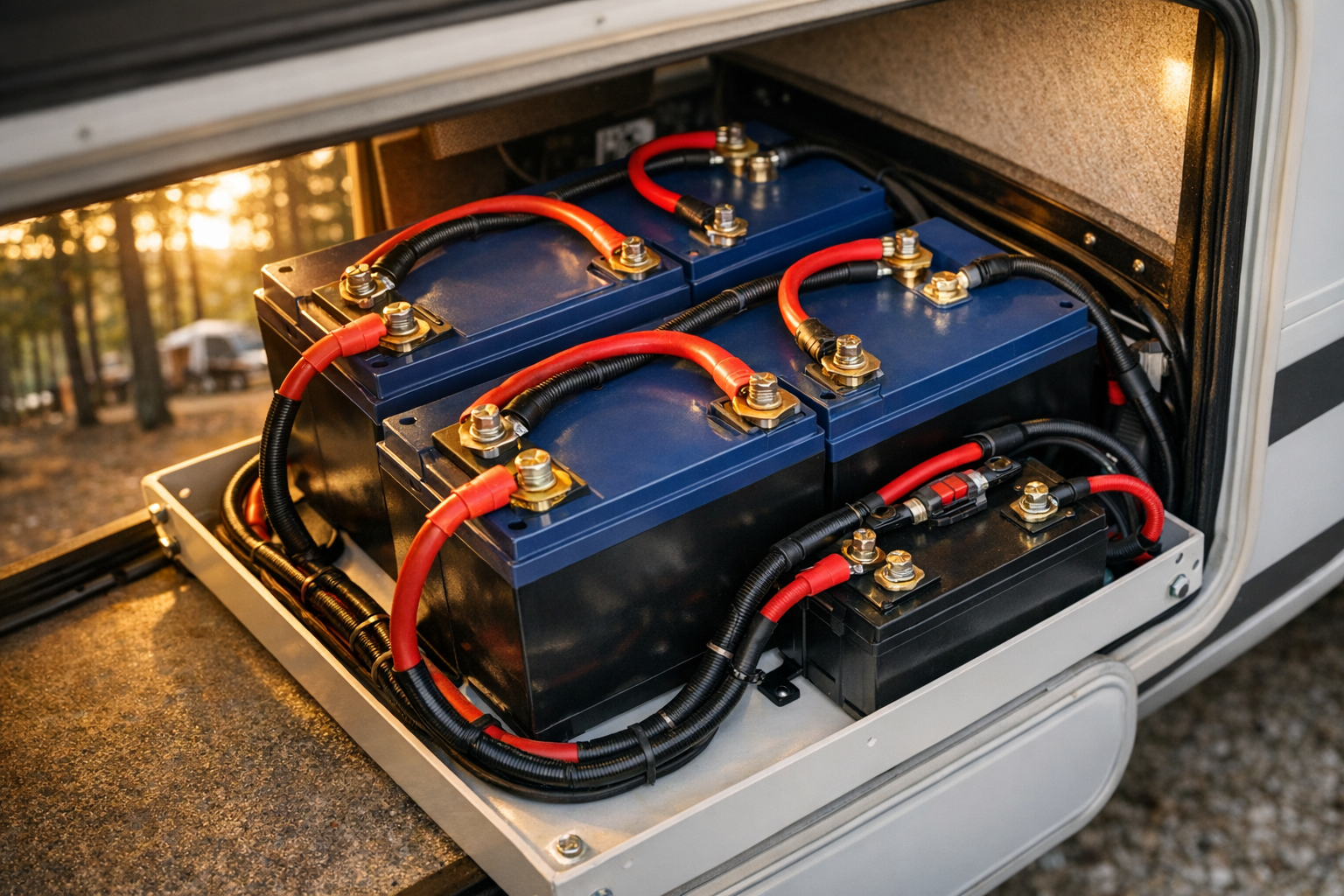
You’re parked at a remote desert campsite with no hookups, your fridge is humming, your phone needs charging, and the sun just dipped below the horizon. How long before your lights go dark? That answer depends entirely on how many amp hours your RV battery bank can deliver — and whether you sized it correctly for your actual energy needs.
Choosing the right battery bank capacity is the single most important electrical decision you’ll make for your RV. Get it wrong and you either run out of power at the worst possible moment or haul around expensive, unnecessary weight. This guide ranks the best RV battery options by amp hour capacity, breaks down exactly how to calculate what you need, and helps you match the right battery bank to your camping style.
TL;DR
- Best Overall: Battle Born BB10012 (100Ah LiFePO4) — Proven reliability, full 100Ah usable capacity, and easy parallel expansion for any bank size.
- Best Budget: Ampere Time 12V 100Ah LiFePO4 — Excellent lithium performance at roughly half the price of premium brands.
- Best for Boondocking: Victron Energy Smart Lithium 200Ah — A single high-capacity battery with Bluetooth monitoring that covers most off-grid needs.
- Best for Full-Time Off-Grid: SOK 206Ah 12V LiFePO4 — Massive usable capacity in one unit with a robust BMS for heavy daily cycling.
- Best Lead-Acid Value: Trojan T-105 6V (225Ah) — The gold standard flooded lead-acid golf cart battery for budget-conscious RVers building a 12V bank.
Understanding Amp Hour Ratings
An amp hour (Ah) is a unit of electrical charge that tells you how much current a battery can deliver over time. A 100Ah battery can theoretically supply 1A for 100 hours, 5A for 20 hours, or 10A for 10 hours. In practical RV terms, amp hours represent your “fuel tank” for everything running on 12V DC power — lights, water pump, refrigerator, fans, and any devices powered through an inverter.
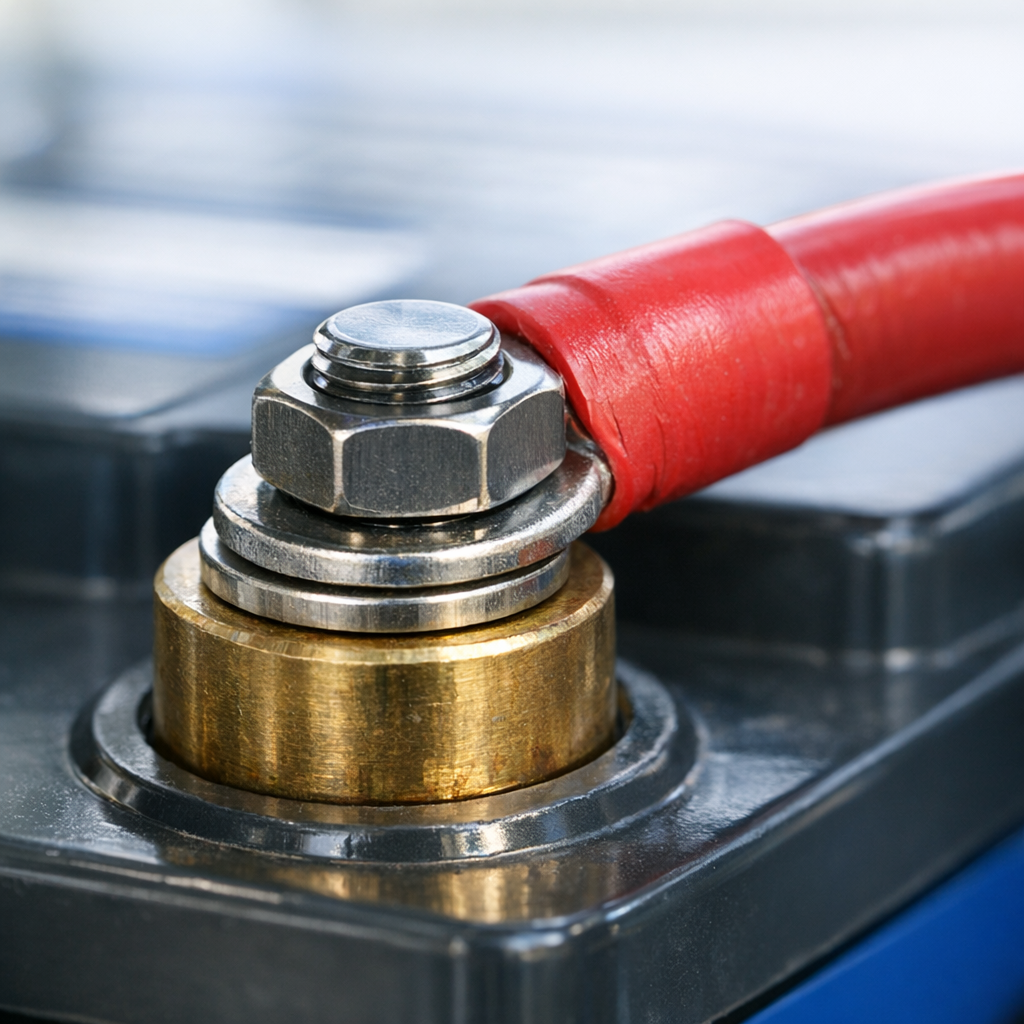
The amp hour rating stamped on a battery is measured under specific conditions, typically a 20-hour discharge rate (C/20). Discharging faster than that rated speed reduces the actual energy you can extract. When you’re running multiple appliances simultaneously, you’re pulling amps faster than that gentle 20-hour rate, so real-world capacity is often slightly less than the label suggests.
Usable Capacity: Lead-Acid vs. Lithium
The number on the battery label is not the number you can actually use.
Lead-acid batteries (including AGM and flooded types) should only be discharged to about 50% of their rated capacity to avoid permanent damage and shortened lifespan. A 200Ah lead-acid bank really gives you only about 100Ah of usable power. Lithium iron phosphate (LiFePO4) batteries can safely be discharged to 80–100% of their rated capacity. Most manufacturers recommend staying above 10–20% state of charge, giving you roughly 80–90% usable capacity.
This single difference is why a 200Ah lithium bank can replace a 400Ah lead-acid bank — and why battery chemistry is inseparable from the question of how many amp hours you actually need.
List Your RV Appliances and Their Power Draw
Start by inventorying every electrical device you plan to use. For each item, note its power consumption in amps (at 12V) or watts. If you only have watts, divide by 12 to get approximate amps:
- LED lights (5–8 fixtures): 2–5A total
- 12V refrigerator: 3–5A (compressor cycling)
- Water pump: 4–8A (intermittent)
- Furnace fan: 6–8A
- Phone/laptop charging: 1–3A
- TV (via inverter): 3–5A
- Vent fans: 1–3A
- Inverter standby draw: 0.5–1A
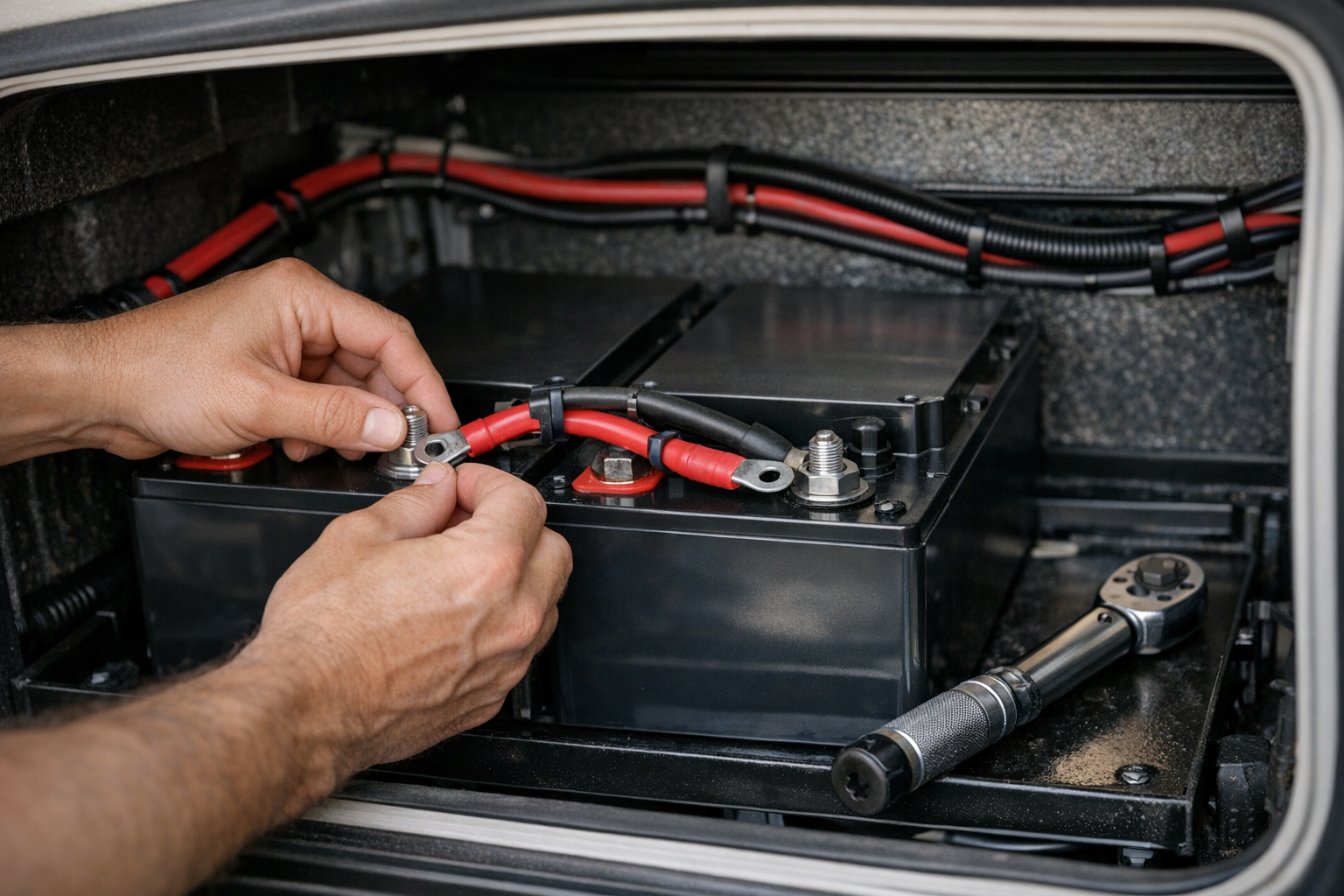
If you run AC appliances through an inverter, account for 10–15% efficiency losses. A 600W microwave actually pulls about 700W from your battery bank once you factor in inverter overhead.
Estimate Daily Amp Hour Consumption
Multiply each appliance’s amp draw by the number of hours you expect to use it per day. A 12V fridge drawing 4A that cycles roughly 8 hours per day uses 32Ah. LED lights running 5 hours at 3A total use 15Ah. Add everything up for your daily consumption figure.
Most RVers land between 75 and 150Ah per day for moderate use — lights, fridge, water pump, phone charging, and a couple hours of TV or laptop. Heavy users running residential refrigerators, coffee makers, hair dryers, or air conditioning through inverters can easily exceed 200–300Ah per day.
Factor in Days of Autonomy
If you’re always at campgrounds with shore power, your battery bank only needs to cover overnight use and brief transitions — maybe 50–100Ah of actual draw. For boondocking, multiply your daily consumption by the number of days you want to go without recharging (or between solar harvest cycles).
A common target for boondockers is two to three days of autonomy. At 100Ah per day, that’s 200–300Ah of usable capacity. With lithium batteries, a 300Ah bank covers this. With lead-acid, you’d need a 600Ah bank for the same usable energy — a massive difference in weight, space, and cost.
Weekend Campground Use (100–200Ah)
If you primarily camp at developed campgrounds with electrical hookups and only need battery power for overnight quiet hours or short drives between sites, 100–200Ah of lithium capacity (or 200–400Ah of lead-acid) is plenty. A single 100Ah lithium battery is the minimum viable setup; 200Ah gives you a comfortable buffer.

Extended Boondocking (200–400Ah)
This is where most serious RVers land. If you spend weekends or weeks off-grid, running a 12V fridge, lights, fans, and moderate electronics, 200–400Ah of lithium capacity is the target. Paired with 200–400W of solar panels, this range sustains indefinite boondocking in sunny conditions and provides a two-to-three-day cushion during cloudy stretches. The 200–400Ah range is the sweet spot that experienced boondockers consistently recommend across RV forums and communities.
Full-Time Off-Grid Living (400Ah+)
Full-timers living in their RV year-round without regular hookup access — especially those running residential refrigerators, induction cooktops, washing machines, or air conditioning — need 400Ah or more of lithium capacity. Some full-time off-gridders run 600–800Ah banks paired with 800+ watts of solar and high-capacity inverter/chargers. At this level, you’re building a small off-grid home power system.
— Battle Born BB10012 100Ah LiFePO4 (Best Overall)
The Battle Born BB10012 has become the de facto standard in the RV lithium battery world. Each unit delivers a true 100Ah of usable capacity in a Group 27 form factor that drops into most existing RV battery compartments. The internal BMS protects against overcharge, over-discharge, short circuits, and extreme temperatures. At roughly 31 pounds per battery, it’s a fraction of the weight of an equivalent lead-acid setup.
What makes the Battle Born ideal for sizing your bank is its modularity. Need 200Ah? Wire two in parallel. Need 400Ah for full-time boondocking? Four units. The company supports paralleling up to four batteries, and many users run more with proper fusing. US-based customer support and a 10-year warranty provide confidence that cheaper brands can’t match. At around $900 per unit, they’re not cheap — but the 3,000–5,000 cycle lifespan means the cost per cycle is competitive with lead-acid over time.
Best for: RVers who want a proven, modular system they can expand over time.
— Ampere Time (LiTime) 12V 100Ah LiFePO4 (Best Budget Lithium)
Ampere Time (now branded as LiTime) has disrupted the RV lithium market by offering solid LiFePO4 batteries at roughly half the price of Battle Born. Their 12V 100Ah unit weighs about 24 pounds, includes a built-in BMS with low-temperature cutoff protection, and delivers the same fundamental chemistry as batteries costing twice as much.
For RVers calculating amp hour needs on a budget, the math becomes much more favorable here. You can build a 200Ah lithium bank for roughly the price of a single premium battery. The trade-off? Customer support is less responsive, the warranty period is shorter (5 years), and some users report slightly less consistent quality control. For the vast majority of RV applications — especially a 200–300Ah bank for weekend boondocking — these batteries perform admirably.
Best for: Budget-conscious RVers who want lithium benefits without the premium price tag.
— Victron Energy Smart Lithium 12.8V 200Ah (Best Single High-Capacity Battery)
If you want to minimize complexity and get your entire battery bank into a single unit, the Victron Smart Lithium 200Ah is the premium choice. Victron is a Dutch company with decades of experience in marine and off-grid power systems, and their build quality reflects it. The integrated Bluetooth module lets you monitor state of charge, voltage, and temperature from your phone — genuinely useful when you’re learning your actual daily consumption patterns.
At 200Ah in a single battery, this unit covers most boondockers’ needs without any parallel wiring. It integrates seamlessly with Victron’s ecosystem of inverter/chargers, solar charge controllers, and monitoring systems. The downside is price — Victron commands a significant premium. But for RVers who value reliability, data, and a cohesive system, it’s hard to beat.
Best for: RVers who want a single, high-quality 200Ah battery with smart monitoring.
— SOK 12V 206Ah LiFePO4 (Best for Full-Time Off-Grid)
SOK has earned a strong following among full-time RVers and van lifers for offering high-capacity lithium batteries with robust BMS systems at competitive prices. Their 206Ah unit packs serious energy into a single battery, and two in parallel give you a 412Ah bank that handles virtually any off-grid lifestyle.
The SOK 206Ah features a 200A continuous BMS with Bluetooth monitoring, low-temperature charging protection, and support for paralleling up to four units (824Ah total). At roughly 50 pounds, it’s heavier than smaller lithium units but still dramatically lighter than the lead-acid equivalent. Full-time boondockers consistently praise SOK for the balance of capacity, features, and value — more amp hours per dollar than most competitors.
Best for: Full-time off-grid RVers who need 400Ah+ capacity and want maximum amp hours per dollar.
— Trojan T-105 6V 225Ah Flooded Lead-Acid (Best Lead-Acid Value)
Not everyone is ready to invest in lithium. The Trojan T-105 remains the gold standard for RVers building a lead-acid battery bank. These 6V golf cart batteries are wired in series pairs to create 12V, and you can parallel multiple pairs to reach your desired capacity. Two T-105s in series give you 225Ah at 12V (about 112Ah usable at 50% depth of discharge). Four T-105s give you 450Ah total (225Ah usable).
At roughly $150–180 per battery, a four-battery T-105 bank costs under $750 and delivers usable capacity comparable to a single 200Ah lithium battery. The trade-offs are significant: each battery weighs about 62 pounds (248 pounds for four), they require regular watering and equalization charging, and they last only 500–1,000 cycles. But for RVers on a tight budget who camp occasionally, the upfront savings are substantial.
Best for: Budget-conscious RVers who don’t mind maintenance and want proven lead-acid reliability.
— Renogy 12V 200Ah Smart LiFePO4 (Best Mid-Range 200Ah)
Renogy’s 200Ah lithium battery features a self-heating function that allows charging in temperatures as low as -4°F (-20°C) — a critical feature for RVers who camp in cold climates where most lithium batteries refuse to accept a charge. The built-in Bluetooth BMS provides real-time monitoring through Renogy’s app.
Priced between Ampere Time and Victron, the Renogy 200Ah hits a comfortable middle ground. It pairs naturally with Renogy solar panels and charge controllers. The 200Ah capacity handles moderate boondocking needs in a single battery, and two in parallel create a 400Ah bank for full-time off-grid use.
Best for: RVers in cold climates or those already using Renogy solar equipment.
— AIMS Power 12V 100Ah AGM (Best AGM for Campground RVers)
AGM (Absorbed Glass Mat) batteries occupy a middle ground between flooded lead-acid and lithium. They’re maintenance-free, spill-proof, and can be mounted in any orientation. The AIMS Power 100Ah AGM is a reliable, no-fuss option for RVers who primarily use campgrounds and need a simple battery replacement.
With AGM, you still face the 50% depth-of-discharge limitation, so a 100Ah AGM gives you roughly 50Ah of usable capacity. Two in parallel provide 100Ah usable — enough for overnight campground use. AGM batteries typically last 300–500 cycles at 50% DOD, making them the least cost-effective option long-term. But their low upfront cost and zero maintenance appeal to casual campers who don’t want to think about their battery system.
Best for: Casual campground RVers who want a simple, maintenance-free drop-in replacement.
— EcoFlow Delta Pro + Smart Extra Battery (Best Portable Alternative)
An unconventional pick that addresses a real use case. The EcoFlow Delta Pro is a 3.6kWh (roughly 300Ah at 12V equivalent) portable power station expandable with additional batteries. For RVers who don’t want to rewire their electrical system or commit to a permanent battery bank upgrade, the Delta Pro offers plug-and-play high-capacity power.
You can charge it from shore power, solar panels, or your vehicle’s alternator, and it outputs both AC and DC power. It’s not a traditional RV battery bank — it sits inside your RV as a standalone unit — but for renters, occasional campers, or those with newer RVs they don’t want to modify, it provides serious capacity without any installation. The downside is cost: the Delta Pro plus an extra battery runs well over $3,000, and it takes up interior living space.
Best for: RVers who want high capacity without permanent electrical modifications.
Is It Better to Have 2 100Ah Batteries or 1 200Ah Battery?
This is one of the most frequently debated questions in RV battery forums. The honest answer: it depends on your priorities.
Two 100Ah batteries offer redundancy — if one fails, you still have 100Ah. They’re easier to handle physically (30 lbs each vs. 50+ lbs for a single 200Ah unit) and easier to replace individually. If your battery compartment has an awkward shape, two smaller batteries may fit where one large one won’t.
A single 200Ah battery simplifies wiring (no parallel connections), reduces potential points of failure, and often costs slightly less than two equivalent 100Ah units from the same brand. A single battery with one BMS also ensures perfectly balanced cell management, whereas two batteries in parallel rely on each unit’s BMS independently.
In practice, the performance difference is minimal. If you’re building 400Ah or more, using two 200Ah batteries in parallel keeps the system manageable. The key rule: never mix batteries of different ages, brands, or chemistries in the same bank.
Comparison Table
| Model | Type | Key Specs | Best for | Pros | Cons | Where to buy |
|---|---|---|---|---|---|---|
| Battle Born BB10012 100Ah | LiFePO4 | 100Ah, 12V, 31 lbs, 3,000–5,000 cycles | Modular bank building | Proven reliability, 10-year warranty, easy to parallel | Premium price (~$900), 100Ah per unit requires multiples | Amazon ↗ |
| Ampere Time 12V 100Ah LiFePO4 | LiFePO4 | 100Ah, 12V, 24 lbs, 4,000+ cycles | Budget lithium bank | Excellent price-to-capacity ratio, lightweight | Shorter warranty, less consistent QC reports | Amazon ↗ |
| Victron Smart Lithium 200Ah | LiFePO4 | 200Ah, 12.8V, ~55 lbs, Bluetooth BMS | Single-battery boondocking | Premium build, Bluetooth monitoring, Victron ecosystem | Very expensive, heavy for lithium | Amazon ↗ |
| SOK 12V 206Ah LiFePO4 | LiFePO4 | 206Ah, 12V, ~50 lbs, 200A BMS, Bluetooth | Full-time off-grid | High capacity per unit, strong BMS, good value | Heavier, less brand recognition | Amazon ↗ |
| Trojan T-105 6V 225Ah | Flooded Lead-Acid | 225Ah, 6V, 62 lbs, 500–1,000 cycles | Budget lead-acid bank | Very low upfront cost, widely available, proven track record | Heavy, requires maintenance, only 50% usable | Amazon ↗ |
| Renogy 12V 200Ah Smart LiFePO4 | LiFePO4 | 200Ah, 12V, self-heating, Bluetooth BMS | Cold-climate RVing | Self-heating for cold weather, Renogy ecosystem, Bluetooth | Mid-premium price, heavier than some competitors | Amazon ↗ |
| AIMS Power 12V 100Ah AGM | AGM Lead-Acid | 100Ah, 12V, ~66 lbs, 300–500 cycles | Campground drop-in | Maintenance-free, low upfront cost, spill-proof | Only 50Ah usable, short cycle life, heavy | Amazon ↗ |
| EcoFlow Delta Pro | Portable LiFePO4 Station | 3.6kWh (~300Ah equiv.), expandable, AC/DC output | No-install portable power | No wiring needed, massive capacity, versatile outputs | Very expensive, takes interior space, not a traditional bank | Amazon ↗ |
Recommended Gear
- Victron SmartSolar MPPT 100/30 — View on Amazon
- Renogy 100W Monocrystalline Panel — View on Amazon
- Battle Born 100Ah LiFePO4 Battery — View on Amazon
FAQs
- Do I need lithium-compatible settings? Ensure your controller supports LiFePO4 profiles and proper voltages.
- What gauge wire should I use for solar? Match wire gauge to amperage and run length; 10 AWG handles 30 A up to about 15 ft.
- Can I install solar panels myself? Yes, with basic tools and safety precautions. Always disconnect batteries first.
- How long do solar panels last on an RV? Quality monocrystalline panels typically last 25+ years with minimal degradation.
As an Amazon Associate, we earn from qualifying purchases. This helps keep SunAmpRV running.