
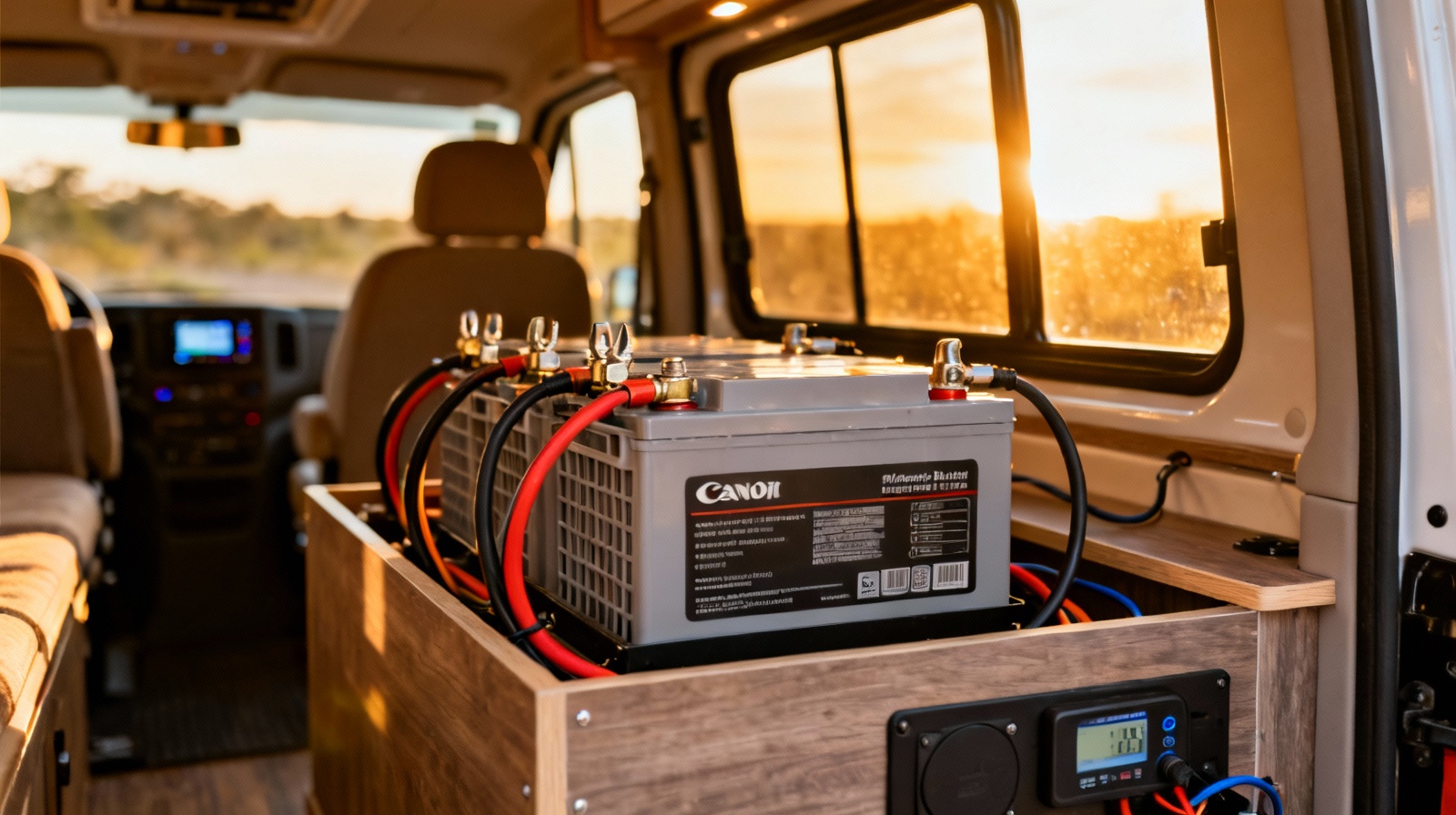
Choosing the right 200Ah LiFePO4 battery for your RV isn’t just about capacity—it’s about matching the battery to how you actually camp. A weekend warrior has vastly different demands than someone boondocking for weeks in the desert, and the “best” battery changes depending on your climate, weight constraints, and budget.
TL;DR — Best Picks
Best Overall: Battle Born 100Ah (x2 in parallel) – Premium build quality, 10-year warranty, and exceptional customer support make this the gold standard for serious RVers.
Best Budget: Redodo 12V 200Ah – Delivers reliable performance at roughly half the price of premium brands with solid BMS protection.
Best for Cold Weather: LiTime 12V 200Ah Self-Heating – Built-in low-temperature charging cutoff and self-heating for winter camping.
Best by Use-Case
Boondocking & Off-Grid
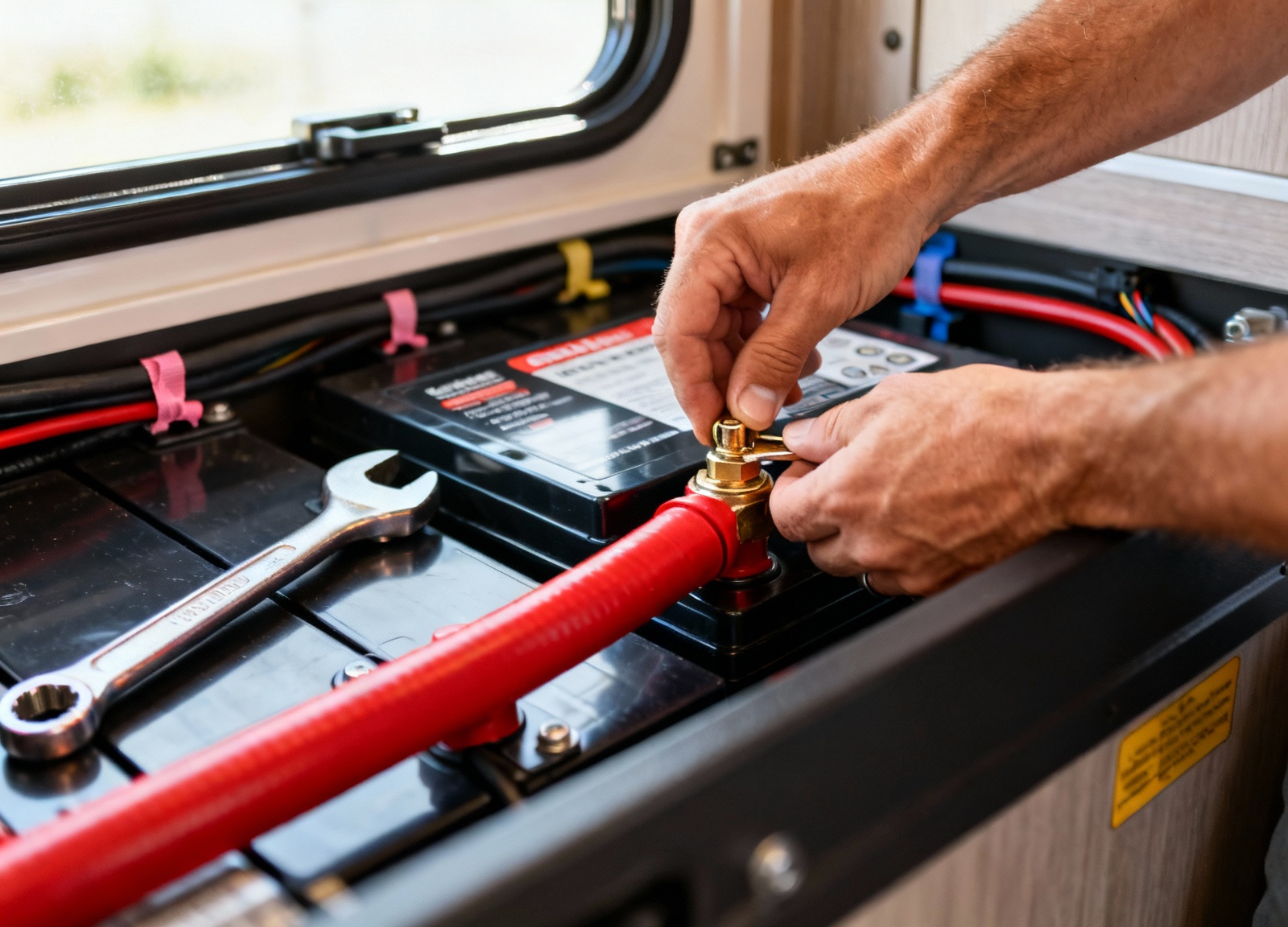
If you’re the type who measures success by how many days you can stay off-grid without firing up a generator, your battery bank is the heart of your system. Extended boondocking demands not just capacity, but reliability, deep discharge tolerance, and robust thermal management. You need a battery that won’t flinch when you’re running the fridge, charging laptops, and powering lights for a week straight in the Arizona backcountry.
For serious off-gridders, the Battle Born 100Ah batteries configured in parallel remain the top recommendation. Yes, you’re buying two units to reach 200Ah, but the modularity offers advantages: easier installation in tight spaces, redundancy if one cell develops issues, and the legendary Battle Born warranty and support. Each unit weighs about 31 pounds, includes an internal BMS, and is designed for long cycle life. View on Amazon
- Pro: Industry-leading 10-year warranty with responsive US-based support
- Pro: Proven track record in extreme temperatures (-4°F to 135°F operating range)
- Pro: Modular design allows flexible installation and future expansion
- Con: Premium pricing—expect to pay $1,800+ for 200Ah total capacity
- Con: Requires parallel wiring and additional cables
An excellent single-unit alternative is the SOK 12V 206Ah, which has earned a cult following in the DIY solar community for its transparent cell sourcing and 200A BMS. It’s a workhorse that handles heavy loads without breaking a sweat. View on Amazon
- Pro: 200A continuous discharge handles high-draw appliances
- Pro: Excellent value-to-performance ratio for premium features
- Con: Heavier at about 50 pounds—installation location matters
Budget Weekender
Not everyone needs a battery that can survive a month in Death Valley. If your RV adventures consist of weekend trips to established campgrounds with occasional dry camping, spending $2,000 on batteries doesn’t make financial sense.
The good news? Budget LiFePO4 options have matured significantly, offering genuine lithium benefits without the premium price tag.
The Redodo 12V 200Ah has emerged as the value champion in this space. At roughly $400-500, it delivers 2,560Wh of usable capacity with a 100A BMS and supports 4,000+ cycles. The company has built a solid reputation for customer service, and some models add Bluetooth monitoring. For weekend warriors running basic loads—LED lights, phone charging, a 12V fridge, and maybe a CPAP—this battery handles it all without drama. View on Amazon
- Pro: Exceptional price-to-capacity ratio
- Pro: Built-in Bluetooth monitoring on current models
- Pro: 5-year warranty with responsive support
- Con: 100A BMS limits high-draw applications
- Con: Less proven long-term track record than premium brands
The LiTime 12V 200Ah offers similar value with slightly different trade-offs. It’s become one of Amazon’s best-sellers for good reason—consistent quality, reasonable pricing around $400, and a growing community of satisfied users. View on Amazon
- Pro: Strong Amazon presence means easy returns if issues arise
- Pro: Compatible with most standard charging profiles
- Con: Customer service can be slower than premium brands
Winter Camper
Cold weather is lithium’s Achilles heel—or at least it used to be. Standard LiFePO4 cells cannot accept a charge below 32°F without risking permanent damage from lithium plating. If you’re chasing powder in Colorado or camping through Canadian winters, you need a battery specifically designed for cold-weather operation.
The LiTime 12V 200Ah Self-Heating solves this problem elegantly. When temperatures drop below 32°F, the integrated heating system activates automatically, warming the cells before accepting charge. This means your solar panels can charge the battery even on frigid mornings without you lifting a finger. The heating draws from the battery itself, so you’ll want adequate solar input to compensate, but it’s a game-changer for four-season camping. View on Amazon
- Pro: Self-heating activates automatically—no manual intervention needed
- Pro: Low-temperature charging cutoff protects cells if heating fails
- Pro: Priced competitively against non-heated premium options
- Con: Heating consumes 50-100W, reducing net charge in extreme cold
- Con: Adds complexity and potential failure point
For those who prefer a premium option, Battle Born offers heated versions of their batteries, though at a significant price premium. The advantage is their proven reliability and warranty support.
Lightweight / Minimalist
Van lifers, teardrop trailer owners, and anyone counting ounces knows that every pound matters. A 50-pound battery might not sound heavy until you’re wrestling it into a cramped compartment or calculating your cargo carrying capacity.
The Dakota Lithium 12V 200Ah strikes an impressive balance, coming in at 44 pounds—lighter than many competitors while maintaining robust performance. Dakota has built their reputation on durability, and their 11-year warranty reflects that confidence. The battery handles 2,000+ cycles and features a 150A BMS for higher-draw applications.
- Pro: Lighter than most 200Ah competitors
- Pro: Industry-leading 11-year warranty
- Pro: 150A BMS supports larger inverters
- Con: Premium pricing similar to Battle Born
- Con: Slightly lower cycle rating than some competitors
If you can sacrifice some capacity for significant weight savings, consider running two 100Ah units from any reputable brand. This approach typically saves 5-10 pounds total while offering installation flexibility—critical in space-constrained vans where battery placement options are limited.
Buyer’s Notes
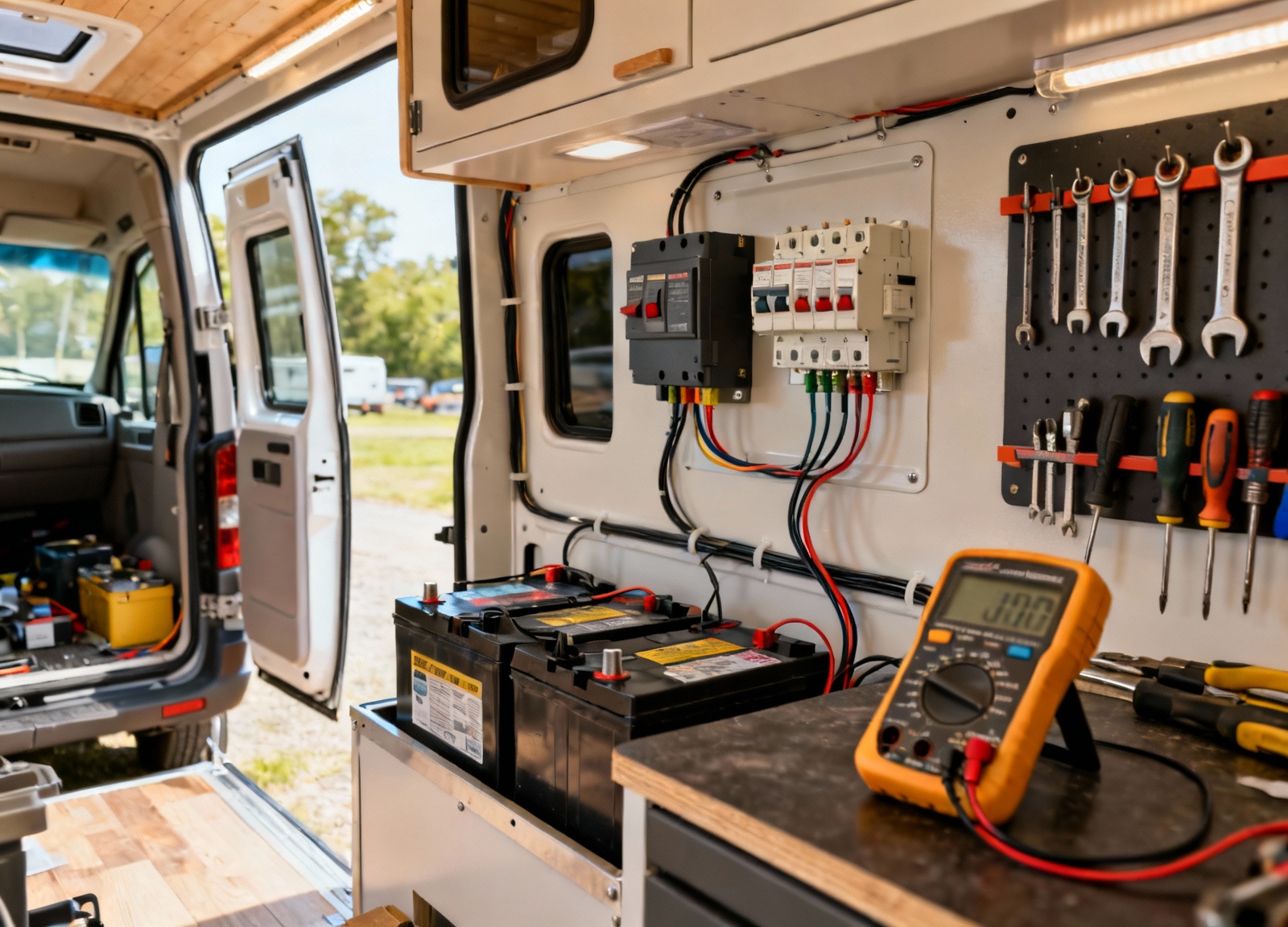
Beyond the headline specs, several factors deserve consideration before you commit to a battery:
BMS compatibility matters. Most LiFePO4 batteries want a charging voltage between 14.2V and 14.6V. If your RV’s converter or alternator charges at 13.8V (common in older rigs), you’ll never fully charge the battery. Verify your charging sources can be adjusted or plan to upgrade them.
Warranty terms vary wildly. A 10-year warranty means nothing if the company won’t exist in 10 years. Battle Born and Dakota Lithium have established track records. Newer budget brands may offer generous warranties, but their long-term viability remains unproven. Consider this when weighing price differences.
Bluetooth monitoring is increasingly standard on mid-range and premium batteries. This feature lets you check state of charge, cell voltages, and temperature from your phone—invaluable for diagnosing issues and optimizing your system.
Physical dimensions matter more than you’d think. A 200Ah battery won’t fit in every battery compartment. Measure twice, order once. Some RVers find that two 100Ah batteries fit where a single 200Ah won’t.
Comparison Table
| Model | Capacity | Weight | BMS Rating | Best For | Warranty | Price Range |
|---|---|---|---|---|---|---|
| Battle Born 100Ah (x2) | 200Ah | 62 lbs total | Internal BMS | Boondocking, reliability-focused | 10 years | $1,800+ |
| SOK 12V 206Ah | 206Ah | 50 lbs | 200A | High-draw off-grid systems | 7 years | $800-900 |
| Redodo 12V 200Ah | 200Ah | 44 lbs | 100A | Budget weekenders | 5 years | $400-500 |
| LiTime 12V | 200Ah | 44 lbs | 100A | Budget-conscious campers | 5 years | $400-450 |
| LiTime 200Ah Self-Heating | 200Ah | 43.3 lbs | 100A | Winter/cold-weather camping | 5 years | $550-650 |
| Dakota Lithium 12V 200Ah | 200Ah | 44 lbs | 150A | Weight-conscious, high-draw | 11 years | $1,100-1,300 |
Which One Should You Buy?
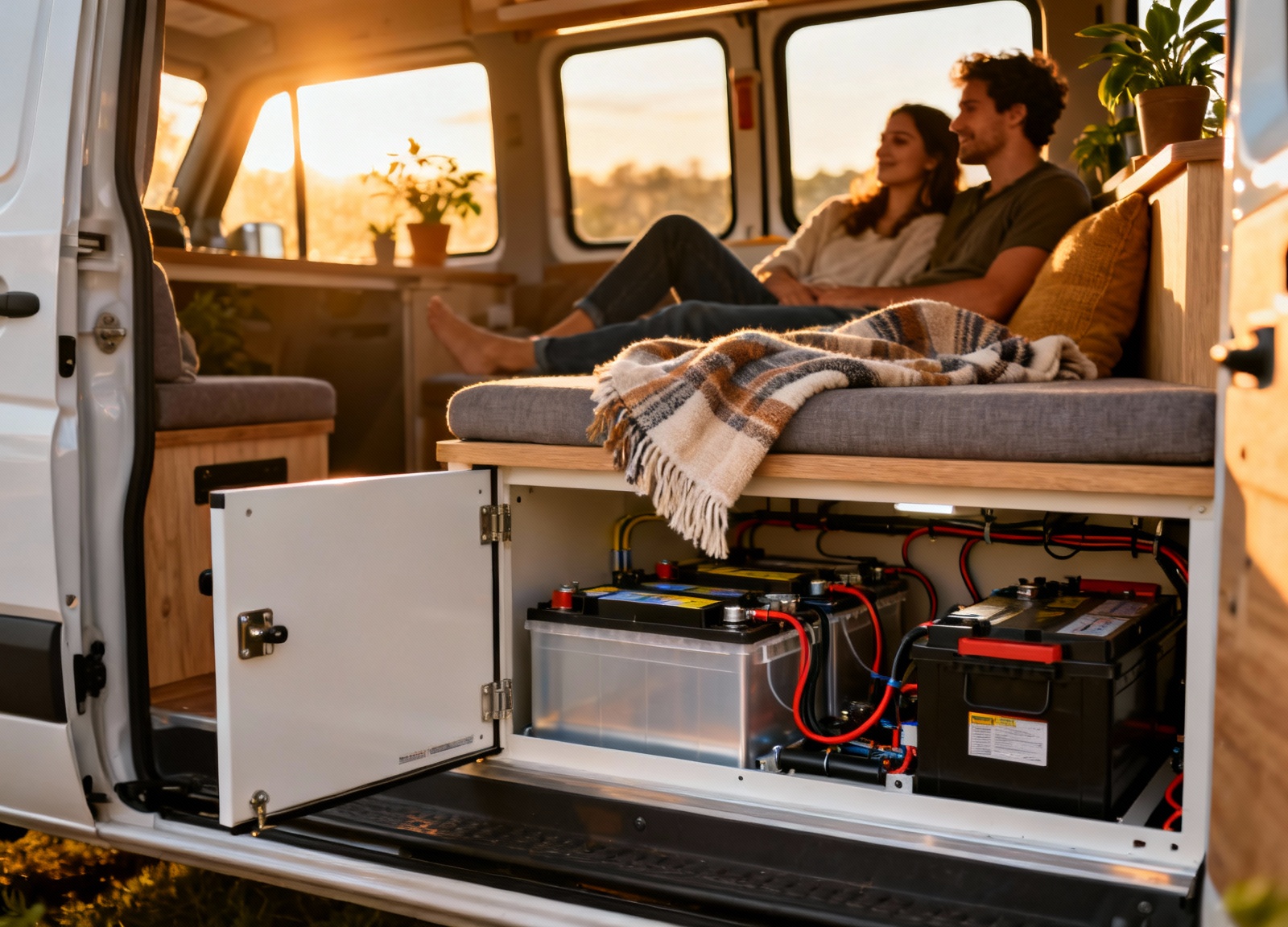
Your camping style should drive your decision, not marketing hype or forum debates.
If you’re a dedicated boondocker who values reliability above all else and plans to keep this RV for years, invest in the Battle Born setup. The premium price buys peace of mind, exceptional support, and a battery bank that will outlast your RV. The SOK 206Ah offers similar performance at a lower price point if you’re comfortable with a slightly less established brand.
Weekend warriors and occasional campers should grab the Redodo 200Ah without hesitation. It delivers 90% of the performance at 25% of the premium price. The money you save can go toward solar panels, a better inverter, or more camping trips.
Cold-weather campers need the LiTime 200Ah Self-Heating. Trying to save money with a standard battery and external heating solutions adds complexity and failure points. The integrated heating just works.
Van lifers and weight-conscious travelers should consider the Dakota Lithium 200Ah for its lighter weight and robust BMS, or explore the two-100Ah-battery approach for maximum installation flexibility.
Safety & Common Mistakes
No matter which battery you choose, proper installation is non-negotiable. LiFePO4 batteries are remarkably safe compared to other lithium chemistries, but they still demand respect:
- Install a correctly sized fuse close to the battery positive terminal—typically a Class T fuse rated for your BMS’s maximum output plus a safety margin.
- Choose wire gauge for the expected current and run length; target ≤3% voltage drop. For 200Ah batteries with 100A+ draws, 2/0 AWG or larger is common for main runs.
- Use proper battery and array disconnects; de-energize before any work. LiFePO4 batteries can deliver massive short-circuit currents.
- Double-check polarity before connecting—reverse polarity will destroy your BMS instantly.
- Secure all cables with strain relief and protect from chafing. Vibration in RVs can wear through insulation over time.
- Ensure adequate ventilation. While LiFePO4 batteries don’t off-gas during normal operation, thermal runaway (though rare) requires an escape path.
Always follow manufacturer installation guidelines and local electrical codes. When in doubt, consult a qualified RV electrical technician.
Recommended Gear
- Victron SmartSolar MPPT 100/30 — View on Amazon
- Renogy 100W Monocrystalline Panel — View on Amazon
- Battle Born 100Ah LiFePO4 Battery — View on Amazon
FAQs
- Is it better to have two 100Ah batteries or one 200Ah battery? Both approaches have merit. Two 100Ah batteries offer installation flexibility, easier handling (29 lbs vs 48+ lbs each), and redundancy if one fails. A single 200Ah battery simplifies wiring and typically costs slightly less. For tight spaces like vans, two smaller batteries often fit where one large one won’t.
- Is 200Ah lithium enough for RV? For most RVers, 200Ah (2,560Wh usable) handles typical loads comfortably: LED lights, 12V fridge, phone/laptop charging, water pump, and furnace fan. If you’re running air conditioning, induction cooking, or multiple high-draw appliances, you’ll want 400Ah or more. Calculate your actual daily usage before deciding.
- Can I charge LiFePO4 batteries with my existing RV converter? Maybe. Most RV converters charge at 13.6-13.8V, which won’t fully charge LiFePO4 batteries (they need 14.2-14.6V). Some converters are adjustable; others need replacement. Progressive Dynamics and WFCO offer lithium-compatible models. Check your converter’s output voltage before assuming it will work.
- How long will a 200Ah LiFePO4 battery last? Most quality 200Ah LiFePO4 batteries are rated for 2,000-5,000 cycles at 80% depth of discharge. At one cycle per day, that’s 5-14 years of daily use. Calendar life typically exceeds 10 years with proper care. You’ll likely replace your RV before wearing out a quality lithium battery.
- Do I need a special charger for LiFePO4 batteries? You need a charger that can be set to the correct voltage profile (typically 14.2-14.6V bulk/absorb, 13.6V float) and that won’t attempt equalization charging. Many modern chargers have a dedicated lithium setting. Avoid chargers designed specifically for lead-acid that can’t be adjusted.
- Can I mix LiFePO4 with my existing lead-acid batteries? This is generally not recommended. The different voltage curves and charging requirements make parallel connection problematic. If you must run both chemistries, keep them on separate circuits with appropriate charging for each. Most RVers find it simpler to convert entirely to lithium.
As an Amazon Associate, we earn from qualifying purchases. This helps keep SunAmpRV running.