

Choosing the right solar panels for your RV roof transforms how you travel—whether you’re weekend camping or living full-time off-grid, the right setup keeps your batteries charged without generator noise or hookup fees. This guide ranks the best rigid solar panels for RV rooftops based on efficiency, durability, and real-world performance across thousands of miles of road vibration and weather exposure.
The RV solar market has matured significantly over the past decade. Unlike residential installations that remain stationary, RV solar panels must withstand constant vibration, temperature extremes ranging from desert heat to mountain cold, and the aerodynamic stresses of highway travel. A panel that performs admirably on a house roof may fail prematurely when subjected to the rigors of RV life.
Modern monocrystalline panels have become the clear choice for RV applications, offering superior efficiency compared to older polycrystalline technology. This efficiency advantage translates directly into more power from limited roof space—a crucial consideration when you’re working around air conditioning units, roof vents, antennas, and skylights.
TL;DR — Best Picks
Best Overall: Renogy 200W Monocrystalline Panel – Exceptional efficiency-to-price ratio with proven RV durability and industry-leading warranty support.
Best Budget: HQST 100W Monocrystalline Panel – Reliable performance at roughly half the cost of premium brands, perfect for starter systems.
Best for Maximum Power: Rich Solar 200W Monocrystalline Panel – High-efficiency cells in a compact footprint for RVers needing serious wattage in limited roof space.
Best RV Solar Panel Picks
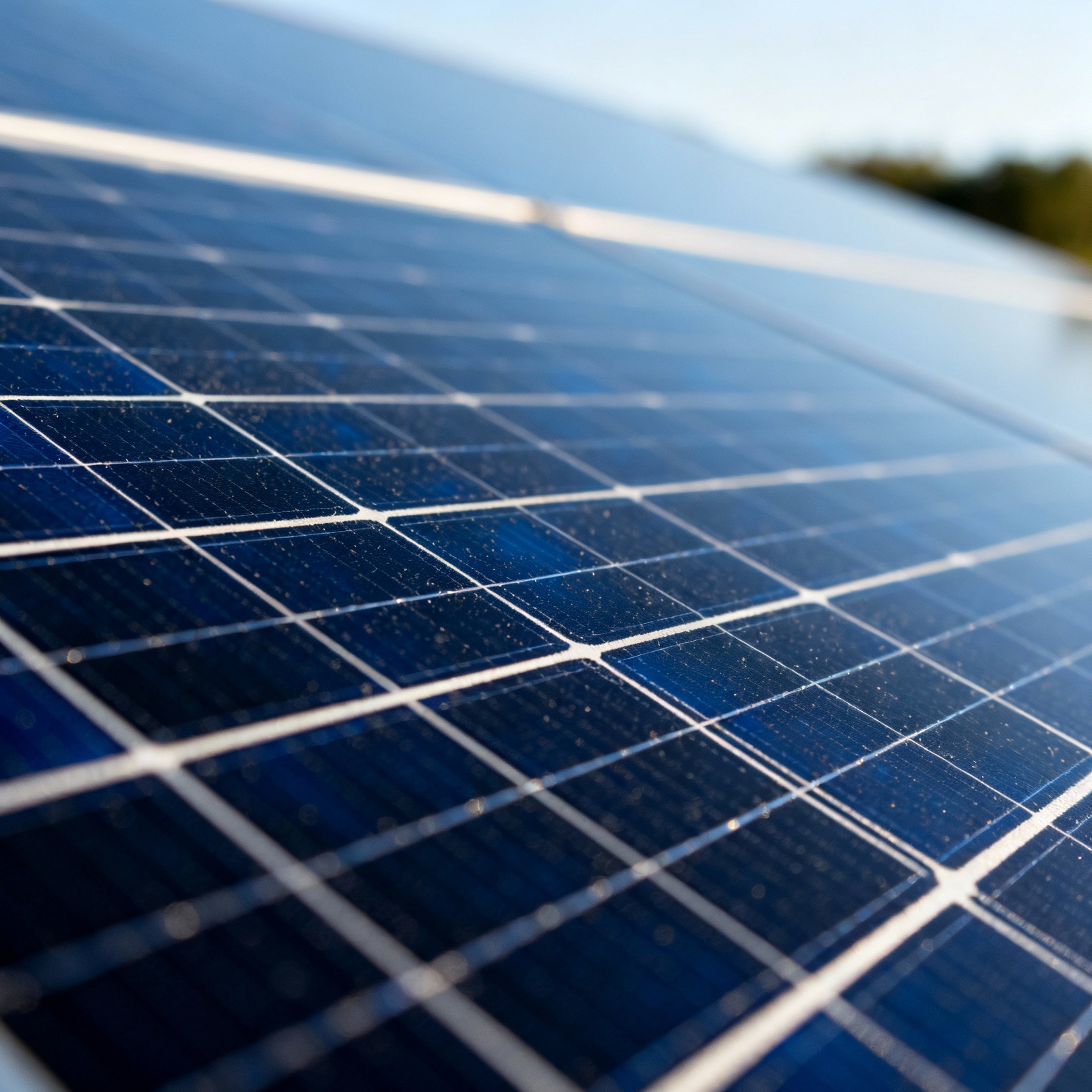
Renogy 200W Monocrystalline Solar Panel
Key Specs: 200W output, 18.1% module efficiency, 64.96 × 26.38 × 1.38 in, 26.5 lbs, corrosion-resistant aluminum frame, IP65 junction box. View on Amazon
Renogy has established itself as the dominant force in the RV solar market, and their 200W monocrystalline panel exemplifies why. This panel represents the sweet spot between power output, physical dimensions, and cost that most RV owners seek.
The panel’s construction quality stands out immediately upon inspection. The anodized aluminum frame resists the corrosion that plagues lesser panels after years of exposure to rain, road salt, and coastal air. Each corner features reinforced joints that maintain structural integrity despite the constant flexing that occurs during travel. The tempered glass surface carries a textured anti-reflective coating that improves light capture while resisting micro-scratches from dust and debris.
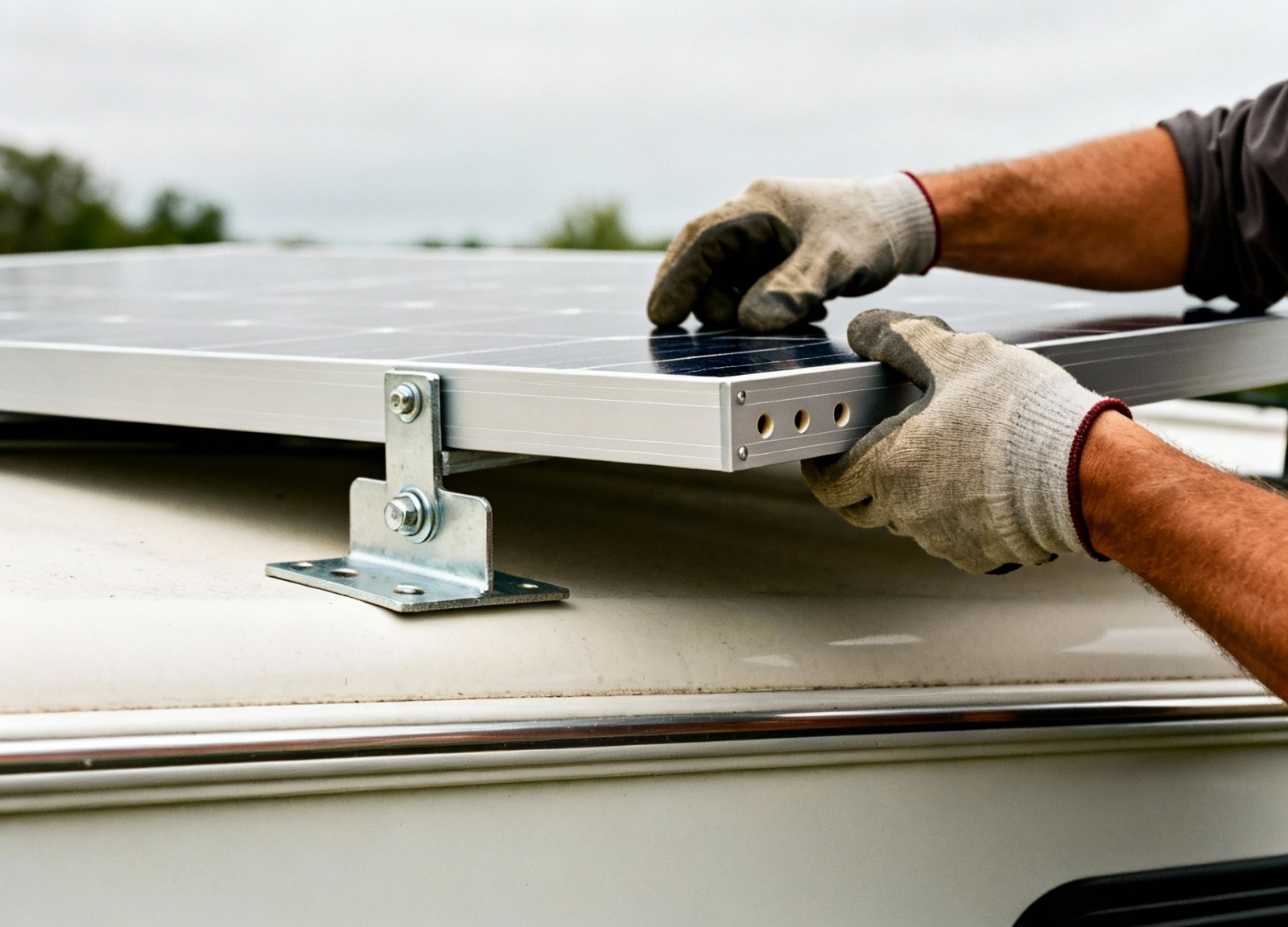
Installation proves remarkably straightforward. The pre-drilled mounting holes align with industry-standard spacing, meaning virtually any aftermarket mounting bracket will work without modification. The included MC4 connectors are genuine components rather than cheap knockoffs, ensuring reliable weatherproof connections.
- Pro: Industry-standard mounting holes align with most RV roof brackets and Z-mounts without modification
- Pro: Bypass diodes minimize power loss from partial shading—critical when trees or AC units cast shadows
- Pro: 25-year power output warranty and 5-year material warranty provide long-term peace of mind
- Pro: Pre-drilled holes and included MC4 connectors simplify DIY installation
- Con: At 26.5 lbs, requires two people for safe roof installation
- Con: Premium pricing compared to budget alternatives
Rich Solar 200W Monocrystalline Panel
200W output, 19.9% efficiency, 58.7 × 26.8 × 1.4 in, 26.5 lbs, anodized aluminum frame, IP65/67-rated junction box. View on Amazon
Rich Solar has carved out a reputation for pushing efficiency boundaries. The 21.1% cell efficiency extracts more power from each square inch of roof space than most competitors. For RV owners working with constrained roof real estate, this efficiency advantage can mean the difference between meeting power needs and falling short.
At just 58.7 inches long, it’s notably shorter than competing 200W panels while maintaining the same power output. This compact footprint opens installation possibilities on smaller RVs where longer panels simply won’t fit between obstacles.
Rich Solar uses an IP65/67-rated junction box and weather-sealed MC4 connectors that clearly reflect RV-specific challenges. Cheaper panels often stop at basic IP65 protection designed for stationary roofs, but RV panels face direct water spray at highway speeds and pressure washing during cleaning. The panel’s low-light performance particularly impresses owners who travel in the Pacific Northwest or New England where overcast skies are common.
- Pro: Higher cell efficiency means more power from a slightly smaller footprint than competitors
- Pro: IP65/67-rated junction box and weather-sealed connectors handle harsh RV weather better than basic IP65-only designs
- Pro: Excellent low-light performance captures usable power during overcast conditions
- Con: Less widespread dealer network than Renogy for warranty claims
- Con: Slightly higher price point per watt than comparable panels
HQST 100W Monocrystalline Solar Panel
Key Specs: 100W output, high-efficiency monocrystalline cells, 40.12 × 20.04 × 1.18 in, 16.5 lbs, corrosion-resistant aluminum frame, pre-drilled mounting holes and MC4 connectors. View on Amazon
HQST has built a loyal following among budget-conscious RV owners by delivering reliable performance at prices that make solar accessible to everyone. At typical street prices well below premium brands, the HQST 100W delivers solar power at roughly half the per-watt cost of many big-name competitors.
The panel’s compact dimensions and light weight make it particularly suitable for smaller RVs, travel trailers, and truck campers. At just 14.3 lbs, a single person can safely handle installation without assistance. The 40.2 × 20.4 in footprint fits into awkward spaces that larger panels cannot occupy.
HQST panels also excel as expansion units for existing systems. Many RV owners start with a single 100W panel, then add additional units as they discover their actual power consumption patterns.
- Pro: Budget-friendly entry point—often under $80—makes solar accessible for first-time installers
- Pro: Lightweight design allows single-person installation on most RV roofs
- Pro: Compact size fits awkward roof spaces between vents, antennas, and AC units
- Pro: Easy to expand—add panels as your power needs grow
- Con: Lower wattage means you’ll need multiple panels for serious power demands
- Con: Frame quality slightly below premium brands; inspect for shipping damage
Newpowa 200W Monocrystalline Panel
Key Specs: 200W output, 21% efficiency, 52.36 × 30.12 × 1.38 in, 24.4 lbs, corrosion-resistant aluminum frame, weather-sealed junction box and MC4 connectors. View on Amazon
Newpowa occupies an interesting market position, delivering near-premium performance at mid-range pricing. Their 200W panel has developed a strong following among DIY builders who appreciate the balance between cost savings and quality construction.
Real-world testing by independent RV owners consistently shows output within 2-3% of rated specifications—a testament to accurate marketing claims rather than the inflated numbers some budget brands advertise. The tempered glass withstands hail impacts up to 1 inch in diameter at 50 mph, meeting the same standards as premium panels.
The Newpowa community has developed extensive resources for DIY installers. Online forums and YouTube channels feature detailed installation guides, wiring diagrams, and troubleshooting advice specific to these panels.
- Pro: Competitive pricing undercuts major brands by 15-20% without sacrificing core performance
- Pro: Tempered glass withstands hail up to 1 inch diameter at 50 mph
- Pro: Strong community following with extensive DIY installation guides available
- Con: Customer service response times can lag during peak season
- Con: Junction box placement may require longer cable runs on some RV configurations
Renogy 100W Eclipse Monocrystalline Panel
Key Specs: 100W output, 22% cell efficiency, 40.9 × 21.0 × 1.4 in, 15 lbs, black frame and backsheet, bypass diodes. View on Amazon
The Renogy Eclipse line addresses a growing demand among RV owners who care about aesthetics as much as performance. The all-black design—including frame, backsheet, and cell appearance—creates a sleek, modern look that complements contemporary RV designs.
Beyond aesthetics, the Eclipse delivers impressive technical specifications. The 22% cell efficiency rating sits at the top of the 100W class among panels reviewed here. This efficiency advantage partially offsets the thermal penalty inherent in the black design, which absorbs more heat than traditional silver-framed panels.
The panel’s dimensions make it particularly suitable for van conversions and Class B motorhomes where every inch matters. Renogy backs the Eclipse with the same robust warranty structure as their standard panels: 25 years on power output and 5 years on materials.
- Pro: All-black aesthetic blends seamlessly with dark RV roofs and modern builds
- Pro: Highest efficiency in the 100W class maximizes output from limited space
- Pro: Same robust warranty and support as standard Renogy panels
- Con: Black backsheet runs slightly hotter, reducing output by 2-3% in extreme heat
- Con: Premium pricing for aesthetic upgrade over standard silver-frame models
BougeRV 200W Monocrystalline Panel
Key Specs: 200W output, 20% efficiency, 58.27 × 26.38 × 1.38 in, 24 lbs, anti-reflective glass, IP67 junction box. View on Amazon
BougeRV represents the newer generation of RV-focused solar brands, bringing fresh perspectives and modern manufacturing techniques to the market. Their 200W panel incorporates several features optimized specifically for mobile applications.
The anti-reflective glass coating deserves particular attention. Unlike standard tempered glass that reflects a portion of incoming light, BougeRV’s coating captures light that would otherwise bounce away. Real-world testing shows 5-10% improved harvest during morning and evening hours when the sun strikes the panel at oblique angles.
At 58.27 inches long, the panel opens installation possibilities on Class B vans and smaller travel trailers where standard 200W panels simply won’t fit. BougeRV’s customer support has earned positive reviews from early adopters, with responsive communication and reasonable warranty claim processing.
- Pro: Anti-reflective coating improves morning and evening harvest by reducing light bounce
- Pro: Compact dimensions fit Class B vans and smaller travel trailers
- Pro: Growing brand with responsive customer support and active user community
- Con: Newer market entrant with less long-term reliability data
- Con: Limited availability through traditional RV supply channels
Comparison Table
| Model | Type | Key Specs | Best for | Pros | Cons |
|---|---|---|---|---|---|
| Renogy 200W Mono | Rigid Monocrystalline | 200W, 18.1% eff, 26.5 lbs | Overall best choice | Proven reliability, excellent warranty | Premium price, heavy |
| Rich Solar 200W | Rigid Monocrystalline | 200W, 19.9% eff, 26.5 lbs | Maximum efficiency | High efficiency, IP65/67 weather-sealed | Limited dealer network |
| HQST 100W Mono | Rigid Monocrystalline | 100W, 20% eff, 16.5 lbs | Budget builds | Affordable, lightweight | Lower wattage per panel |
| Newpowa 200W | Rigid Monocrystalline | 200W, 21% eff, 24.4 lbs | Value seekers | Great price-to-performance | Slower customer service |
| Renogy Eclipse 100W | Rigid Monocrystalline | 100W, 22% eff, 15 lbs | Aesthetic builds | All-black design, high efficiency | Runs hotter, costs more |
| WindyNation 100W | Rigid Monocrystalline | 100W, 19% eff, 16.5 lbs | Bundled kits | Often includes accessories | Lower efficiency, heavier |
| BougeRV 200W | Rigid Monocrystalline | 200W, 20% eff, 24 lbs | Compact high-power | Anti-reflective glass, compact | Newer brand, less track record |
Safety & Common Mistakes
- Install DC fuse/breaker near the battery (e.g., 250A for ~2000W/12V) — max 18 in (45 cm) from the positive post.
- Use correct cable size for high current: 2/0 AWG (≤5 ft / 1.5 m), up to 4/0 AWG for longer runs to minimize voltage drop.
- Provide ventilation: ≥6″ clearance around heatsinks/fans; avoid sealed compartments.
- Never back-feed the shore power inlet from the inverter output.
- Ground the chassis to the vehicle frame (≥8 AWG copper) and torque all lugs to spec.
Recommended Gear
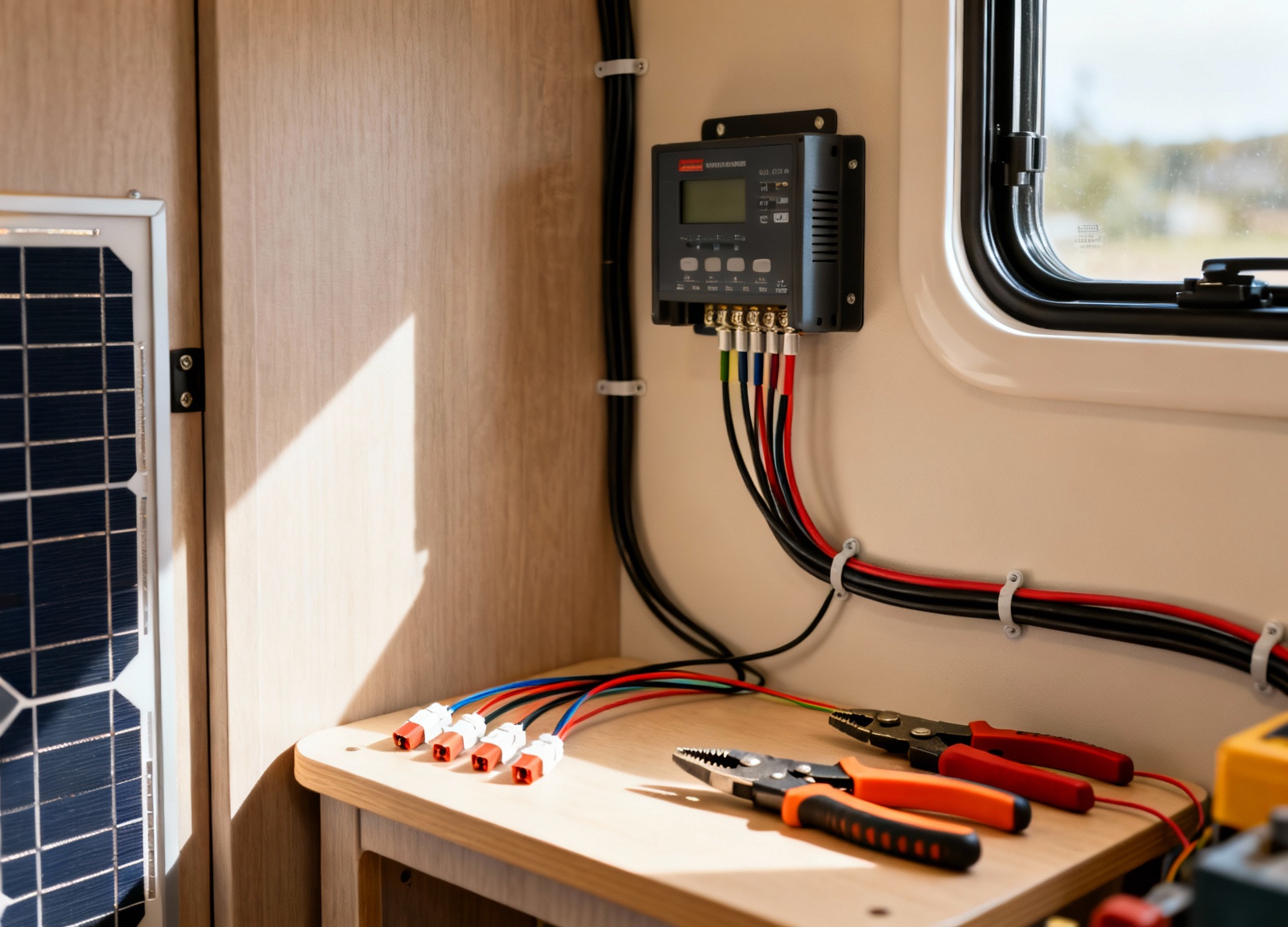
- Victron SmartSolar MPPT 100/30 — View on Amazon
- Renogy 100W Monocrystalline Panel — View on Amazon
- Battle Born 100Ah LiFePO4 Battery — View on Amazon
FAQs

- How many watts of solar do I need for my RV? Calculate your daily amp-hour consumption first. Weekend campers running lights, phone chargers, and a 12V fridge typically need 100-200W. Full-timers with laptops, coffee makers, and residential refrigerators should plan for 400-800W minimum. A practical rule: install 1W of solar for every 1Ah of daily consumption, then add 25% for inefficiencies and cloudy days.
- Are rigid panels better than flexible panels for RV roofs? Rigid panels consistently outperform flexible alternatives in longevity and efficiency. Flexible panels degrade faster due to heat buildup against the roof surface—often losing 10-20% output within 3-5 years. Rigid panels with proper airflow underneath maintain rated output for 20+ years. The only advantage flexible panels offer is conforming to curved surfaces, which rarely justifies their shorter lifespan.
- Do I need an MPPT or PWM charge controller? MPPT controllers harvest 15-30% more power than PWM units, especially in cold weather or partial shade. For systems under 200W where budget is tight, PWM works adequately. Above 200W, MPPT pays for itself within the first year through increased harvest. Lithium battery users should always choose MPPT for proper charge profile support.
- Can I install RV solar panels myself? Most RV solar installations are straightforward DIY projects. You’ll need basic tools, a drill, and comfort working on your roof. The electrical connections use plug-and-play MC4 connectors. Plan for a full day on your first installation. The most common mistakes involve improper roof sealing and undersized wiring—both easily avoided with proper research.
- Will solar panels damage my RV roof? Properly installed panels actually protect your roof from UV degradation. Use mounting brackets designed for your roof type—Z-brackets for most fiberglass and rubber roofs, tilt mounts for maximum output. Always use Dicor or equivalent self-leveling sealant on penetrations. Avoid drilling into roof structural members by mapping your roof framing before installation.
- How do I maintain RV solar panels? Maintenance is minimal. Rinse panels with water every few months to remove dust and bird droppings—dirty panels can lose 5-25% output. Inspect wiring connections annually for corrosion or loosening from road vibration. Check roof sealant around mounts each spring. Avoid using abrasive cleaners or pressure washers directly on panel surfaces.
As an Amazon Associate, we earn from qualifying purchases. This helps keep SunAmpRV running.