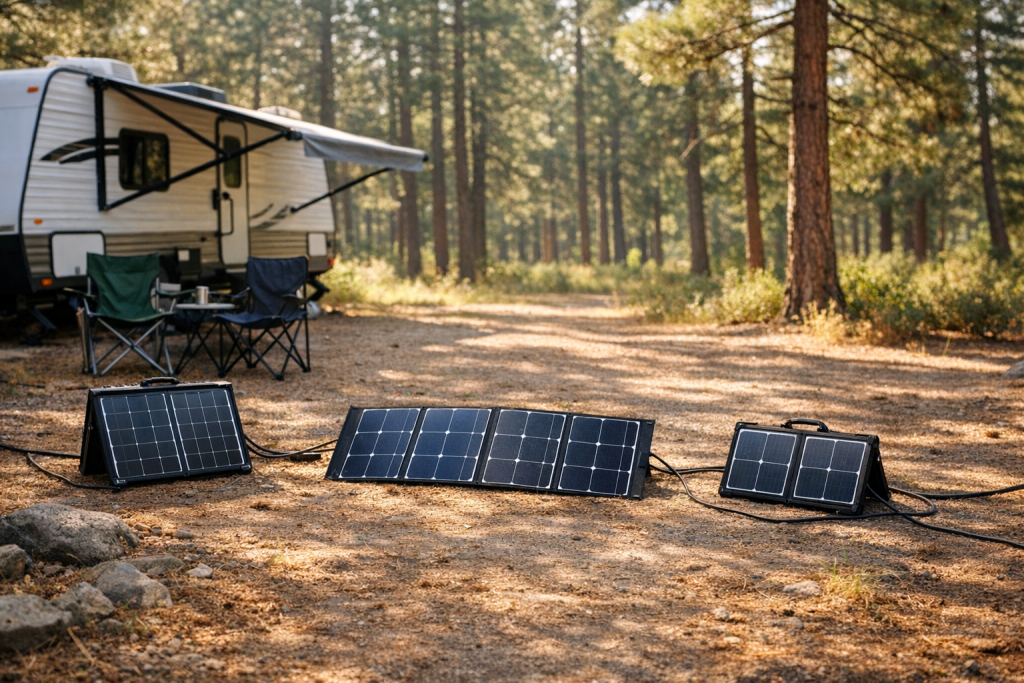
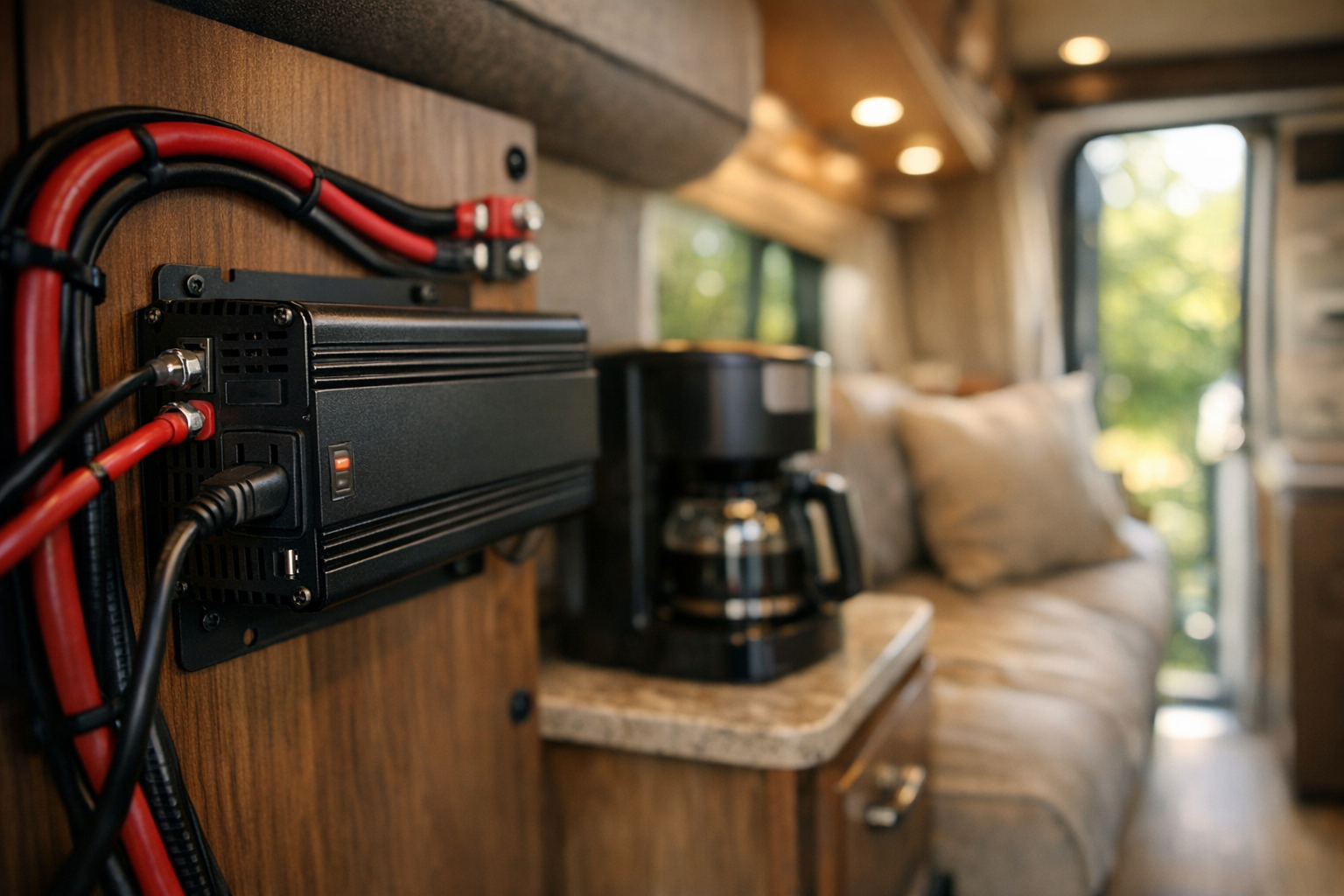
Running a CPAP machine at 60 W while simultaneously charging a laptop at 65 W and powering a 32-inch LED TV at 55 W puts you at roughly 180 W continuous draw—well within a 1000 W envelope. The moment you flip on a 700 W microwave, headroom shrinks to almost nothing. That narrow margin is exactly why choosing the right 1000 W RV inverter matters: the wrong unit clips your sine wave, overheats under sustained load, or lacks the surge capacity to start inductive appliances. This guide breaks down the engineering specs, protection circuits, and real-world performance data you need to make a confident purchase.
TL;DR
- Best Overall: Renogy 1000W 12V Pure Sine Wave Inverter — Clean output, robust protections, and a 2000 W surge rating in a compact chassis
- Best Budget: GIANDEL 1000W Pure Sine Wave Inverter — Reliable pure sine output with dual AC outlets and a remote switch at a sub-$100 price
- Best Premium: Victron Phoenix 12/1200 — Laboratory-grade sine wave, ultra-low THD, and Victron ecosystem integration for serious off-grid setups
- Best Compact: BESTEK 1000W Modified Sine Wave Inverter — Lightweight plug-in unit ideal for weekend trips and non-sensitive loads
Renogy 1000W 12V Pure Sine Wave Inverter
Renogy’s 1000 W pure sine wave inverter converts 12 V DC to 120 V AC at a continuous 1000 W with a peak surge of 2026 W. Total harmonic distortion (THD) is rated below 3 %, clean enough for CPAP machines, variable-speed fans, and laptop chargers with sensitive power supplies. No-load current sits at roughly 0.7 A—about 8.4 W when idling—an important figure if you leave the inverter on overnight.
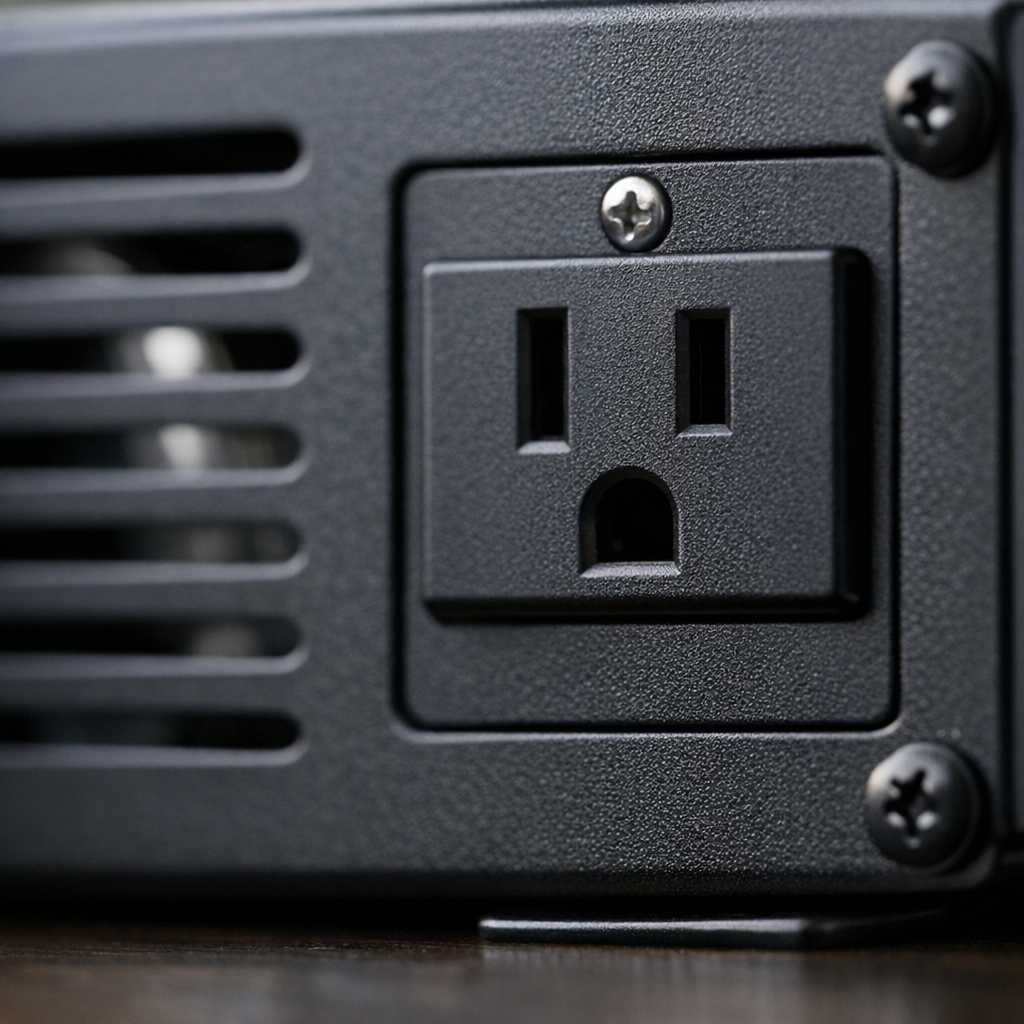
The aluminum housing measures approximately 14.4 × 6.1 × 3.4 inches and weighs around 5.5 lbs. Two standard NEMA 5-15 AC outlets sit on the front panel alongside a single 5 V / 2.1 A USB port. Protection circuitry covers over-voltage (≥ 15.5 V input cutoff), under-voltage (≤ 10.5 V cutoff), overload, over-temperature, and short-circuit scenarios. An LED indicator panel provides at-a-glance status for input voltage, output load, and fault conditions.
Renogy includes 2 AWG battery cables (roughly 24 inches long), ring terminals, and a wired remote on/off switch—useful when the inverter is tucked behind a panel. The 18-month warranty is standard for this price tier.
GIANDEL 1000W Pure Sine Wave Inverter
GIANDEL positions this unit as a value-oriented pure sine wave option. Continuous output is 1000 W with a 2026 W surge lasting up to 10 seconds—enough to handle the inrush current of a small compressor fridge. THD is specified at ≤ 3 %, and the output frequency holds steady at 60 Hz ± 0.5 Hz.
The chassis is slightly larger than the Renogy at roughly 15.2 × 6.7 × 3.5 inches, but it adds a second USB-A port (both rated 5 V / 2.4 A) and includes a 15-foot wired remote control—one of the longest in this class. The remote features an LED display showing input voltage and output wattage in real time, genuinely useful for monitoring battery health while boondocking.
Protection features mirror the Renogy: over-voltage, under-voltage, overload, short-circuit, and thermal shutdown. The cooling fan is thermostatically controlled, activating only when internal temperature exceeds approximately 104 °F (40 °C), keeping cabin noise low during light loads. GIANDEL backs the unit with an 18-month warranty and responsive customer support, frequently cited on RV forums.
Victron Phoenix 12/1200
Victron’s Phoenix 12/1200 is rated at 1200 VA (approximately 1000 W at a 0.8 power factor for resistive loads), with a peak surge capacity of 2200 W. Where it separates from the field is total harmonic distortion: Victron specifies THD below 1.5 % under linear loads, producing a waveform essentially indistinguishable from grid power. This matters for audiophile equipment, precision medical devices, and any appliance with a power-factor-corrected (PFC) power supply.
The unit supports both 120 V 60 Hz and 230 V 50 Hz output, configurable via DIP switches—a plus for RVers who travel internationally or use European appliances. Victron’s “SenseBus” and “VE.Direct” ports allow integration with Victron battery monitors, charge controllers, and the VRM online portal for remote monitoring. No-load power consumption is approximately 8 W, competitive with the Renogy.
Build quality is a step above. The anodized aluminum enclosure is rated for a wider operating temperature range (−40 °C to +65 °C), and the internal transformer uses toroidal construction for lower electromagnetic interference. The trade-off is price—expect to pay roughly 2–3× more than the Renogy or GIANDEL. Victron provides a 5-year warranty, the longest in this roundup.
BESTEK 1000W Modified Sine Wave Inverter
If your load profile consists exclusively of resistive or non-sensitive devices—LED lights, basic phone chargers, a hair dryer on low—the BESTEK 1000W modified sine wave inverter delivers adequate performance at the lowest cost in this roundup. Continuous output is 1000 W with a 2400 W peak surge. The modified sine wave output means THD is significantly higher (typically 20–40 %), which can cause audible buzzing in audio equipment and may reduce the efficiency of devices with switching power supplies by 10–20 %.
The form factor is notably compact at approximately 10.3 × 5.5 × 3.0 inches and under 3 lbs. Two AC outlets and two USB-A ports (5 V / 2.4 A each) are provided. The unit plugs directly into a 12 V cigarette lighter socket for loads under roughly 150 W, but also ships with battery clamp cables for full-power operation. Protection includes overload, over-temperature, short-circuit, and low-battery alarms.
One drawback: the cooling fan runs continuously, which some users find noisy in a quiet RV cabin at night.
AIMS Power 1000W Pure Sine Wave Inverter
AIMS Power is a US-based brand with a strong presence in the off-grid and RV community. Their 1000 W pure sine wave model (PWRI100012120S) delivers 1000 W continuous and 2026 W surge. THD is rated at ≤ 3 %, and the unit operates at a peak efficiency of approximately 90 %. The chassis is built from heavy-gauge steel rather than aluminum, adding weight (approximately 7.5 lbs) but improving durability and EMI shielding.
A standout feature is the GFCI-protected AC outlet, which adds a layer of safety for outdoor or wet-environment use—relevant if you’re running an extension cord to an external setup. The unit also includes a hardwire terminal block for permanent installation, making it a strong candidate for built-in RV electrical systems. AIMS provides a 1-year warranty with optional extended coverage.
Go Power! GP-SW1000-12 Pure Sine Wave Inverter
Go Power is a well-known name in the RV aftermarket, and their GP-SW1000-12 is designed specifically for mobile applications. The inverter outputs 1000 W continuous with a 2026 W surge and features a low idle draw of approximately 0.5 A (6 W)—the lowest in this roundup. This makes it particularly suitable for scenarios where the inverter stays on continuously to power a fridge or monitoring equipment.

The unit includes a built-in transfer relay that can be wired to automatically switch between inverter power and shore power, eliminating the need for a separate transfer switch in some installations. The aluminum enclosure is conformal-coated internally to resist moisture and corrosion. Go Power backs the unit with a 2-year warranty and provides detailed RV-specific installation guides.
Pure Sine Wave vs Modified Sine Wave for RV Use
The single most consequential decision when selecting a 1000 W RV inverter is waveform type. A pure sine wave inverter produces output with THD typically below 3 %, closely replicating utility-grid power. A modified sine wave inverter approximates a sine wave using a stepped square wave, resulting in THD of 20–40 %. The practical consequences are measurable:
- Efficiency loss: Devices with active power-factor correction (PFC)—most modern laptop chargers, CPAP machines, and LED TV power supplies—operate 10–20 % less efficiently on modified sine wave, generating excess heat.
- Motor performance: Inductive loads like fan motors and compressor fridges run hotter and louder on modified sine wave, reducing lifespan.
- Audio interference: Modified sine wave causes a 60 Hz buzz in speakers, AM radios, and some Bluetooth devices.
- Incompatibility: Some devices—particularly CPAP machines with humidifiers and certain microwave inverter boards—will not operate at all on modified sine wave.
For the vast majority of RV owners, pure sine wave is the correct choice. The price premium over modified sine wave has shrunk to roughly $20–$40 at the 1000 W tier, making the trade-off almost universally favorable. The BESTEK modified sine wave unit in this roundup is appropriate only if you are certain your load profile excludes sensitive electronics.
Sizing Your Battery Bank for 1000 W Loads
A 1000 W inverter drawing full rated power from a 12 V battery bank pulls approximately 83.3 A before accounting for efficiency losses. At a typical 90 % efficiency, actual battery draw rises to roughly 92–95 A. This has direct implications for cable sizing, fuse ratings, and battery capacity:
- Cable gauge: At 95 A over a 6-foot round-trip cable run, you need 2 AWG (or larger) copper cable to keep voltage drop below 3 %. Undersized cables cause resistive heating and voltage sag that triggers the inverter’s low-voltage cutoff.
- Fuse rating: A 150 A ANL or Class-T fuse placed within 12 inches of the battery positive terminal is standard practice. This protects against short circuits in the DC wiring.
- Battery capacity: A single 100 Ah 12 V lithium (LiFePO4) battery can sustain a 1000 W load for approximately 55–60 minutes (accounting for 90 % inverter efficiency and 90 % usable depth of discharge). A 100 Ah lead-acid battery, limited to roughly 50 % depth of discharge, cuts that runtime to about 30 minutes. For sustained use, a 200 Ah lithium bank or dual 6 V golf-cart batteries in series are more practical.
If your typical draw is 200–400 W (laptop + TV + phone chargers), a 100 Ah lithium battery provides 2.5–5 hours of runtime—more than enough for an evening of boondocking.
Hardwired vs Plug-In Installation
Plug-in inverters like the BESTEK connect via battery clamp cables or a cigarette lighter socket. They’re portable, require zero permanent modification, and can move between vehicles. However, the cigarette lighter circuit is typically fused at 15–20 A (180–240 W), severely limiting usable output. Clamp cables improve this but introduce connection resistance and vibration-loosening risks on rough roads.
Hardwired installations—bolting the inverter to a mounting surface and connecting directly to the battery bank with properly terminated ring lugs—deliver the lowest resistance path and most reliable long-term performance. Units like the AIMS Power 1000W and Go Power GP-SW1000-12 include hardwire terminal blocks specifically for this purpose. If you plan to use your 1000 W inverter regularly, a hardwired installation is the engineering-correct approach.
For permanent installs, consider an inverter with a built-in transfer relay (like the Go Power) or pair your inverter with an external automatic transfer switch. This allows seamless switching between inverter power and shore/generator power without manually unplugging devices.
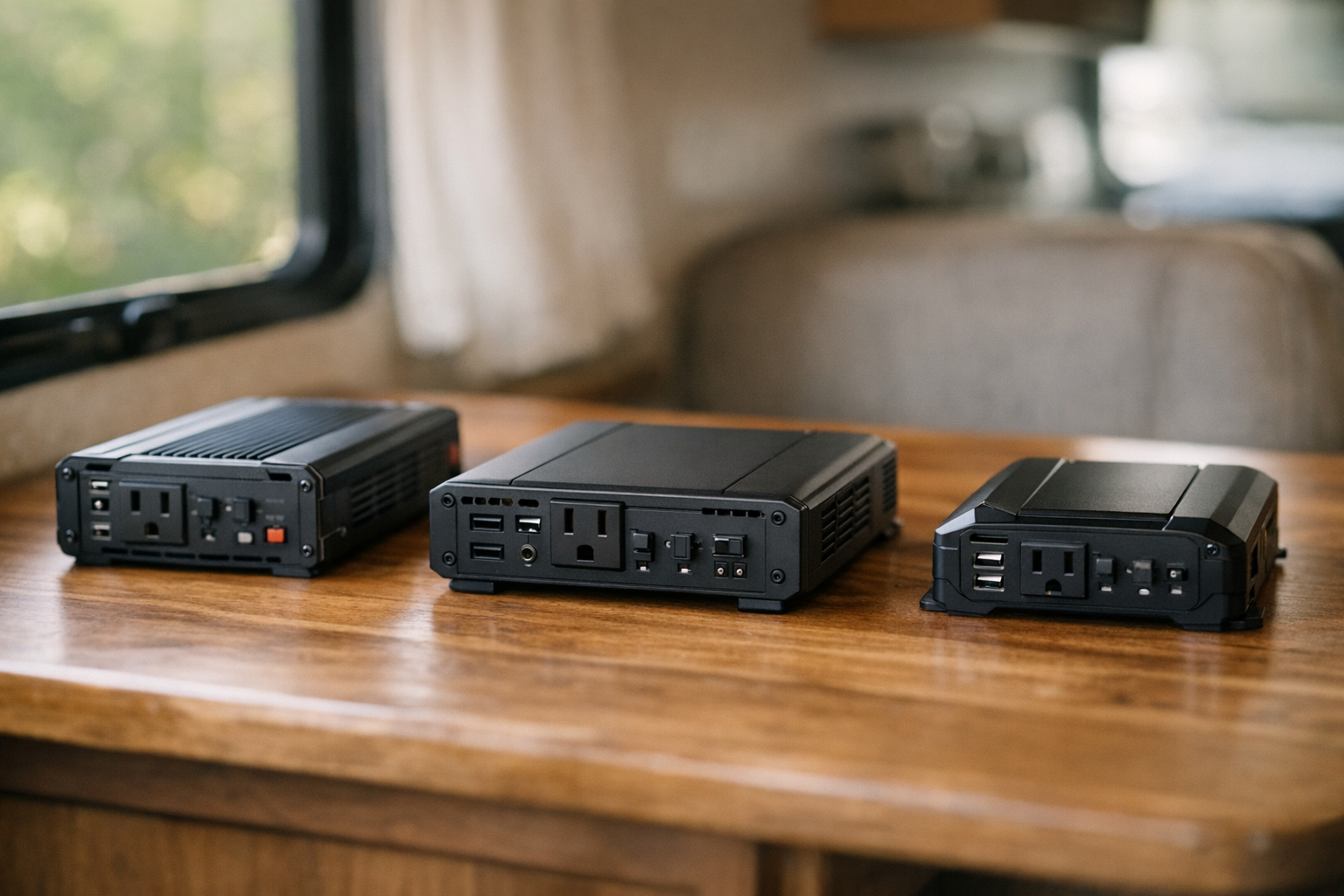
Comparison Table
| Model | Type | Key Specs | Best for | Pros | Cons | Where to buy |
|---|---|---|---|---|---|---|
| Renogy 1000W 12V | Pure Sine Wave | 1000 W cont / 2026 W surge; THD < 3 %; 5.5 lbs; 0.7 A idle | Best overall RV use | Clean output; compact; remote switch included; competitive price | USB port limited to 2.1 A; 18-month warranty only | Amazon ↗ |
| GIANDEL 1000W | Pure Sine Wave | 1000 W cont / 2026 W surge; THD ≤ 3 %; dual USB 2.4 A; 15 ft remote | Best budget pure sine | Sub-$100 price; long remote cable with display; quiet fan | Slightly bulky; no GFCI outlet | Amazon ↗ |
| Victron Phoenix 12/1200 | Pure Sine Wave | 1200 VA (~1000 W); 2200 W surge; THD < 1.5 %; VE.Direct | Best premium / system integration | Ultra-low THD; 5-year warranty; dual voltage; Victron ecosystem | High price; no USB ports; requires separate remote panel | Amazon ↗ |
| BESTEK 1000W | Modified Sine Wave | 1000 W cont / 2400 W surge; 3 lbs; cigarette lighter + clamp cables | Best compact / portable | Lightest; lowest price; plug-and-play | Modified sine wave; continuous fan noise; not for sensitive electronics | Amazon ↗ |
| AIMS Power 1000W | Pure Sine Wave | 1000 W cont / 2026 W surge; ~90 % efficiency; GFCI outlet; 7.5 lbs | Best for permanent hardwired installs | GFCI protection; steel chassis; hardwire terminal block | Heavier; 1-year base warranty; no remote included | Amazon ↗ |
| Go Power! GP-SW1000-12 | Pure Sine Wave | 1000 W cont / 2026 W surge; 0.5 A idle; built-in transfer relay | Best for always-on RV systems | Lowest idle draw; transfer relay built in; conformal-coated PCB | Premium price; limited retail availability; single AC outlet | Amazon ↗ |
Safety & Common Mistakes
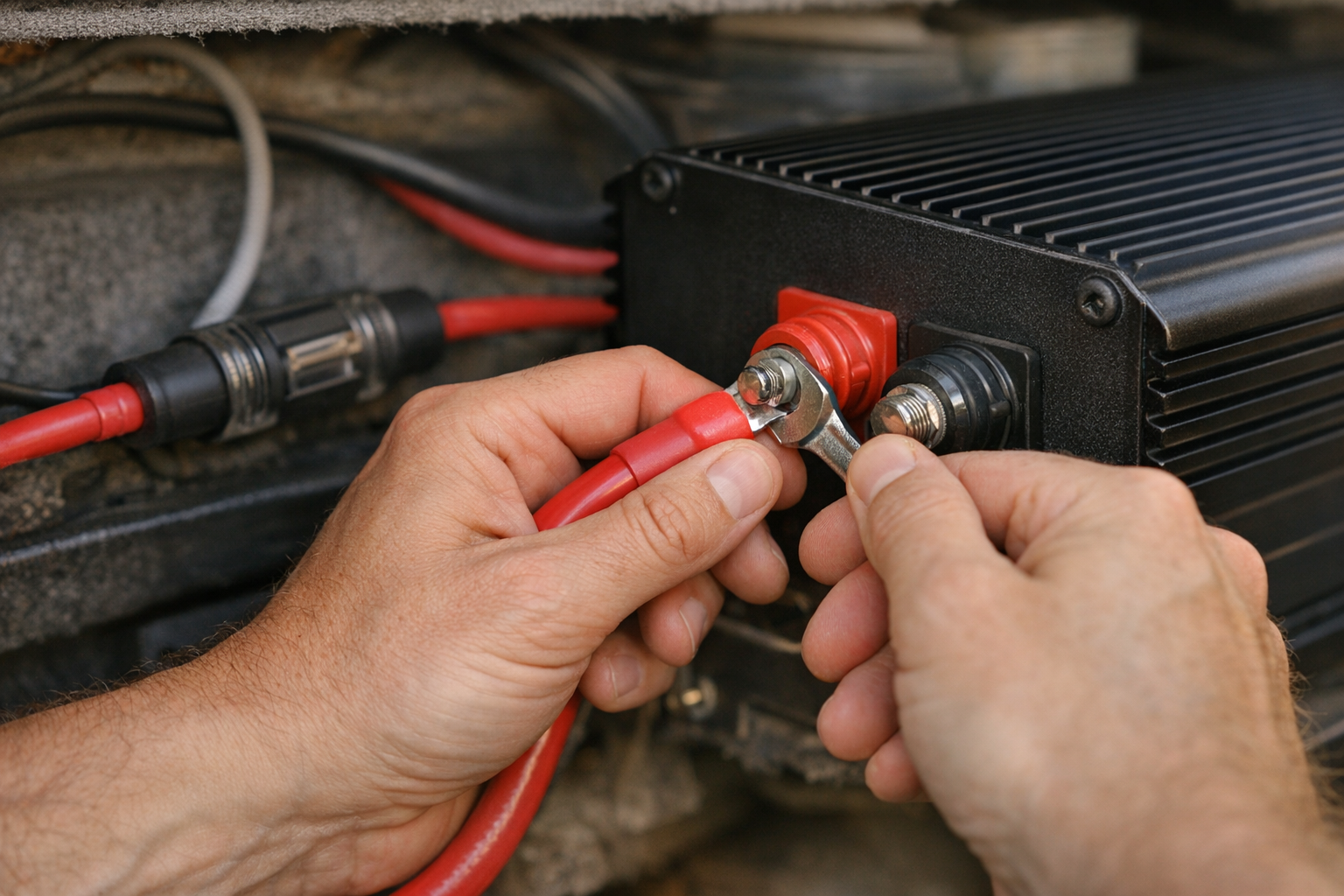
- Undersized wiring: Using 10 AWG or 8 AWG cable for a 1000 W inverter is a fire hazard. At full load, a 1000 W / 12 V inverter draws ~95 A. Use 2 AWG minimum for runs up to 6 feet, and 1/0 AWG for longer runs. Always reference American Wire Gauge ampacity tables for your specific cable length.
- Missing or incorrect fuse: Every 1000 W inverter installation requires a properly rated fuse (typically 150 A ANL or Class-T) on the positive battery cable, installed within 12 inches of the battery terminal. Omitting this fuse means a short circuit has no protection other than the battery itself—which can deliver thousands of amps and cause a thermal event.
- Running modified sine wave on CPAP or medical devices: Modified sine wave inverters can cause CPAP machines to malfunction, overheat, or display error codes. Some CPAP manufacturers explicitly void their warranty if the device is powered by a modified sine wave source. If you rely on a CPAP, a pure sine wave inverter is non-negotiable.
- Ignoring idle draw: An inverter left on 24/7 with no load still consumes power. At 0.7 A idle, a Renogy 1000W draws about 8.4 W continuously—roughly 200 Wh per day, or 16.8 Ah from a 12 V battery. Over a multi-day boondocking trip without solar recharge, this parasitic draw can deplete a battery bank. Use the remote switch to turn off the inverter when not in use, or choose a model with an eco/sleep mode.
- Exceeding continuous rating with sustained loads: The 2000 W surge rating on most 1000 W inverters is designed for momentary inrush currents lasting 5–10 seconds. Running a 1200 W load “because the surge rating covers it” will trigger overload protection within seconds to minutes, or damage the inverter’s MOSFETs if the protection circuit is slow.
- Poor ventilation: Mounting an inverter in an enclosed, unventilated compartment causes thermal throttling and premature shutdown. Leave at least 4 inches of clearance on all sides and ensure the cooling fan’s intake and exhaust are unobstructed. Ambient temperatures inside an RV compartment in summer can exceed 120 °F (49 °C), pushing the inverter closer to its thermal limits before it even starts working.
Always follow the manufacturer’s installation manual and local electrical codes. When in doubt, consult a certified RV electrician.
Recommended Gear
- Victron SmartSolar MPPT 100/30 — View on Amazon
- Renogy 100W Monocrystalline Panel — View on Amazon
- Battle Born 100Ah LiFePO4 Battery — View on Amazon
FAQs
- Is a 1000 W inverter enough for an RV? For most common RV electronics—laptops (65 W), LED TVs (50–80 W), CPAP machines (30–60 W), phone chargers (10–20 W), and small fans (40–60 W)—a 1000 W inverter provides ample headroom. You can run several of these simultaneously without approaching the continuous rating. However, high-draw appliances like rooftop air conditioners (1200–1500 W starting), full-size microwaves (1000–1500 W), and electric heaters (1500 W) exceed the 1000 W continuous limit. If your primary goal is powering electronics and small appliances while boondocking, 1000 W is a well-matched capacity.
- Can a 1000 W inverter run a microwave in an RV? It depends on the microwave’s actual electrical input draw. A microwave labeled “700 W” refers to cooking power; the electrical input is typically 1000–1200 W. Most 1000 W inverters cannot sustain this continuously. However, some compact RV microwaves with 500–600 W cooking power draw only 800–900 W from the wall, which a 1000 W inverter can handle—barely. Verify the microwave’s input wattage (printed on the rear label or in the manual) and confirm it falls below 1000 W. Running at 90–100 % of rated capacity continuously is not recommended for inverter longevity.
- What size battery do I need for a 1000 W RV inverter? A 100 Ah 12 V lithium (LiFePO4) battery is the practical minimum. At full 1000 W output and 90 % inverter efficiency, battery draw is approximately 92 A. A 100 Ah lithium battery (usable to ~90 % DoD) provides roughly 55–60 minutes at this rate. For more realistic mixed loads averaging 300–500 W, the same battery lasts 2–3 hours. If you use lead-acid batteries (AGM or flooded), double the capacity to 200 Ah to account for the 50 % depth-of-discharge limit. Pairing your battery bank with a 200–400 W solar array extends runtime significantly during daylight hours.
- Do I need a pure sine wave inverter for my RV? In nearly all RV scenarios, yes. Pure sine wave inverters produce clean AC power with THD below 3 %, which is safe for sensitive electronics including CPAP machines, laptop chargers with PFC circuits, LED TVs, and gaming consoles. Modified sine wave inverters save $20–$40 at the 1000 W tier but introduce efficiency losses, audible noise in speakers, and potential incompatibility with medical devices. The cost difference is small enough that pure sine wave is the default recommendation for any RV owner powering modern electronics.
- How long will a 12 V battery last with a 1000 W inverter? Runtime depends on actual load, battery chemistry, and depth of discharge. For a 100 Ah 12 V lithium battery at a constant 1000 W draw: 100 Ah × 12 V = 1200 Wh capacity; at 90 % usable DoD, you have 1080 Wh available; dividing by 1000 W and accounting for ~90 % inverter efficiency yields approximately 58 minutes. At a more typical 300 W average load, the same battery lasts roughly 3.2 hours. For a 100 Ah AGM lead-acid battery limited to 50 % DoD, halve those figures. Adding a second 100 Ah battery in parallel doubles runtime linearly.
- What is the most reliable brand for a 1000 W RV inverter? Victron Energy consistently ranks highest for long-term reliability, backed by a 5-year warranty and a proven track record in marine and off-grid installations worldwide. Renogy and Go Power are strong mid-tier options with dedicated RV product lines and responsive warranty support. AIMS Power is well-regarded in the US off-grid community for rugged build quality. GIANDEL offers solid reliability at the budget tier, with frequent positive reports on RV forums regarding multi-year service life. Brand reliability ultimately correlates with proper installation—even the best inverter will fail prematurely if wired with undersized cables or mounted in an overheated compartment.
As an Amazon Associate, we earn from qualifying purchases. This helps keep SunAmpRV running.