
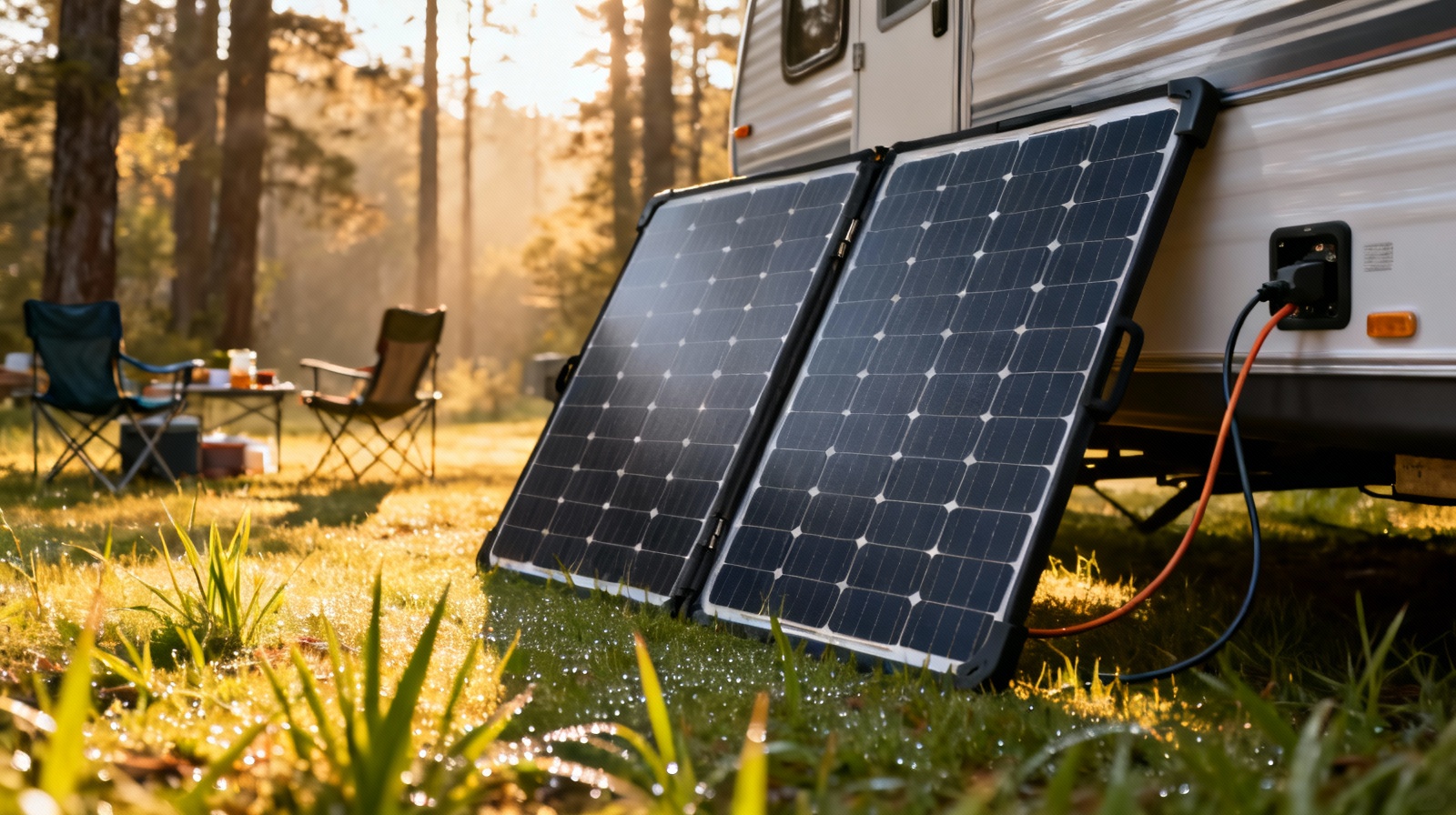
Whether you’re a weekend warrior escaping to state parks or a full-time nomad chasing endless sunsets, reliable solar power transforms your RV from a glorified tent into a self-sufficient home on wheels. After researching dozens of panels, kits, and real-world user experiences, I’ve narrowed down the best 100W solar options that actually deliver on their promises—because nothing ruins a camping trip faster than a dead battery and no way to charge it.
TL;DR — Best Picks
Best Overall: Renogy 100W 12V Monocrystalline Solar Panel – Exceptional build quality, proven reliability, and industry-leading efficiency make this the gold standard for RV installations.
Best Budget: Topsolar 100W 12V Monocrystalline Kit – Complete starter kit with controller included at an unbeatable price point for first-time solar users.
Best for Portability: Rich Solar 100W Portable Suitcase – Folds flat, sets up in minutes, and lets you chase the sun without permanent roof modifications.
Best RV Solar Picks

Topsolar 100W 12V Monocrystalline Kit — Best Budget
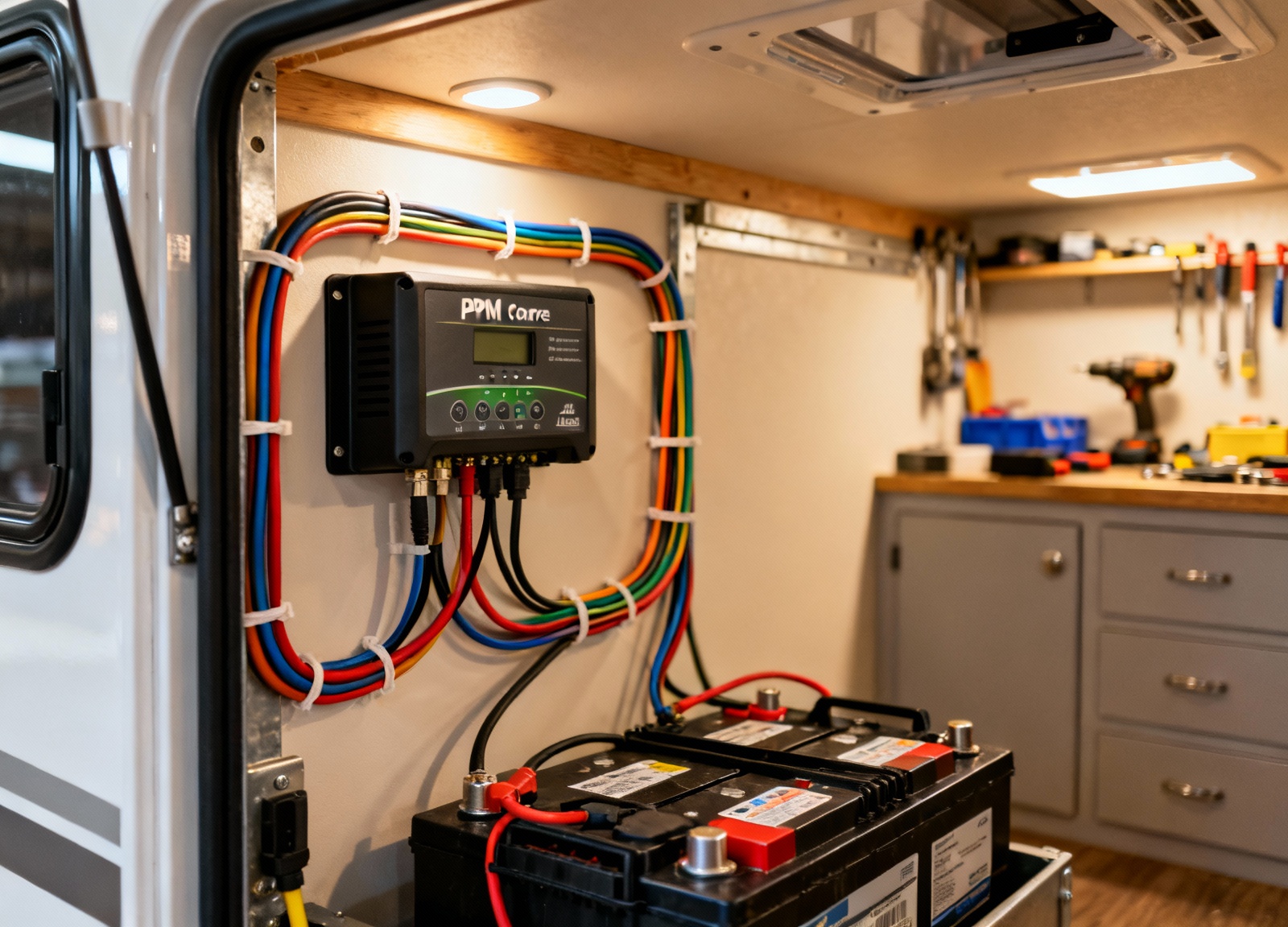
For RVers dipping their toes into solar for the first time, Topsolar’s complete kit removes the guesswork entirely. You get the panel, a 20A PWM charge controller, mounting brackets, and all necessary cables in one box—everything needed to go from zero to charging in an afternoon.
The included controller features an LCD display showing real-time charging data, which is genuinely helpful when you’re learning how solar behaves throughout the day. While the panel efficiency sits around 19% (slightly below premium options), the value proposition is hard to beat. This kit regularly costs less than buying a comparable panel alone from premium brands.
Key Specs: 100W, 12V system, 19% efficiency, includes 20A PWM controller, Z-brackets, and 16 ft cables. View on Amazon
- Pro: Complete kit eliminates compatibility concerns for beginners
- Pro: LCD controller provides educational real-time feedback
- Pro: Price point makes solar accessible for tight budgets
- Con: PWM controller leaves 15-20% potential harvest on the table versus MPPT
- Con: Lighter-gauge cables may need upgrading for longer runs
- Con: Shorter warranty period than premium competitors
Rich Solar 100W Portable Suitcase — Best for Portability
Not everyone wants to drill holes in their RV roof, and that’s where portable suitcase panels shine.
Rich Solar’s folding design opens to reveal two 50W panels that connect in series, complete with an integrated kickstand that lets you angle toward the sun regardless of how your RV is parked. The built-in charge controller (10A PWM) and alligator clips mean you can literally unpack, unfold, and start charging within five minutes. This is the go-to choice for renters, seasonal campers, or anyone who wants the flexibility to move their panel throughout the day to maximize sun exposure. When folded, it’s compact enough to slide under a dinette seat.
Key Specs: 100W total (2×50W), 12V, folds to 20.5 × 27.2 × 2.4 inches, 24 lbs with case, integrated 10A controller.
- Pro: Zero permanent installation—perfect for rentals or resale concerns
- Pro: Adjustable kickstand optimizes angle throughout the day
- Pro: Integrated controller simplifies setup to plug-and-play
- Pro: Heavy-duty carrying case protects during transport
- Con: Must be deployed manually; won’t charge while driving
- Con: Requires secure storage when not in use
WindyNation 100W Kit with P30L Controller — Best Controller Included
WindyNation takes the kit concept further by including their P30L charge controller—a 30A unit that can handle future expansion up to 400W of panels. This forward-thinking approach means you won’t need to replace your controller when you inevitably decide one panel isn’t enough.
The kit also includes 40 feet of cable (double what most competitors provide), giving you flexibility in routing and panel placement. The panel itself is a solid monocrystalline unit with respectable 19% efficiency.
Key Specs: 100W panel, 12V, 19% efficiency, includes 30A PWM controller, 40 ft 12 AWG cables, mounting hardware.
- Pro: 30A controller supports expansion to 400W without upgrades
- Pro: Generous 40 ft cable length handles complex routing
- Pro: Complete kit with quality mounting hardware
- Con: PWM controller still less efficient than MPPT options
- Con: Heavier overall package weight
Renogy 100W Eclipse Monocrystalline — Best Aesthetics
Let’s be honest—most solar panels look industrial.
Renogy’s Eclipse series addresses this with an all-black design where even the backsheet and frame are black, creating a sleek, modern appearance that blends beautifully with dark RV roofs. Beyond looks, the panel uses the same high-quality monocrystalline cells as their standard line, delivering 21% efficiency. The aesthetic upgrade does come with a slight thermal penalty (black absorbs more heat), but real-world testing shows only 2-3% output reduction in hot conditions.
Key Specs: 100W, 12V, 21% efficiency, all-black design, 47.3 × 21.3 × 1.4 inches, 16.5 lbs.
- Pro: Stunning all-black aesthetic for design-conscious owners
- Pro: Same proven Renogy quality and warranty
- Pro: Identical mounting pattern to standard Renogy panels
- Con: Premium price for cosmetic upgrade
- Con: Slightly higher operating temperature in direct sun
Comparison Table
| Model | Type | Key Specs | Best for | Pros | Cons |
|---|---|---|---|---|---|
| Renogy 100W Mono | Rigid Monocrystalline | 100W, 21% eff, 14.3 lbs | Overall reliability | 25-year warranty, proven durability | Premium pricing, panel only |
| Topsolar 100W Kit | Mono Kit w/ PWM | 100W, 19% eff, 20A controller | Budget beginners | Complete kit, great value | PWM less efficient, shorter warranty |
| Rich Solar Suitcase | Portable Folding | 100W, 24 lbs, integrated controller | Portability & rentals | No installation, adjustable angle | Manual deployment, storage needed |
| HQST 100W Poly | Rigid Polycrystalline | 100W, 17% eff, 16.5 lbs | Cloudy climates | Better diffuse light performance | Lower peak efficiency, larger size |
| Newpowa 100W Compact | Rigid Monocrystalline | 100W, 20.5% eff, 14.3 lbs | Small roofs & vans | Smallest footprint, lightweight | Limited expandability |
| WindyNation 100W Kit | Mono Kit w/ 30A PWM | 100W, 19% eff, 40 ft cables | Future expansion | 30A controller, long cables | PWM efficiency loss, heavier |
| Renogy Eclipse 100W | Rigid Mono (All-Black) | 100W, 21% eff, 16.5 lbs | Aesthetic appeal | Sleek design, Renogy quality | Higher cost, runs slightly warmer |
Which One Should You Buy?
Your ideal panel depends entirely on how you camp and what you’re willing to invest.
If you’re a weekend warrior testing the solar waters on a tight budget, the Topsolar 100W Kit gets you charging for minimal investment—you can always upgrade the controller later. Full-timers who depend on solar daily should invest in the Renogy 100W Monocrystalline; the 25-year warranty and proven track record justify the premium when reliability isn’t optional.
Renting your RV or hesitant about permanent modifications? The Rich Solar Suitcase gives you full solar capability without drilling a single hole. Pacific Northwest campers dealing with perpetual overcast should seriously consider the HQST Polycrystalline—it’ll outperform mono panels on those gray days that define the region.
Van lifers and teardrop owners fighting for every square inch of roof space will appreciate the Newpowa Compact design. And if you’re already planning to expand beyond 100W, start with the WindyNation Kit—that 30A controller will handle up to four panels without replacement. Finally, if your RV is a showpiece and aesthetics matter, the Renogy Eclipse delivers premium performance in a package that actually looks good.
Safety & Common Mistakes
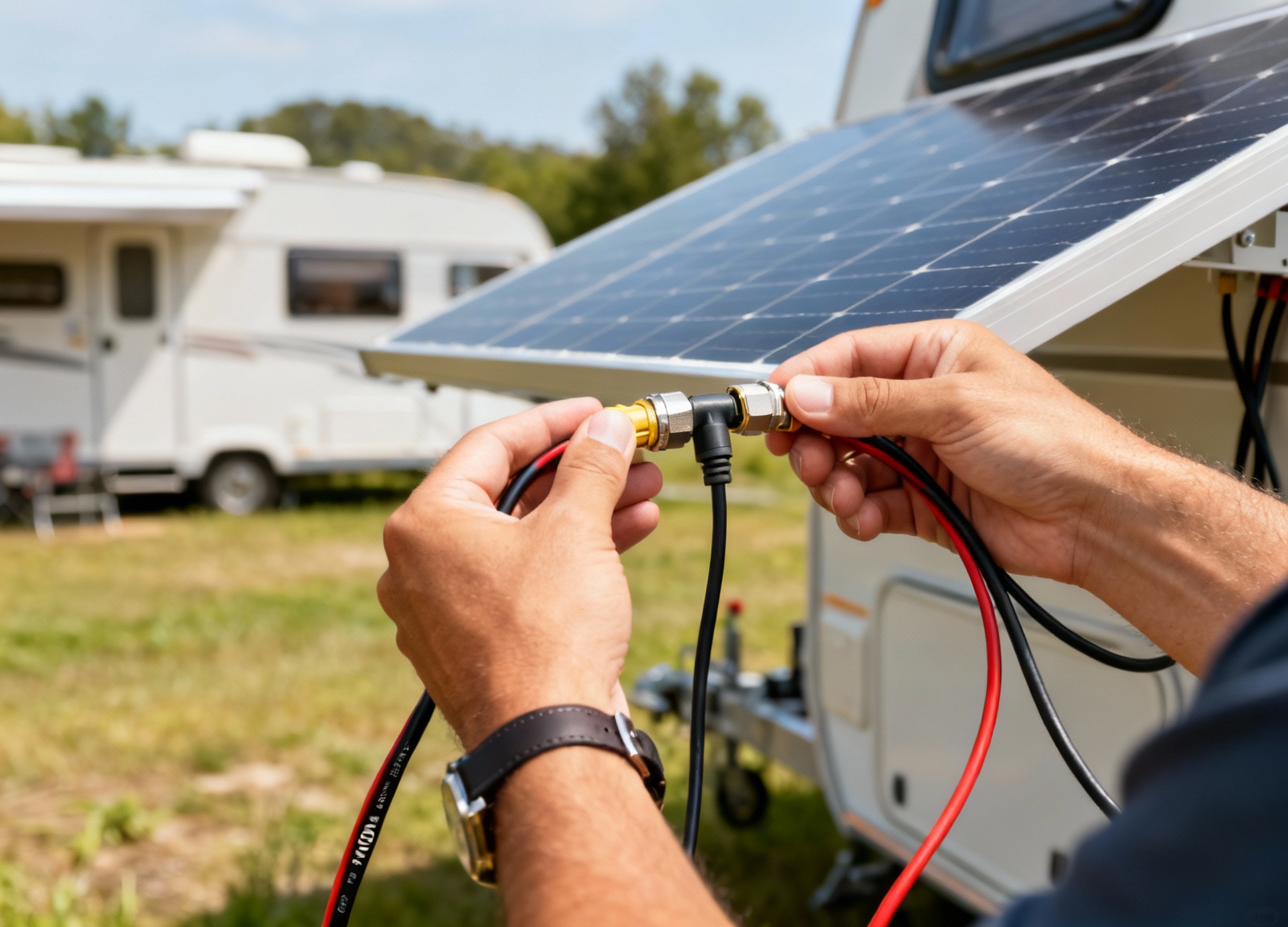
Before you climb on the roof with a drill, keep these safety essentials in mind—solar installations involve real electrical hazards that demand respect:
- Install a correctly sized fuse (typically 15A for a single 100W panel) within 12 inches of the battery positive terminal to prevent cable fires.
- Choose wire gauge based on both current and run length; aim for ≤3% voltage drop. For 100W panels, 10 AWG handles most runs under 20 feet.
- Use proper battery and array disconnects; always de-energize the system before performing any work on connections.
- Wear appropriate PPE including eye protection and insulated gloves when working with batteries—lead-acid batteries can vent explosive hydrogen gas.
- Double-check polarity before connecting anything—reversed connections can instantly destroy charge controllers and damage batteries.
- Cover panels with an opaque material during installation; they generate voltage immediately upon exposure to light, even indoors.
When in doubt, consult a qualified RV electrician or solar installer.
Recommended Gear
- Victron SmartSolar MPPT 100/30 — View on Amazon
- Renogy 100W Monocrystalline Panel — View on Amazon
- Battle Born 100Ah LiFePO4 Battery — View on Amazon
FAQs

- Is a 100W solar panel enough for RV use? For weekend campers running LED lights, charging phones, and powering a 12V fridge, 100W is often sufficient—expect roughly 30-40 amp-hours daily in good conditions. Full-timers with laptops, coffee makers, or air conditioning needs should plan for 300-400W minimum. A single 100W panel makes an excellent starting point to learn the system before expanding.
- Who makes the best solar panels for RVs? Renogy consistently earns top marks for their combination of quality, warranty support, and RV-specific design considerations. Rich Solar and HQST offer excellent alternatives at lower price points. The “best” ultimately depends on your specific needs—a budget panel that gets installed beats a premium panel that stays in the box.
- Should I choose monocrystalline or polycrystalline panels? Monocrystalline panels deliver higher efficiency (19-22% vs 15-17%) and perform better in direct sunlight, making them ideal for most RVers. Polycrystalline panels cost less and actually outperform mono in diffuse light conditions—a genuine advantage in cloudy climates. For limited roof space, mono’s higher efficiency per square foot usually wins.
- Do I need an MPPT controller with a 100W panel? With a single 100W panel, the efficiency gains from MPPT (10-25% more harvest) may not justify the 3-4× price premium over PWM controllers. However, if you plan to expand beyond 200W or camp frequently in variable conditions, investing in MPPT from the start saves money long-term. The controller is the brain of your system—it’s worth buying one that can grow with your needs.
- Can I install solar panels myself? Absolutely—RV solar installation is well within DIY capability for anyone comfortable with basic electrical work and roof access. Most 100W panels mount with four corner brackets and require only two wire connections. The key is taking your time, double-checking polarity, and properly sealing any roof penetrations with self-leveling lap sealant designed for RV use.
As an Amazon Associate, we earn from qualifying purchases. This helps keep SunAmpRV running.