
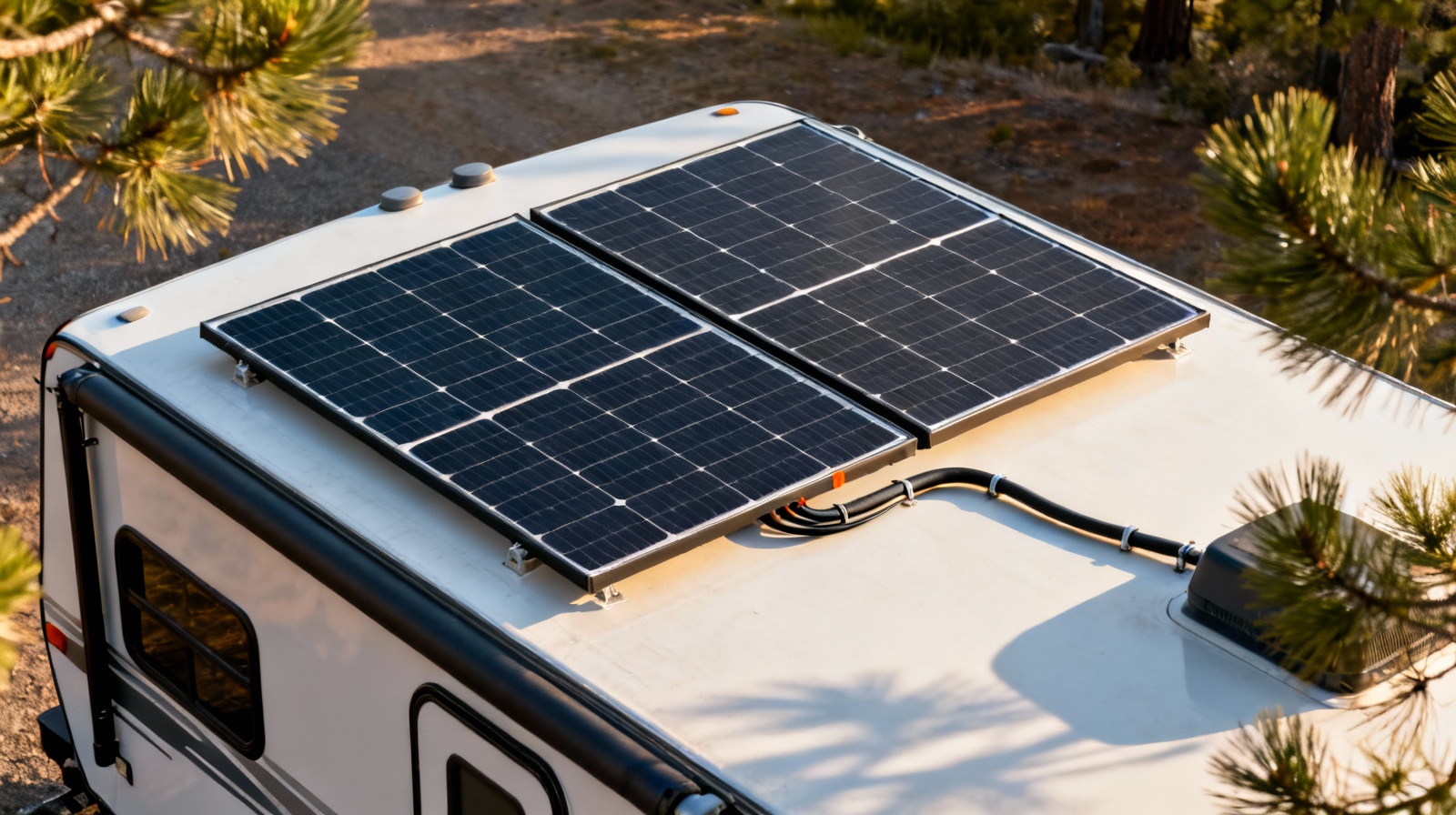
Choosing a 200-watt solar panel kit for your RV isn’t just about wattage—it’s about matching the right kit to how you actually camp. A weekend warrior at developed campgrounds has vastly different needs than a boondocker chasing solitude in the desert for weeks at a time.
TL;DR — Best Picks
Best Overall: Renogy 200W 12V Monocrystalline Solar Kit – Complete package with MPPT controller, premium cells, and excellent warranty for serious off-gridders.
Best Budget: ACOPOWER 200W Polycrystalline Solar Kit – Delivers solid performance at a fraction of premium kit prices, perfect for occasional campers.
Best for Portability: Go Power! Overlander 200W Portable Kit – Foldable design with integrated kickstand makes setup effortless at any campsite.
Best by Use-Case
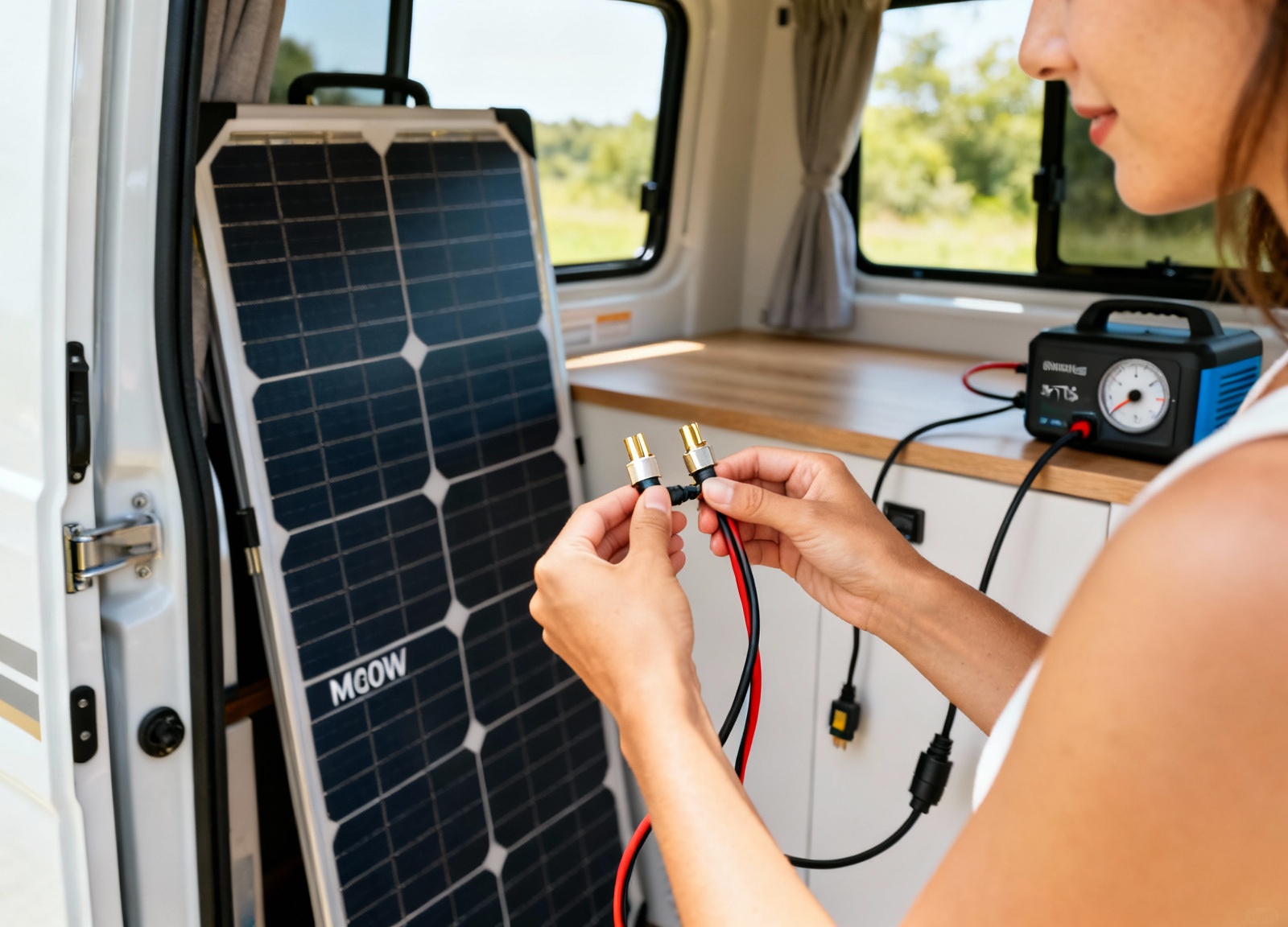
Boondocking & Off-Grid
If you’re a boondocker who disappears into BLM land for a week or more, your solar kit becomes your lifeline. You need maximum energy harvest, rock-solid reliability, and components that won’t fail when the nearest auto parts store is 80 miles away.
The Renogy 200W 12V Monocrystalline Solar Kit stands out here with its high-efficiency monocrystalline cells (typically 21-22% efficiency), included 40A MPPT Rover controller, and comprehensive mounting hardware. The MPPT controller alone can boost your harvest by 15-30% compared to PWM alternatives—critical when you’re running a 12V fridge, charging devices, and powering LED lights around the clock.
- Pro: MPPT controller maximizes every available watt from dawn to dusk
- Pro: Monocrystalline cells perform better in partial shade and high temperatures
- Pro: 25-year panel warranty and 5-year controller warranty provide peace of mind
- Con: Higher upfront cost than budget alternatives
- Con: Rigid panels require permanent roof mounting
For extended boondocking with higher power demands, consider the Renogy 200W Premium Kit with 40A MPPT, which includes heavier-gauge wiring and upgraded MC4 connectors rated for harsh conditions. This kit handles the thermal cycling of desert camping without connector degradation.
- Pro: Premium connectors resist corrosion and heat damage
- Pro: Thicker cables reduce voltage drop on longer runs
- Con: Premium pricing adds $50-100 over standard kits
Budget Weekender
If you’re hitting state parks most weekends with shore power available but want solar for those occasional primitive sites, there’s no need to invest in top-tier equipment.
The ACOPOWER 200W Polycrystalline Solar Kit delivers honest performance at a price point that won’t make you wince. You’ll get two 100W polycrystalline panels, a 30A PWM charge controller, mounting brackets, and basic cabling—everything needed for a functional system. Polycrystalline efficiency runs slightly lower (around 17-19%), but for weekend use, you’ll rarely notice the difference.
- Pro: Exceptional value—often 40-50% less than premium monocrystalline kits
- Pro: Complete kit simplifies purchasing decisions
- Pro: PWM controller is simple and reliable for basic setups
- Con: Lower efficiency means slightly less power per square foot
- Con: Polycrystalline cells show more performance drop in high heat
Another solid budget option is the ECO-WORTHY 200W Solar Panel Kit (12V/24V), which bundles two 100W monocrystalline panels with a 30A PWM charge controller, Z-mounting brackets, and basic wiring/connectors for a straightforward roof install. The kit supports series (24V) or parallel (12V) configurations, but the included controller is PWM (not MPPT), so harvest will be lower in cold weather and partial shade than with an MPPT setup. View on Amazon
- Pro: Complete starter bundle includes two 100W monocrystalline panels, a 30A PWM controller, and Z-mounting brackets
- Pro: Includes wiring/connectors and supports 12V (parallel) or 24V (series) configurations
- Con: PWM controller (not MPPT) reduces energy harvest in cold weather and partial shade versus MPPT systems
Winter Camper
Cold-weather camping presents unique solar challenges: low sun angles, shorter days, and snow accumulation. If you’re chasing powder in your RV or camping through shoulder seasons, you need equipment optimized for these conditions.
The Go Power! Overlander 200W Portable Solar Kit excels here because its portable design lets you position panels for optimal angle—critical when winter sun barely clears the treeline. The integrated kickstand adjusts from 0-45 degrees, and you can place panels in sunny clearings while your RV stays parked in the shade.
- Pro: Adjustable positioning captures low-angle winter sun
- Pro: Move panels to sunny spots away from shaded campsites
- Pro: Folds flat for storage and transport
- Con: Requires manual setup at each campsite
- Con: Must be secured or brought inside during high winds
For fixed-mount winter camping, the Renogy 200W Eclipse Monocrystalline Kit features all-black cells that absorb heat more efficiently, helping shed light snow accumulation faster than traditional blue cells. The kit’s MPPT controller also converts the higher voltage produced by cold panels into usable charging current—panels can produce 10-25% more voltage in freezing temperatures, and MPPT captures this bonus.
- Pro: Black cells promote faster snow melt
- Pro: MPPT controller harvests cold-weather voltage boost
- Con: All-black aesthetic may not suit all RV styles
Lightweight / Minimalist
Van lifers, teardrop trailer owners, and minimalists face a constant battle against weight and space. Every pound matters when you’re driving a Sprinter or towing with a crossover SUV.
The BougeRV 200W Flexible Solar Panel Kit weighs roughly 70% less than rigid glass panels—typically under 10 pounds for 200W versus 25-30 pounds for traditional panels. These panels curve up to 248 degrees, conforming to curved van roofs without complex mounting systems.
- Pro: Dramatically lighter than rigid alternatives
- Pro: Flexible design conforms to curved surfaces
- Pro: Low profile reduces wind resistance and visual impact
- Con: Shorter lifespan than rigid panels (typically 10-15 years vs 25+)
- Con: Cannot be tilted for optimal sun angle
- Con: More susceptible to damage from walking or debris
The Dokio 200W Foldable Solar Panel Kit offers another minimalist solution—a briefcase-style portable that stores in a closet when not in use. Weighing around 12 pounds total, it unfolds to reveal two 100W panels with an integrated charge controller. Perfect for campers who don’t want permanent roof modifications.
- Pro: No permanent installation required
- Pro: Stores compactly when traveling or in storage
- Con: Must be deployed manually at each stop
- Con: Integrated controller limits future upgrade options
Buyer’s Notes
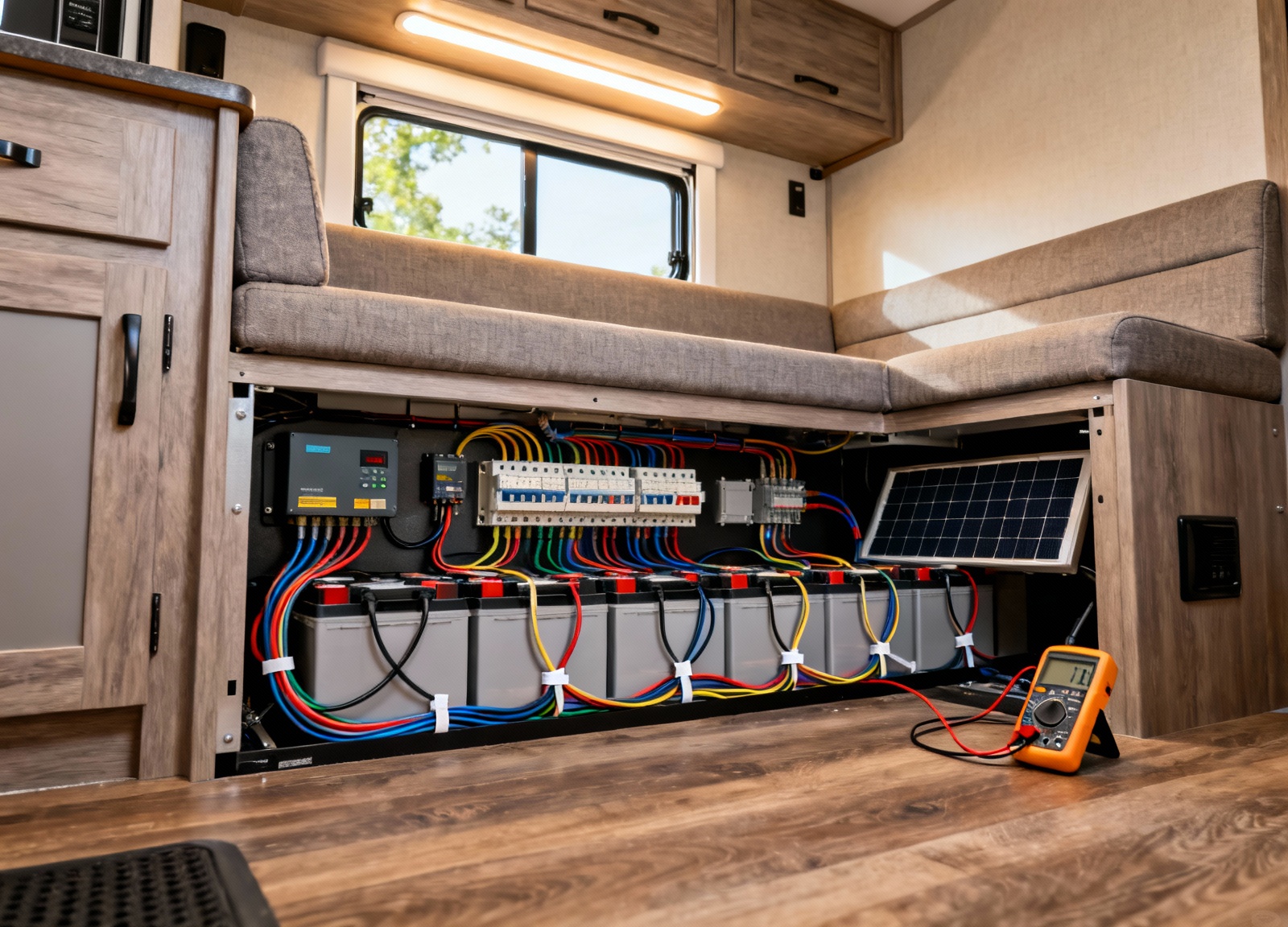
Beyond matching a kit to your camping style, consider these factors before purchasing:
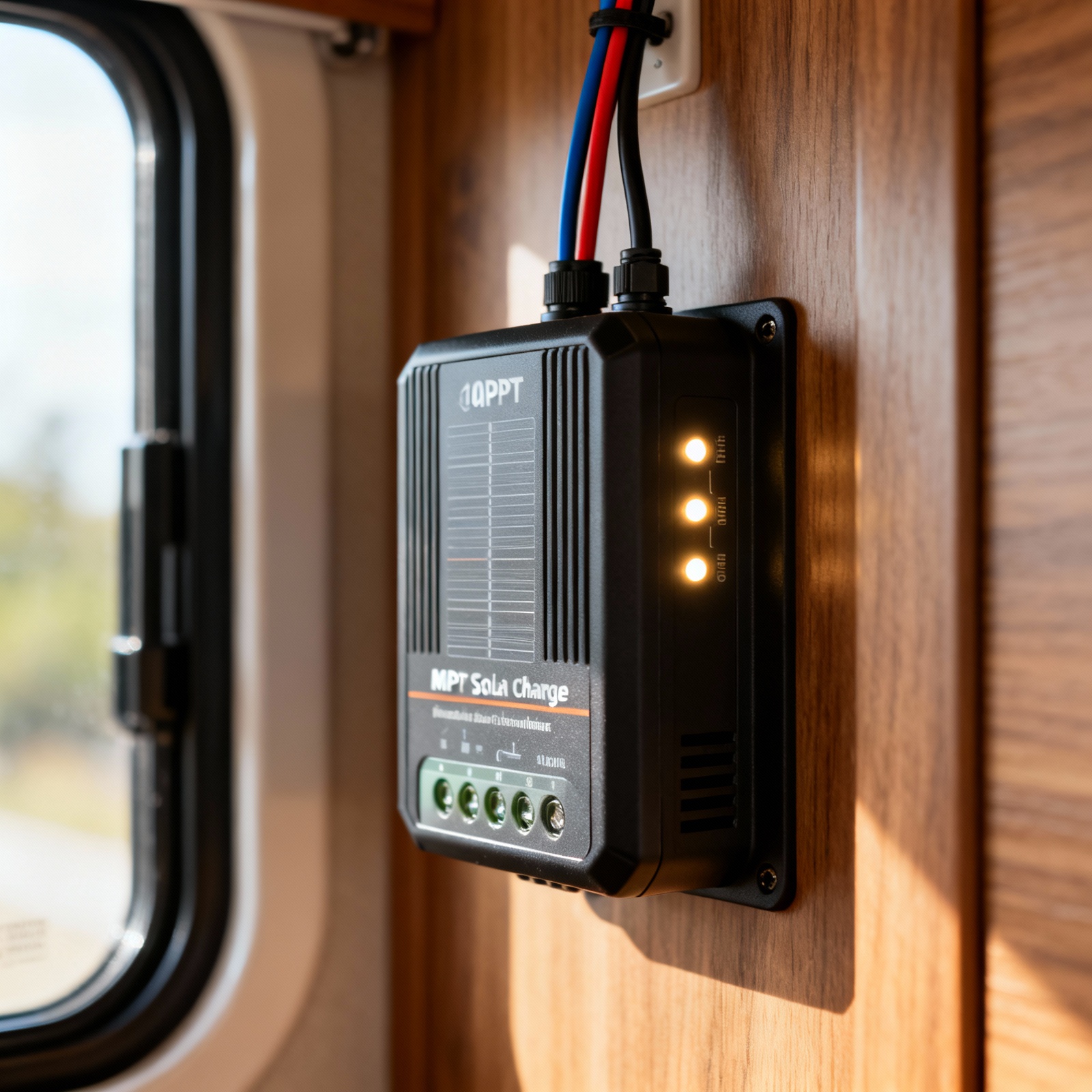
Controller type matters more than you think. MPPT controllers cost more but harvest 15-30% more power than PWM, especially in non-ideal conditions like partial shade, cold weather, or when panels aren’t perfectly oriented. If you’re investing in quality panels, pair them with an MPPT controller to maximize your return.
Warranty terms vary significantly. Premium brands like Renogy and Go Power! offer 25-year panel warranties and 2-5 year controller warranties. Budget brands may offer only 1-2 years of coverage. For full-time RVers, that warranty difference represents real value.
Expandability deserves consideration. A 200W kit might be perfect today, but what happens when you add a second battery or upgrade to a residential fridge? Look for controllers with headroom—a 40A controller can handle future panel additions, while a 20A controller limits your expansion options.
Don’t overlook cable quality. Cheap kits often include undersized cables that create voltage drop and heat buildup. For runs over 15 feet, consider upgrading to 10 AWG or 8 AWG wire regardless of what’s included in your kit.
Comparison Table
| Model | Type | Key Specs | Best For | Pros | Cons |
|---|---|---|---|---|---|
| Renogy 200W 12V Mono Kit | Rigid Monocrystalline | 200W, 21-22% eff., 40A MPPT | Boondocking | High efficiency, excellent warranty | Higher cost |
| Renogy 200W Premium Kit | Rigid Monocrystalline | 200W, upgraded connectors, 40A MPPT | Extended Off-Grid | Premium components, heavy-gauge wire | Premium pricing |
| ACOPOWER 200W Poly Kit | Rigid Polycrystalline | 200W, 17-19% eff., 30A PWM | Budget Weekenders | Excellent value, complete kit | Lower efficiency |
| ECO-WORTHY 200W Kit | Rigid Monocrystalline | 200W (2×100W), 30A PWM, Z-brackets | Budget Conscious | Complete kit for roof install | PWM (not MPPT) |
| Go Power! Overlander 200W | Portable Monocrystalline | 200W, adjustable kickstand, foldable | Winter Camping | Angle adjustment, portable | Manual setup required |
| Renogy 200W Eclipse Kit | Rigid Monocrystalline | 200W, all-black cells, MPPT | Cold Weather | Snow melt, cold voltage capture | Aesthetic preference |
| BougeRV 200W Flexible Kit | Flexible Monocrystalline | 200W, ~10 lbs, 248° bend | Van Life / Minimalist | Ultra-light, curves to roof | Shorter lifespan |
| Dokio 200W Foldable Kit | Portable Foldable | 200W, ~12 lbs, integrated controller | No-Install Minimalist | No roof mods, compact storage | Manual deployment |
Which One Should You Buy?

Your ideal 200W solar kit depends entirely on how you camp.
If you’re a boondocker who needs maximum independence and reliability, invest in the Renogy 200W Monocrystalline Kit with its MPPT controller and premium components—the extra cost pays dividends in energy harvest and longevity.
Weekend warriors on a budget should grab the ACOPOWER 200W Polycrystalline Kit. It covers the basics without overspending, and for occasional use at developed campgrounds with backup shore power, you won’t miss the premium features.
Cold-weather campers chasing ski slopes or fall foliage need the positioning flexibility of the Go Power! Overlander 200W Portable Kit. That adjustable kickstand and ability to chase sunny spots makes all the difference when the sun barely clears the horizon.
Van lifers and minimalists prioritizing weight and space should look at the BougeRV 200W Flexible Kit. Yes, the lifespan is shorter than rigid panels, but the weight savings and low-profile installation often outweigh that tradeoff for the mobile lifestyle.
Safety & Common Mistakes
- Install a correctly sized fuse close to the battery positive terminal—typically 15-20A for a 200W system, but check your controller’s specifications.
- Choose wire gauge for the expected current and run length; target ≤3% voltage drop. For 200W at 12V over 20 feet, 10 AWG is the minimum.
- Use proper battery and array disconnects; de-energize before any work. Solar panels produce power whenever light hits them.
- Double-check polarity before connecting—reversed polarity can instantly destroy charge controllers.
- Secure all cables with strain relief and UV-resistant conduit where exposed to prevent chafing and sun damage.
- Seal all roof penetrations with self-leveling lap sealant designed for RV use; standard silicone will fail.
Always follow manufacturer instructions and local electrical codes. When in doubt, consult a qualified RV technician.
Recommended Gear
- Victron SmartSolar MPPT 100/30 — View on Amazon
- Renogy 100W Monocrystalline Panel — View on Amazon
- Battle Born 100Ah LiFePO4 Battery — View on Amazon
FAQs
- Is 200 watts enough solar for RV camping? For most weekend campers running LED lights, charging phones, and powering a 12V fan, 200W provides adequate power. Full-timers running residential refrigerators or air conditioning will need 400-800W or more. Calculate your daily watt-hour consumption and size accordingly.
- Portable vs fixed panels—which is better? Portable panels offer flexibility and work great for renters or occasional campers who want to chase the sun. Fixed panels charge while driving, handle all weather without setup time, and can’t be stolen from your campsite. Many serious RVers use both.
- Will MPPT help in winter? Absolutely. MPPT controllers convert higher cold-weather voltage into usable current, typically yielding 10-25% more power than PWM in winter conditions. Cold panels produce more voltage, and MPPT captures this bonus that PWM controllers waste.
- Can I mix different panel brands in my system? It’s possible but not ideal. Mismatched panels can cause the system to underperform because the weakest panel limits the string. If mixing brands, ensure similar voltage specifications and use an MPPT controller, which handles voltage differences better than PWM.
- How long will a 200W kit last? Quality rigid monocrystalline panels typically last 25-30 years, though output degrades roughly 0.5% annually. Flexible panels have shorter lifespans of 10-15 years. Charge controllers and wiring may need replacement after 10-15 years depending on conditions and quality.
- Do I need to tilt my panels? Tilting panels toward the sun can increase output by 20-40%, especially in winter or at northern latitudes. Fixed roof-mount panels work fine for summer camping but sacrifice efficiency. Portable panels with adjustable stands offer the best of both worlds.
As an Amazon Associate, we earn from qualifying purchases. This helps keep SunAmpRV running.