

Selecting the right solar panel kit for your RV requires matching wattage output, panel type, and included components to your specific power demands and mounting preferences. This guide breaks down the technical specifications, compatibility considerations, and real-world performance factors that matter most for mobile solar installations.
TL;DR — Best Picks
Best Overall: Renogy 400W Premium Kit – Delivers high efficiency monocrystalline cells with a robust 40A MPPT controller and comprehensive mounting hardware.
Best Budget: HQST 200W Polycrystalline Kit – Solid entry-level performance at approximately $1.00/watt with PWM controller included.
Best for Boondocking: Zamp Solar 200W Portable Suitcase – Quick deployment without permanent installation, ideal for extended off-grid stays.
Buyer’s Guide
Power & Sizing
Calculate your daily watt-hour (Wh) consumption before selecting kit wattage. A typical RV refrigerator draws 40–60W continuously, LED lighting totals 10–30W, and device charging adds 20–50W. Multiply each load’s wattage by hours of use to get daily Wh.
For example: 50W fridge × 24h = 1,200Wh; 20W lights × 5h = 100Wh; 30W charging × 3h = 90Wh. Total: 1,390Wh/day.
Solar panels produce rated wattage only under Standard Test Conditions (STC): 1,000 W/m² irradiance, 25°C cell temperature, AM 1.5 spectrum. Real-world output typically reaches 70–85% of rated capacity due to temperature derating, angle losses, and atmospheric conditions. A 400W array realistically generates 280–340W peak and harvests 1,400–2,000Wh daily with 5–6 peak sun hours.
Size your system with a 20–30% buffer above calculated needs to account for cloudy days, seasonal variation, and system losses through wiring, controller conversion, and battery charging inefficiency.
Portability vs Fixed
Fixed roof-mount systems maximize harvest area and require no daily setup. They work continuously while driving and parked. Drawbacks include permanent roof penetrations (potential leak points), inability to angle toward the sun, and reduced output when parked in shade while the roof remains in sunlight.
Portable suitcase kits eliminate roof modifications and allow optimal sun tracking by repositioning throughout the day. A properly angled portable panel can outperform a larger fixed panel by 15–25% in certain conditions. However, portables require storage space, setup time, and supervision to prevent theft. They cannot charge while driving.
Hybrid approaches work well: install a modest fixed array (100–200W) for baseline charging and supplement with a portable suitcase for extended boondocking sessions.
Panel Technology: Monocrystalline vs Polycrystalline vs Flexible
Monocrystalline panels offer the highest efficiency (19–23%) and best performance in low-light conditions. Their uniform black appearance and single-crystal structure command premium pricing but deliver more watts per square foot—critical when roof space is limited.
Polycrystalline panels use multi-crystal silicon, resulting in lower efficiency (15–18%) and a distinctive blue speckled appearance. They cost 10–20% less than monocrystalline equivalents but require more surface area for equivalent output.
Flexible panels use thin-film or monocrystalline cells laminated onto bendable substrates. They weigh 70–80% less than rigid panels and conform to curved surfaces. However, they suffer from reduced heat dissipation (lowering output 10–15% in hot conditions), shorter lifespans (5–10 years vs 25+ years for rigid), and higher degradation rates.
Compatibility (MPPT/Inverter)
Charge controllers regulate voltage and current from panels to batteries. PWM (Pulse Width Modulation) controllers are simpler and cheaper but waste potential power by clamping panel voltage to battery voltage. A 100W panel at 18V connected to a 12.5V battery through PWM delivers only ~69W effective.
MPPT (Maximum Power Point Tracking) controllers convert higher panel voltage to optimal charging current, capturing 15–30% more energy than PWM—especially valuable in cold weather when panel voltage rises. For systems over 200W, MPPT controllers typically pay for themselves within 1–2 years through increased harvest.
Verify controller input voltage limits match your panel configuration. Series-wired panels increase voltage; parallel wiring increases amperage. A 4-panel 400W array wired in series produces ~80V open-circuit voltage (Voc), requiring a controller rated for 100V+ input. The same array in parallel produces ~20V Voc but requires thicker wiring for higher current.
Battery chemistry matters. LiFePO4 batteries require specific charge profiles (typically 14.2–14.6V absorption, 13.6V float) different from lead-acid (14.4–14.8V absorption, 13.2–13.6V float). Ensure your controller supports programmable charge parameters or has preset lithium modes.
Mounting Hardware & Installation Considerations
Quality kits include Z-brackets or corner mounts, cable entry glands, and appropriate fasteners. Z-brackets provide airflow beneath panels, improving heat dissipation and extending panel life. Corner mounts sit lower but may trap heat.
Cable entry glands (also called weatherproof cable boxes) seal roof penetrations while allowing cable passage. Use self-leveling lap sealant (Dicor or equivalent) around all roof attachments—never silicone, which doesn’t adhere properly to RV roofing materials.
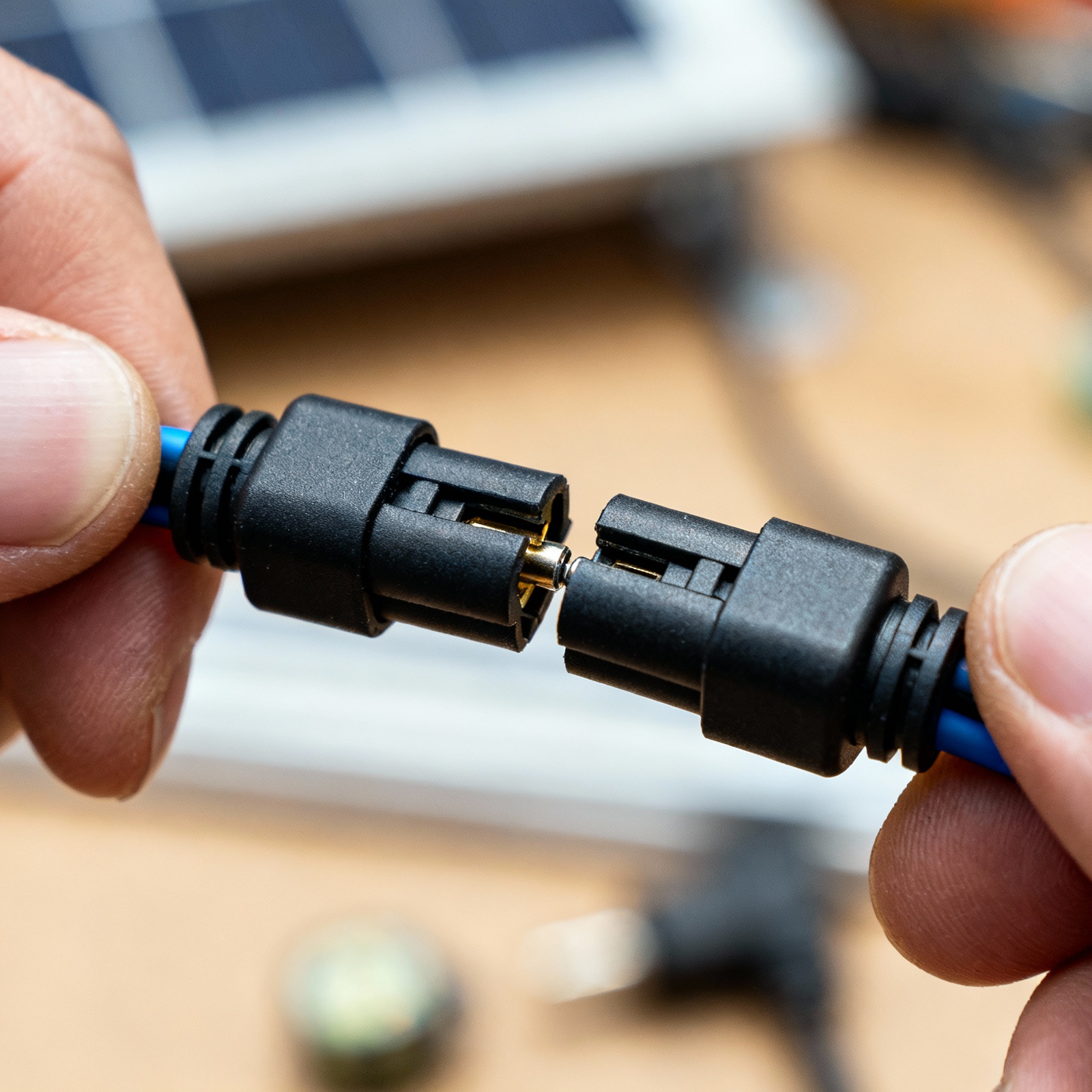
Pre-wired kits with MC4 connectors simplify installation. Verify included cable gauge matches your system current and run length. Most kits include 10 AWG wire, adequate for 30A over 15 feet with acceptable voltage drop.
Product Details
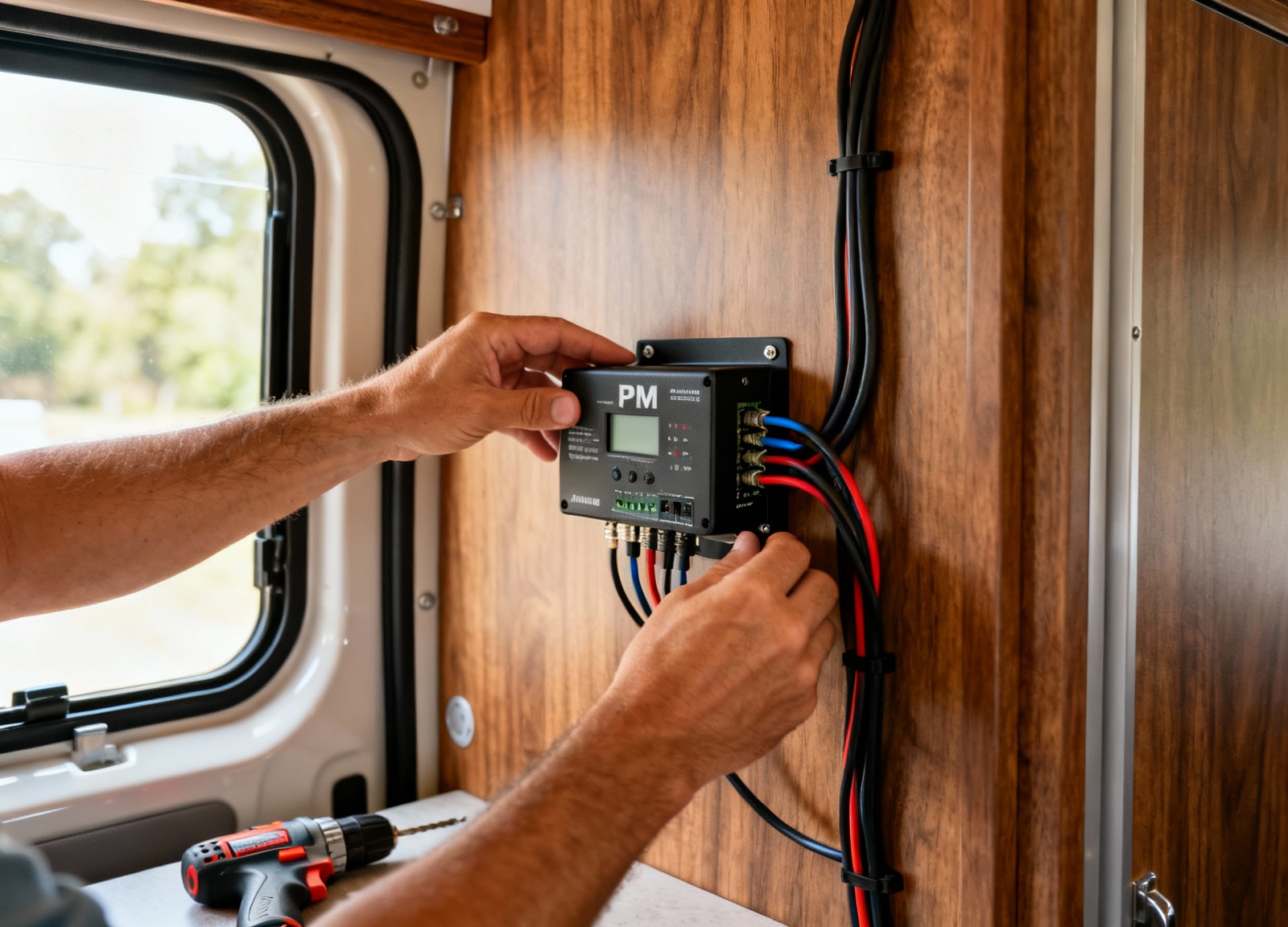
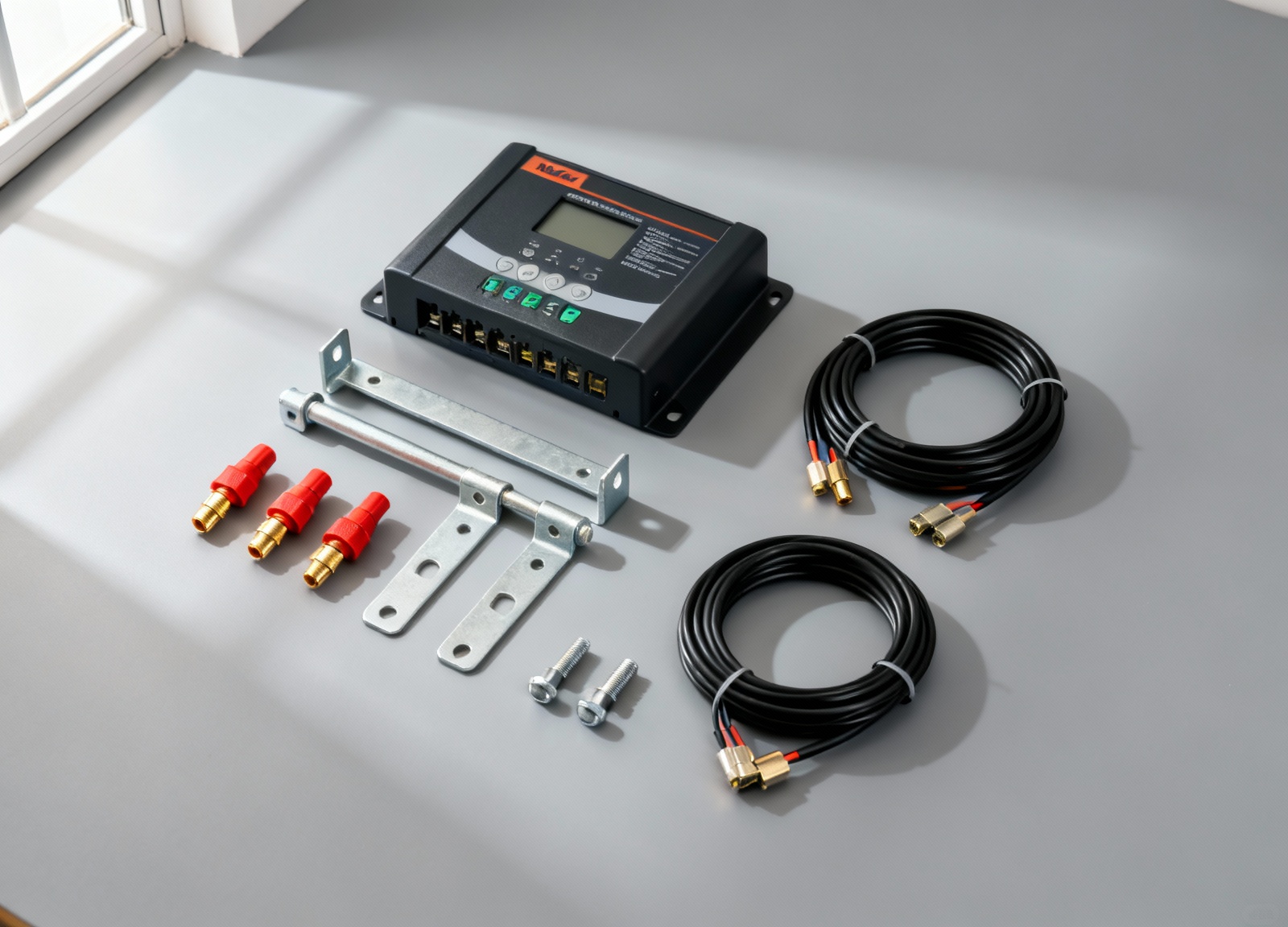
Renogy 400W Premium Kit
Key specs: 400W total output from four 100W monocrystalline panels, 20.4V Vmp per panel, 5.29A Imp per panel, 40A Rover MPPT controller (Bluetooth monitoring requires a BT module unless your bundle includes it), 47.6 lbs combined panel weight, 25-year panel warranty, 5-year controller warranty. View on Amazon
- The Rover 40A MPPT controller supports up to 520W input at 12V nominal, allowing future expansion without controller replacement
- Panels feature bypass diodes minimizing partial-shade losses and corrosion-resistant aluminum frames rated for 2,400 Pa wind loads
- Optional Bluetooth monitoring (via a BT module if purchased/bundled) provides real-time production data, historical graphs, and fault alerts
- Kit includes mounting hardware, MC4 branch connectors, 20 feet of 10 AWG tray cable, and cable entry housing
- Requires significant roof real estate: four panels occupy approximately 28 square feet total
- Premium pricing positions this kit 30–40% above budget alternatives with similar wattage
HQST 200W Polycrystalline Kit
Key specs: 200W total output from two 100W polycrystalline panels, 18.36V Vmp per panel, 5.45A Imp per panel, 30A PWM controller, 26.5 lbs combined panel weight, 5-year panel warranty, 1-year controller warranty. View on Amazon
- Exceptional value at approximately $1.00 per watt including controller and basic mounting hardware
- PWM controller limits harvest efficiency but includes USB ports for direct device charging
- Polycrystalline cells perform adequately in full sun but show 5–8% lower output than monocrystalline equivalents in overcast conditions
- Straightforward installation with included Z-brackets and pre-attached MC4 connectors
- 30A controller provides headroom for adding a third 100W panel without upgrade
- Shorter warranty period and basic controller features reflect budget positioning
Zamp Solar 200W Portable Suitcase
Key specs: 200W total output from two hinged 100W monocrystalline panels, 18.4V Vmp, 10.87A Imp, integrated 10A PWM controller, 42 lbs folded weight, 5-year warranty, includes 15-foot extension cable with SAE connector.
- Adjustable aluminum legs allow optimal sun angle positioning, potentially increasing daily harvest 20–30% versus flat-mounted panels
- No roof penetrations required—ideal for renters, leased RVs, or those avoiding permanent modifications
- Zamp’s proprietary SAE port system is widely pre-installed on RVs from major manufacturers including Winnebago and Airstream
- Rugged carrying case protects panels during transport and storage
- Integrated 10A controller limits system to its rated output; external MPPT controller recommended for maximum efficiency
- Requires secure storage location and cannot charge while vehicle is in motion
- Higher cost per watt than fixed installations reflects portability premium
SunGoldPower 200W Monocrystalline Kit
Key specs: 200W total output from two 100W monocrystalline panels, 19.8V Vmp per panel, 5.05A Imp per panel, 20A MPPT controller, 24 lbs combined panel weight, 25-year panel warranty, 2-year controller warranty.
- Includes MPPT controller at price points where competitors typically bundle PWM units
- Lightweight panel construction (12 lbs each) reduces roof load concerns on smaller RVs
- Controller supports lithium battery profiles with adjustable charge parameters
- 20A MPPT controller limits practical expansion to approximately 260W at 12V nominal
- Mounting hardware is functional but basic; consider upgrading brackets for high-wind areas
- Less established brand presence than Renogy or Zamp, though customer reviews indicate solid reliability
BougeRV 200W Flexible Kit
Key specs: 200W total output from two 100W flexible monocrystalline panels, 18.0V Vmp per panel, 5.55A Imp per panel, 30A PWM controller, 5.5 lbs per panel, 1-year warranty.
- Ultra-lightweight construction (5.5 lbs per panel vs 15+ lbs for rigid equivalents) suits weight-sensitive applications
- Panels flex up to 30° arc, conforming to curved fiberglass roofs common on Class B and C motorhomes
- Low-profile installation (less than 0.1 inch thick) minimizes wind resistance and aesthetic impact
- Adhesive mounting eliminates drilling but requires careful surface preparation and may complicate future removal
- Reduced heat dissipation compared to raised rigid panels can decrease output 10–15% on hot days
- Shorter lifespan expectation (5–10 years) and limited warranty reflect flexible panel technology trade-offs
- PWM controller adequate for this wattage but limits efficiency gains
Safety & Common Mistakes
- Install DC fuse/breaker near the battery (e.g., 250A for ~2000W/12V) — max 18 in (45 cm) from the positive post.
- Use correct cable size for high current: 2/0 AWG (≤5 ft / 1.5 m), up to 4/0 AWG for longer runs to minimize voltage drop.
- Provide ventilation: ≥6″ clearance around heatsinks/fans; avoid sealed compartments.
- Never back-feed the shore power inlet from the inverter output.
- Ground the chassis to the vehicle frame (≥8 AWG copper) and torque all lugs to spec.
Comparison Table
| Model | Type | Key Specs | Best for | Pros | Cons |
|---|---|---|---|---|---|
| Renogy 400W Premium Kit | Roof-mount monocrystalline | 400W total (4×100W), 20.4V Vmp, 19.6A Imp combined, 40A MPPT controller, 47.6 lbs total panel weight, 25-year warranty | Full-time RVers needing reliable daily harvest | High cell efficiency (21%+), comprehensive hardware, expandable to 800W | Higher upfront cost, requires roof space for four panels |
| HQST 200W Polycrystalline Kit | Roof-mount polycrystalline | 200W total (2×100W), 18.36V Vmp, 10.9A Imp combined, 30A PWM controller, 26.5 lbs total panel weight, 5-year warranty | Budget-conscious weekend campers | Low cost per watt (~$1.00/W), straightforward installation | Lower efficiency (17%), PWM controller limits harvest potential |
| Zamp Solar 200W Portable Suitcase | Portable folding monocrystalline | 200W total, 18.4V Vmp, 10.87A Imp, integrated 10A PWM controller, 42 lbs folded, 5-year warranty | Boondockers who move frequently | No roof penetrations, angle-adjustable legs, quick connect | Must store when traveling, lower controller capacity |
| SunGoldPower 200W Monocrystalline Kit | Roof-mount monocrystalline | 200W total (2×100W), 19.8V Vmp, 10.1A Imp combined, 20A MPPT controller, 24 lbs total panel weight, 25-year panel warranty | Mid-range buyers wanting MPPT efficiency | MPPT controller included at competitive price, lightweight panels | Smaller controller limits expansion, mounting hardware basic |
| Renogy 200W Portable Solar Suitcase | Portable folding monocrystalline | 200W total, 20.0V Vmp, 10.0A Imp, 20A PWM controller, 24.3 lbs folded, 5-year warranty | Travelers wanting portability with brand reliability | Compact fold, corrosion-resistant frame, built-in kickstand | PWM controller, premium price for portable format |
| ECO-WORTHY 400W Complete Kit | Roof-mount monocrystalline | 400W total (4×100W), 18.0V Vmp, 22.2A Imp combined, 40A MPPT controller (Bluetooth module included), 52 lbs total panel weight, 25-year panel warranty | High-capacity needs on a budget | Aggressive pricing, high-amp controller, includes cables and connectors | PWM controller inefficiency, heavier panels, mixed component quality reports |
| BougeRV 200W Flexible Kit | Flexible monocrystalline | 200W total (2×100W), 18.0V Vmp, 11.1A Imp combined, 30A PWM controller, 5.5 lbs per panel, 1-year warranty | Curved roof applications, weight-sensitive rigs | Ultra-lightweight, conforms to curved surfaces, low profile | Shorter lifespan than rigid panels, heat dissipation concerns, limited warranty |
Recommended Gear
- Victron SmartSolar MPPT 100/30 — View on Amazon
- Renogy 100W Monocrystalline Panel — View on Amazon
- Battle Born 100Ah LiFePO4 Battery — View on Amazon
FAQs
- Who makes the best solar panels for RVs? Renogy dominates the RV solar market with proven reliability, comprehensive kit options, and strong warranty support. Zamp Solar leads in portable/suitcase configurations and OEM installations. For budget builds, HQST and Rich Solar offer competitive value. Panel quality matters less than proper system design—a well-configured budget kit outperforms a poorly installed premium system.
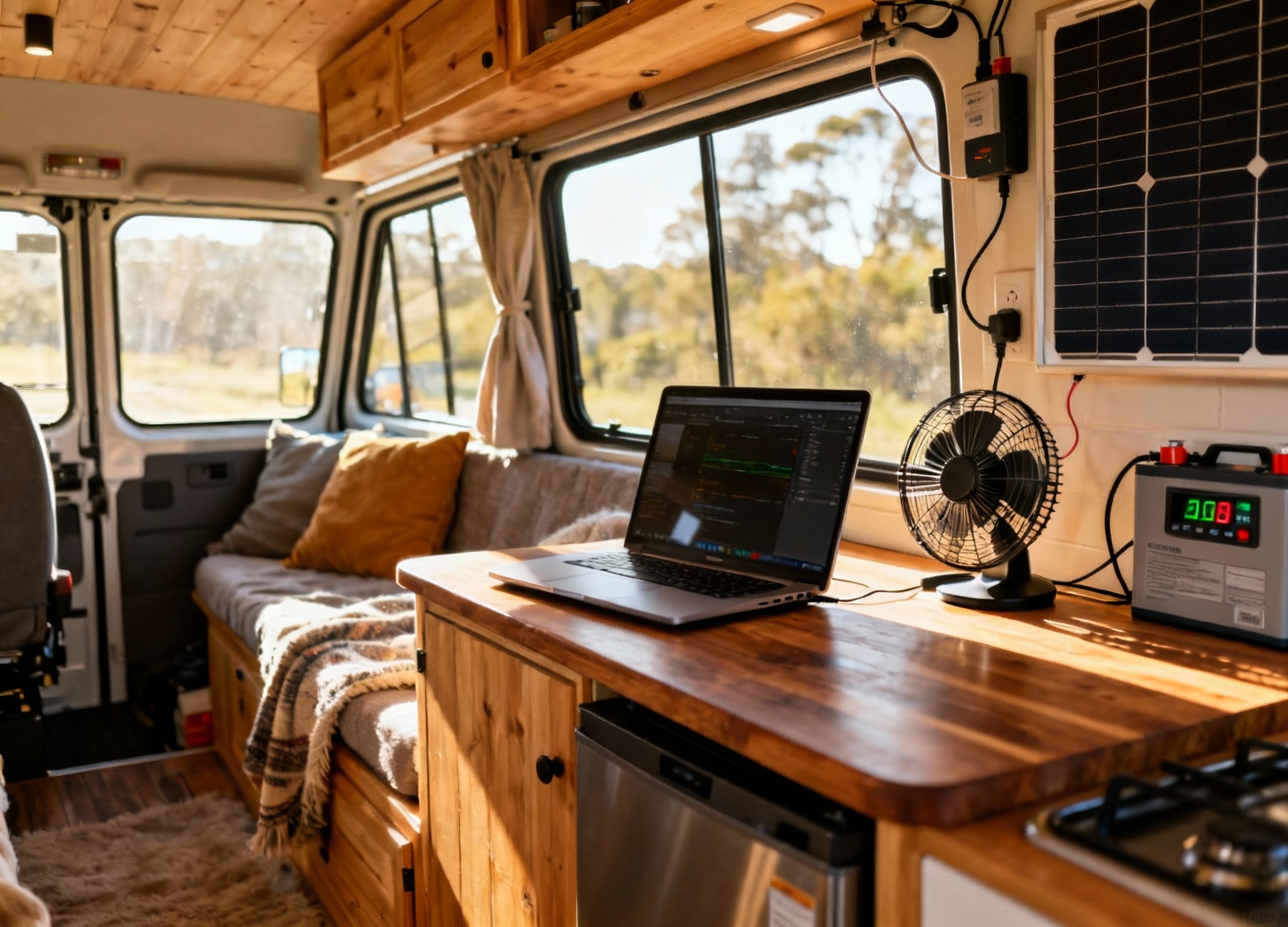
- Can a 200 watt solar panel run a 12 volt refrigerator? A 200W panel can support a 12V compressor refrigerator drawing 40–60W average, but battery capacity determines overnight operation. The panel produces approximately 800–1,200Wh daily (4–6 peak sun hours × 200W × 0.85 efficiency factor). A typical RV fridge consumes 1,000–1,400Wh daily. You’ll need adequate battery storage (minimum 200Ah lithium or 400Ah lead-acid) to bridge nighttime hours and cloudy periods.
- MPPT vs PWM: Which is better for RVs? MPPT controllers are typically 15–30% more efficient, especially in cold weather or partial shade. PWM is cheaper but wastes more potential power. For systems under 200W with tight budgets, PWM remains acceptable. Above 200W, MPPT efficiency gains typically offset the $50–100 price premium within one to two camping seasons.
- Do I need lithium-compatible controller settings? Yes—if using LiFePO4 batteries, ensure the controller supports their specific charge profile to avoid damage or reduced lifespan. Lithium batteries require lower absorption voltage (14.2–14.6V vs 14.4–14.8V for lead-acid) and should not receive equalization charges. Most modern MPPT controllers include lithium presets; verify before purchasing.
- How do I calculate the wire gauge I need? Use the voltage-drop formula: Voltage Drop = (2 × Length × Current × Resistance per foot) ÷ 1000. Target ≤3% drop (0.36V at 12V nominal). Online calculators simplify this—input your current (amps), one-way cable length (feet), and system voltage. For 20A over 15 feet at 12V, 8 AWG maintains acceptable drop; 6 AWG provides additional margin.
- Can I expand my solar system later? Yes—most MPPT controllers allow adding panels up to their rated input wattage and voltage limits. Plan your initial wiring to accommodate future expansion: install conduit with pull strings, use junction boxes with spare knockouts, and select a controller with 30–50% headroom above initial panel wattage. Adding panels to an existing system typically requires only MC4 branch connectors and additional mounting hardware.
As an Amazon Associate, we earn from qualifying purchases. This helps keep SunAmpRV running.