TL;DR
- Audit daily Wh: Sum each load’s wattage × hours per day to find your total daily energy need.
- Apply DoD: Divide by usable depth of discharge — 50% for lead-acid, 80–90% for LiFePO4.
- Add autonomy days: Multiply by the number of days you want to go without charging.
Introduction to Battery Bank Sizing
A typical RV consumes between 50 and 200 amp-hours per day, yet most factory-installed battery banks deliver only 80–100 usable amp-hours. That mismatch is why lights dim, fridges shut down, and boondocking trips end early. Sizing a battery bank correctly starts with honest math, not guesswork.
Daily Energy Audit
Every reliable battery bank starts with a daily energy audit. List each electrical appliance in your RV, note its power draw in watts, estimate how many hours per day you run it, and multiply watts by hours to get watt-hours per day (Wh/day). Sum every row and you have the single most important number in the entire sizing process—your total daily energy consumption.
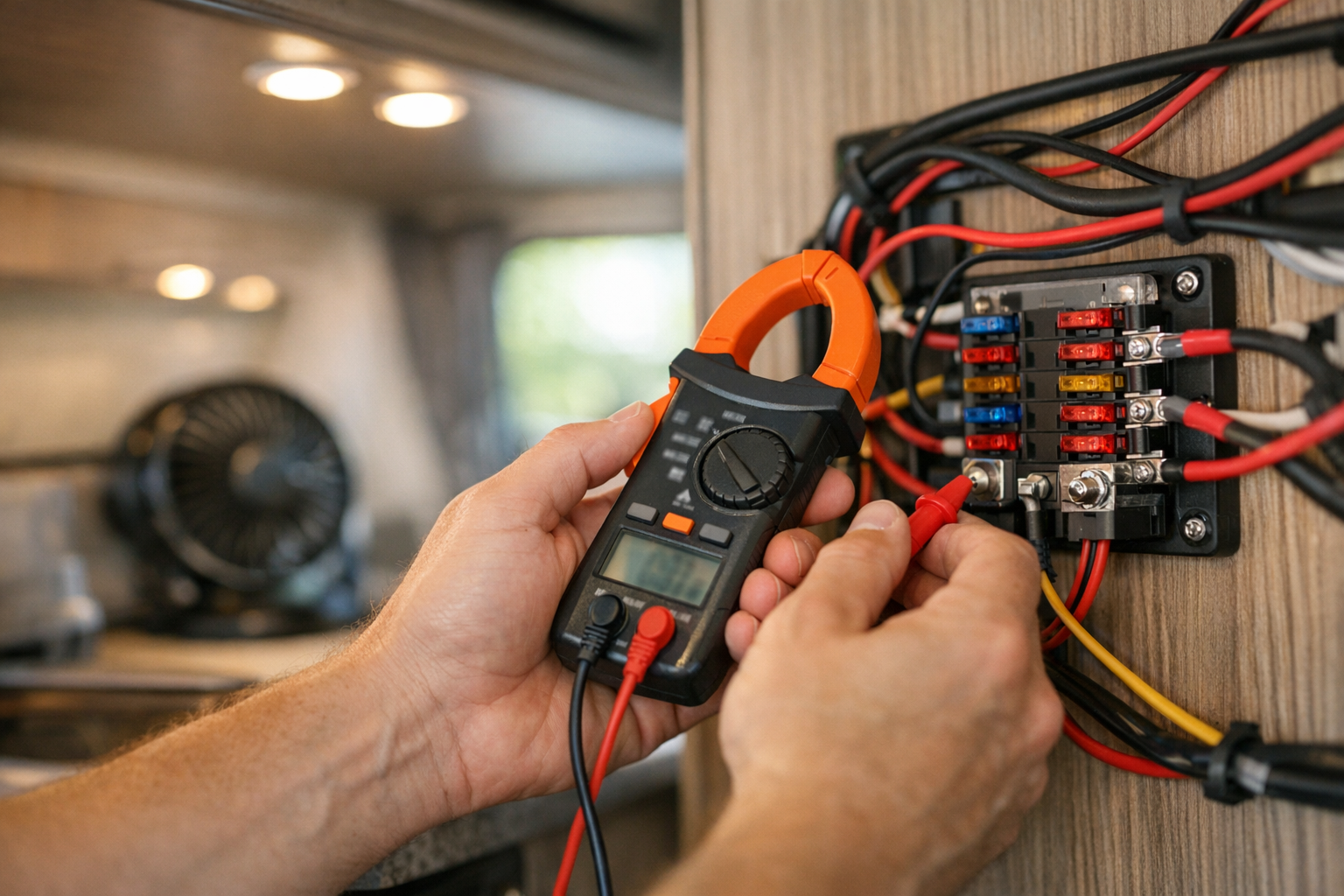
Be ruthless about accuracy. Underestimating by even 15–20 percent can leave you stranded on the second night of a boondocking trip. If you own a clamp meter or a plug-in watt meter, use it to measure real draw rather than relying on nameplate ratings, which often overstate continuous consumption.
Don’t forget phantom loads. An inverter on standby can pull 10–25 W around the clock, a propane detector draws 1–2 W continuously, and a cell booster may consume 8–12 W even when idle. Over 24 hours, these small loads add up to hundreds of watt-hours.
| Appliance | Watts | Hours/Day | Wh/Day |
|---|---|---|---|
| LED Interior Lights (5 fixtures) | 25 | 5 | 125 |
| 12V Compressor Fridge | 50 | 12 | 600 |
| Water Pump | 60 | 0.5 | 30 |
| Laptop Charger (via inverter) | 65 | 3 | 195 |
| Roof Vent Fan | 30 | 8 | 240 |
| Cell Booster | 10 | 24 | 240 |
| Inverter Standby Draw | 15 | 24 | 360 |
| Phone & Tablet Charging | 15 | 4 | 60 |
In this representative audit the total daily energy need is 1,850 Wh/day. That figure becomes the foundation for every calculation that follows. Adding a residential coffee maker, a microwave, or an air conditioner—even for short bursts—can push the number dramatically higher. A 1,000 W microwave running for just 15 minutes adds roughly 250 Wh once you account for inverter inefficiency (typically 85–90 percent). Always apply an inverter efficiency factor of 10–15 percent on any AC load.
Keep a log for at least two or three typical days. Weekday and weekend routines often differ, and seasonal changes—running a furnace blower in winter versus a fan in summer—shift the balance significantly.
Worked Examples
Example 1: Weekend Camper (12V Lead-Acid)
Sarah uses her travel trailer for two- to three-night weekend trips. She runs LED lights, a 12V compressor fridge, a roof vent fan, charges her phone, and occasionally uses a small water pump.
| Appliance | Watts | Hours/Day | Wh/Day |
|---|---|---|---|
| LED Lights | 20 | 4 | 80 |
| 12V Compressor Fridge | 45 | 12 | 540 |
| Roof Vent Fan | 25 | 6 | 150 |
| Phone Charging | 10 | 3 | 30 |
| Water Pump | 55 | 0.3 | 17 |
Total daily draw: 817 Wh/day.
Sarah wants two days of autonomy (no solar, no generator) on a 12V lead-acid bank with 50 percent DoD.
Step 1—Convert to amp-hours per day: 817 Wh ÷ 12V = 68.1 Ah/day.
Step 2—Multiply by days of autonomy: 68.1 Ah × 2 = 136.2 Ah.
Step 3—Divide by DoD: 136.2 Ah ÷ 0.50 = 272.4 Ah nameplate capacity.
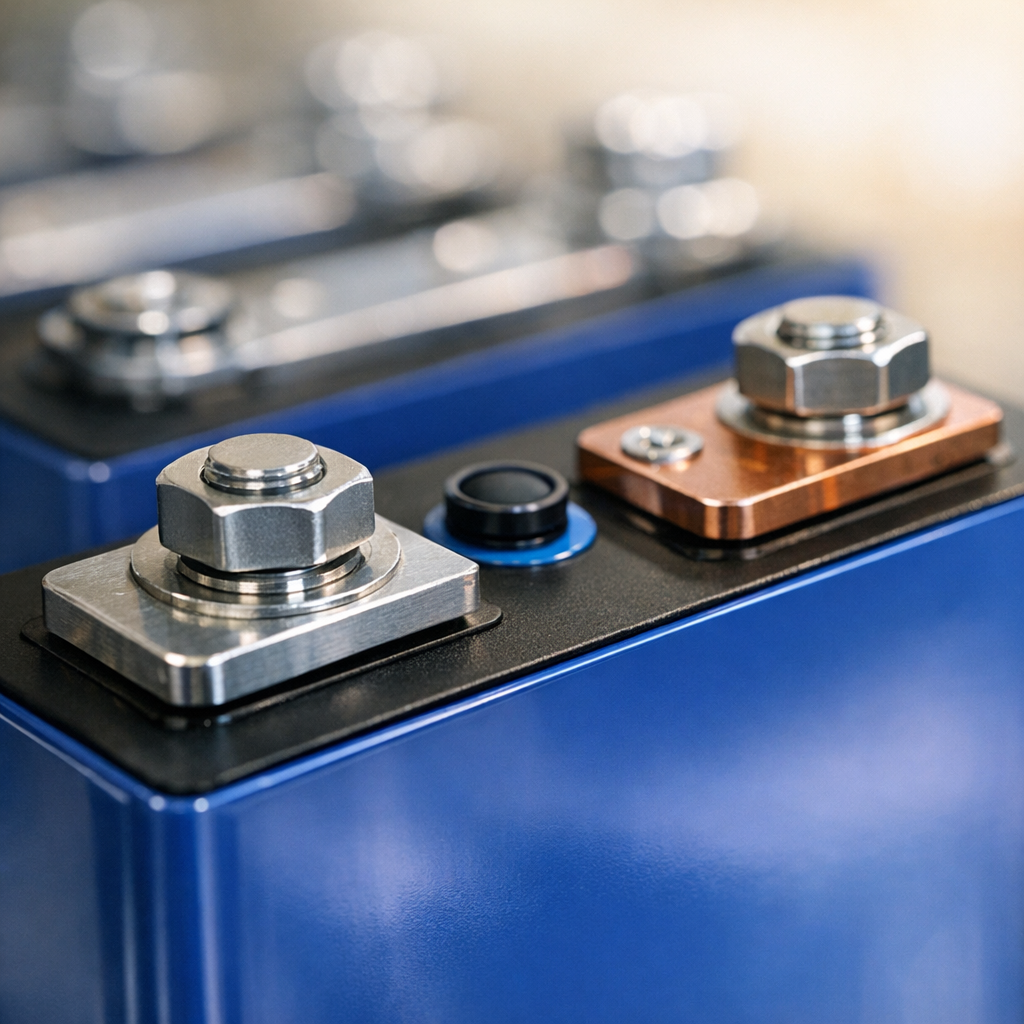
Sarah needs approximately 280 Ah of lead-acid capacity—roughly three Group 31 AGM batteries (each rated around 95–105 Ah) wired in parallel. Total weight: about 195 lbs. Retail cost: roughly $450–$700 depending on brand.
Adding a 200 W solar panel could recover 60–80 Ah per day in good sun, extending her autonomy or allowing her to downsize to two batteries for shorter trips.
Example 2: Full-Timer (12V LiFePO4)
Mike and Dana live in their fifth wheel year-round and boondock frequently in the desert Southwest. Their energy audit is more demanding:
| Appliance | Watts | Hours/Day | Wh/Day |
|---|---|---|---|
| LED Lights (8 fixtures) | 40 | 6 | 240 |
| 12V Compressor Fridge | 55 | 14 | 770 |
| Roof Vent Fan | 30 | 10 | 300 |
| Two Laptops (via inverter, adjusted for 88% efficiency) | 148 | 4 | 592 |
| Cell Booster | 12 | 24 | 288 |
| Inverter Standby | 18 | 24 | 432 |
| Water Pump | 60 | 0.5 | 30 |
| Microwave (via inverter, adjusted) | 1,250 | 0.2 | 250 |
Total daily draw: 2,902 Wh/day.
They want three days of autonomy on a 12V LiFePO4 bank at 80 percent DoD.
Step 1—Convert to amp-hours per day: 2,902 Wh ÷ 12V = 241.8 Ah/day.
Step 2—Multiply by days of autonomy: 241.8 Ah × 3 = 725.5 Ah.
Step 3—Divide by DoD: 725.5 Ah ÷ 0.80 = 906.9 Ah nameplate capacity.
Mike and Dana need roughly 900 Ah of LiFePO4 capacity—nine 100 Ah batteries or three 300 Ah batteries wired in parallel. At current retail prices of $350–$600 per 100 Ah, the battery investment alone is $3,150–$5,400. Weight is manageable: roughly 240–270 lbs total, comparable to just three AGM Group 31 batteries that would deliver far less usable energy.
In practice, they also run 800 W of rooftop solar, which in the desert Southwest can harvest 3,200–4,000 Wh on a clear day. That solar input covers most or all of their daily draw, so the three-day autonomy bank serves as a buffer for cloudy stretches and winter’s shorter days. Without solar, a 900 Ah bank would be impractical to recharge by generator alone—it would take 8–12 hours of generator runtime per day.
12V vs 24V Battery Banks
Most RVs roll off the lot with 12V electrical systems, and the aftermarket ecosystem—lights, water pumps, fridges, charge controllers, inverter-chargers—is overwhelmingly designed for 12V. Sticking with 12V keeps things simple and compatible.
But 12V has a physics problem: current.
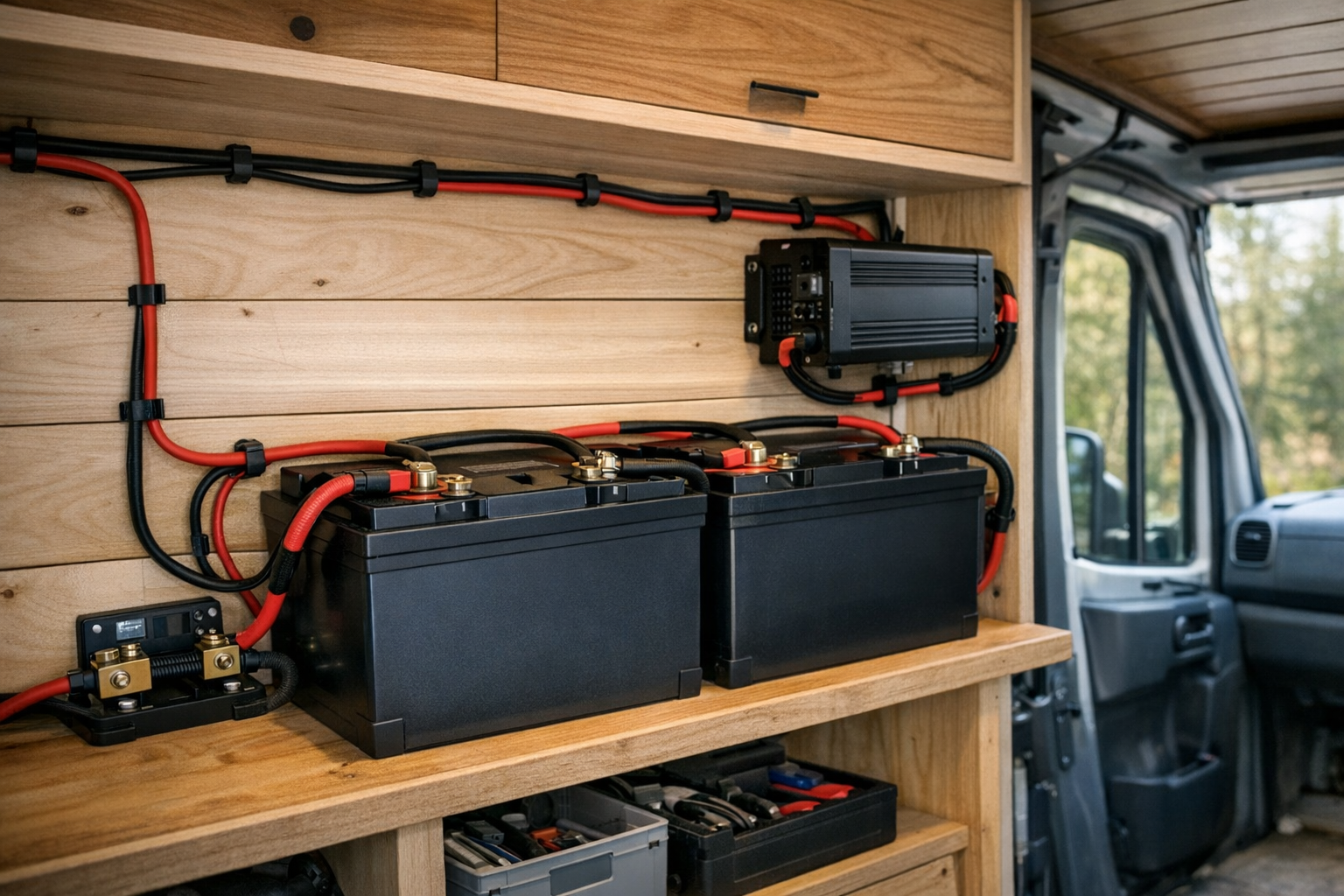
At 12V, a 3,000 W inverter draws 250 A. That requires 4/0 AWG copper cable (about 0.46 inches in diameter) for even a short three-foot run to stay within a safe 3 percent voltage drop. The cables are heavy, expensive, and stiff. Fuses and disconnect switches rated for 250+ A at 12V DC are bulky and costly.
A 24V system cuts the current in half for the same power. That same 3,000 W inverter draws only 125 A at 24V, allowing 2 AWG cable for the same run length and voltage drop. Fuses, busbars, and disconnects are smaller and cheaper. Wire losses—proportional to current squared—drop by 75 percent.
The trade-off is compatibility. At 24V you need a 24V-to-12V DC-DC converter to run standard RV appliances: lights, water pumps, slide motors, furnace blowers, and the fridge. That converter adds cost, complexity, and a small efficiency loss (typically 3–5 percent). You also need a 24V-compatible inverter-charger and solar charge controller, which narrows your product choices.
| Parameter | 12V System | 24V System |
|---|---|---|
| Current for 3,000 W load | 250 A | 125 A |
| Typical cable size (3 ft run) | 4/0 AWG | 2 AWG |
| Fuse/breaker rating | 300 A class T | 150 A class T |
| Native RV appliance compatibility | Direct | Requires DC-DC converter |
| Inverter-charger options | Wide selection | Moderate selection |
| Best suited for | Most RVs, simple builds | Large builds > 400 Ah, high-power loads |
A practical rule of thumb: if your battery bank exceeds 400 Ah and you regularly run loads above 2,000 W through an inverter, a 24V system starts to make economic and engineering sense. Below that threshold, 12V is simpler and cheaper overall. Some large Class A conversions and expedition vehicles use 48V systems, borrowing technology from the off-grid solar-home industry, but those are niche builds with very specific component requirements.
Days of Autonomy
Days of autonomy is the number of days your battery bank can sustain your daily load without any recharging—no solar, no generator, no shore power. It is the core planning variable for boondocking.
Weekend campers with reliable solar often size for one to two days. Full-timers who boondock in variable weather—Pacific Northwest winters, for example—may want three to five days. Expedition rigs heading to remote locations sometimes plan for seven days or more.
More autonomy means more batteries, more weight, more cost, and more space. The returns diminish quickly. Going from one day to two doubles your bank size. Going from two to three adds another 50 percent. At some point, a portable generator or additional solar becomes a more practical—and lighter—solution than another 200 lbs of batteries.
The sweet spot for most boondockers with a decent solar array (200–400 W) is two to three days of autonomy.
Here is a quick reference showing how autonomy days scale the bank size, using the full-timer example above (241.8 Ah/day at 12V, LiFePO4 at 80 percent DoD):
| Days of Autonomy | Total Ah Needed (Nameplate) | Approx. Number of 100 Ah LiFePO4 Batteries | Approx. Weight (lbs) |
|---|---|---|---|
| 1 | 302 | 3 | 75–90 |
| 2 | 605 | 6 | 150–180 |
| 3 | 907 | 9 | 225–270 |
| 5 | 1,511 | 15 | 375–450 |
Five days of autonomy for a high-consumption full-timer requires over 1,500 Ah—roughly $5,000–$9,000 in lithium batteries alone. For most people, investing in more solar capacity and a small generator is a better strategy than pushing beyond three days of battery autonomy.
Safety and Common Mistakes
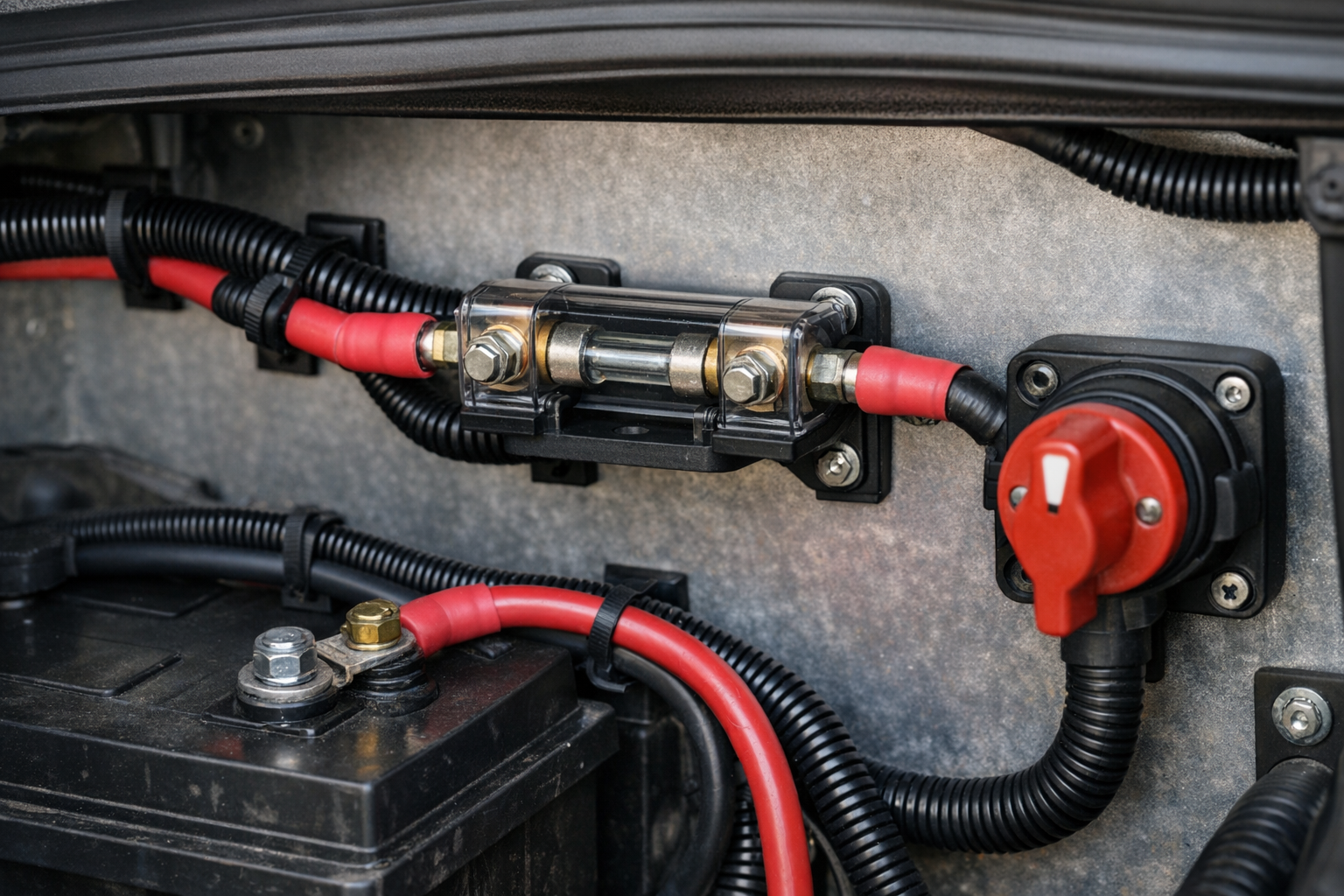
- Fuse each parallel string independently. A short circuit in one battery can draw catastrophic current from every other battery in the bank. Install a fuse or circuit breaker on the positive lead of each individual battery (or each series string in a 24V/48V configuration). Use Class T or ANL fuses rated for DC service—standard automotive blade fuses are not designed for sustained high currents.
- Never mix battery chemistries or ages. Connecting a new AGM battery in parallel with a three-year-old flooded battery creates an imbalance. The weaker battery drags down the stronger one, and the stronger battery overcharges the weaker one. The result is accelerated degradation and a potential thermal event. Replace batteries in matched sets.
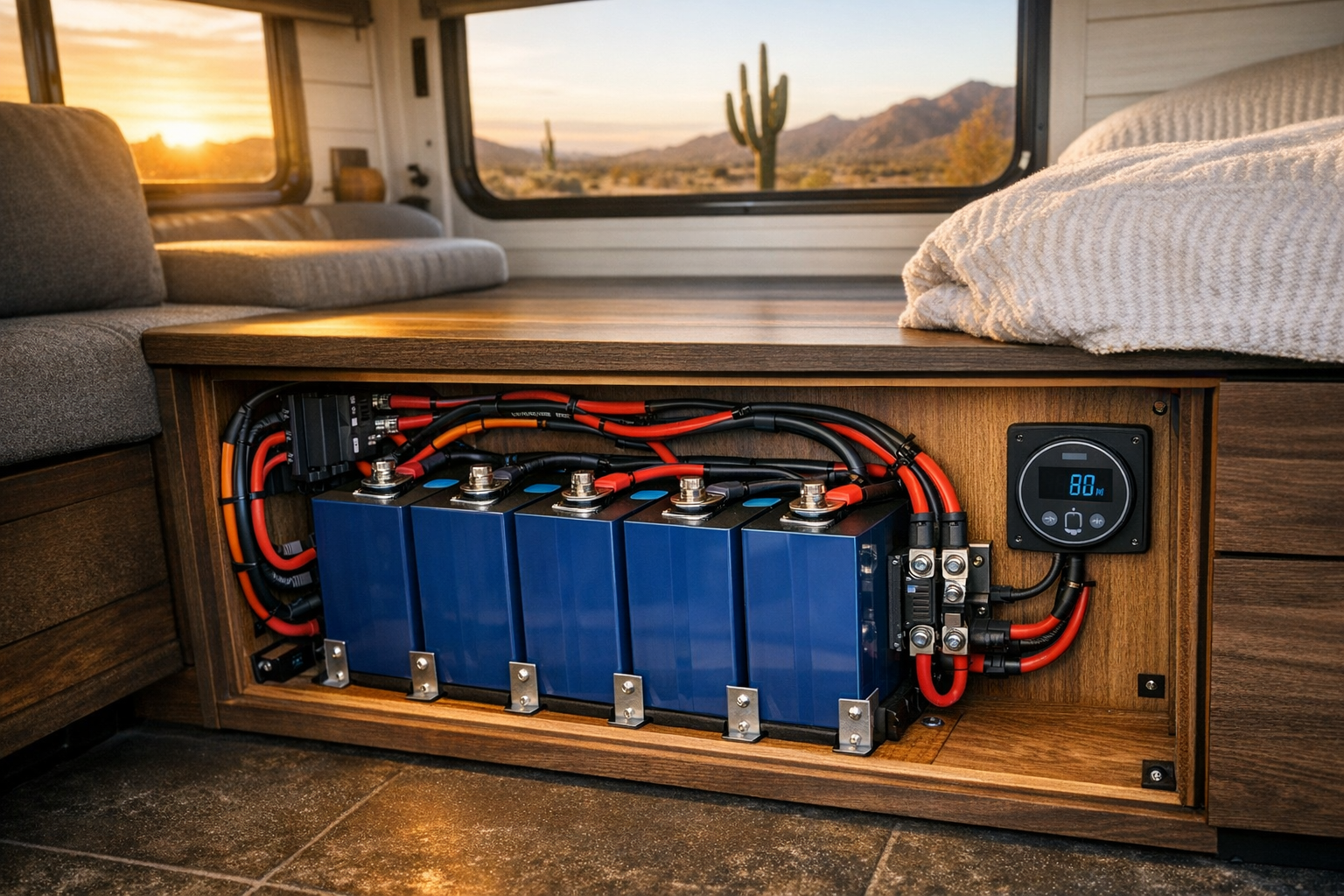
- LiFePO4 requires a compatible BMS and charger profile. Every lithium battery should have a Battery Management System (BMS) that monitors individual cell voltages, controls charge and discharge cutoffs, and provides over-temperature protection. Charging LiFePO4 with a lead-acid profile can overcharge cells and trigger a BMS disconnect, potentially damaging the charger. Many modern MPPT charge controllers and inverter-chargers include a dedicated LiFePO4 charge profile; verify this before purchasing.
- Ventilate lead-acid batteries. Flooded lead-acid batteries emit hydrogen gas during charging, especially during absorption and equalization phases. Hydrogen is explosive at concentrations above 4 percent in air. Battery compartments must have ventilation—passive vents at the top of the enclosure or a small exhaust fan. AGM and gel batteries produce far less hydrogen under normal conditions but can still off-gas if overcharged.
- Size cables and fuses for worst-case current, not average current. A 2,000 W inverter on a 12V system can draw 180–200 A during a surge (microwave startup, for example). Undersized cables cause voltage drop, heat buildup, and in extreme cases, fire. Use a voltage-drop calculator and size for no more than 3 percent drop at peak current over the actual cable length (measure both positive and negative runs).
- Torque all battery terminal connections to manufacturer specifications. Loose connections are the number-one cause of battery-bank fires in RVs. A loose terminal creates resistance, resistance creates heat, and heat melts insulation. Use a torque wrench and check connections at least twice a year. Apply a thin coat of dielectric grease to terminals after tightening.
- Install a battery disconnect switch. A master disconnect between the battery bank and the rest of the electrical system allows you to isolate the bank during maintenance, storage, or an emergency. For lithium systems, this switch should be rated for the full short-circuit current the bank can deliver—often 500 A or more for large banks.
Always consult the battery manufacturer’s installation manual and follow NEC/ABYC standards applicable to your vehicle type.
Charge-Side Mistakes
A commonly overlooked error is ignoring the charge side of the equation. If you install 400 Ah of lithium but only have a 30 A converter-charger, a full recharge from 20 percent state of charge takes over 10 hours on shore power. Match your charge sources to your bank size: a general guideline is a charge rate of 0.2C to 0.5C for lithium (80–200 A for a 400 Ah bank) and 0.1C to 0.2C for lead-acid (40–80 A for a 400 Ah bank).
Another frequent error is neglecting the alternator when adding a large lithium bank. LiFePO4 batteries accept charge at very high rates—they will happily pull 100+ A from your alternator if the wiring allows it. Most RV and truck alternators are rated for 130–160 A but are designed to taper as the starting battery reaches full charge. A hungry lithium bank can hold the alternator at maximum output indefinitely, overheating it. A DC-DC charger (battery-to-battery charger) between the alternator and the house bank limits current to a safe level and provides the correct charge profile.
Conclusion
FAQs
- How many amp-hours do I need for boondocking? Most moderate-use RVers consume 100–200 Ah per day on a 12V system. A conservative boondocking setup with two days of autonomy and LiFePO4 batteries at 80 percent DoD requires 250–500 Ah of nameplate capacity. Full-timers with heavier loads and three or more days of autonomy may need 600–1,000 Ah. The only way to know your specific number is to complete a daily energy audit and run the sizing formula.
- Can I mix lead-acid and lithium batteries in the same bank? No. Lead-acid and LiFePO4 have fundamentally different charge voltage profiles, internal resistance characteristics, and discharge curves. Connecting them in parallel causes the lithium battery to overcharge the lead-acid battery during certain states of charge and the lead-acid battery to drag down the lithium during discharge. The result is reduced lifespan for both and a genuine safety risk. Always use a single chemistry and matched batteries throughout your bank.
- How long will my battery bank last before it needs replacement? Cycle life depends on chemistry, DoD, temperature, and charge management. A quality AGM battery cycled to 50 percent DoD daily typically lasts 500–800 cycles, or roughly two to three years of full-time use. A LiFePO4 battery cycled to 80 percent DoD daily is commonly rated for 2,000–5,000 cycles, translating to five to fifteen years. Keeping batteries within their recommended temperature range and avoiding chronic undercharging are the two biggest factors in reaching the upper end of those ranges.
- Is LiFePO4 worth the extra cost over AGM? For frequent boondockers and full-timers, yes. A 100 Ah AGM at $200 delivers about 50 Ah of usable capacity and lasts perhaps 600 cycles—roughly $0.0067 per usable Ah per cycle. A 100 Ah LiFePO4 at $400 delivers 80 Ah of usable capacity and lasts 3,000 cycles—roughly $0.0017 per usable Ah per cycle. The upfront cost is double, but the lifetime cost is less than a third. For occasional weekend campers who cycle their batteries only 30–50 times per year, AGM may still make financial sense because the batteries will age out before they cycle out.
- Do I need a battery monitor, and which type is best? A battery monitor is strongly recommended for any off-grid RV setup. Voltage alone is a poor indicator of state of charge, especially for LiFePO4 batteries whose voltage curve is nearly flat between 20 and 80 percent charge. A shunt-based coulomb-counting monitor tracks current in and out of the bank and provides an accurate state-of-charge percentage, time remaining, and historical consumption data. Install the shunt on the negative bus so all loads and charge sources pass through it.
- Can I use my RV's existing wiring when upgrading to a larger battery bank? Possibly, but you must verify that the existing wire gauge can handle the increased current safely. If you upgrade from a 1,000 W inverter to a 3,000 W inverter on a 12V system, your peak current jumps from roughly 95 A to 280 A—a change that almost certainly requires heavier cables between the battery bank and the inverter. The 12V distribution wiring to individual appliances (lights, water pump, fridge) usually remains adequate because those loads haven’t changed. Always recalculate voltage drop for any circuit where the load or cable run length has changed.