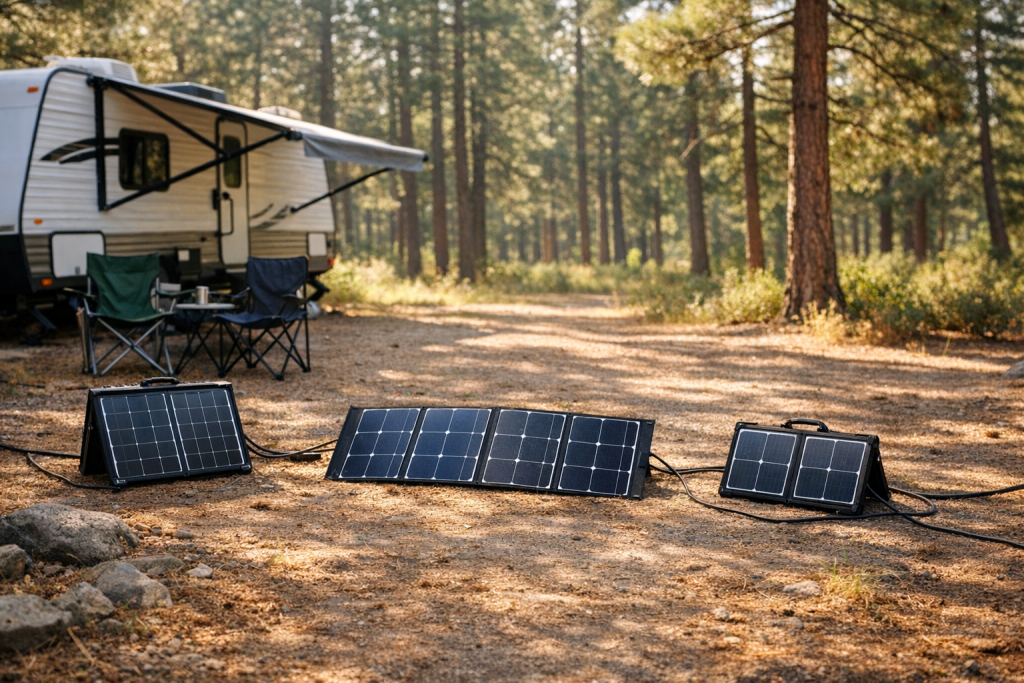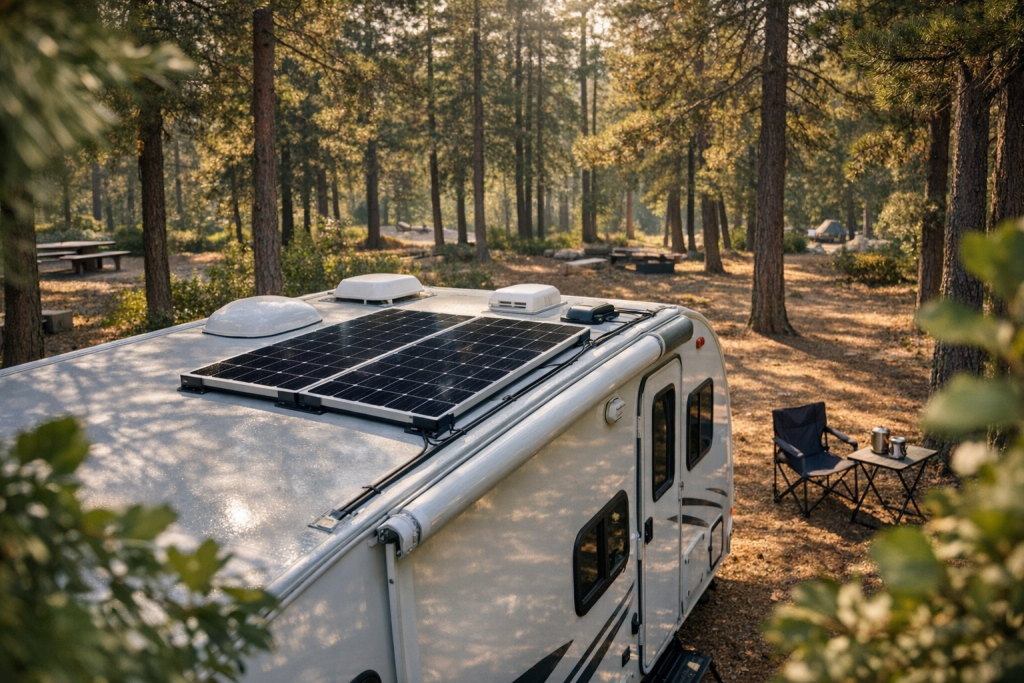
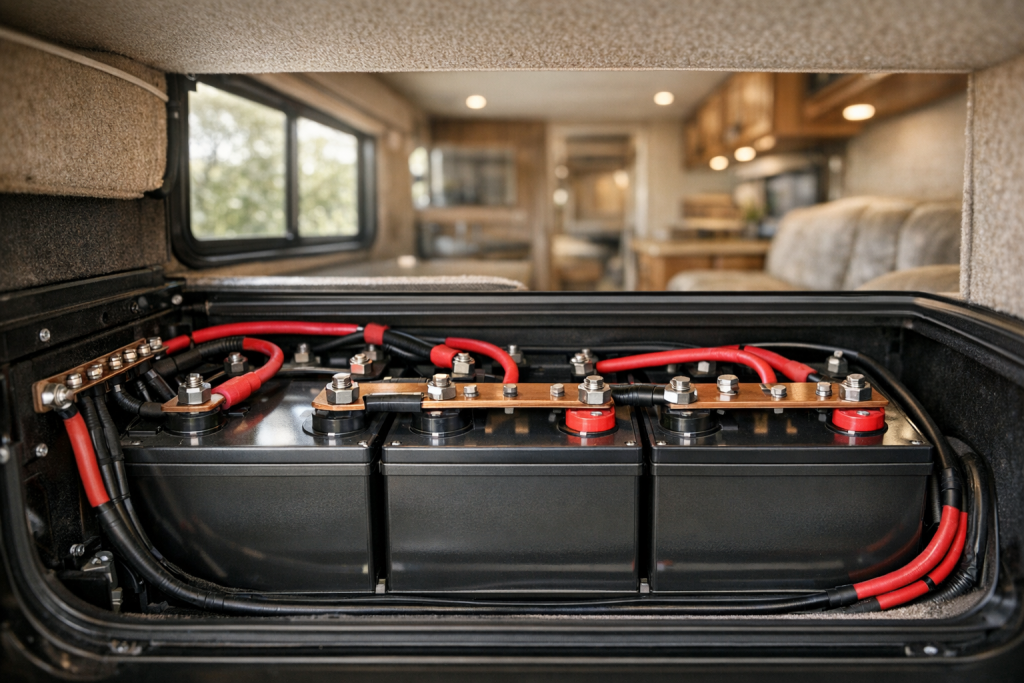
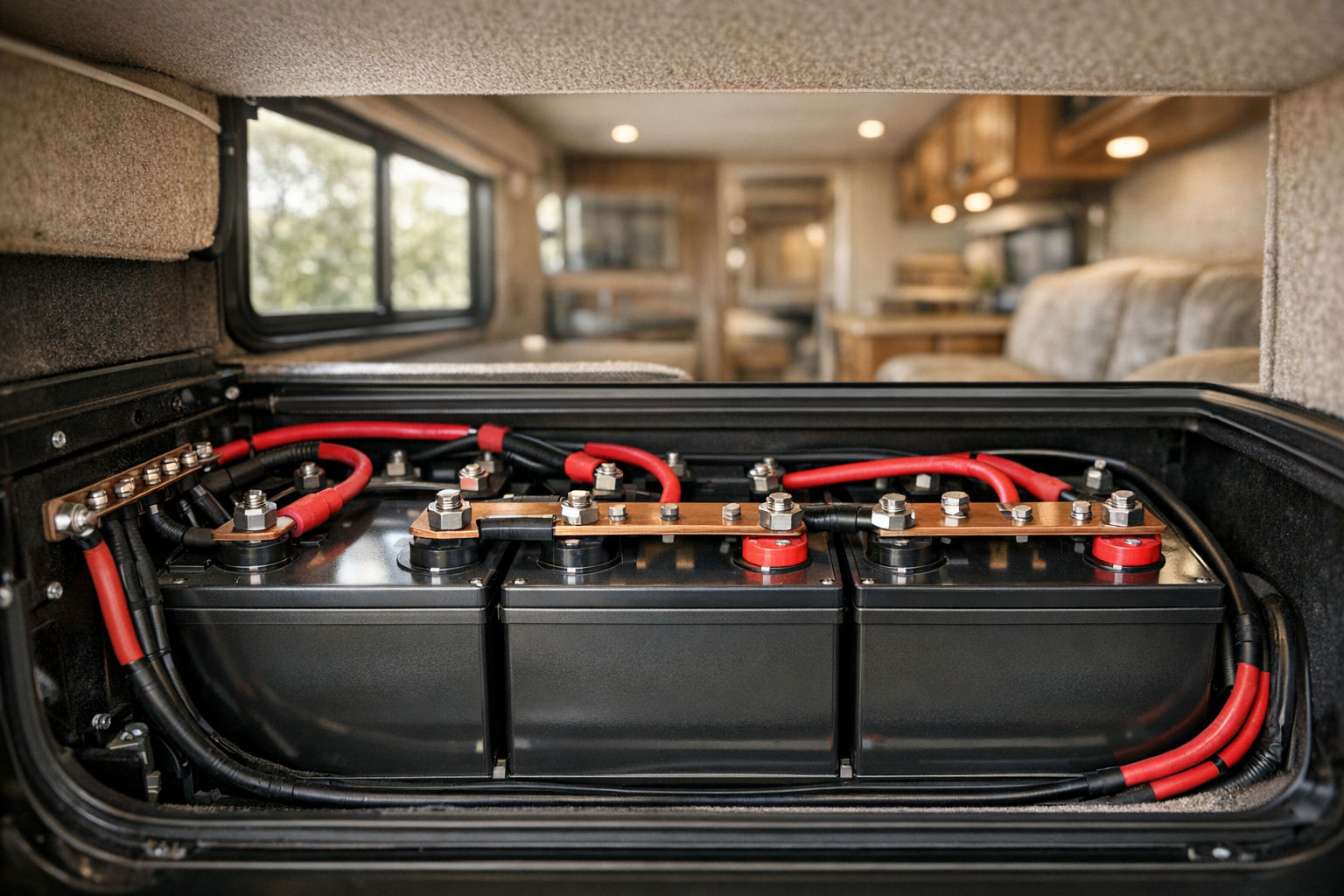
You’re parked at a remote desert campsite with no hookups, your fridge is humming, your phone needs charging, and the sun just dipped below the horizon. How long your lights stay on—and whether your coffee maker works in the morning—depends on one number: the amp hours in your RV battery bank. Getting that number right is the single most important decision in your RV electrical system. Oversize it and you waste hundreds of dollars on capacity you’ll never tap. Undersize it and you’re running a generator at midnight or driving to the nearest RV park in the dark.
TL;DR
- Best Overall: Battle Born BB10012 (100Ah LiFePO4, scalable to 400Ah+) — The gold standard for RV lithium banks with a 10-year warranty and easy parallel expansion.
- Best Budget: Ampere Time (LiTime) 12V 100Ah LiFePO4 — Delivers reliable lithium performance at roughly half the price of premium brands.
- Best for Full-Time Boondocking: EG4 LifePower4 12V 400Ah Server Rack Battery — Massive single-unit capacity eliminates the need to wire multiple batteries together.
- Best Lead-Acid Value: Trojan T-105 6V 225Ah (pair for 12V) — Proven flooded lead-acid workhorse for budget-conscious RVers who don’t mind maintenance.
- Best Compact Option: Renogy 12V 200Ah Smart LiFePO4 — Packs 200Ah into a single battery with Bluetooth monitoring for space-constrained rigs.
Amp Hours Explained in Simple Terms
An amp hour (Ah) measures how much electrical energy a battery can deliver over time. A 100Ah battery can theoretically supply 1A for 100 hours, 5A for 20 hours, or 10A for 10 hours. In the RV world, amp hours are the currency of off-grid freedom. Every light you flip on, every water pump cycle, every minute your furnace blower runs—all of it draws amps from your house battery bank. More stored amp hours means more time camping without plugging in or running a generator.
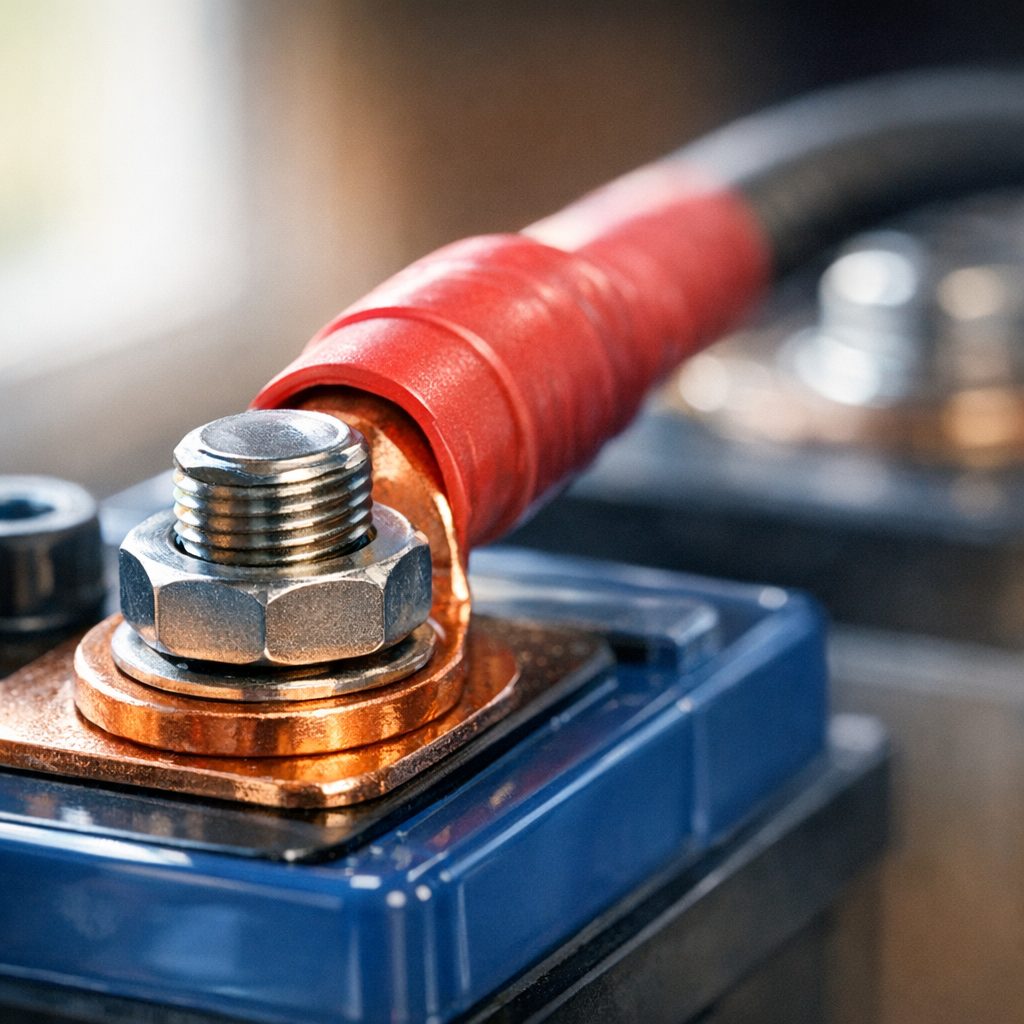
Think of your battery bank like a water tank. The amp-hour rating is the tank’s volume, and your appliances are the faucets. Open more faucets (or bigger ones), and the tank drains faster. Your job is to size the tank so it doesn’t run dry before you can refill it—through solar panels, an alternator charger, or shore power.
Usable vs. Rated Amp Hours (Lead-Acid vs. Lithium)
This is where many RVers get tripped up. A 100Ah lead-acid battery does not give you 100 usable amp hours. Discharging a flooded or AGM lead-acid battery below 50% state of charge dramatically shortens its lifespan. That means a 100Ah lead-acid battery really only provides about 50Ah of usable energy.
Lithium iron phosphate (LiFePO4) batteries can safely be discharged to 80–100% of their rated capacity. A 100Ah lithium battery gives you 80–100Ah of usable power. This single difference means you need roughly twice as many lead-acid amp hours to match the usable capacity of a lithium bank. A 200Ah lithium bank often replaces a 400Ah lead-acid bank—and weighs a fraction as much.
List Every Appliance and Its Draw
Start by listing every 12V DC and 120V AC device you plan to use while off-grid. For DC loads, note the amp draw directly (usually printed on the device or in the manual). For AC loads running through an inverter, divide the wattage by your system voltage (typically 12V) and add 10–15% for inverter inefficiency. Common RV loads:
- LED lights (per fixture): 0.5–1.5A
- Water pump: 4–8A (intermittent)
- Furnace blower: 6–8A
- 12V RV refrigerator: 2.5–5A
- Residential refrigerator (via inverter): 8–12A
- Phone/laptop charging: 1–3A
- TV (via inverter): 3–5A
- Microwave (via inverter): 100–150A (short bursts)
- Coffee maker (via inverter): 80–100A (short bursts)
- RV air conditioner (via inverter): 100–150A
Estimate Daily Usage in Hours
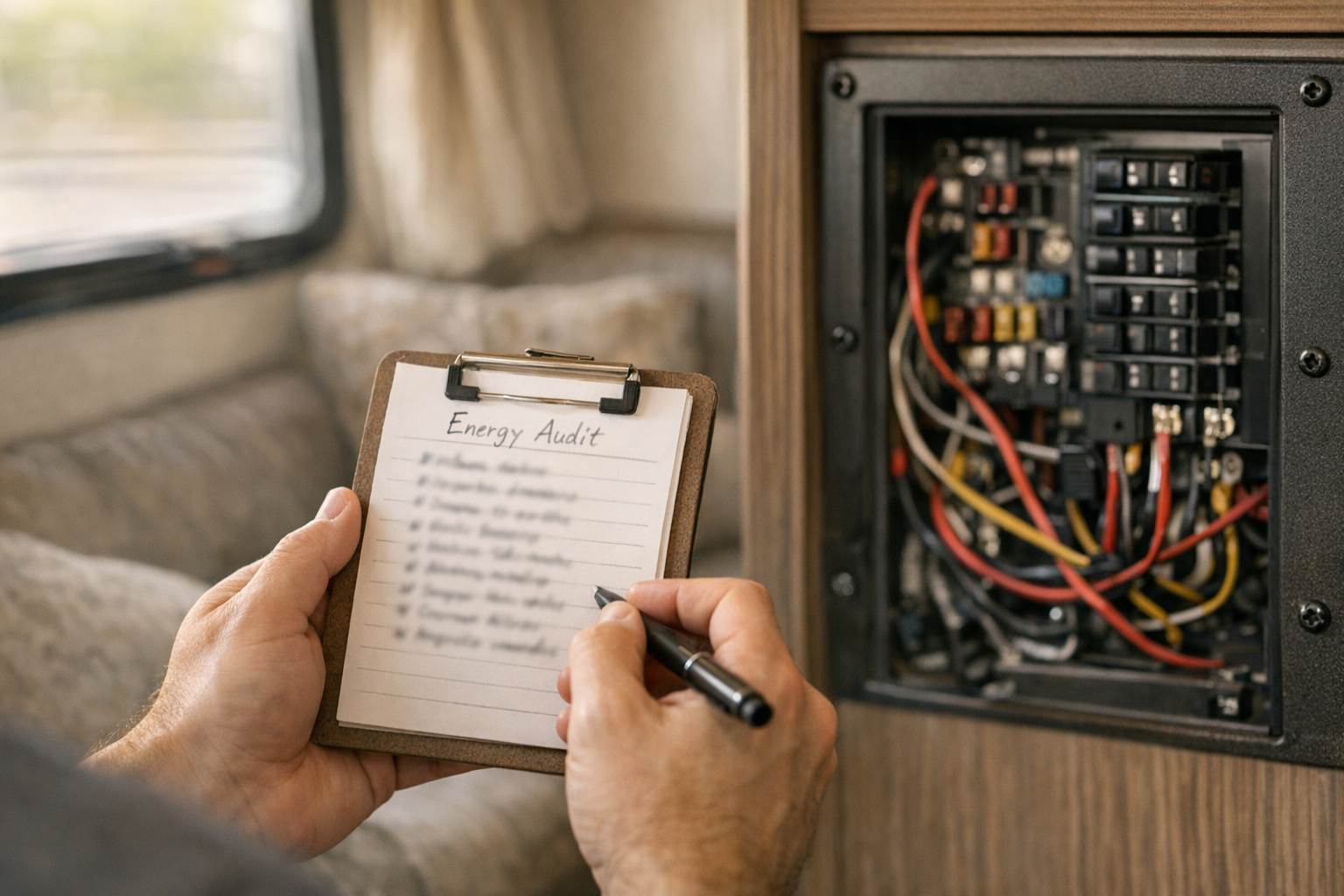
Next, estimate how many hours per day each appliance runs. Be realistic. Your water pump doesn’t run continuously—it cycles on for maybe 15–30 minutes total per day. Your furnace blower might run 4–6 hours on a cold night. LED lights might be on for 4–5 hours in the evening. Multiply each appliance’s amp draw by its daily hours of use to get amp hours per day for that device.
Sample Daily Amp-Hour Calculation
Here’s a realistic example for a couple boondocking in moderate weather:
| Appliance | Amps | Hours/Day | Ah/Day |
|---|---|---|---|
| LED lights (5 fixtures) | 5 | 4 | 20 |
| Water pump | 5 | 0.5 | 2.5 |
| 12V fridge | 3.5 | 12 | 42 |
| Furnace blower | 7 | 3 | 21 |
| Phone/laptop charging | 2 | 3 | 6 |
| TV (via inverter) | 4 | 2 | 8 |
Total: ~100Ah per day. Add a residential fridge, a coffee maker, or regular microwave use and you could hit 150–200Ah per day. Full-timers running air conditioning can exceed 300Ah daily.
Once you know your daily consumption, size your battery bank to cover at least one to two days of use without recharging (to account for cloudy days or travel days without solar input). For the 100Ah/day example above, that means 200Ah of usable lithium capacity—or 400Ah of lead-acid capacity.
Weekend Hookup Camping
If you primarily camp at RV parks with full hookups and only occasionally dry camp for a night or two, a single 100Ah lithium battery or a pair of 6V lead-acid batteries (200–225Ah rated, ~100–112Ah usable) handles overnight power for lights, the water pump, and basic electronics. Many factory-installed RV batteries fall into this range.

Recommended range: 100–200Ah lithium / 200–400Ah lead-acid.
Extended Boondocking and Off-Grid Use
Boondockers spending 3–14 days off-grid need enough capacity to handle daily loads plus a buffer for cloudy days when solar input drops. Most experienced boondockers on forums like iRV2 and DIY Solar Power Forum report daily consumption between 75Ah and 200Ah. The sweet spot for most boondocking couples is 200–400Ah of lithium capacity, paired with 200–400W of solar panels.
Recommended range: 200–400Ah lithium / 400–800Ah lead-acid.
Full-Time RV Living
Full-timers who split time between hookups and boondocking—or who live entirely off-grid—need the most robust banks. Running a residential refrigerator, working from the RV (laptops, monitors, routers), and using an air conditioner even occasionally pushes daily consumption to 200–400Ah. Many full-timers report running 400–600Ah of lithium capacity, with some heavy users going to 800Ah or more.
Recommended range: 400–800Ah lithium / 800–1600Ah lead-acid (at this level, lithium is almost always the better choice due to weight and space).
#1. Battle Born BB10012 100Ah LiFePO4 — Best Overall for Scalable RV Battery Banks
The Battle Born BB10012 has earned its reputation as the most trusted name in RV lithium batteries. Each unit delivers 100Ah of usable capacity in a Group 27 form factor that drops into most existing RV battery compartments. You can parallel up to four BB10012s for a 400Ah bank, or wire in series-parallel for 24V or 48V systems. The built-in BMS protects against overcharge, over-discharge, short circuits, and extreme temperatures.
Battle Born’s 10-year warranty is among the best in the industry, and their Reno, Nevada-based tech support team is well-regarded in the RV community for hands-on installation help. At roughly 31 pounds per battery, a 400Ah bank weighs about 124 pounds—compared to 400+ pounds for an equivalent lead-acid setup.
Best for: RVers who want a proven, warrantied lithium battery they can start with one and expand over time. Ideal for 200–400Ah banks.
#2. EG4 LifePower4 12V 400Ah Server Rack Battery — Best for Full-Time Boondocking
If you need serious capacity and don’t want to parallel multiple batteries, the EG4 LifePower4 delivers 400Ah in a single unit. Originally designed for home solar storage, this server-rack-style battery has been adopted by the RV community for its value per amp hour—roughly $1.50–$2.00 per usable Ah.
The trade-off is form factor. This isn’t a drop-in Group 27 or Group 31 battery. It’s a rectangular rack-mount unit that requires custom mounting—typically under a dinette, in a basement compartment, or in a dedicated battery box. It weighs about 106 pounds, which is heavy for a single unit but lighter than the lead-acid equivalent. The built-in BMS supports up to 200A continuous discharge, and you can parallel two units for an 800Ah bank.
Best for: Full-time RVers and serious boondockers who need 400–800Ah and are comfortable with custom mounting.
#3. LiTime (Ampere Time) 12V 100Ah LiFePO4 — Best Budget Lithium
LiTime (formerly Ampere Time) offers solid LiFePO4 performance at roughly 40–50% less than Battle Born. Their 12V 100Ah battery uses the same basic chemistry—lithium iron phosphate cells with a built-in BMS—and delivers 100Ah of usable capacity. You can parallel up to four units for a 400Ah bank.
Where LiTime saves money is in the warranty (5 years vs. 10) and support infrastructure. The BMS is rated for 100A continuous discharge, adequate for most RV loads but potentially limiting if you’re running a large inverter at full output. Many RVers on the DIY Solar Power Forum report thousands of cycles with zero issues.
Best for: Budget-minded RVers who want lithium benefits without the premium price tag. Great for 100–300Ah banks.
#4. Renogy 12V 200Ah Smart LiFePO4 — Best Compact High-Capacity Single Battery
Space is at a premium in most RVs. The Renogy 200Ah Smart LiFePO4 packs twice the capacity of a standard 100Ah battery into a single unit, with built-in Bluetooth monitoring for checking state of charge, voltage, current, and temperature from your phone. A dedicated shunt monitor is still recommended for multi-battery banks.
At about 52 pounds, it’s heavier than two separate 100Ah batteries from some brands, but the single-unit design means fewer connections, less wiring, and a cleaner installation. The BMS supports 200A continuous discharge, making it compatible with 2000W inverters. You can also parallel two for 400Ah.
Best for: RVers with limited battery compartment space who want 200Ah in a single, smart-monitored package.
#5. Trojan T-105 6V 225Ah Flooded Lead-Acid (Pair for 12V) — Best Lead-Acid Value
Not everyone is ready to invest in lithium. The Trojan T-105 has been the go-to RV battery for decades. These 6V golf cart batteries are wired in series (two for 12V) and deliver 225Ah of rated capacity—about 112Ah usable at the recommended 50% depth of discharge. A bank of four T-105s (two pairs in parallel) gives you 450Ah rated / 225Ah usable, enough for moderate boondocking.
The downsides are well-known: roughly 62 pounds each, regular watering and equalization charges required, and proper ventilation needed due to hydrogen gas production during charging. Cycle life is shorter too—800–1,200 cycles at 50% DOD compared to lithium’s 3,000–5,000+ cycles. But at roughly $150–$180 per battery, a pair costs under $400 for 225Ah rated capacity.
Best for: Budget-conscious RVers who don’t mind lead-acid maintenance and want proven, widely available batteries.
#6. Victron Energy 12.8V 200Ah Smart LiFePO4 — Best Premium Option
Victron is the gold standard in marine and off-grid power systems. Their 200Ah Smart LiFePO4 battery integrates seamlessly with Victron’s ecosystem of inverter/chargers, solar charge controllers, and the Cerbo GX monitoring system. If you’re building a complete Victron-based electrical system (as many high-end builds do), this battery communicates directly with your other components for optimized charging and load management.
The price is steep—often 2–3× the cost of comparable LiTime or Renogy batteries. You’re paying for integration, build quality, and Victron’s 5-year warranty backed by decades of off-grid power experience. The BMS allows 200A continuous discharge and supports paralleling for larger banks.
Best for: RVers building high-end, fully integrated Victron electrical systems who want seamless component communication.
#7. SOK 12V 206Ah LiFePO4 — Best Mid-Range 200Ah Option
SOK occupies the sweet spot—better build quality and support than the cheapest imports, significantly less expensive than Battle Born or Victron. Their 206Ah battery features a 200A BMS, a metal casing (not plastic like some budget brands), and a low-temperature charging cutoff to protect the cells. The slightly odd 206Ah rating comes from using higher-capacity cells.
SOK batteries have a strong following on the DIY Solar Power Forum, where users report excellent long-term reliability. At roughly $700–$900 per unit, a single SOK 206Ah battery gives you enough capacity for moderate boondocking, and two in parallel (412Ah) covers most full-time needs.
Best for: RVers who want a reliable 200Ah lithium battery at a fair price without the premium brand tax.
#8. AIMS Power 12V 100Ah AGM Deep Cycle — Best AGM for Occasional Campers
AGM (Absorbed Glass Mat) batteries occupy the middle ground between flooded lead-acid and lithium. They’re maintenance-free, spill-proof, and can be mounted in any orientation. The AIMS Power 100Ah AGM is a Group 31 battery that delivers about 50–60Ah of usable capacity at recommended discharge depths. Two in parallel give you 200Ah rated / 100–120Ah usable.
AGM batteries cost more than flooded lead-acid but less than lithium, making them a reasonable choice for occasional campers who want a maintenance-free, drop-in solution. They’re also a good fit for RVers whose existing converters don’t support lithium charge profiles. Cycle life is moderate—around 500–800 cycles at 50% DOD—so they’re best for lighter-duty use.
Best for: Occasional campers who want maintenance-free lead-acid batteries and aren’t ready to invest in lithium.
Sizing a Lead-Acid Battery Bank
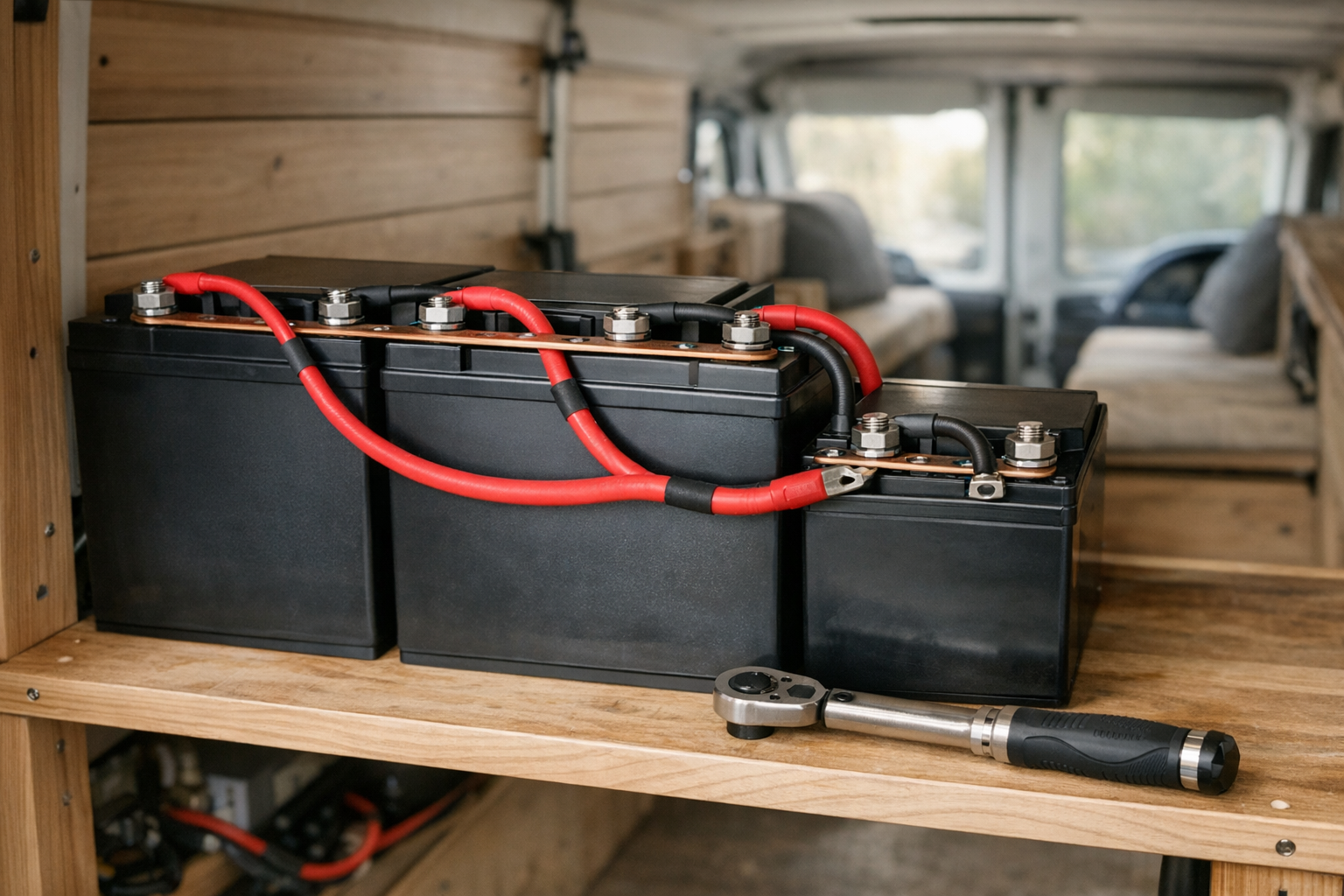
Because you can only safely use about 50% of a lead-acid battery’s rated capacity, double your daily amp-hour requirement to determine the minimum rated capacity. If you use 100Ah per day, you need at least 200Ah of rated lead-acid capacity—and that only covers one day. For a two-day buffer (recommended for boondocking), you’d want 400Ah rated. That’s four Trojan T-105s wired in a series-parallel configuration, weighing nearly 250 pounds.
Common Battery Bank Configurations (100Ah–800Ah)
- 100Ah lithium: Weekend hookup camping with occasional overnight dry camping. Powers lights, water pump, phone charging for one night.
- 200Ah lithium: The most popular configuration. Handles 1–3 days of moderate boondocking with solar recharging. Sufficient for most couples.
- 300Ah lithium: Extended boondocking with moderate loads. Good buffer for cloudy days. Popular with couples who run a residential fridge.
- 400Ah lithium: The sweet spot for full-time boondockers. Covers 2+ days of heavy use without recharging. Supports larger inverter loads.
- 600–800Ah lithium: Full-time off-grid living with air conditioning, residential appliances, and work-from-RV setups. Typically paired with 600+ watts of solar.
Comparison Table
| Model | Type | Key Specs | Best for | Pros | Cons | Where to buy |
|---|---|---|---|---|---|---|
| Battle Born BB10012 | LiFePO4 | 100Ah, 31 lbs, 100A BMS, 10-yr warranty | Scalable banks (200–400Ah) | Industry-leading warranty, excellent support, easy to parallel | Premium price, 100A BMS limits large inverter loads per battery | Amazon ↗ |
| EG4 LifePower4 400Ah | LiFePO4 | 400Ah, 106 lbs, 200A BMS, server rack form | Full-time boondocking (400–800Ah) | Massive capacity in one unit, excellent cost per Ah | Non-standard form factor, requires custom mounting | Amazon ↗ |
| LiTime 12V 100Ah | LiFePO4 | 100Ah, 24 lbs, 100A BMS, 5-yr warranty | Budget lithium banks (100–300Ah) | Excellent price, lightweight, proven reliability | Shorter warranty, less robust customer support | Amazon ↗ |
| Renogy 200Ah Smart LiFePO4 | LiFePO4 | 200Ah, 52 lbs, 200A BMS, Bluetooth | Space-constrained 200Ah setups | High capacity in single unit, Bluetooth monitoring, 200A BMS | Heavier than two separate 100Ah units, moderate price | Amazon ↗ |
| Trojan T-105 (pair) | Flooded Lead-Acid | 225Ah rated (6V, pair for 12V), 62 lbs each | Budget-conscious occasional campers | Very affordable, widely available, proven track record | Heavy, requires maintenance, only ~50% usable capacity | Amazon ↗ |
| Victron 12.8V 200Ah Smart | LiFePO4 | 200Ah, 50 lbs, 200A BMS, Victron ecosystem | Premium integrated Victron systems | Seamless Victron integration, excellent build quality | Very expensive, overkill without other Victron components | Amazon ↗ |
| SOK 12V 206Ah | LiFePO4 | 206Ah, 49 lbs, 200A BMS, metal case | Mid-range 200Ah builds | Great value, metal casing, strong community reputation | Less brand recognition, availability can fluctuate | Amazon ↗ |
| AIMS Power 100Ah AGM | AGM Lead-Acid | 100Ah, 66 lbs, maintenance-free, Group 31 | Occasional campers, drop-in replacement | Maintenance-free, spill-proof, works with existing chargers | Heavy, only ~50% usable, shorter cycle life than lithium | Amazon ↗ |
Safety & Common Mistakes
- Ventilation: Flooded lead-acid batteries produce hydrogen gas during charging. Install them in a ventilated compartment and never near ignition sources.
- Fusing: Always install a Class T or ANL fuse within 12 inches (30 cm) of the positive battery terminal, rated for your system’s maximum current.
- Wire sizing: Use appropriately sized cables (typically 2/0 AWG or 4/0 AWG for high-current runs) to prevent voltage drop and overheating. Consult an ampacity chart for your specific run length and current draw.
- Torque connections: Loose battery terminal connections cause arcing, heat buildup, and potential fires. Torque to manufacturer specifications and check periodically.
- Mixing batteries: Never mix battery chemistries (e.g., lithium and lead-acid)
Recommended Gear
- Victron SmartSolar MPPT 100/30 — View on Amazon
- Renogy 100W Monocrystalline Panel — View on Amazon
- Battle Born 100Ah LiFePO4 Battery — View on Amazon
FAQs
- How many watts do I need for full-time RV living? Most full-timers find 400–600W sufficient with 200–400Ah lithium.
- Can I mix different wattage panels? Yes. Wire identical panels in series first, then parallel the strings.
- Should I disconnect solar when plugged into shore power? Good controllers stop charging automatically; ensure profiles are compatible.
- Will solar panels survive hail? Tier-1 panels are tested with 1-inch hail at ~50 mph and typically pass.
As an Amazon Associate, we earn from qualifying purchases. This helps keep SunAmpRV running.