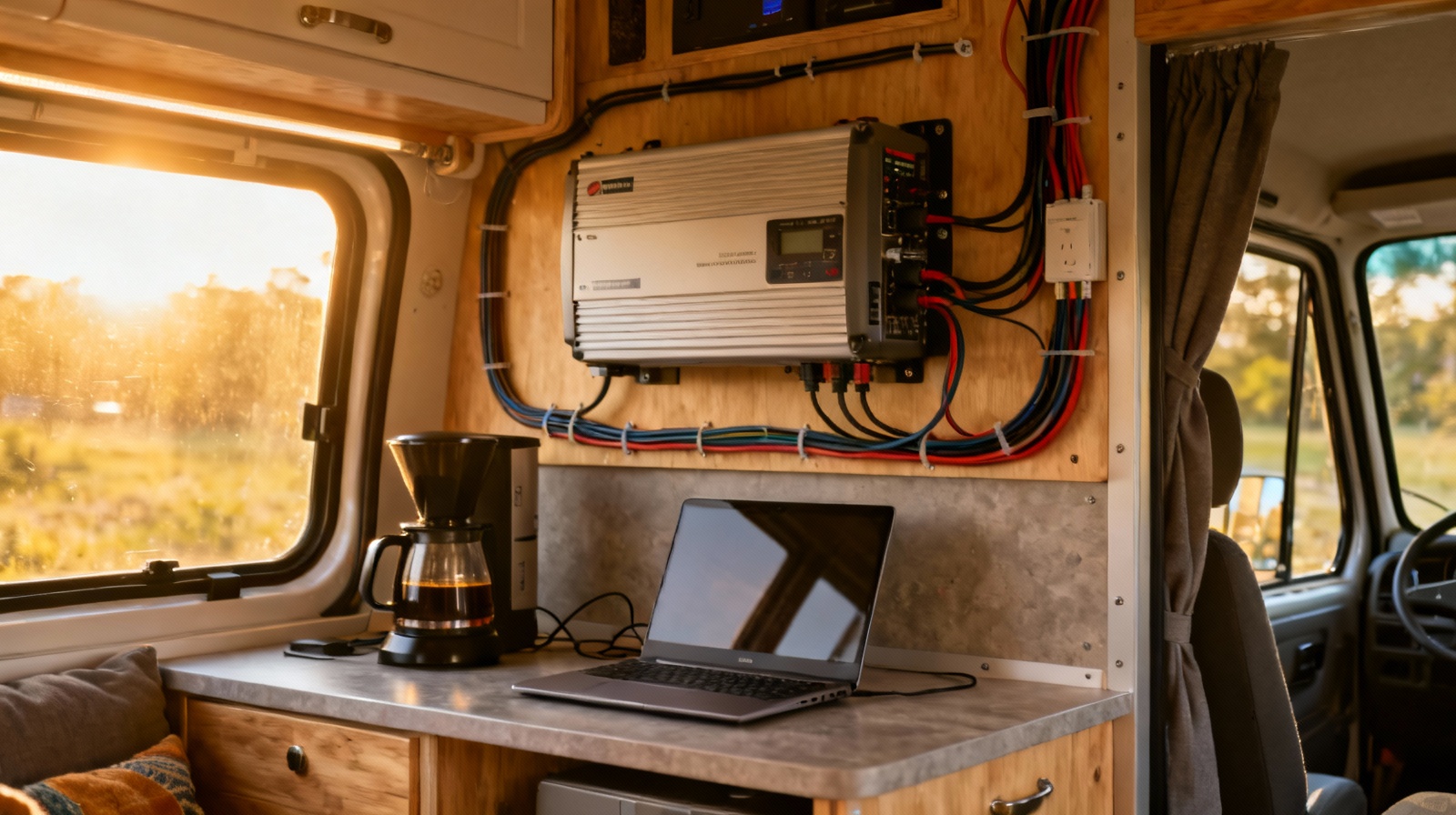
Choosing a 3000W inverter for your RV isn’t about finding the “best” unit—it’s about matching the right inverter to how you actually camp. A weekend warrior’s needs differ dramatically from someone boondocking for weeks in the desert, and the wrong choice means either wasted money or inadequate power when you need it most.
TL;DR — Best Picks
Best Overall: Victron MultiPlus-II 3000VA – Unmatched reliability with integrated charging and programmable power assist for serious off-gridders.
Best Budget: Giandel 3000W Pure Sine Wave – Delivers clean 3000W continuous power with 6000W surge at roughly half the premium price.
Best for Full-Time RVers: AIMS Power 3000W Pure Sine Inverter Charger – Built-in 50A charger and robust thermal management for daily use.
Best by Use-Case
Boondocking & Off-Grid
If you’re a boondocker who measures success by days between civilization, your inverter becomes the heart of your electrical system. You need bulletproof reliability, maximum efficiency to stretch every amp-hour, and the intelligence to work seamlessly with lithium batteries and solar charging.
The Victron MultiPlus-II 3000VA 12/3000/120-50 stands alone in this category. With high efficiency, integrated 120A battery charger, and PowerAssist technology that supplements shore power with battery power during peak loads, it handles everything from running your air conditioner to keeping your refrigerator humming through a week in the backcountry. The programmable relay outputs and VE.Bus communication let you build a truly intelligent system that monitors and adjusts automatically. View on Amazon
- Pro: Industry-leading 94% efficiency preserves battery capacity
- Pro: Integrated 120A charger eliminates need for separate charging equipment
- Pro: PowerAssist prevents breaker trips when shore power is limited
- Pro: Full lithium BMS compatibility with programmable charge profiles
- Con: Premium price point
- Con: Requires additional components (GX device) for full monitoring capability
For extended boondocking on a more moderate budget, the Renogy REGO 3000W Pure Sine Wave Inverter Charger offers compelling value. It delivers 3000W continuous with 9000W surge capacity, includes an integrated shore power charger, and features transfer switching between inverter and shore power. The built-in Bluetooth monitoring via the Renogy App lets you track performance without additional hardware. View on Amazon
- Pro: Integrated 60A charger with automatic transfer switch
- Pro: Bluetooth monitoring included at no extra cost
- Pro: Solid 90%+ efficiency rating
- Con: Charger amperage lower than Victron’s 120A
- Con: Less sophisticated programming options
Budget Weekender
If you’re hitting the campground every other weekend and want reliable AC power without a four-figure investment, you don’t need all the bells and whistles—you need clean power that won’t damage your electronics.
The Giandel 3000W Pure Sine Wave Inverter delivers exactly that. At roughly $350-450, it provides true pure sine wave output (essential for laptops, CPAP machines, and modern refrigerators), 3000W continuous power, and 6000W surge capacity to handle startup loads. The dual AC outlets and USB ports cover most camping needs, and the included remote switch lets you mount the inverter in your battery compartment while controlling it from inside. View on Amazon
- Pro: Genuine pure sine wave output at budget pricing
- Pro: 6000W surge handles air conditioner startup
- Pro: Remote on/off switch included
- Pro: Comprehensive protection circuits (over-voltage, under-voltage, overload, short circuit)
- Con: No integrated charger—inverter function only
- Con: Efficiency up to 91%, slightly lower than premium units
The BESTEK 3000W Pure Sine Wave Inverter offers another budget-friendly option with similar specifications. It features 3000W continuous output, 6000W peak surge, and includes both standard AC outlets and USB charging ports. The soft-start technology helps manage inrush current, though it lacks the remote switch that makes the Giandel more convenient for permanent installations.
- Pro: Competitive pricing under $400
- Pro: Soft-start technology reduces stress on batteries
- Con: No remote switch included
- Con: Fan noise reported louder than competitors
Winter Camper
Cold-weather camping introduces unique challenges for inverters: batteries deliver less power in freezing temperatures, and you’re likely running more loads (electric blankets, space heaters, heated water hoses). You need an inverter that handles these demands while working efficiently with cold-stressed batteries.
The AIMS Power 3000W Pure Sine Inverter Charger excels here with its robust thermal management system designed for temperature extremes. The integrated charger quickly replenishes batteries when you do connect to shore power. The 3000W continuous rating with 9000W surge capacity (highest in this roundup) handles the heavy startup loads of electric heaters and heated mattress pads. View on Amazon
- Pro: 9000W surge capacity—highest in class for demanding startup loads
- Pro: Conformal-coated boards resist moisture and condensation
- Pro: Integrated charger with transfer switching
- Pro: Wide operating temperature range
- Con: Heavier than competitors
- Con: Larger footprint requires more installation space
For winter campers who already have a separate charger, the Go Power! GP-ISW3000-12 3000W Pure Sine Wave Inverter offers excellent cold-weather performance in a standalone package. Go Power has built its reputation in the RV industry specifically, and this unit features robust construction designed for mobile applications. View on Amazon
- Pro: Purpose-built for RV applications
- Pro: Strong dealer and support network
- Pro: 6000W surge capacity handles most loads
- Con: Premium pricing for inverter-only unit
- Con: No integrated charging capability
Lightweight / Minimalist
Van lifers and minimalist campers face a constant battle against weight and space. Every pound matters when you’re also carrying water, food, and gear.
While 3000W inverters are inherently substantial (you’re converting serious power), some models minimize the footprint better than others. The Renogy 3000W Pure Sine Wave Inverter (standalone, non-charger version) offers the best power-to-weight ratio in this category—much lighter than inverter/charger combos. The compact design fits into tight van installations. You sacrifice the integrated charger, but if you’re primarily solar-powered with an MPPT controller handling battery charging, this trade-off makes sense. View on Amazon
- Pro: Lightweight for a 3000W unit
- Pro: Compact footprint for van installations
- Pro: 90%+ efficiency rating
- Pro: LED indicators show real-time status
- Con: No integrated charger—requires separate charging solution
- Con: 6000W surge lower than some competitors
The Ampeak 3000W Pure Sine Wave Inverter provides another lightweight option with a focus on simplicity. It’s a lightweight unit in this roundup, though the trade-off comes in slightly lower build quality and a shorter warranty period. For minimalists who prioritize weight above all else and don’t run their inverter continuously, it’s worth considering. View on Amazon
- Pro: Lightest option at ~15 lbs
- Pro: Budget-friendly pricing
- Con: Shorter warranty than premium brands
- Con: Less robust thermal management for continuous use
Buyer’s Notes
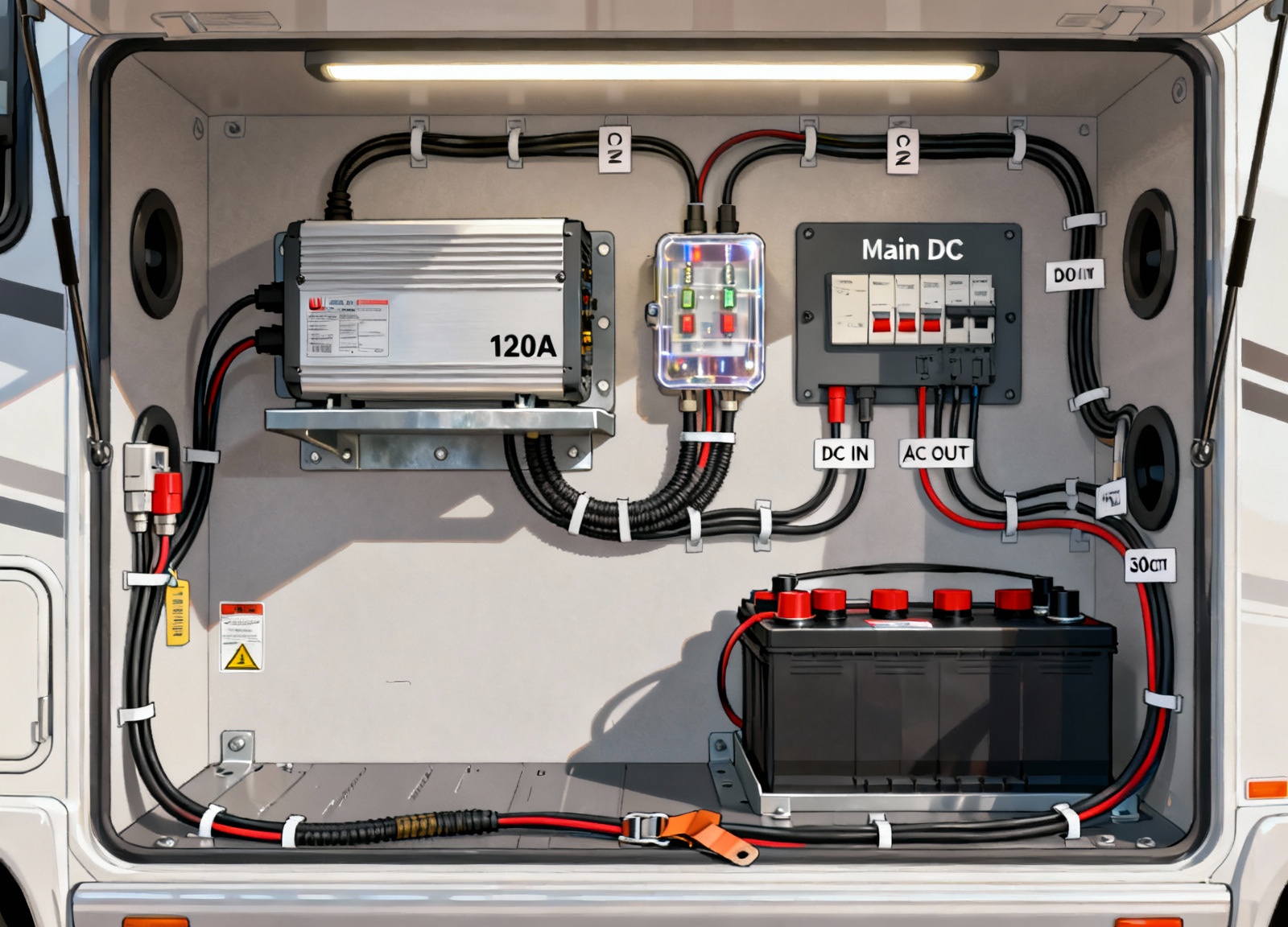
Before purchasing any 3000W inverter, verify your electrical system can support it. A 3000W inverter at 12V draws up to 250A at full load—this requires 4/0 AWG cable minimum with runs under 6 feet, and a 300A class T fuse at the battery. Longer cable runs demand even heavier gauge wire to prevent voltage drop and heat buildup. Many RV electrical fires trace back to undersized wiring on high-power inverters.
Battery capacity matters enormously. Running a 3000W load continuously requires roughly 250Ah of lithium battery capacity per hour of use (or 500Ah of AGM, since you can only safely discharge AGM to 50%). If you’re running an air conditioner that cycles, actual consumption drops significantly, but plan for worst-case scenarios. Most serious 3000W installations pair with 400-600Ah lithium banks.
Consider whether you truly need 3000W continuous or just 3000W surge. Many RVers install 3000W inverters primarily for air conditioner startup (which requires 2000-3000W surge for 1-2 seconds) while their actual running loads stay under 1500W. If this describes your use case, a quality 2000W inverter with strong surge capacity might serve you better at lower cost and weight.
Comparison Table
| Model | Type | Key Specs | Best For | Pros | Cons |
|---|---|---|---|---|---|
| Victron MultiPlus-II 3000VA | Inverter/Charger | 3000VA, 120A charger, PowerAssist | Boondocking & Off-Grid | Best efficiency, PowerAssist, full programmability | Premium price, requires GX for full features |
| Renogy REGO 3000W Inverter Charger | Inverter/Charger | 3000W cont., 9000W surge, integrated charger, Bluetooth | Boondocking (Value) | Bluetooth monitoring, good efficiency, auto transfer | Lower charger amperage |
| Giandel 3000W Pure Sine | Inverter Only | 3000W cont., 6000W surge, up to 91% eff. | Budget Weekender | Best value, remote included, full protection | No charger, slightly lower efficiency |
| AIMS Power 3000W Inverter Charger | Inverter/Charger | 3000W cont., 9000W surge, built-in charger | Winter Camping | Highest surge, robust design, wide temp range | Heavy, large footprint |
| Go Power! GP-ISW3000-12 | Inverter Only | 3000W cont., 6000W surge | Winter Camping (Alt) | RV-specific design, strong support network | Premium price, no charger |
| Renogy 3000W Standalone | Inverter Only | 3000W cont., 6000W surge, 90%+ eff. | Lightweight/Minimalist | Best power-to-weight, compact, LED indicators | No charger, requires separate charging |
| Ampeak 3000W Pure Sine | Inverter Only | 3000W cont., 6000W surge | Ultra-Lightweight | Lightweight option, budget-friendly | Shorter warranty, less robust cooling |
| BESTEK 3000W Pure Sine | Inverter Only | 3000W cont., 6000W surge, soft-start | Budget Alternative | Soft-start technology, competitive price | No remote, louder fan |
Which One Should You Buy?

If you’re a boondocker who needs maximum independence and system intelligence, invest in the Victron MultiPlus-II. Yes, it costs more—but the efficiency gains, integrated charging, and programmability pay dividends over years of off-grid camping. The Renogy Inverter Charger offers similar functionality at a lower price point if budget constrains your choice.
Weekend warriors on a budget should grab the Giandel 3000W—it covers the basics with genuine pure sine wave output without overspending. You’ll need a separate charger for shore power, but if you’re primarily using campground hookups anyway, this matters less.
Cold-weather campers need the winter-optimized AIMS Power 3000W Inverter Charger. The conformal coating, wide temperature range, and massive 9000W surge capacity handle the demands of heating equipment and cold-stressed batteries.
Van lifers prioritizing space and weight: the Renogy 3000W Standalone is your match. At 18 lbs with a compact footprint, it delivers full 3000W capability without the bulk of inverter/charger combos—assuming your solar system handles charging duties.
Safety & Common Mistakes
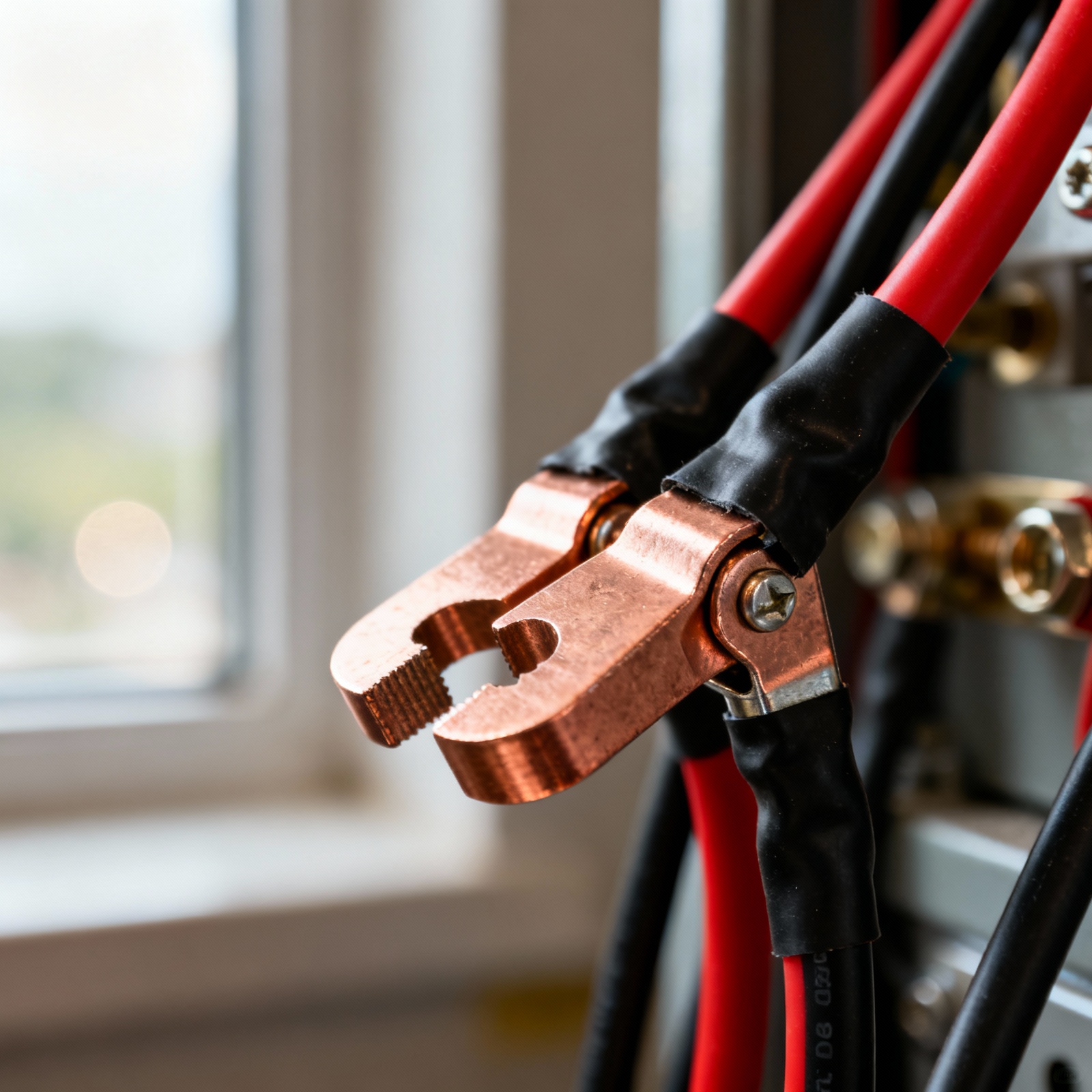
- Install a correctly sized fuse (300A class T for 3000W/12V systems) within 12 inches of the battery positive terminal—this is non-negotiable.
- Use 4/0 AWG cable minimum for 3000W at 12V; target less than 3% voltage drop across your cable run.
- Install proper battery disconnects; never work on the system while energized.
- Double-check polarity before connecting—reversed polarity destroys inverters instantly and voids warranties.
- Secure all cables with appropriate strain relief and protect exposed runs with UV-resistant conduit.
- Ensure adequate ventilation around the inverter; most units require 6+ inches clearance on all sides for cooling.
Disclaimer: High-power DC electrical work carries inherent risks. If you’re uncertain about any installation step, consult a qualified RV electrician.
Recommended Gear
- Victron SmartSolar MPPT 100/30 — View on Amazon
- Renogy 100W Monocrystalline Panel — View on Amazon
- Battle Born 100Ah LiFePO4 Battery — View on Amazon
FAQs
- What can a 3000W inverter run in an RV? A 3000W inverter handles most RV appliances including air conditioners (13,500-15,000 BTU), microwaves, coffee makers, hair dryers, and multiple smaller loads simultaneously. The 6000W surge capacity manages high-inrush startup loads from compressors and motors. The limiting factor is typically battery capacity, not inverter capability.
- How long will a 200Ah lithium battery last with a 3000W inverter? At full 3000W load, a 200Ah lithium battery lasts approximately 45 minutes (200Ah × 12V = 2400Wh ÷ 3000W = 0.8 hours, minus efficiency losses). However, most RV loads cycle rather than run continuously—an air conditioner might average 1200W over time, extending runtime to roughly 1.5-2 hours of actual cooling.
- Do I need pure sine wave or will modified sine wave work? Pure sine wave is mandatory for RV applications. Modified sine wave inverters can damage sensitive electronics, cause motors to run hot and fail prematurely, create interference with audio/video equipment, and prevent some devices (CPAP machines, certain refrigerators) from operating at all. The price difference no longer justifies the risk.
- What cable gauge and fuse size do I need for a 12V 3000W inverter? Use 4/0 AWG cable minimum for runs up to 6 feet, with a 300A class T fuse installed within 12 inches of the battery positive terminal. For runs longer than 6 feet, consider upgrading to 350 MCM cable or running parallel 2/0 cables. Undersized wiring is the leading cause of RV electrical fires with high-power inverters.
- Can I run a 3000W inverter on AGM batteries? Yes, but you’ll need significantly more capacity than with lithium. AGM batteries should only discharge to 50% to preserve lifespan, effectively halving usable capacity. A 3000W system typically requires 400-600Ah of AGM capacity for reasonable runtime, compared to 200-300Ah of lithium. AGM also struggles with the high discharge rates 3000W demands.
- Is an inverter/charger worth the extra cost over a standalone inverter? For full-timers and frequent boondockers, absolutely. Inverter/chargers provide automatic transfer switching between shore and battery power, eliminate the need for a separate converter/charger, and typically offer more sophisticated battery charging profiles. Weekend campers who primarily use campground hookups may find a standalone inverter sufficient.
As an Amazon Associate, we earn from qualifying purchases. This helps keep SunAmpRV running.