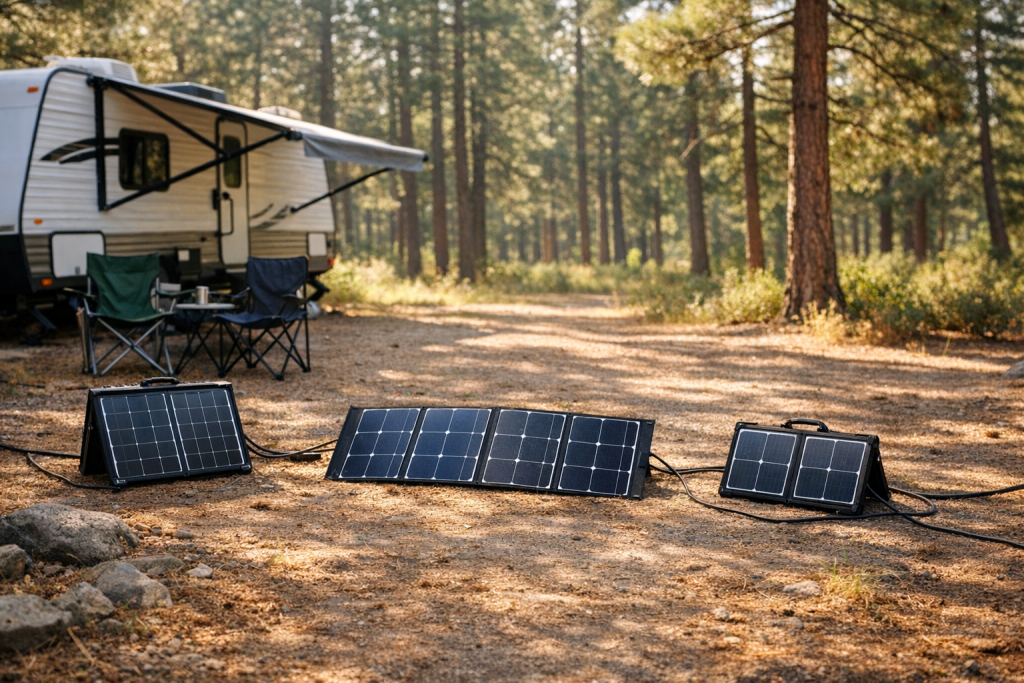
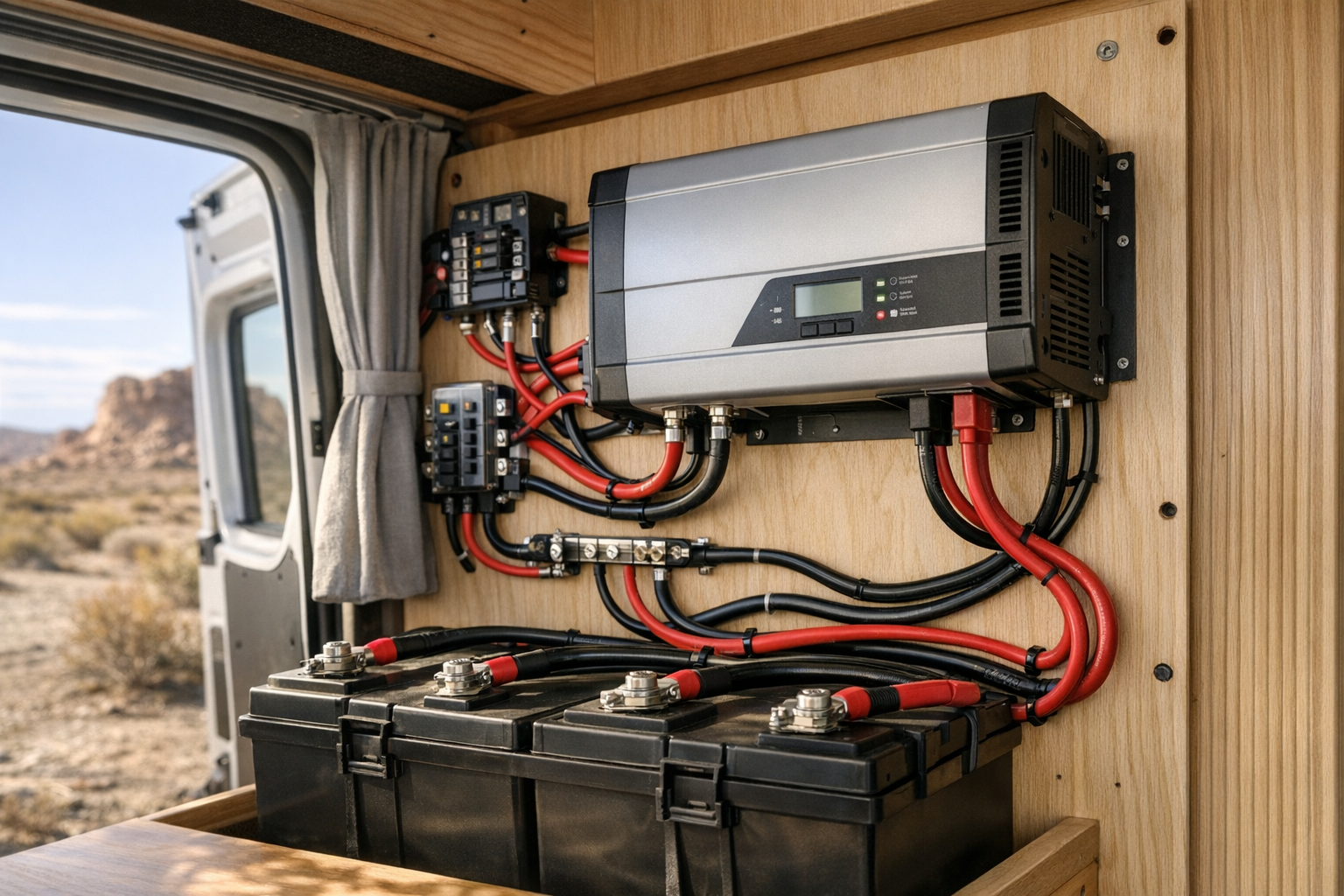
You’re parked on a remote stretch of BLM land, miles from the nearest hookup, and your batteries are the only thing standing between you and a dead fridge, dark lights, and a useless CPAP machine. That’s the reality of boondocking — and it’s exactly why choosing the right inverter charger is one of the most consequential decisions you’ll make for your off-grid RV setup. The best RV inverter charger for boondocking doesn’t just convert DC battery power to AC household current; it also replenishes your batteries from a generator or shore power, manages automatic power switching, and integrates with a solar charging system. Below, we’ve ranked the top options across budgets, RV sizes, and power needs.
TL;DR
- Best Overall: Victron MultiPlus — Gold-standard reliability with excellent solar integration and multi-stage charging for serious boondockers.
- Best Budget: AIMS Power PWRIC Series — Affordable pure sine wave output with a built-in transfer switch for basic off-grid needs.
- Best for Large RVs: Magnum Energy MS-PAE Series — High continuous power designed for Class A motorhomes and fifth wheels running multiple appliances simultaneously.
- Best for Travel Trailers: Xantrex Freedom XC — Compact form factor that fits tight compartments while delivering clean, pure sine wave power.
- Best for Lithium Setups: Victron EasySolar — All-in-one unit with built-in MPPT solar charge controller and native lithium battery profiles.
Best RV Inverter Charger for Boondocking Picks
Victron MultiPlus
If you spend any time in the boondocking and DIY solar communities, the Victron MultiPlus is the name that comes up again and again. This pure sine wave inverter charger has earned a reputation for bulletproof reliability and an ecosystem of monitoring and control accessories that let you fine-tune every aspect of your off-grid power system. Forum users on DIYSolarForum consistently recommend Victron products for boondocking setups, praising their programmability and compatibility with lithium battery banks.
What makes the MultiPlus particularly well-suited to boondocking is its PowerAssist feature, which supplements shore or generator power with battery power when demand spikes. You can run a smaller, quieter generator and still power high-draw appliances. The unit includes an automatic transfer switch, so the transition between inverter mode and incoming AC power is seamless. Multi-stage charging supports various battery chemistries — check manufacturer specs for exact charging profiles and amperage for your specific model.
The Victron ecosystem also shines for solar integration. Pair the MultiPlus with a Victron MPPT charge controllers and a Cerbo GX monitoring hub, and you have a fully integrated system you can monitor from your phone.
It’s not the cheapest option on this list, but for full-time boondockers who depend on reliable off-grid power day after day, it’s the one to beat.
Magnum Energy MS-PAE Series
When you’re running a large Class A motorhome or a fifth wheel with a residential fridge, a microwave, and an air conditioner, you need serious wattage. The Magnum Energy MS-PAE series is purpose-built for these high-demand scenarios — a pure sine wave inverter charger that delivers strong continuous power, enough to handle multiple large appliances running simultaneously.
Magnum has been a staple in the RV industry for years. The built-in automatic transfer switch handles the handoff between inverter power and generator or shore power, and the unit supports multi-stage battery charging across various battery chemistries. One standout feature is the ability to stack two units for even more power, which some full-timers with large battery banks find essential.
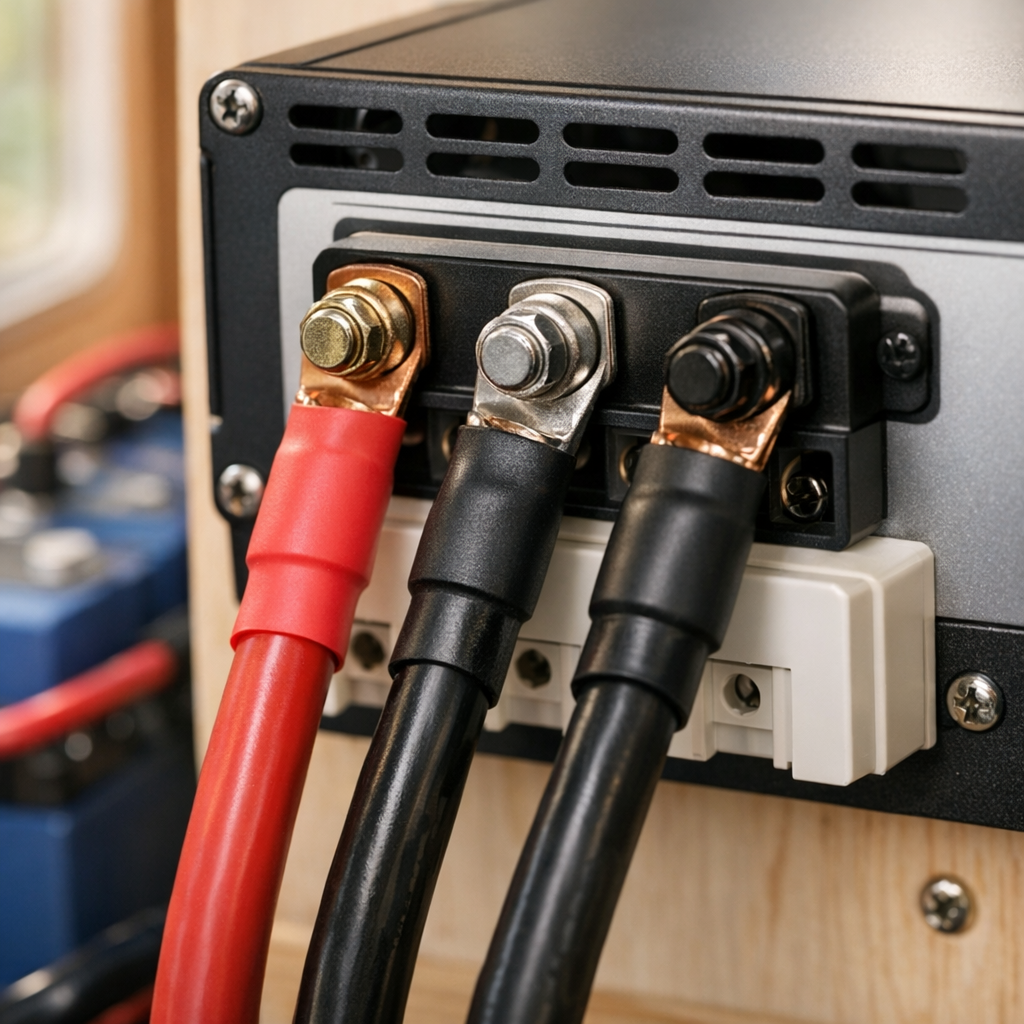
The trade-off? Size and weight. This is not a unit you tuck into a small compartment in a travel trailer. It’s designed for rigs with dedicated electrical bays, and the installation requires appropriately heavy-gauge wiring and robust fusing. But if your boondocking lifestyle involves running a full household worth of appliances off-grid, the Magnum MS-PAE series is built for exactly that.
Xantrex Freedom XC
Travel trailer owners face a unique challenge: they need clean, reliable inverter power but often have very limited space for electrical components. The Xantrex Freedom XC addresses this with a compact, lightweight design that still delivers pure sine wave output. It’s a popular recommendation on Reddit’s travel trailer communities, where users appreciate its straightforward installation and solid performance for the size.
The Freedom XC includes an automatic transfer switch and multi-stage battery charging — the essentials boondockers need. It’s well-suited for running a TV, charging laptops, powering LED lighting circuits, and keeping a CPAP machine running through the night.
Because of its compact design, the Freedom XC’s continuous power output is lower than larger units like the Magnum MS-PAE. Carefully calculate your power needs to make sure it can handle your peak loads. For the majority of travel trailer boondockers, though, it’s more than sufficient — and the space savings are a genuine advantage in a rig where every cubic inch matters.
AIMS Power PWRIC Series
Budget-conscious boondockers have long turned to AIMS Power for affordable inverter chargers that don’t cut corners on the fundamentals. The AIMS PWRIC series offers pure sine wave output, a built-in transfer switch, and multi-stage battery charging at a price point significantly lower than premium brands like Victron or Magnum. PowerInverters.com highlights AIMS as one of the best inverter charger options for RVs, noting their value proposition for buyers who want reliable off-grid power without a premium price tag.
These units are available in several power tiers, so you can match the inverter to your specific needs. Build quality is solid for the price, and AIMS has a decent track record of customer support. Where the AIMS units fall short compared to higher-end options is in the ecosystem — you won’t get the same level of remote monitoring, programmability, or seamless solar integration that Victron offers. But for straightforward boondocking setups, an AIMS inverter charger can serve you well for years.

Installation is standard: appropriate wire gauge, proper fusing, and adequate ventilation. Some users on forums have noted that the cooling fans can be audible under heavy loads, so consider mounting location carefully if noise is a concern.
Victron EasySolar
For boondockers who want to simplify their electrical system as much as possible, the Victron EasySolar is an intriguing all-in-one solution. It combines a pure sine wave inverter charger with a built-in MPPT solar charge controller, eliminating the need to purchase and wire a separate solar controller. This integration reduces complexity, saves space, and ensures all components are designed to work together from the factory.
The EasySolar is particularly appealing for lithium battery setups. Victron’s charging algorithms are well-regarded in the off-grid community, and the built-in MPPT controller is optimized to harvest maximum energy from your solar panels. If you’re building a new boondocking system from scratch — especially one centered around LiFePO4 batteries and rooftop solar — the EasySolar can save significant time and wiring complexity compared to assembling individual components.
The downside is cost and flexibility. As an all-in-one premium unit, the EasySolar carries a higher price tag than buying a basic inverter charger alone. Because it bundles the solar controller, you’re locked into Victron’s MPPT specifications — which are excellent, but may not match every panel configuration. Check manufacturer specs for exact solar input voltage and amperage limits before committing.
Royal Power Inverter Charger
Royal Power is another brand that surfaces in discussions about affordable RV inverter chargers, particularly on PowerInverters.com alongside AIMS. Their inverter charger units offer pure sine wave output and built-in transfer switching at competitive price points, making them worth considering for boondockers on a tight budget who still want clean power for sensitive electronics.
Royal Power units are generally straightforward to install and operate, with multi-stage charging that supports common battery types. They’re a solid choice for weekend boondockers or seasonal dry campers who don’t need advanced monitoring and integration features. The brand may not have the same name recognition or extensive dealer network as Magnum or Xantrex, but users who have tried them generally report satisfactory performance for the price.
As with any budget-oriented brand, do your due diligence on the specific model’s capabilities before purchasing. Check manufacturer specs for exact continuous power rating, surge capacity, and battery compatibility, and make sure the unit matches your battery chemistry and bank size.
Samlex Evolution Series
The Samlex Evolution series rounds out our list as a mid-range option that balances features, build quality, and price. Samlex has a solid reputation in the mobile power industry, and their Evolution inverter chargers deliver pure sine wave output with an integrated transfer switch and multi-stage battery charging. They’re a popular choice among RV owners who want something more refined than a budget unit but don’t need the full Victron ecosystem.
The Evolution series is known for relatively quiet operation and efficient power conversion — both of which matter when you’re running off a finite battery bank. The units are compatible with common battery types and can be paired with external solar charge controllers for a complete off-grid system. For boondockers who want a reliable, set-it-and-forget-it inverter charger without the complexity of a fully networked power system, Samlex offers a compelling middle ground.
Comparison Table
| Model | Type | Key Features | Best For | Pros | Cons | Where to buy |
|---|---|---|---|---|---|---|
| Victron MultiPlus | Pure sine wave inverter charger | Multiple power tiers; PowerAssist feature; multi-stage charging; automatic transfer switch | Serious boondockers wanting a fully integrated system | Exceptional ecosystem and monitoring; excellent solar integration; highly programmable | Premium price; steeper learning curve for configuration | Amazon ↗ |
| Magnum Energy MS-PAE Series | Pure sine wave inverter charger | High continuous power; stackable; multi-stage charging; automatic transfer switch | Large RVs and high-draw appliances | Handles heavy loads; proven RV industry track record; stackable for more power | Large and heavy; requires significant installation space | Amazon ↗ |
| Xantrex Freedom XC | Pure sine wave inverter charger | Compact design; multi-stage charging; automatic transfer switch | Travel trailers and smaller rigs | Space-saving form factor; clean sine wave output; easy installation | Lower continuous power than larger units; limited for high-draw appliances | Amazon ↗ |
| AIMS Power PWRIC Series | Pure sine wave inverter charger | Multiple power tiers; built-in transfer switch; multi-stage charging | Budget-conscious boondockers | Excellent value; pure sine wave at a low price; solid basic features | Limited monitoring ecosystem; fans can be audible under load | Amazon ↗ |
| Victron EasySolar | All-in-one inverter charger with MPPT | Built-in MPPT solar charge controller; pure sine wave; multi-stage charging | Lithium battery + solar boondocking setups | Simplifies wiring; integrated solar controller; native lithium profiles | Higher cost; locked into Victron MPPT specs | Amazon ↗ |
| Royal Power Inverter Charger | Pure sine wave inverter charger | Built-in transfer switch; multi-stage charging; competitive pricing | Weekend and seasonal boondockers on a budget | Affordable; clean power output; straightforward operation | Less brand recognition; smaller dealer/support network | Amazon ↗ |
| Samlex Evolution Series | Pure sine wave inverter charger | Integrated transfer switch; multi-stage charging; quiet operation | Mid-range buyers wanting quality without complexity | Quiet operation; solid build quality; good middle-ground pricing | Lacks advanced networked monitoring; fewer power tier options | Amazon ↗ |
As an Amazon Associate I earn from qualifying purchases.
Which One Should You Buy?
If you’re a full-time boondocker or extended-stay dry camper who has invested in a lithium battery bank and rooftop solar, the Victron MultiPlus is the clear frontrunner. The ability to monitor your entire system remotely, fine-tune charging parameters, and integrate seamlessly with Victron MPPT controllers and monitoring hubs pays dividends over thousands of hours of off-grid use. The PowerAssist feature — letting you run a smaller generator while the batteries supplement peak loads — can save you money and noise over time.
If you’re outfitting a large Class A or fifth wheel and routinely run a microwave, residential fridge, and other high-draw appliances simultaneously, the Magnum Energy MS-PAE series is purpose-built for your needs. Its high continuous power and stackability make it the go-to for rigs that function like small apartments. Just make sure your battery bank is sized to match — a high-wattage inverter charger paired with a small battery bank will drain your reserves alarmingly fast. For lead-acid banks, plan on only about 50% usable depth of discharge; LiFePO4 banks offer 80–90% usable capacity.
Travel trailer owners and van lifers who need reliable power in a tight space should look closely at the Xantrex Freedom XC. Its compact footprint is a genuine advantage when you’re working with limited compartment space, and it delivers clean pure sine wave power for everyday essentials like laptops, TVs, and medical devices.
On a tight budget? The AIMS Power PWRIC series and Royal Power inverter chargers both deliver pure sine wave output and built-in transfer switching at prices that won’t break the bank. They lack the advanced ecosystem features of Victron, but for straightforward boondocking setups — especially if you’re just getting started with off-grid camping — they provide excellent value.
Building a new system from scratch with solar and lithium batteries? The Victron EasySolar simplifies the build by combining the inverter charger and MPPT solar controller into one unit. You’ll save on wiring complexity and component count, though you’ll pay a premium for the convenience.
If you want a solid mid-range option without the complexity of a networked system, the Samlex Evolution series offers quiet, efficient operation at a reasonable price point.
Safety & Common Mistakes
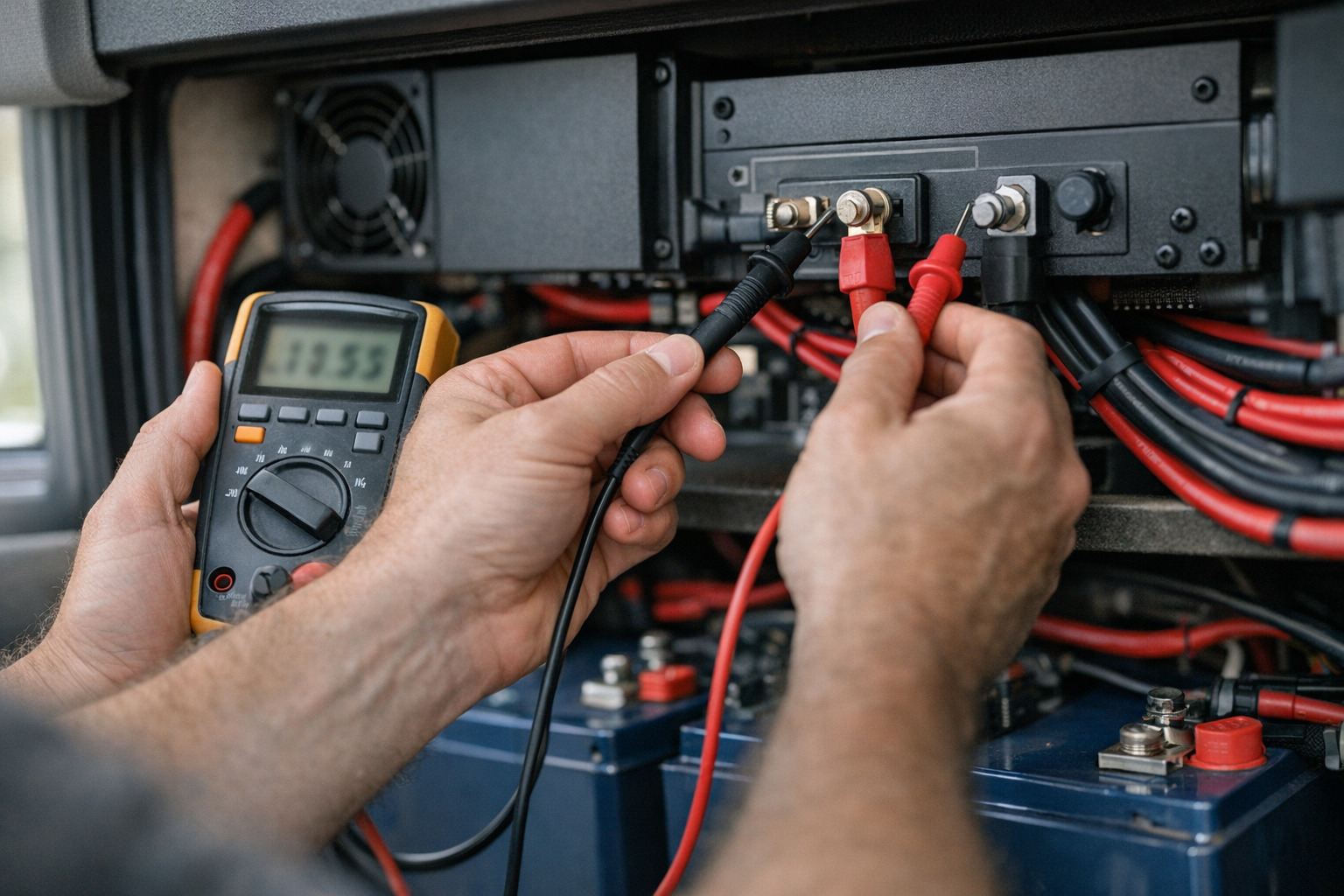
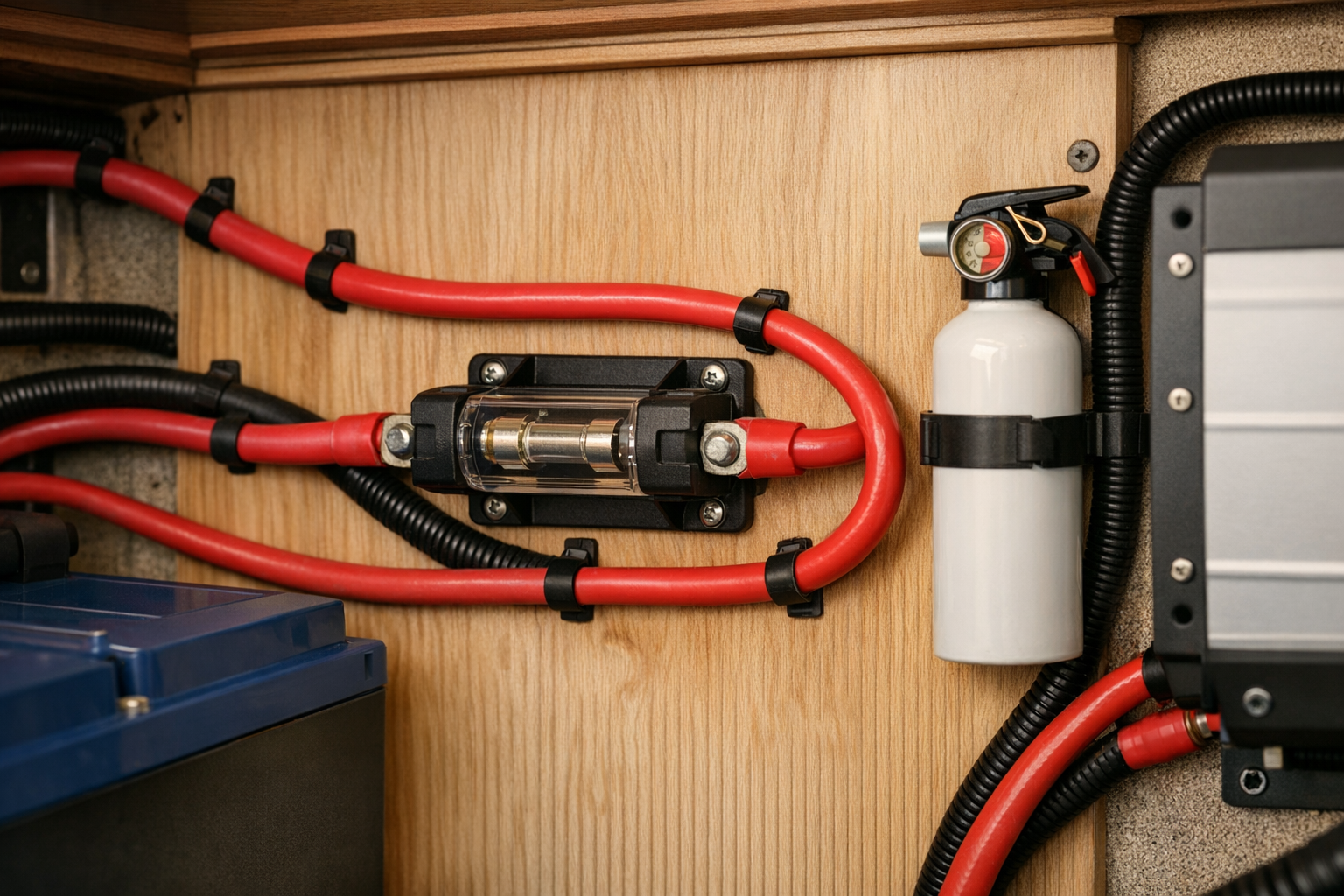
- Undersized wiring is dangerous. Inverter chargers draw significant DC current from your battery bank. Wire gauge that’s too small for the current and cable run length can cause overheating, voltage drop, and fire. Always consult a wire gauge chart for your specific inverter’s current draw and the distance between the battery bank and the inverter. When in doubt, go one gauge heavier (lower AWG number).
- Skipping proper fusing invites disaster. Every installation needs a properly rated fuse or circuit breaker on the DC side, as close to the battery bank as possible. A short circuit in unfused DC wiring can deliver hundreds of amps instantly — enough to melt wires and start a fire before you notice.
- Poor ventilation causes premature failure. Inverter chargers generate heat, especially under heavy loads. Mounting a unit in an enclosed, unventilated compartment will shorten its lifespan and may trigger thermal shutdown at the worst possible moment. Never block the cooling fan intakes or exhausts.
- Mismatched battery chemistry settings can damage your batteries. If your inverter charger is set to a lead-acid charging profile but you’re running lithium batteries (or vice versa), you risk undercharging, overcharging, or permanently damaging your bank. Always verify the charging profile matches your exact battery chemistry, and update settings if you switch battery types.
- Overloading the inverter causes shutdowns and potential damage. Running appliances that exceed your inverter’s continuous wattage rating will trigger protective shutdowns at best and damage the unit at worst. A kill-a-watt meter is an inexpensive tool that tells you exactly how much power each appliance draws.
- Ignoring the ground connection creates shock hazards. Proper grounding of your inverter charger and your RV’s electrical system is not optional. An ungrounded system can result in electric shock, especially in wet conditions. Follow the manufacturer’s grounding instructions exactly, and consider having a certified electrician verify your installation.
Disclaimer: Always follow the manufacturer’s installation manual and local electrical codes. If you are not confident in your electrical skills, hire a certified technician.
FAQs
- What size inverter charger do I need for boondocking? Start by identifying your highest-draw appliance — typically a microwave or coffee maker — and choose an inverter charger with a continuous rating that exceeds that appliance’s wattage. Add up the wattage of everything you might run simultaneously, then add 20–25% as a buffer. Most boondockers find a unit in the moderate-to-high power range covers their needs, but your actual requirement depends entirely on your appliance list. Factor in inverter efficiency losses of roughly 10–15% when sizing your battery bank to support those loads.
- Is a pure sine wave inverter charger necessary for an RV? For boondocking, yes — strongly recommended. Modified sine wave inverters are cheaper, but they produce a choppy approximation of household AC power that can cause problems with sensitive electronics. CPAP machines, modern TVs, microwave ovens, and laptop chargers either won’t work properly or may be damaged over time by modified sine wave power. The price gap between pure sine wave and modified sine wave units has narrowed significantly, making the upgrade well worth it.
- Can I use an inverter charger with lithium batteries? Most modern inverter chargers support lithium (LiFePO4) batteries, but you must confirm that the specific unit has a lithium charging profile. Lithium batteries require different charge voltages and cutoff parameters than lead-acid or AGM batteries. Using a lead-acid profile on lithium batteries can result in undercharging — reducing usable capacity — or triggering the battery management system’s protective shutdown. Always check the manufacturer’s specifications for supported battery chemistries and ensure the correct profile is selected during setup.
- What should you never plug into an inverter? Avoid plugging in high-draw resistive heating appliances like space heaters, hair dryers, and electric kettles that exceed your inverter’s continuous wattage rating. These devices draw enormous power and can quickly overwhelm a moderately sized inverter charger. Even if the appliance’s rated wattage is technically within your inverter’s capacity, resistive heating loads are an extremely wasteful use of limited off-grid energy — you’re converting battery DC to AC just to make heat. If you need heat, propane is far more efficient. If you must use a hair dryer, look for a low-wattage travel model.
- How does an inverter charger integrate with solar panels? In a typical boondocking setup, the inverter charger and the solar charge controller are separate devices that both connect to the same battery bank. The solar charge controller takes DC power from your rooftop panels and feeds it into the batteries. The inverter charger draws DC power from those batteries to produce AC power for your appliances, and it also charges the batteries when you’re connected to shore power or a generator. The two systems work in parallel — solar replenishes the batteries during the day, while the inverter charger manages AC loads and provides an alternative charging path. Some all-in-one units, like the Victron EasySolar, combine both functions into a single device.
- Do I need a separate transfer switch with an inverter charger? In most cases, no. Quality inverter chargers designed for RV use include a built-in automatic transfer switch that seamlessly shifts between inverter power and incoming shore or generator power. When you plug into shore power or start your generator, the transfer switch detects the incoming AC source, switches your RV’s electrical panel over to that source, and simultaneously begins charging your batteries. When the external source is disconnected, the switch reverts to inverter power. If you’re installing a standalone inverter (not an inverter charger), you will need a separate transfer switch — which is one of the key reasons an inverter charger is the preferred choice for boondocking setups.
Conclusion
Choosing the best RV inverter charger for boondocking comes down to matching the unit to your specific rig, battery bank, and power consumption habits. Full-time boondockers with lithium batteries and solar panels will get the most value from a Victron MultiPlus or EasySolar, where the investment in a premium ecosystem pays off over years of reliable off-grid use. Large rig owners running heavy appliances should look to the Magnum Energy MS-PAE series for its high continuous-power capability. Travel trailer owners will appreciate the compact efficiency of the Xantrex Freedom XC, while budget-minded campers can get excellent pure sine wave performance from AIMS Power or Royal Power units.
Regardless of which unit you choose, the inverter charger is just one piece of your off-grid power puzzle. Proper wire sizing, fusing, ventilation, and battery bank matching are all critical to a safe, reliable installation. Take the time to calculate your actual daily power consumption before you buy — accounting for realistic depth-of-discharge limits (roughly 50% for lead-acid, 80–90% for LiFePO4) and inverter efficiency losses of 10–15%. That single step is the most important part of sizing your system correctly. If you’re not confident in your electrical skills, hiring a certified technician for the installation is money well spent.