12V vs 24V Solar for RVs: Which Is Better?
On this page

You’re staring at a roof with room for 600 watts of panels, a 12V fridge and water pump already wired into your rig, and a forum thread insisting that “real” off-grid builds run 24V — so which voltage actually makes sense for your RV solar system? The honest answer depends on system size, cable run length, and what your appliances expect. The good news: most of the best RV solar components today are built to serve either camp.
TL;DR
- Best Overall: Victron SmartSolar MPPT — RVers who want one controller family that works whether they settle on a 12V or 24V battery bank
- Best Budget: Renogy Rover MPPT — Budget-conscious builders starting at 12V who may scale up later
- Best for 24V Builds: Victron Orion-Tr DC-DC Converter — Owners running standard 12V RV appliances from a 24V battery bank
- Best for Simple 12V Roofs: Renogy 100W 12V Monocrystalline Panel — Weekend campers keeping a small, straightforward 12V array
- Best for Bigger Arrays: Rich Solar 200W Monocrystalline Panel — Full-timers building higher-wattage arrays where 24V starts to win
Best 12V vs 24V solar on RV which is better Picks
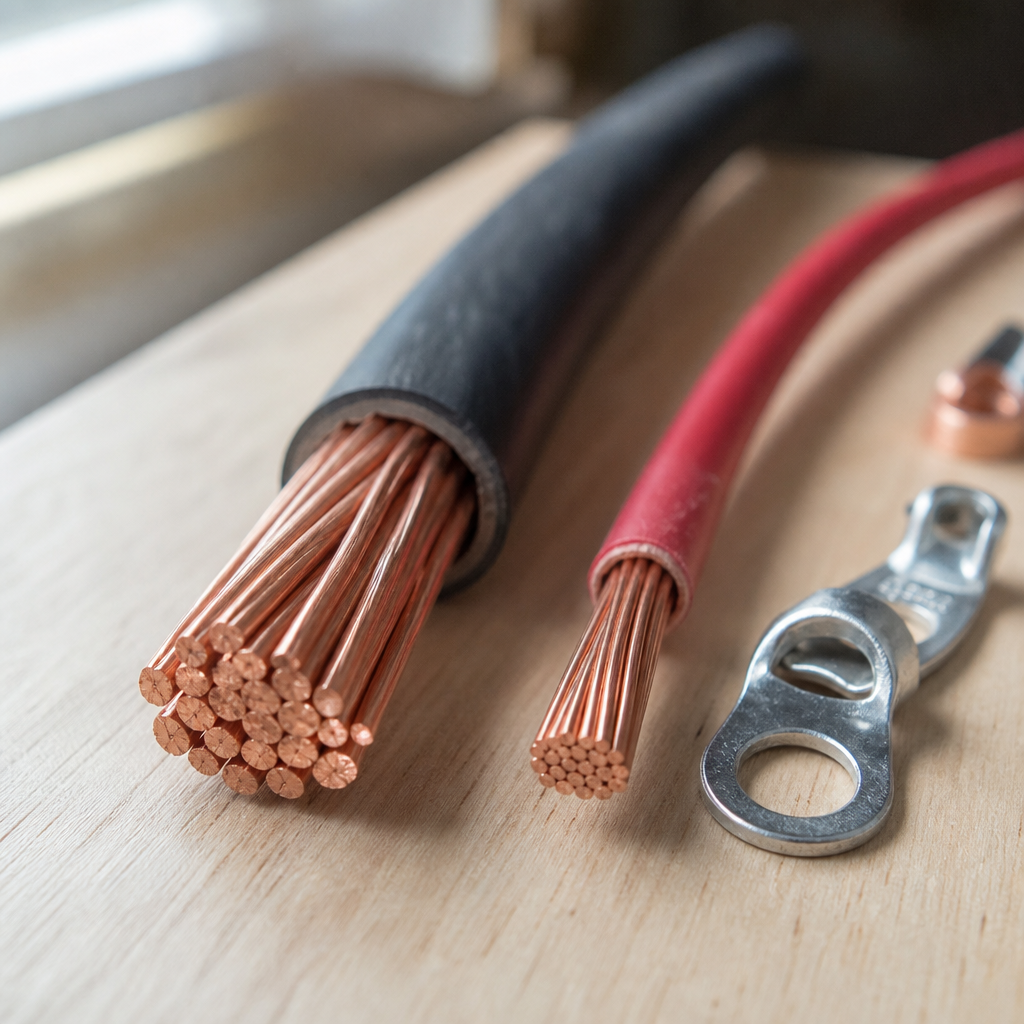
Before the picks, a 60-second primer, because the voltage debate is really a current debate. Power is voltage multiplied by current, so a 1,000W system pushes roughly 83 A at 12V but only about 42 A at 24V. Halving the current means thinner, cheaper copper, lower resistive losses on long cable runs, and smaller (or fewer) charge controllers — which is why big arrays and long rigs lean 24V. On the flip side, nearly the entire RV appliance ecosystem — fridges, water pumps, lights, fans, USB outlets — runs natively on 12V, which is why small and mid-size systems overwhelmingly stay 12V. The consensus from builders on iRV2, DIY Solar Forum, and the van-life community lands roughly here: under about 1,000W of solar and inverter load, 12V keeps life simple; above that, 24V starts paying for itself in copper savings and headroom.
The products below are the components that actually decide the question for you. Some, like Victron’s controllers, are voltage-agnostic and keep both doors open. Others, like a 24V-to-12V converter, are what make a 24V bank livable in a rig full of 12V gear. One note that applies to every pick: confirm final compatibility, accessories, and warranty terms on the current product listing before purchase, because bundles and revisions change over time.
Victron SmartSolar
If you’re genuinely torn between 12V and 24V, the smartest first purchase is a controller that doesn’t force the decision — and that’s why the Victron SmartSolar MPPT line sits at the top of this list. Check the manufacturer specification for the model you are considering. That means you can start with a 12V bank today, and if you later rebuild around a 24V bank for a bigger inverter and array, the controller stays in the system. For anyone whose honest answer to “which is better?” is “I don’t know yet,” that flexibility is worth real money.
The MPPT architecture also matters for this debate specifically. An MPPT controller accepts panel-string voltage well above battery voltage and converts it down efficiently, which means you can wire your roof panels in series for higher array voltage — enjoying the thin-wire, low-loss benefits of high voltage on the roof run — while still charging a 12V bank if that’s what your appliances demand. Charge-controller type and pairing varies by kit. Panel-side voltage and battery-side voltage are separate decisions once MPPT is in play — a nuance the debate often misses.
Who it’s best for: builders who value long-term flexibility, anyone planning to expand their array over several seasons, and RVers who want the deepest documentation and community support in the industry. The trade-off is price — Victron sits at the premium end of the controller market, and budget-focused builders can get MPPT charging for less elsewhere on this list.
2 — Renogy Rover
The Renogy Rover line is the answer for builders who want genuine MPPT charging and 12V/24V system flexibility without the Victron price tag. Like the Victron, Rover controllers are used across both 12V and 24V battery-bank builds, so the same “buy once, decide later” logic applies.

Where the Rover earns its ranking is value for a first serious system. A typical scenario: a couple with a travel trailer, a modest roof array, a 12V fridge, and plans to maybe add panels next year. A Rover-based system charges the existing 12V bank today, and if the array grows to the point where 24V starts making sense, the controller family accommodates the change. For most weekenders and part-timers who will never cross the roughly 1,000W threshold where 24V becomes compelling, a Rover on a 12V bank is simply the pragmatic answer to the whole debate.
Who it’s best for: budget-conscious DIYers, first-time installers, and anyone whose loads are predominantly native 12V. The trade-offs versus Victron are ecosystem depth and long-term expandability — Victron’s networking and system-integration options run deeper for complex multi-source setups. Verify the model’s PV input limits against your panel string’s cold-weather open-circuit voltage before finalizing the wiring plan.
3 — Victron Orion-Tr DC-DC Converter
Here’s the component that makes 24V livable in an RV — and the one most people forget to budget for. The single biggest drawback of a 24V house bank is that virtually every RV appliance is built for 12V: the water pump, the furnace board, the lights, the tank sensors, the stereo. The fix is a 24V-to-12V DC-DC converter, and Victron’s Orion-Tr line is the go-to choice among experienced builders for exactly this job. It steps your 24V bank down to a stable 12V rail so all your existing appliances keep working as if nothing changed.
Think of the Orion-Tr as the tax you pay for 24V’s efficiency gains — and it’s a reasonable tax. On a large system, the money saved on thick copper cable and higher-current controllers typically outweighs the cost of a converter, which is precisely why the forum consensus flips toward 24V as arrays grow. But it’s also a real added component: another device to mount, fuse, and size against your actual 12V load profile. If your rig’s 12V loads are heavy — big furnace draw, multiple pumps — size the converter accordingly, and possibly run more than one.
Who it’s best for: anyone committing to a 24V battery bank in a rig that still has conventional 12V systems — which is nearly every rig. If you’re staying 12V, you can skip this entirely, which is itself a data point in the 12V column for small builds.
4 — Renogy 100W 12V Monocrystalline Solar Panel
The Renogy 100W 12V monocrystalline panel is probably the most common single solar panel on RV roofs in North America, and it’s the natural building block for the “keep it simple, stay 12V” camp. For a weekender running lights, a fan, phone charging, and maybe a 12V compressor fridge, two to four of these panels on a 12V bank covers the mission with minimal complexity: familiar wiring, cheap fuses and components at every hardware store, and no converter needed for any of your appliances.
There’s an important subtlety here that answers one of the most-asked questions in this debate: you do not necessarily need different panels for a 24V system. A roof full of Renogy 100W panels doesn’t lock you into 12V forever; the battery bank and controller configuration define your system voltage, not the panel label. Series wiring also cuts current on the roof-to-controller run, letting you use thinner wire even on a long rig.
Who it’s best for: small-system builders, roof layouts with awkward spaces where small panels tile better than large ones, and anyone prioritizing easy sourcing and replacement. The main watchout is that lots of small panels means more connections and mounting hardware than fewer large panels — plan your combiner and fusing layout before you drill anything.
5 — Rich Solar 200W Monocrystalline Solar Panel
Once your ambitions climb past a few hundred watts, larger-format panels like Rich Solar’s 200W monocrystalline modules start making more sense than tiling the roof with 100W units — fewer panels, fewer connections, fewer mounting points, and fewer things to leak or fail. Rich Solar has become a fixture in the DIY RV solar community, and the brand publishes some of the clearer educational material on the 24V-versus-12V question, which tells you where its customer base lives: people building bigger systems.
This is the pick for readers whose honest system plan lands in 24V territory. At 12V, the same wattage would demand dramatically thicker cable between battery and inverter — the kind of wire that’s genuinely difficult to route and terminate in a camper.
Who it’s best for: full-timers, boondockers with high daily consumption, and long rigs where cable runs are measured in tens of feet. Watchouts: large panels are physically harder to handle on a roof solo, and higher-voltage series strings demand more attention to connector quality and cold-weather voltage margins on your controller’s input rating.
6 — EPEver Tracer AN
EPEver has a large installed base in the DIY solar world, and the Tracer line frequently comes up in forum threads as the “gets the job done for less” option when builders price out a full system and start trimming.
The realistic positioning: if the controller budget is the difference between finishing your build this season or not, a Tracer on a properly fused system will charge your bank and let you make the 12V-or-24V decision on your own terms. What you give up versus the premium options is polish — documentation quality, configuration friendliness, and ecosystem integration are areas where the budget tier typically trails Victron in user reports. For a straightforward single-controller RV system, many owners find that trade acceptable.
Who it’s best for: cost-driven builders, secondary systems (a trailer alongside a main rig), and experimenters who expect to revise their setup anyway. As with any controller, verify the PV input voltage ceiling against your panel string configuration, and set the battery type and voltage parameters correctly before connecting the array.
7 — Newpowa 100W Solar Panel
Newpowa rounds out the list as the budget panel play for 12V-first builders. The brand has carved out a following among RVers and off-grid tinkerers who want the most watts per dollar and are willing to trade brand-name cachet for savings.
That matters because “I bought 12V panels, am I stuck?” is one of the most common questions in this debate — and the answer is almost always no, provided your controller accepts the higher string voltage.
Watchouts: with any value-tier panel, inspect frames, junction boxes, and connectors on arrival, and don’t skimp on mounting hardware to protect a cheap panel — wind at highway speed doesn’t care what you paid.
Comparison Table
Scroll sideways to see every column.
| Search Target | Best Fit | What to Confirm Before Buying | Why It Might Fit | Watchouts | Where to buy |
|---|---|---|---|---|---|
| Victron SmartSolar | Best when you want one controller family that serves both 12V and 24V banks | Verify the PV input ceiling against your string’s cold-weather voltage | Fits builders who want to start at 12V and keep the controller through a 24V rebuild | Premium pricing — budget builds get MPPT for less elsewhere in this list. | Amazon ↗ |
| Renogy Rover | Best value MPPT for a first serious 12V system that may scale later | Confirm the model’s PV input limit and battery-chemistry profiles cover your plan | Fits budget-minded DIYers whose loads are mostly native 12V | Ecosystem depth and integration options are thinner than the premium tier. | Amazon ↗ |
| Victron Orion-Tr DC-DC Converter | Best way to run standard 12V appliances from a 24V house bank | Confirm the converter’s output rating covers your rig’s actual 12V load profile | Fits anyone committing to 24V in a rig full of conventional 12V systems | One more device to mount and fuse — heavy 12V loads may need more than one. | Amazon ↗ |
| Renogy 100W 12V Monocrystalline Solar Panel | Best building block for a simple, expandable 12V roof array | Confirm mounting dimensions and connector type fit your roof plan | Fits weekenders who value easy sourcing and hardware-store replaceability | Many small panels means more connections — plan the combiner and fusing first. | Amazon ↗ |
| Rich Solar 200W Monocrystalline Solar Panel | Best for bigger arrays where fewer, larger panels simplify the roof | Confirm the panel physically fits your open roof space | Fits full-timers and long rigs where cable runs favor higher voltage | Large panels are awkward to handle alone and demand cold-weather voltage margin. | Amazon ↗ |
| Newpowa 100W Solar Panel | A budget-friendly panel pick for value-focused 12V builds | Inspect frame, junction box, and connectors on arrival, and check the mounting dimensions fit your roof layout | Suits builders who want the most watts per dollar and simple 12V-first wiring | Don’t skimp on mounting hardware, and buy from a current listing since bundles change between sellers. | Amazon ↗ |
| EPEver Tracer AN | Best budget MPPT when the controller price decides whether the build happens | Verify the PV input ceiling and set battery type and voltage before connecting | Fits cost-driven builders and secondary systems that will be revised anyway | Documentation and configuration polish trail the premium brands. | Amazon ↗ |
As an Amazon Associate I earn from qualifying purchases.
Which One Should You Buy
Start with the only question that really decides this debate: how big will your system honestly be in two years?

If your array is modest and storage space is tight, prioritize fit and essential overnight loads. Every appliance in your rig already speaks 12V, replacement parts are everywhere, and the efficiency penalty at this scale is small enough that simplicity wins.
If you’re planning a genuinely large system — full-time boondocking, induction cooking, or serious inverter loads on a long rig where cable runs stretch 20 feet or more — the math flips. Many RVers are better served by sizing around a simple load budget: daily watt-hour use, battery capacity, sun exposure, and how many cloudy days they want in reserve. Size the battery bank around your actual overnight demand, depth of discharge, and charge-controller limits rather than a fixed amp-hour figure. The converter is the cost of admission, but on a big build it’s cheaper than the copper you’d otherwise buy.
And if you truly can’t decide yet? Buy the voltage-agnostic pieces first. Start with an MPPT controller that works on both bank voltages, and keep the panel wiring plan flexible. That sequencing lets you start at 12V today and convert later without throwing away your controller or your roof.
Safety & Common Mistakes
- Never connect panels to a controller before the battery. Most charge controllers must sense battery voltage first; connecting the PV array to an unpowered controller can damage it. Battery first, panels second — and reverse the order when disconnecting.
- Respect cold-weather panel voltage. Panel open-circuit voltage rises in cold temperatures, and a series string that’s fine in July can exceed your controller’s input ceiling on a frosty morning. Leave margin when sizing strings.
- Fuse for the current, not the voltage. A 12V system moves double the amps of a 24V system at the same wattage — undersized wire and fuses on a 12V build are a genuine fire risk, not just an efficiency loss.
- Don’t feed 24V into 12V appliances. Connecting a 24V bank directly to standard RV loads will destroy them. A properly sized DC-DC converter is mandatory, and it should be fused on both sides.
- Set the controller’s battery voltage and chemistry before connecting the array. A controller left on the wrong voltage or battery-type profile can chronically overcharge or undercharge an expensive bank.
- Don’t mix battery voltages in one bank. A bank must be all one system voltage; series/parallel misconfigurations are one of the most common — and most expensive — DIY solar mistakes.
This overview is informational only — follow manufacturer instructions and applicable electrical codes, and consult a qualified installer if you’re unsure.
FAQs
- Is 24V more efficient than 12V for RV solar? At the same wattage, a 24V system carries half the current, which cuts resistive losses in the wiring and lets you use thinner, cheaper cable — an advantage that grows with system size and cable-run length.
- When should I stick with 12V? For systems under roughly 1,000W, or when most of your appliances run natively on 12V and you value simplicity, easy parts sourcing, and skipping a DC-DC converter, 12V is usually the better choice.
- Can I run 12V appliances on a 24V system? Yes — a 24V-to-12V DC-DC converter (such as Victron’s Orion-Tr line) creates a stable 12V rail for your pumps, lights, fridge, and other standard RV loads. Size it against your total 12V draw.
- Do I need different solar panels for a 24V system? Not necessarily. Common “12V” panels can be wired in series to raise string voltage, and an MPPT charge controller will convert that down to charge either a 12V or 24V bank, as long as the string stays within the controller’s input limits.
- Does 24V charge batteries faster? Not inherently — charging speed depends on array size and controller capacity. What 24V does is let the same wire and controller hardware move more total power, which makes larger, faster-charging systems practical.
- Can I upgrade from 12V to 24V later? Yes, but plan for it: you’ll reconfigure the battery bank, replace or reprogram the charge controller and inverter, and add a converter for 12V loads. Buying voltage-flexible components up front makes the conversion far cheaper.
Conclusion
The 12V-versus-24V question isn’t really about which voltage is “better” — it’s about matching architecture to ambition. Then line up the pieces that must agree with each other: controller input limits against your panel strings, bank voltage against your inverter, and a properly sized converter if you go 24V in a 12V-appliance rig.
Your concrete next step: sketch your realistic two-year load list, total the watts, and let that number pick your voltage. Check the manufacturer specification for charge-controller requirements on the model you are considering.
Spot an error or an outdated detail in this guide?
Report it