Best Lithium Batteries for RV Solar Setups
On this page
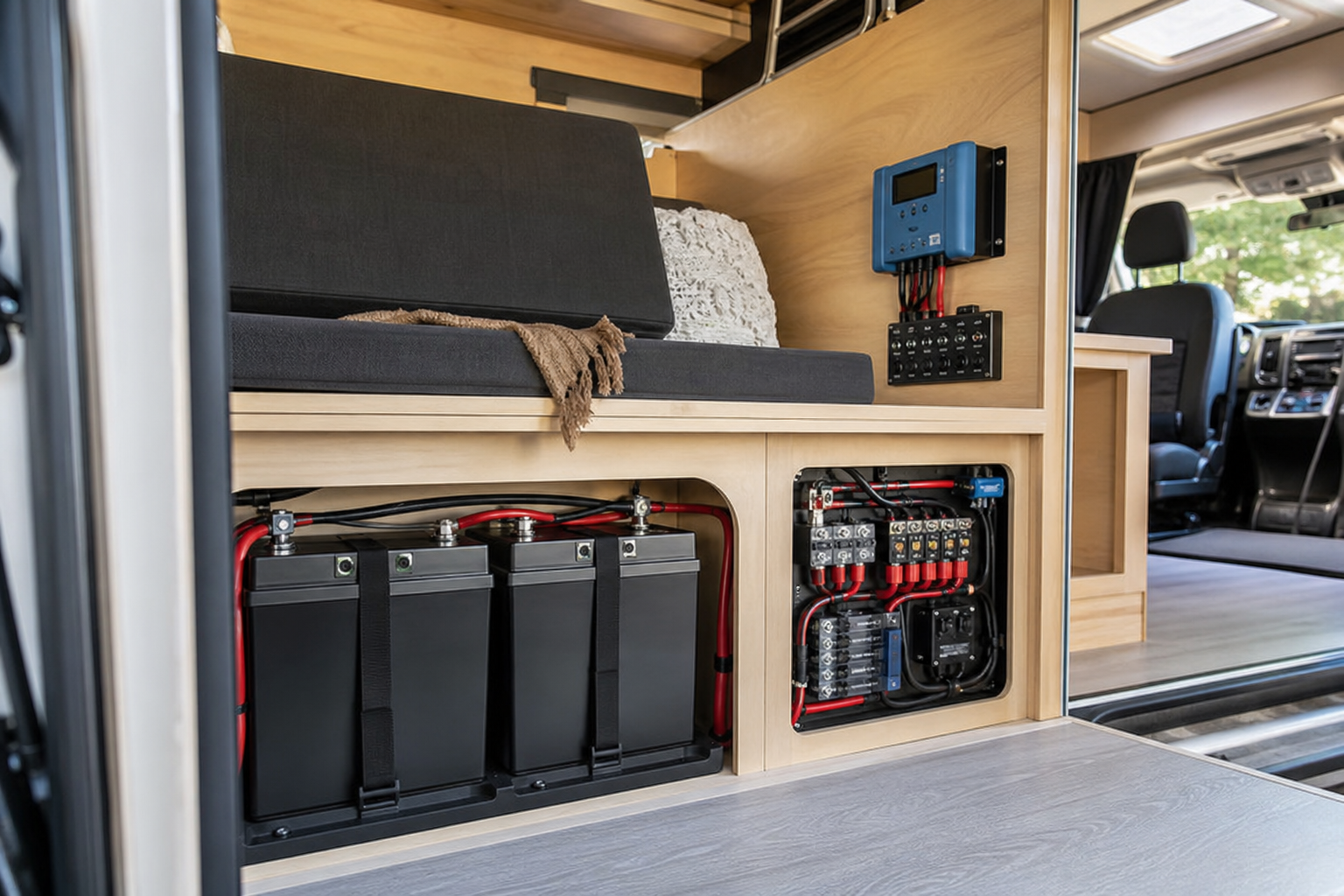
Run a 400 W rooftop array into a single 12 V battery and the limiting factor is rarely the panels — it’s the chemistry, the BMS discharge ceiling, and the usable depth of discharge sitting under your inverter. Choosing the best lithium batteries for RV solar means matching capacity, continuous discharge rate, and charge acceptance to the way you actually camp, not to a headline amp-hour number on a box. A common mistake is assuming the panel rating dictates the system: in reality, the battery is the reservoir, and a mismatched reservoir either chokes the harvest or starves the loads. The panels set the rate at which energy flows in during daylight, but the battery determines how much of that energy you can store and how aggressively you can pull it back out when the sun is gone.
Lithium iron phosphate has reshaped what is practical in a recreational vehicle because it changes the math on usable energy, weight, and lifespan at once. Where lead-acid forced owners to oversize banks just to access a usable fraction of rated capacity, lithium lets the same nameplate amp-hours translate into meaningfully more real-world runtime. That shift cascades through every design decision: smaller, lighter banks do more work, parallel configurations become easier to balance, and the daily cycle of charging from solar and discharging overnight stops degrading the cells the way deep lead-acid cycling does. The sections below break the decision down by buyer profile, then walk through the sizing logic so you can match a product to your build with confidence.
TL;DR
- Best Overall: LiTime Deep Cycle LiFePO4 — Best for owners comparing long-term value in a balanced RV solar bank
- Best Budget: Redodo LiFePO4 — Best for budget RV battery upgrades from aging lead-acid
- Best for Full Off-Grid: RELiON LiFePO4 — Best for full-time off-grid builds comparing battery options
- Best Compact 12V: Redodo Compact LiFePO4 — Best for weight-sensitive RV builds with tight battery bays
Product Details
Lithium iron phosphate (LiFePO4) is the dominant chemistry for RV solar because of its flat discharge curve, deep usable capacity, and tolerance for partial-state-of-charge cycling — the exact pattern a solar bank lives in. The picks below are grouped by buyer fit rather than by a single spec, because the best battery for a weekend camper with 200 W of panels is not the best battery for a full-timer running a residential fridge off 600 W. For each product, lead with how it fits your build, then confirm the model-level details that matter to your wiring before you order.
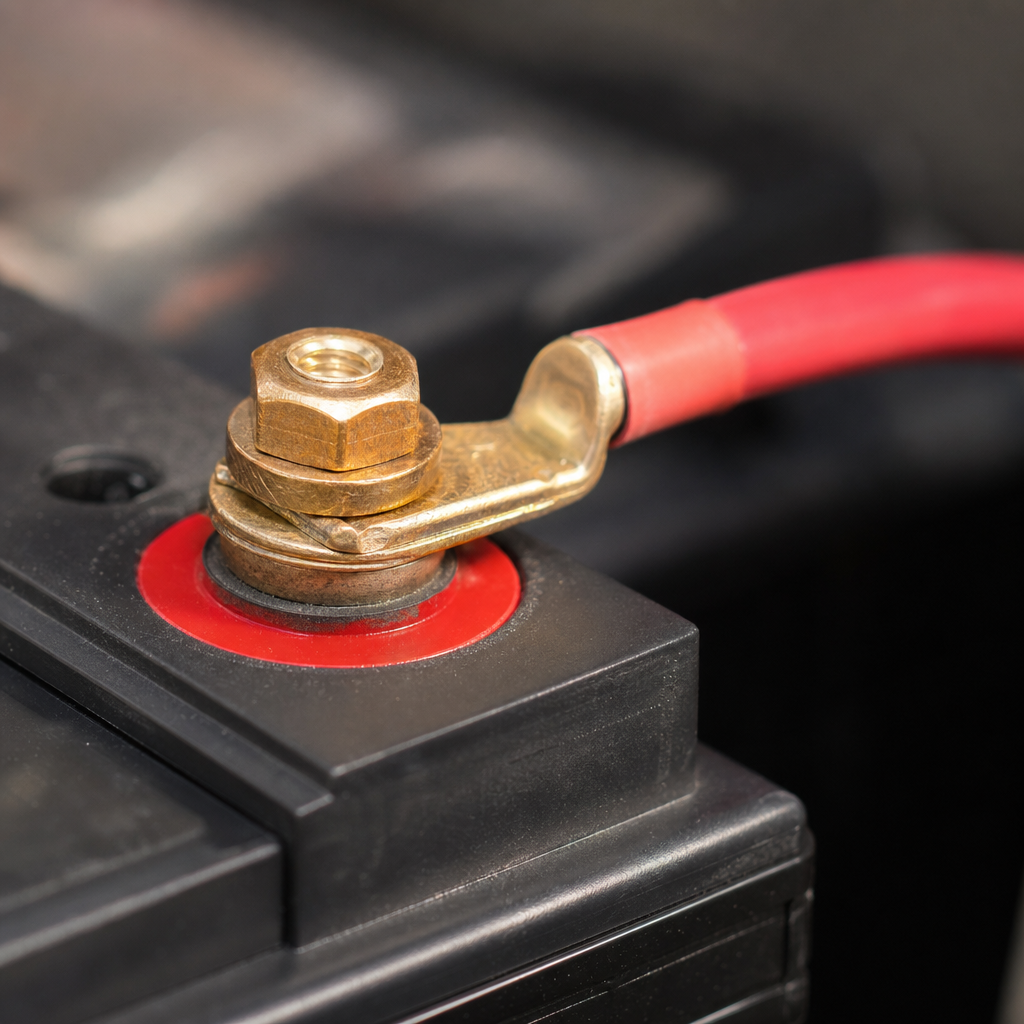
It helps to understand what the flat discharge curve actually buys you. A lead-acid battery’s terminal voltage sags steadily as it discharges, so a load that runs comfortably at full charge can behave erratically as the bank drains, and the voltage reading becomes a poor proxy for remaining capacity. LiFePO4 holds a far more stable voltage across most of its usable range, which means your inverter and DC loads see consistent supply from a nearly full pack down to a nearly depleted one. The practical consequence is predictable behavior: lights stay at full brightness, the inverter does not stumble as the evening wears on, and a coulomb-counting battery monitor gives you a trustworthy fuel gauge rather than a voltage reading that swings with every load change.
The other defining characteristic for solar use is tolerance of partial-state-of-charge cycling. Solar banks rarely reach a full, completed charge every day — cloudy stretches, shaded mornings, and heavy afternoon loads leave the bank sitting somewhere in the middle of its range for extended periods. Lead-acid chemistry penalizes that pattern with sulfation and accelerated capacity loss, which is why lead-acid solar banks historically needed periodic full absorption charges to stay healthy. LiFePO4 is largely indifferent to where it sits in its charge window, so the messy, real-world rhythm of solar harvesting and overnight draw does not shorten its life the way it would with the older chemistry. That single trait is the strongest technical argument for lithium in any system that depends on the sun rather than shore power.
Best Lithium Batteries for RV Solar: Our Top Picks
LiTime Deep Cycle LiFePO4
LiTime’s deep-cycle LiFePO4 line is positioned as a general-purpose RV and camper battery, which makes it a sensible default for a balanced solar bank. The flat LiFePO4 voltage curve means your inverter sees stable voltage from near-full down to near-empty, so loads behave consistently as the day’s harvest depletes overnight. Parallel and series limits vary by battery model, BMS design, and manufacturer documentation. Check the exact manual before wiring multiple batteries together.
The buyer fit here is “I want a dependable mid-capacity unit I don’t have to think about.” Plan your install around the battery’s continuous discharge rating relative to your inverter’s draw, and make sure your solar charge controller can output a LiFePO4-appropriate charge profile.
Where this tier earns its keep is in the unglamorous middle of the market, serving the largest share of RV owners who want a clear upgrade from lead-acid without a maximalist off-grid build. The cell behavior is what most buyers actually need: a deep, repeatable cycle that recovers fully from an overnight draw and accepts a strong morning charge. Charge-controller type and pairing varies by kit; check the manufacturer specification for the model you are considering. If your daily pattern is lights, a water pump, vent fans, device charging, and the occasional inverter draw for a coffee maker or laptop, a mid-capacity unit covers it with room to spare, and a second battery in parallel later doubles your reserve.
Redodo LiFePO4
Redodo’s LiFePO4 batteries are aimed at the cost-conscious upgrade path — the camper tired of replacing flooded lead-acid every couple of seasons who wants the usable-capacity jump without a premium-tier price. Lead-acid safely yields only a fraction of its rated capacity before deep discharge shortens its life, so a like-for-like lithium swap typically gives you noticeably more nightly runtime even at the same nameplate amp-hours, though usable depth depends on the specific cell and manufacturer guidance. That makes budget LiFePO4 an easy first step into solar-friendly storage.
Trade-offs at this tier usually show up in peripheral details — monitoring options, support responsiveness, and documentation polish — rather than in core cell behavior. Treat it as a solid foundation battery: wire it into a clean charge profile, fuse it correctly, and it will carry a modest solar bank well. Verify the discharge rating against your largest inverter load so you don’t clip on surge.
It is worth being precise about what “noticeably more nightly runtime” means, because the comparison is often misunderstood. A flooded lead-acid battery is typically held to roughly half its rated capacity before deep discharge begins to shorten its life. A LiFePO4 pack of the same nameplate amp-hours commonly makes a much larger share of that capacity available for routine use per its manufacturer’s guidance, so the gap in actual usable energy is wider than the matching label numbers suggest. The budget tier delivers this core advantage faithfully; what you trade away is polish around the edges, not the fundamental energy density that makes the swap worthwhile.
RELiON LiFePO4
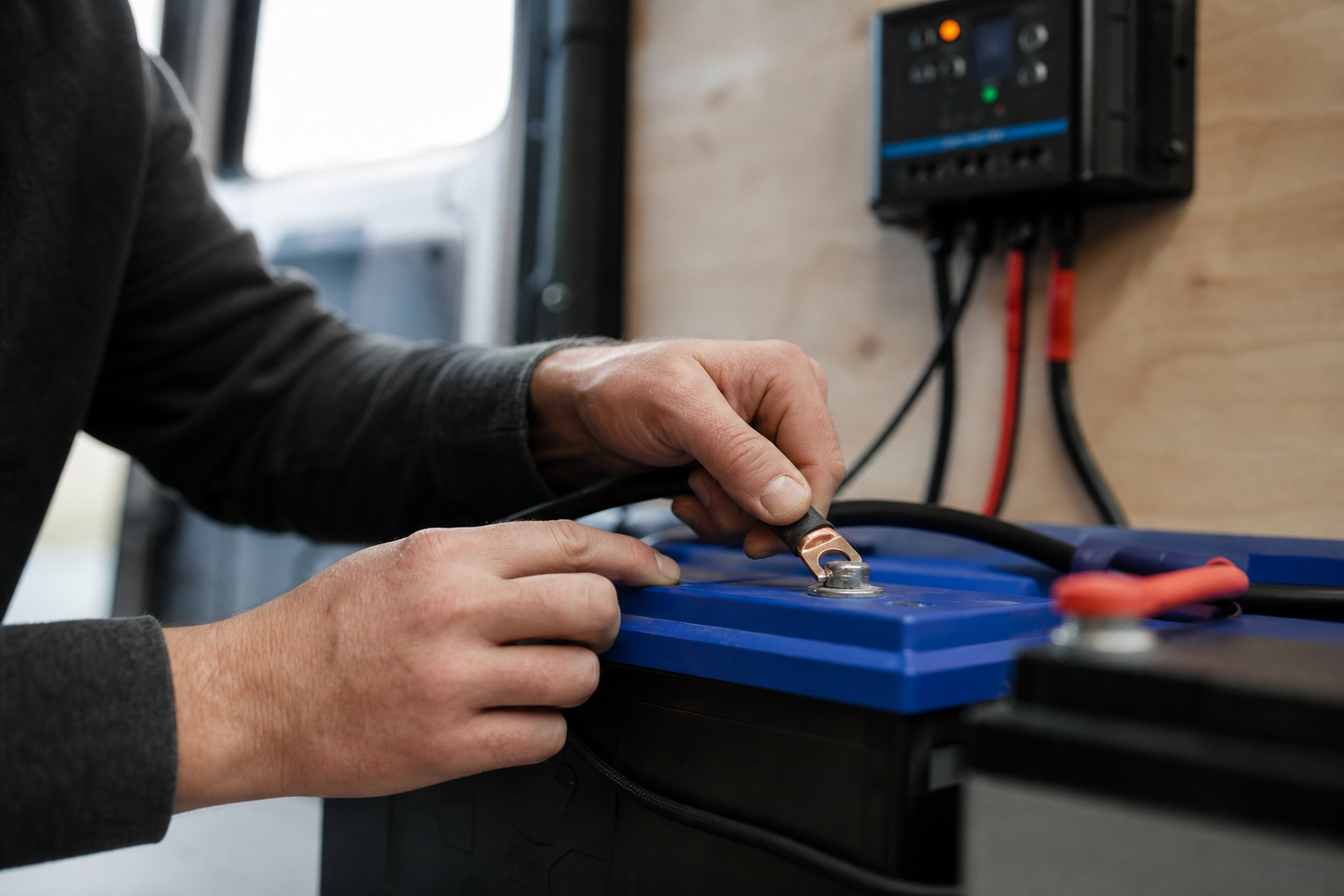
The relevant buyer-fit question is scale. Full off-grid users typically need 300 Ah or more of usable storage, which means planning bus bars, balanced cabling, and a charge controller sized to push real current into the bank.
At this scale, the battery management system stops being a background component and becomes a central design concern. Brands that have spent years in the marine and off-grid space tend to engineer for that envelope, with documented parallel-configuration limits and discharge ratings that hold up under continuous load rather than only brief peaks. When you are committing to a bank that may represent a substantial share of your build budget, that engineering maturity is part of what you are paying for.
Redodo Compact LiFePO4
Compact LiFePO4 units exist for a specific constraint: a tight battery bay, a weight budget, or a small van/teardrop build where every kilogram and centimeter counts. A smaller-footprint pack still delivers the deep usable discharge that solar banks depend on, just at lower total energy — which is exactly right for minimalist 100–200 W setups powering lights, charging, and light inverter use.
The trade-off is intentional: less stored energy. That’s fine for weekenders and dry-camping in moderate weather, but it caps how much overnight inverter load you can run.
This category rewards careful measurement more than any other, because its entire reason for existing is fitting into spaces where a standard group-size battery will not go. A pack that fits the footprint but leaves no room to route and secure cabling is as much a problem as one that is physically too large. Weight matters just as much in small builds, where payload limits are real — and here lithium’s advantage over lead-acid is most dramatic, since a compact LiFePO4 pack delivers usable energy at a fraction of the mass of an equivalent lead-acid unit, freeing capacity for water, gear, or a second battery later.
Battle Born LiFePO4
Battle Born is frequently the reference point in RV solar discussions for its track record and support culture, making it a strong “buy once” candidate for owners who prioritize long-term value over upfront savings. The buyer here is comparing total cost of ownership: a higher-quality LiFePO4 pack that cycles reliably for years usually beats two cheaper replacements over a typical ownership window.
The total-cost-of-ownership argument deserves to be taken seriously rather than treated as a slogan. A battery that survives the full span of your ownership without replacement saves not only the price of a second pack but the labor of pulling, rewiring, and rebalancing a bank mid-life, plus the downtime that comes with it. Support culture factors in too: when a question arises about parallel configuration, charge settings, or a warranty claim, responsive and knowledgeable support shortens the path to a working system. For owners who keep a rig for many years and lean on it heavily, paying more upfront for a pack with a long, well-documented cycle life and a vendor that stands behind it is a defensible economic decision.
Renogy LiFePO4
Renogy sits naturally in the solar-ecosystem conversation because many RVers already run Renogy panels and controllers, and a single-brand pairing can simplify charge-profile setup. Required accessories vary by panel and battery; check the manufacturer specification for the model you are considering.
Evaluate this option on how cleanly it integrates with the rest of your planned system and on its capacity relative to your nightly draw.
The value of staying within one ecosystem is mostly about reducing the number of independent decisions you have to get right. When the panels, controller, and battery come from a single vendor, the recommended charge settings are often published as a matched set, and any companion monitoring app tends to read the whole chain rather than just one component. For a first-time builder, that coherence removes a class of subtle configuration errors — mismatched absorption voltages, monitoring that only sees part of the system, or accessories that almost-but-not-quite interoperate. None of this locks you in; a correctly configured controller of any brand will charge any LiFePO4 pack properly. But for buyers who value a single point of reference and a tidy, documented build, the ecosystem approach trades a small amount of flexibility for a meaningful reduction in setup friction.
How Much Capacity Do You Need?
Capacity sizing follows your daily consumption, not your panel wattage. If you camp weekends and run lights, a water pump, fans, and occasional device charging, a 100–200 Ah bank typically covers a night with margin. If you live off-grid and run a fridge plus an inverter for kitchen appliances, plan for 300 Ah or more of usable storage. Because LiFePO4 lets you safely use a large share of rated capacity per manufacturer guidance — well beyond the shallow draw lead-acid tolerates — the real-world gap between the two chemistries is bigger than the nameplate numbers suggest.
A practical way to arrive at a number is to build a short load budget. List each device you expect to run overnight, estimate its power draw and the hours it operates, and convert to amp-hours at your system voltage. A handful of LED lights, an intermittent water pump, and a couple of device chargers add up to a modest overnight total; a residential refrigerator cycling through the night is a far larger, more continuous draw that can dominate the budget on its own. Add a margin for the inevitable underestimate and for days when solar harvest is poor, and you have a target usable capacity. Working from that figure rather than from the panel rating is what keeps you from buying a bank the array refills by mid-morning but that runs dry before dawn.
If you need a simple, dependable bank → choose the LiTime Deep Cycle tier. If you’re replacing lead-acid on a budget → choose the Redodo tier. If you’re going full-time off-grid → choose the RELiON or Battle Born tier and build a larger bank.
Matching the Battery to Your Solar Wattage
Panels generate energy; the battery stores it. A useful planning rule is that the bank should absorb what your array produces on a good day and carry your loads through the night. For most 400 W setups, a bank in the 200 Ah range balances charge acceptance against overnight reserve, while larger arrays justify larger banks.
The failure mode to avoid is a bank so small relative to the array that it fills early in the day and leaves hours of sunlight unused. When the battery reaches full charge by late morning, the controller throttles back and the afternoon’s potential harvest is discarded, even though you may draw the bank down again that night. A bank sized to absorb most of a good day’s production lets the array keep working through the afternoon, banking energy against cloudy days and heavy evenings. The reverse problem — a bank far larger than the array can fill — leaves you chronically undercharged, relying on shore power or an alternator to make up the difference. Matching the two so the array can comfortably refill the bank’s nightly deficit on a typical sunny day is the balance you are aiming for.
If your array is small (100–200 W) and the bay is tight → choose a compact LiFePO4 unit. If your array is 400 W or more → choose a mid-capacity or larger bank sized to your overnight load.
Comparison Table
Scroll sideways to see every column.
| Search Target | Best Fit | What to Confirm Before Buying | Why It Might Fit | Watchouts | Where to buy |
|---|---|---|---|---|---|
| LiTime Deep Cycle LiFePO4 | Best for shoppers weighing a recognizable option against their rig, power needs, and budget | Check fit, wiring, and charge-or-power compatibility before you order. | Worth a look if its size and capability line up with your daily power use and available space. | Do not assume a universal fit — match it to your rig first. | Amazon ↗ |
| Redodo LiFePO4 | A practical starting point for owners comparing fit and features before they decide | Make sure it suits your loads, your space, and your install plan first. | A reasonable match when its feature set fits the way you travel and the loads you run. | Headline numbers can mislead; weigh real-world fit and support. | Amazon ↗ |
| RELiON LiFePO4 | Suits buyers narrowing a shortlist around how they actually camp and travel | Match its capability and protection limits to your setup before buying. | Earns a spot on your shortlist when the install effort suits your skills and your rig. | Watch for compatibility gaps with your existing charge-or-power setup. | Amazon ↗ |
| Redodo Compact LiFePO4 | Good for upgrades where space, wiring, and compatibility still need a closer look | Look over mounting, connections, and support terms for your rig. | Fits builds where compatibility with your existing charge-or-power setup checks out. | Mind the install effort and the space the unit actually needs. | Amazon ↗ |
| Battle Born LiFePO4 | Aimed at DIY installers matching capability and fit to their existing setup | Be sure the size, fit, and warranty terms work for your build. | Appeals to owners who want dependable performance without paying for capability they will not use. | Treat unverified marketing claims with caution and compare the essentials. | Amazon ↗ |
| Renogy LiFePO4 | A sensible candidate for owners balancing capability, install effort, and price | Double-check compatibility and install constraints against your rig. | Makes sense when its capability and support reputation match what your setup demands. | Make sure the warranty and support terms genuinely cover your use. | _ |
As an Amazon Associate I earn from qualifying purchases.
Which One Should You Buy?
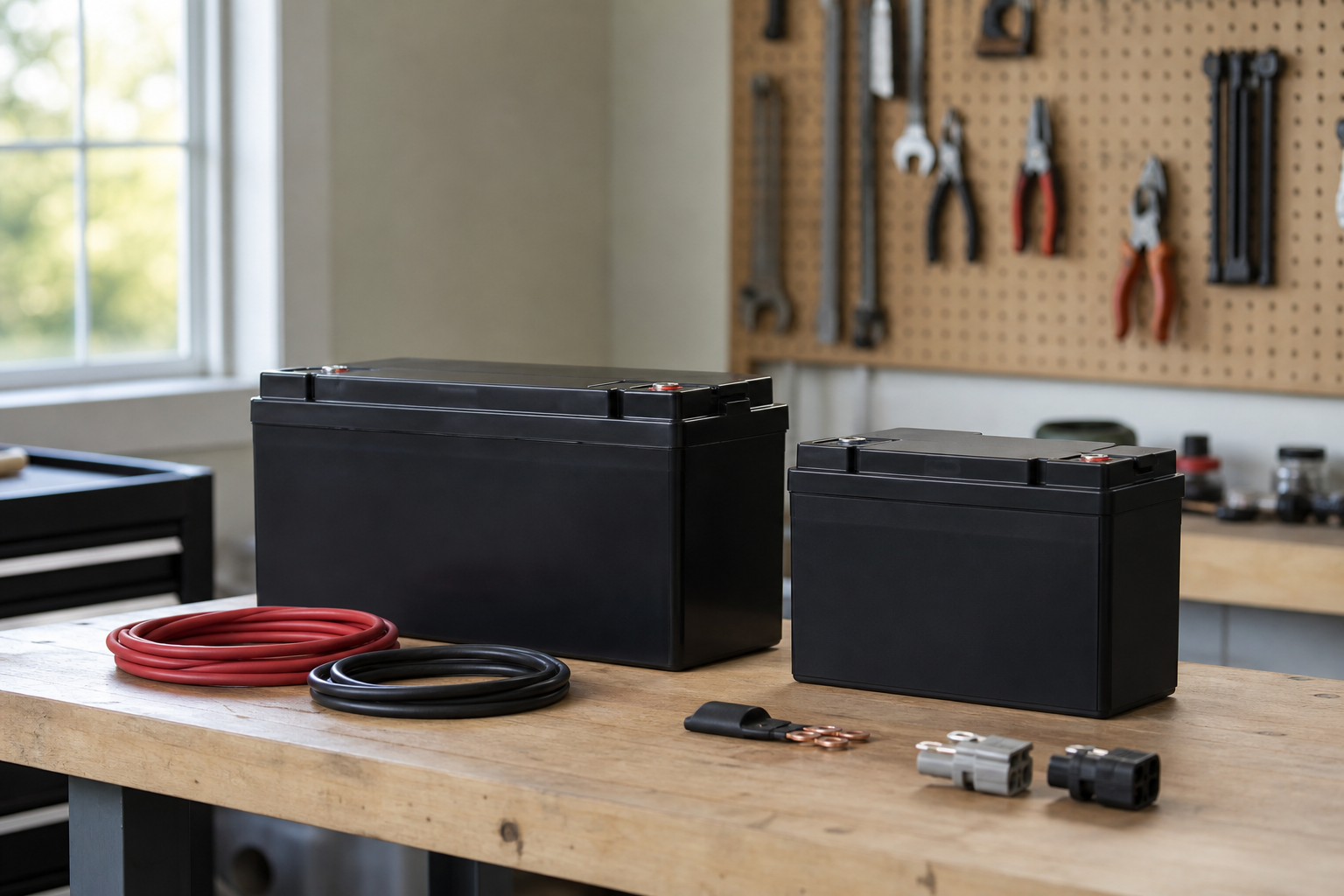
The right pick falls out of three questions: how much energy you use overnight, how big your solar array is, and how hard your inverter pulls. Work those out first and the battery selects itself.
These three questions matter more than any single specification because they describe the actual job the battery has to do. Overnight consumption sets the minimum reserve you need, array size sets how quickly that reserve refills, and inverter draw sets the instantaneous current the battery must deliver without tripping its protection. A battery can satisfy one constraint while failing another — plenty of capacity but too low a discharge ceiling, or a high discharge rating in a pack too small to carry the night. Answering all three before you shop keeps you from anchoring on a headline amp-hour figure that may not address your real limitation.
Safety & Common Mistakes
- Charge lithium batteries only above freezing unless the pack has built-in low-temperature protection — charging a cold cell can cause permanent damage.
- Match your charger or controller to a lithium charge profile; a lead-acid curve can over- or under-charge a lithium bank.
- Make sure the battery’s BMS cuts off safely on over-current, over-voltage, and low temperature before you rely on it.
- Fit a properly rated fuse or breaker close to the battery positive terminal on every run.
- Size cables to the real current draw and keep connections tight; loose or undersized wiring is a common cause of heat and failure.
- Mount the bank securely in a ventilated spot and protect exposed terminals against accidental shorts.
FAQs
- What should I look for when choosing lithium batteries for RV solar? Start by matching the option to your own rig. The things that matter most are charger and controller compatibility, physical fit in your battery bay, the low-temperature charging policy, the BMS current limits, and the warranty and return terms. Confirm each against the current listing and the manual before you buy.
- Are lithium batteries worth it for most RV setups? For most RV owners the answer is yes, but the right pick depends on your battery bank, daily power use, and travel style. Use the comparison table above to match your needs.
- How do I choose the right lithium battery for my RV? The honest answer depends on your specific setup. Estimate your daily energy use first, then check that the unit physically fits your battery bay and that your charge source offers a lithium profile. After that, compare BMS current limits, temperature handling, and warranty before committing.
Conclusion
Choosing the right lithium battery for RV solar comes down to matching real use to the right fit rather than chasing headline numbers. Start by shortlisting options such as LiTime Deep Cycle LiFePO4, Redodo LiFePO4 and RELiON LiFePO4, then weigh each against how you actually camp — daily power needs, available space, and the budget you are working with. The comparison table and the ‘Which One Should You Buy?’ section are there to narrow that shortlist quickly.
Use the safety notes to plan a clean, protected install, and treat the current product listing as the final word on the details that matter to your rig. Pick the option that fits your setup today and you will get dependable power without overspending.
Spot an error or an outdated detail in this guide?
Report it