Best Pure Sine Wave Inverter for RV: Top Picks
On this page
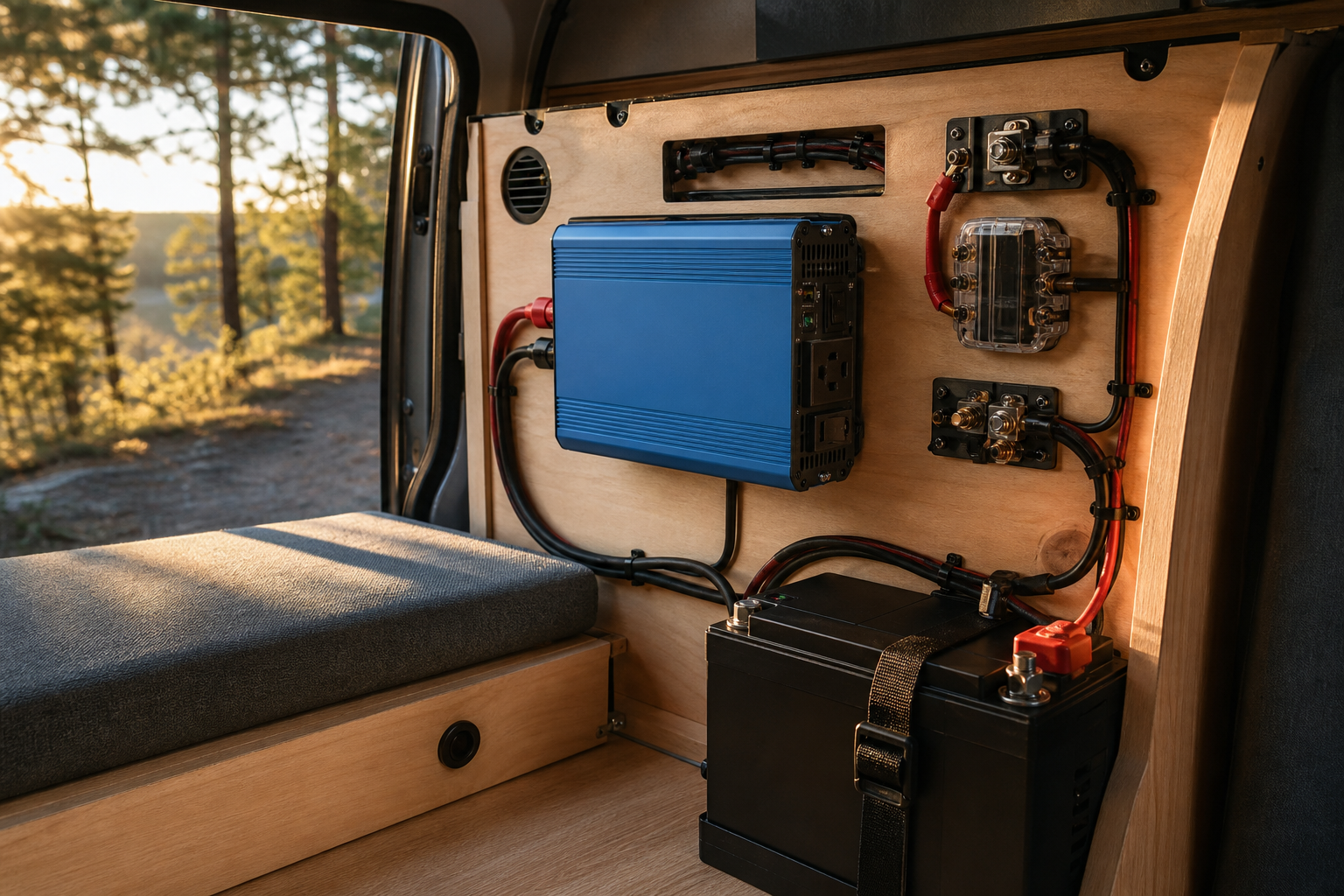
Run a residential microwave, a CPAP, and a laptop charger off a 12V battery bank at the same time and a cheap modified sine wave inverter will make at least one of them buzz, overheat, or fail early — that’s the practical constraint that pushes most RV owners toward a pure sine wave inverter. The engineering problem is straightforward: you need clean AC output, a continuous rating that covers your simultaneous loads, and enough surge headroom for motor start-ups, all delivered from a DC bus that punishes undersized cabling.
TL;DR
- Best Overall: Victron Phoenix Inverter — Boondockers who want proven reliability and clean, stable AC output
- Best Budget: Renogy Pure Sine Wave Inverter — Cost-conscious RVers building their first off-grid electrical system
- Best for Shore-Power Rigs: Xantrex Freedom XC — Owners who want inverting and battery charging in one unit
- Best for High-Demand Rigs: AIMS Power Pure Sine Inverter — Large motorhomes running heavy simultaneous loads
- Best Premium Inverter/Charger: Victron MultiPlus — Full-time lithium-plus-solar builds where the inverter/charger is the heart of the system
- Best Compact Pick: Xantrex PROwatt SW — Vans and small trailers with limited mounting space
Product Details
The picks below are all true pure sine wave designs from brands with an established track record in the RV and marine market — Victron, Xantrex, Renogy, and AIMS come up repeatedly in owner forums and installer recommendations. Each entry covers who the unit fits, the trade-offs against the rest of the field, and what to plan for during installation.
Victron Phoenix Inverter
The Victron Phoenix line is the default recommendation among experienced boondockers and professional installers, and it earns that position on build quality rather than marketing. Victron’s reputation in the RV and marine space rests on consistent output quality, conservative component ratings, and firmware that behaves predictably under load transitions — exactly what you want feeding sensitive electronics like laptops, induction cooktops, and medical equipment. The Phoenix line is offered across a range of output sizes, so you can match the inverter to your actual load profile rather than buying whatever single size a budget brand happens to sell.
The trade-off is price. Victron sits at the premium end of the market, and you are paying for reliability and ecosystem integration rather than headline wattage per dollar. For full-time RVers, that math usually works out: an inverter failure a hundred miles from the nearest town costs far more than the price difference at purchase. The Phoenix pairs naturally with the rest of Victron’s DC ecosystem, which matters if you plan to expand your system with solar charge controllers or battery monitoring later. Buyers on a strict budget who run only light loads can save money elsewhere in this list, but if the inverter is the backbone of your off-grid power, this is the low-regret choice. Confirm final compatibility, accessories, and warranty terms on the current product listing before purchase.
Renogy Pure Sine Wave Inverter
Renogy occupies the value tier of the market with a pure sine wave inverter line that has become a staple in DIY van and trailer builds. The appeal is straightforward: genuine pure sine output at a price point well below the Victron and Xantrex tiers, from a brand that already dominates entry-level RV solar. If your battery bank, panels, and charge controller are already Renogy, staying in the same brand family simplifies support and keeps documentation consistent across the system.
The compromises are the ones you’d expect at this tier. Renogy inverters generally don’t carry the same long-service reputation as Victron or Xantrex units in heavy daily-cycle use, and owner reports suggest quality control is good but not flawless. For weekend campers, seasonal travelers, and anyone whose worst-case failure scenario is “plug into shore power instead,” those are acceptable risks for the savings. Renogy offers the line in multiple output sizes, which lets budget builders size correctly instead of overbuying. Plan your DC-side cabling carefully — budget inverters are just as sensitive to voltage drop from undersized wire as premium ones, and a surprising share of “defective inverter” complaints trace back to thin cables and loose lugs rather than the unit itself.
Xantrex Freedom XC
The Xantrex Freedom XC is an inverter/charger — a combination unit that converts battery power to AC when you’re off-grid and recharges your battery bank when you’re connected to shore power or a generator. For RVers who split time between campgrounds with hookups and boondocking, this architecture eliminates a separate converter/charger, reduces the number of failure points, and simplifies the transition between power sources. Xantrex has decades of history in RV OEM installations, and the Freedom line is one of the most commonly factory-installed inverter/charger families in North American motorhomes, which means service knowledge is widespread.
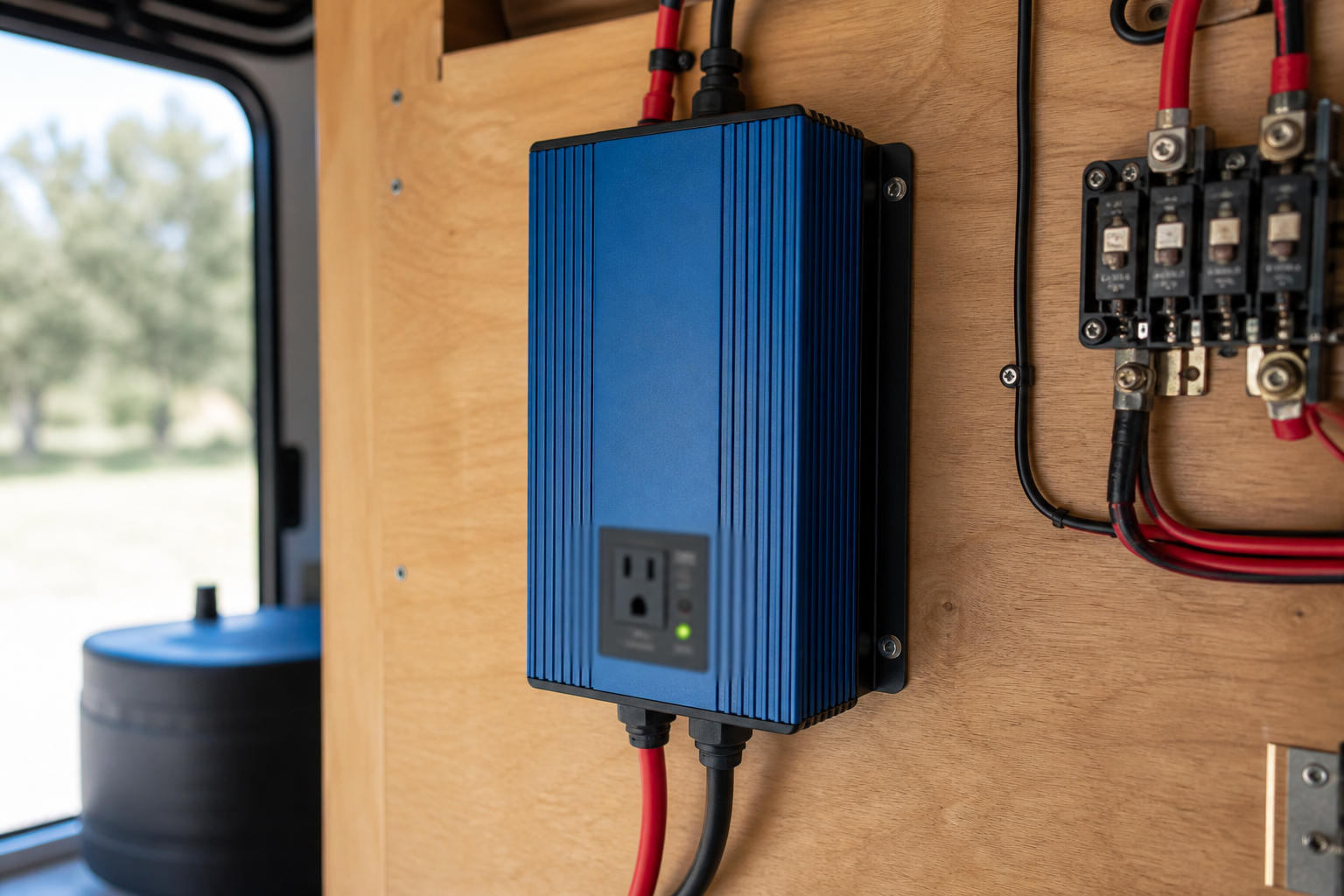
The engineering advantage of an integrated inverter/charger is seamless source management: when shore power appears, the unit passes AC through to your loads and switches to charging the batteries; when shore power drops, it inverts from the bank. The cost is complexity — installation involves both AC-in and AC-out wiring in addition to the DC side, so this is a unit where hiring a qualified installer or studying the manual thoroughly is warranted. It also costs more than a standalone inverter of similar output class, but less than buying a comparable inverter and quality multi-stage charger separately.
AIMS Power Pure Sine Inverter
AIMS Power specializes in high-capacity inverters, and its pure sine wave line extends into output classes that most consumer brands don’t touch. That makes AIMS the practical answer for large motorhomes and fifth wheels trying to run heavy simultaneous loads — residential refrigerators, microwaves, and, with a sufficiently large lithium bank, even air conditioning. If your load calculation lands above what the mainstream 12V inverter market comfortably serves, AIMS is one of the few brands with a deep catalog in that territory.
Big inverters pull enormous DC current at 12V, which means very thick cabling, short cable runs, correctly rated fusing, and a battery bank large enough to deliver that current without severe voltage sag — undersized banks will trip low-voltage cutoffs the moment a compressor starts. Many owners running loads this large step up to 24V or 48V architectures to keep current manageable, and AIMS offers models across those input voltages as well. In owner-forum reliability discussions, AIMS is generally regarded as a value-tier brand relative to Victron and Xantrex, so it fits buyers who prioritize raw capacity per dollar and are comfortable engineering the supporting system properly.
Victron MultiPlus
The Victron MultiPlus is the premium inverter/charger answer — the unit that serious full-time and off-grid builds gravitate toward when budget allows. Like the Freedom XC, it combines inverting and multi-stage battery charging in one chassis, but it adds Victron’s system-integration strengths: it plays cleanly with the brand’s charge controllers, battery monitors, and system displays, letting you manage the entire electrical system as one coordinated installation. One standout capability of the MultiPlus family is its ability to supplement a limited shore-power or generator connection with battery power, which lets small-service campground pedestals run larger loads than the hookup alone could support.
The MultiPlus costs more than nearly everything else and its configurability is a double-edged sword — initial setup involves more decisions than a plug-and-play budget unit, and DIYers should budget real time for reading documentation. For a weekend trailer with modest loads, it’s overkill. But for buyers designing a system they intend to live on, where the inverter/charger is the heart of a lithium-plus-solar installation, the MultiPlus is widely considered the benchmark, and its resale value reflects that reputation.
Xantrex PROwatt SW
The Xantrex PROwatt SW is the compact, invert-only pick for vans, truck campers, and small travel trailers where mounting space and load requirements are both modest. It delivers true sine wave output from a brand with a long RV pedigree, without the size, cost, or wiring complexity of an inverter/charger. For builds where the AC load list is short — laptop chargers, a small blender, camera batteries, a CPAP — a compact dedicated inverter like this is the right-sized engineering answer rather than a compromise.
The limitations are inherent to the class. There’s no built-in charging function, so you’ll pair it with a separate converter/charger or DC-DC charger for battery replenishment. Surge headroom on compact units is more limited than on larger inverters, so loads with big motor start-up spikes deserve a careful check against the unit’s ratings before you commit. The PROwatt line is offered in more than one output size, so match the variant to your calculated load rather than defaulting to the largest — a smaller inverter idles at lower draw, which matters when every amp-hour counts in a small battery bank.
How to Size an Inverter for Your RV
Start with a load inventory. List every AC appliance you realistically expect to run at the same time — not everything you own, but the worst-case simultaneous combination. A microwave plus a coffee maker plus a laptop charger is a common real-world peak for mid-size rigs. Sum the running wattages from each appliance’s nameplate, then add a margin of roughly twenty percent so the inverter isn’t operating at its ceiling. Many RVers are better served by sizing around a simple load budget: daily watt-hour use, battery capacity, sun exposure, and how many cloudy days they want in reserve.
One number puts the DC side in perspective: a 2000 W AC load at a nominal 12V works out to well over 160 A on the battery side before inverter losses are counted. That single figure explains most of the cabling, fusing, and battery-bank requirements.
Surge power matters as much as continuous power. Motors and compressors — refrigerators, air conditioners, power tools, some pumps — draw a large multiple of their running wattage for a moment at start-up. An inverter that covers your continuous total but lacks surge headroom will trip its protection the instant the fridge compressor kicks in. When comparing units, evaluate both ratings against your worst single start-up event stacked on top of your other running loads. If you need heavy simultaneous loads or air-conditioning capability, look at the AIMS Power high-capacity line paired with a substantial lithium bank; if your loads are light and space is tight, the Xantrex PROwatt SW class is the efficient answer. Oversizing dramatically wastes money and increases idle draw; undersizing produces nuisance shutdowns.
Inverter vs. Inverter/Charger
A standalone inverter does one job: DC in, clean AC out. An inverter/charger adds a multi-stage battery charger and automatic source management, so when you plug into shore power the same unit recharges your bank and passes AC through to your outlets. If you split time between campgrounds and boondocking, the integrated approach reduces parts count, wiring complexity, and the number of things that can fail. If you rarely see shore power, or you already own a quality converter/charger, a standalone inverter is simpler and cheaper.
Decision shorthand: if you want one box managing everything and budget is flexible, choose the Victron MultiPlus. If you want the integrated architecture at a more accessible price with wide RV service familiarity, choose the Xantrex Freedom XC. If you’re invert-only, choose the Victron Phoenix for reliability or Renogy for budget.
Pure Sine Wave vs. Modified Sine Wave
A pure sine wave inverter reproduces the smooth AC waveform your household grid delivers. A modified sine wave inverter approximates it with a stepped, square-ish waveform that’s cheaper to generate. Simple resistive loads — basic incandescent lights, some heating elements — tolerate the stepped waveform. But anything with sensitive electronics, variable-speed motors, or medical duty (laptops, CPAP machines, residential refrigerators, induction cooktops, modern TVs) runs hotter, noisier, and shorter-lived on modified sine power, and some devices simply won’t run at all.
For an RV that carries the electronics modern travelers actually use, the price gap no longer justifies the risk — pure sine is the correct default, which is why every pick is a true sine wave design. If a seller’s listing is ambiguous about waveform type, treat that ambiguity as a red flag; reputable pure sine units advertise it prominently because it’s a genuine engineering differentiator.
Comparison Table
Scroll sideways to see every column.
| Search Target | Best Fit | What to Confirm Before Buying | Why It Might Fit | Watchouts | Where to buy |
|---|---|---|---|---|---|
| Victron Phoenix Inverter | Best for full-timers who want maximum reliability feeding sensitive electronics | Confirm the output size matches your simultaneous loads and your mounting space | Fits owners who value proven build quality and clean integration with other Victron gear | Premium pricing — you pay for reliability, not headline watts per dollar. | Amazon ↗ |
| Renogy Pure Sine Wave Inverter | Best budget entry into true pure sine power for first off-grid builds | Confirm what the listing includes — remote switch, cables, and fusing often ship separately | Fits DIY builders who already run Renogy solar gear and want one brand family | Size DC cables generously — many “defective inverter” complaints trace to thin wiring. | Amazon ↗ |
| Xantrex Freedom XC | Best for rigs that alternate between shore power and boondocking | Confirm the charging side supports your battery chemistry before ordering | Fits owners who want inverting and battery charging combined in one proven unit | AC-in and AC-out wiring adds install complexity — budget time or hire an installer. | Amazon ↗ |
| AIMS Power Pure Sine Inverter | Best for large motorhomes running heavy simultaneous loads | Confirm your battery bank can deliver the current draw without severe voltage sag | Fits buyers who need capacity classes the mainstream brands serve thinly | Big inverters demand very thick cabling, short runs, and correctly rated fusing. | Amazon ↗ |
| Victron MultiPlus | Best premium inverter/charger for full-time lithium-plus-solar builds | Confirm you have time for configuration — setup involves real documentation reading | Fits system builders who want the whole electrical system managed as one installation | Overkill for modest weekend loads — the capability costs money and setup effort. | Amazon ↗ |
| Xantrex PROwatt SW | Best compact invert-only pick for vans and small trailers | Confirm surge ratings cover your largest motor start-up before committing | Fits short AC load lists where a right-sized dedicated inverter beats a combo unit | No built-in charging — pair it with a separate converter or DC-DC charger. | Amazon ↗ |
As an Amazon Associate I earn from qualifying purchases.
Which One Should You Buy
The right inverter is determined by three variables: your simultaneous load total, whether you want integrated charging, and how much system-level reliability is worth to you. Work through those in order and the shortlist above collapses to one or two candidates quickly.
Safety & Common Mistakes
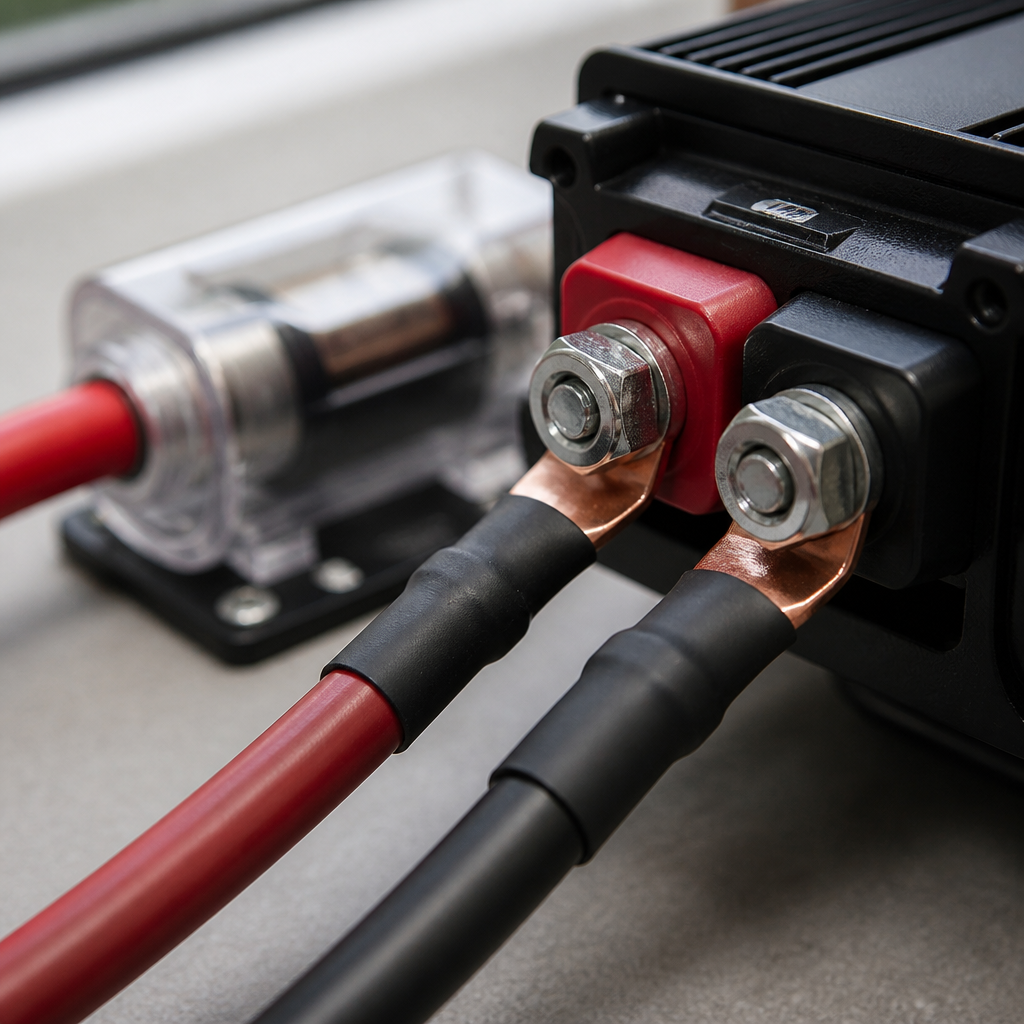
- Undersized DC cabling is the number-one installation failure. Inverters pull very high current at 12V; thin or overly long cables cause voltage drop, nuisance low-voltage shutdowns, hot connections, and fire risk. Follow the manufacturer’s cable-gauge (AWG) guidance and keep DC runs as short as practical.
- Always fuse the DC positive line close to the battery. A correctly rated fuse or breaker within inches of the battery terminal protects the entire cable run — an unfused inverter cable is one chafe point away from a battery-fed short.
- Never backfeed the inverter into your RV’s shore-power inlet without a transfer switch. Feeding inverter output and shore power into the same circuit simultaneously can destroy the inverter and create a shock hazard; use a proper transfer arrangement or an inverter/charger designed for source switching.
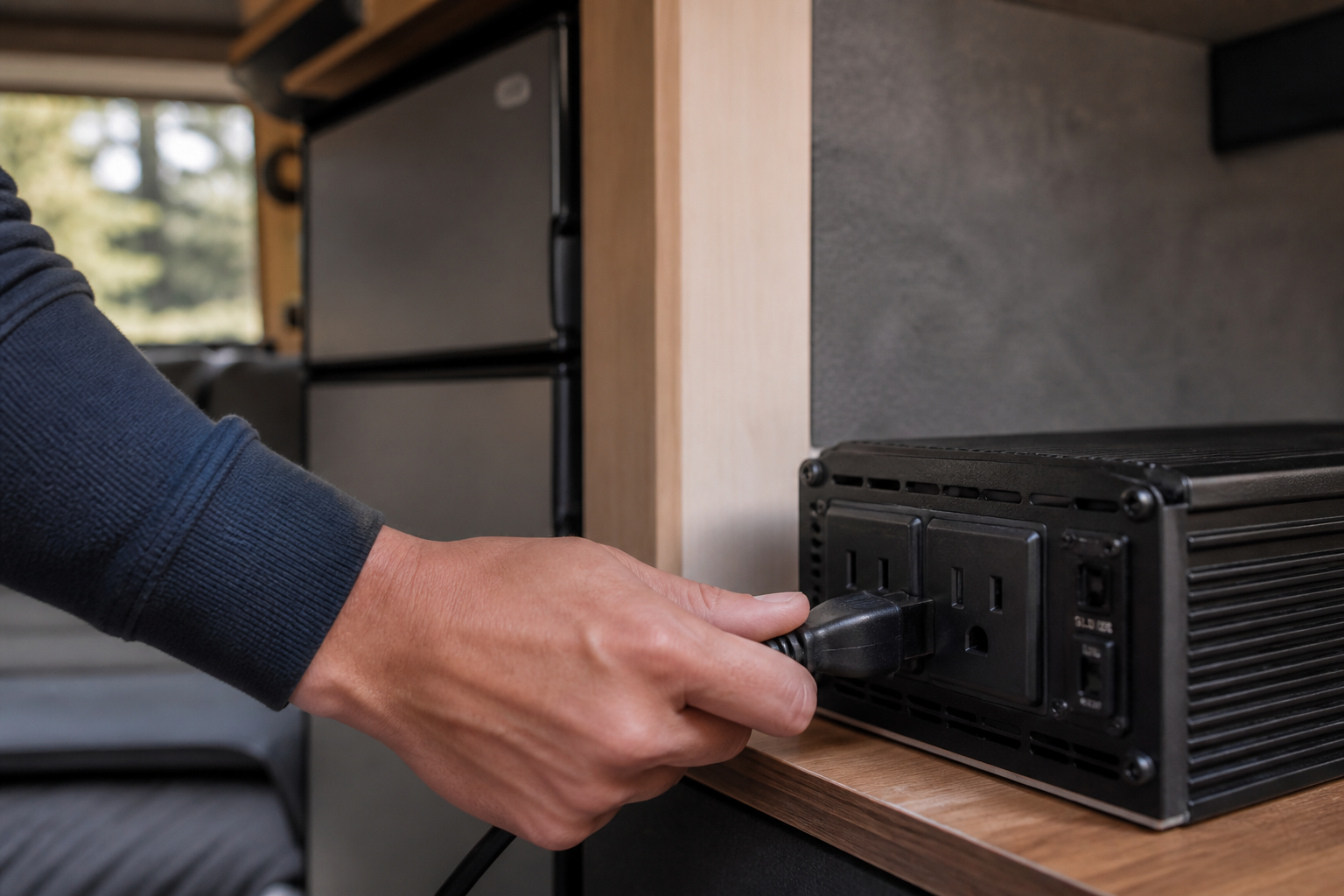
- Mount the unit in a ventilated, dry, non-battery compartment. Inverters shed heat under load and must not share sealed space with vented lead-acid batteries, whose gases are corrosive and flammable.
- Don’t forget idle draw. A pure sine inverter consumes battery power even with no load connected — often anywhere from a fraction of an amp to a couple of amps depending on the unit and size class. Switch it off when unused or use a remote switch to make that easy.
- Match the battery bank to the inverter, not the other way around. A large inverter on a small bank sags voltage under load and trips cutoffs; as a rule of thumb, plan on roughly 200Ah of lithium (or about double that in lead-acid) to support a 2000W-class inverter. Confirm your specific bank’s continuous-discharge rating against the inverter’s maximum DC draw using the battery manufacturer’s documentation.
This is general guidance, not a substitute for the manufacturer’s installation manual or applicable electrical codes — when in doubt, use a qualified RV electrical technician.
FAQs
- Do I really need a pure sine wave inverter for my RV? If you run laptops, a CPAP, a residential fridge, or nearly any modern electronics, yes. Pure sine output runs these devices cooler, quieter, and safer, while modified sine wave power stresses electronics and motor-driven appliances and can shorten their lifespan.
- What size inverter is best for an RV? Size to your worst-case simultaneous load plus about twenty percent margin.
- What is the best brand of pure sine wave inverter? Victron and Xantrex lead the reliability conversation among RV owners and installers, while Renogy and AIMS are the strongest value plays — Renogy at the budget end, AIMS in high-capacity classes the premium brands serve thinly.
- Can an inverter run my RV air conditioner? Only a high-capacity unit backed by a substantial lithium battery bank can handle most RV A/C compressors, and even then the start-up surge is the limiting factor. For occasional A/C off-grid, a soft-start device on the compressor significantly improves the odds of success.
- How many batteries do I need for a 2000W inverter? As a rule of thumb, plan on at least roughly 200Ah of lithium, or around 400Ah of lead-acid, so the bank can deliver high current without severe voltage sag — then confirm the bank’s continuous-discharge rating covers the inverter’s maximum draw per the battery maker’s specs. Smaller banks will trip the inverter’s low-voltage protection under heavy load even when they show plenty of remaining charge.
- Should I buy an inverter or an inverter/charger? If you regularly plug into shore power or run a generator, an inverter/charger like the Freedom XC or MultiPlus consolidates two devices and automates source switching. If you’re rarely on hookups or already own a good converter/charger, a standalone unit is simpler and cheaper — just confirm the charging side of any combo unit supports your battery chemistry before ordering.
Conclusion
Shortlisting the best pure sine wave inverter for your RV comes down to a disciplined sequence: total your realistic simultaneous loads, decide whether integrated charging earns its keep in your travel pattern, and then buy the most reliable unit that fits the resulting size class. Full-timers and boondockers should weight reliability heavily — the Victron Phoenix and MultiPlus justify their premiums over years of daily cycling — while weekenders and first builds are well served by Renogy’s value line or Xantrex’s proven inverter/chargers.
Confirm the relevant details against the manufacturer documentation for your exact model.
Spot an error or an outdated detail in this guide?
Report it