Best MPPT Charge Controller for RV: Top Picks & Guide
On this page
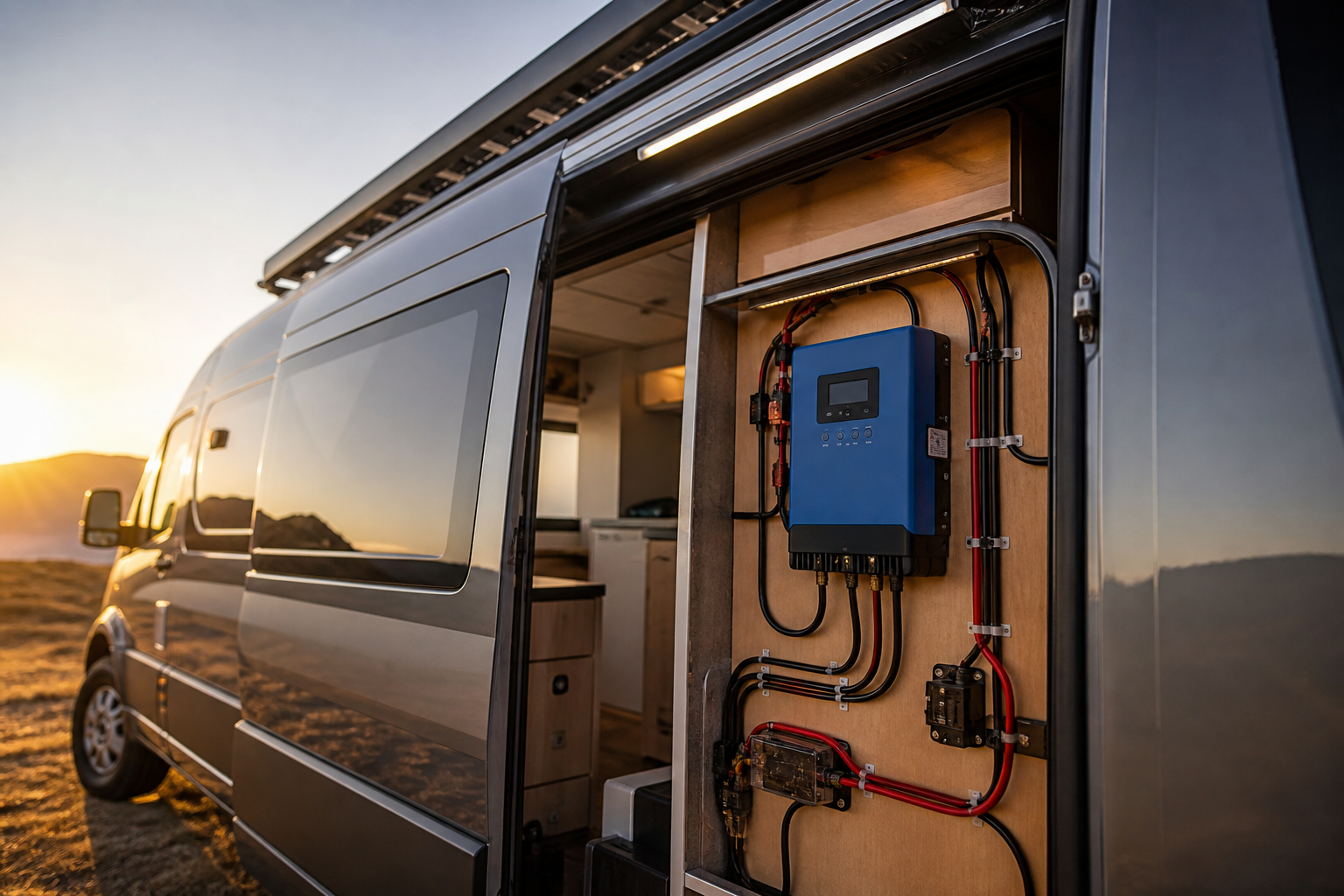
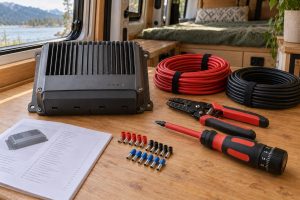
You’ve got 400 watts of panels going on the RV roof, a battery bank you’d like to keep healthy for years, and a cheap PWM controller that’s quietly throwing away a chunk of your solar harvest every day you boondock. With Victron, Renogy, EPEver, and half a dozen other brands competing for the same spot on your wall, choosing the right one takes a little homework.
TL;DR
- Best Overall: Victron SmartSolar MPPT — RVers who want top-tier efficiency and long-term system flexibility.
- Best Budget: EPEver Tracer AN — Entry-level boondockers building a first off-grid solar setup.
- Best Value: Renogy Rover — Budget-conscious builds that still want real MPPT harvest gains.
- Best for Simple Installs: Go Power! — Factory-prepped rigs and owners who want a clean, straightforward install.
- Best for Large Systems: OutBack Power FLEXmax — Big off-grid arrays and whole-rig solar conversions.
Best MPPT Charge Controller for RV Picks
These six picks cover the full range of RV solar setups — from a single portable panel feeding a small battery to a rooftop array powering a full-time off-grid rig. Every pick is a real, widely used product line with a strong track record in the RV and off-grid community. Because exact electrical specs vary by model variant within each line, treat the descriptions below as buyer-fit guidance and confirm the specific variant’s ratings against your array before ordering.
1 — Victron SmartSolar MPPT
Ask in any RV forum what charge controller people are running, and Victron’s SmartSolar line dominates the answers. On communities like r/GoRVing and iRV2, it’s the default recommendation for anyone who plans to keep their rig — and their solar system — for the long haul. The reputation is built on consistent charging behavior, a wide range of model variants that scale from small trailer setups to serious off-grid arrays, and an ecosystem of Victron components (battery monitors, DC-DC chargers, inverters) that all play nicely together.
The SmartSolar line is offered in multiple voltage and current variants, which means you pick the controller to match your array rather than forcing your array to match the controller. The higher input-voltage variants also let you wire panels in series, which reduces wire gauge requirements on long roof-to-controller runs and improves cold-morning and low-light harvest.
Configurability is the other big draw. The SmartSolar line supports adjustable charge profiles, which is what you want if you’re running lithium (LiFePO4) batteries or plan to switch from AGM to lithium later. Rather than being locked into a handful of factory presets, you can tune absorption and float behavior to match your battery manufacturer’s recommendations. Confirm the monitoring and configuration options for the exact variant you’re considering, since setup workflows differ across the line.
Downsides? Price, mostly. Victron sits at the premium end of the market, and if you’re running a single 100W panel to trickle-charge a battery, the value picks below will do the job for less. But for a primary rooftop system on a rig you intend to keep, the SmartSolar line is the safest long-term buy in this category — which is exactly why it tops this list.
2 — Renogy Rover
The Renogy Rover series is the value benchmark in RV solar, and it’s the controller most people land on when the Victron price tag makes them wince.
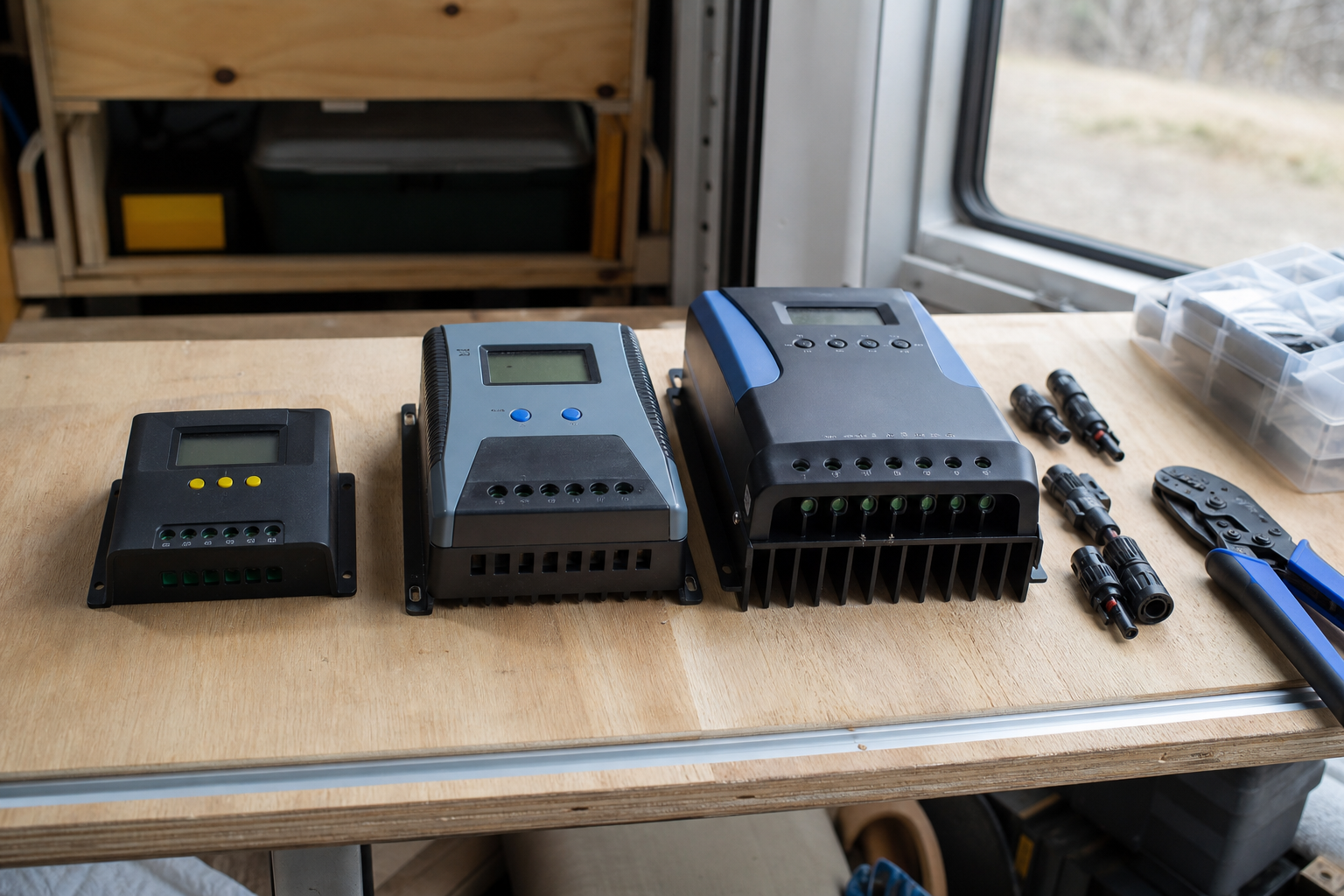
The Rover line comes in multiple amperage variants, so it scales reasonably well from small starter systems up to mid-size arrays. Most variants offer selectable charge profiles for common RV battery chemistries, but confirm the chemistry support and settings for the specific model you pick, since capabilities differ across the line and across hardware revisions.
Where the Rover gives ground to Victron is in fit and finish: the app and firmware ecosystem is less polished, documentation is thinner, and long-term community confidence isn’t quite as deep. Some owners also report that programming custom charge parameters is clunkier than it should be. None of that is a dealbreaker for a weekend rig or a first solar build — it’s simply the trade you make for the savings.
It’s #2 on merit: most of the benefit, most of the flexibility, at a lower cost of entry.
3 — Go Power! MPPT Solar Controller
Go Power! is the brand many RVs already have on the roof — it’s a common OEM and dealer-installed solar supplier, which means its MPPT controllers are designed around RV-specific realities: pre-run rooftop wiring, solar-prep ports, and owners who want a system that just works without a weekend of YouTube research. If your rig came “solar prepped” from the factory, a Go Power! controller is often the path of least resistance.
The appeal here is simplicity and support. Go Power! products are sold and serviced through the RV dealer network, so if something goes sideways, you can walk into a dealership and get help — something you can’t say for most controllers bought online. The company’s documentation is written for RV owners rather than off-grid electricians, and its controllers are designed to pair cleanly with its own panels and kits.
The trade-off is a convenience premium, and the tinkerer crowd will find fewer advanced configuration options than Victron offers. Enthusiasts building large custom systems usually look elsewhere. But that’s not who this pick is for: it’s for the owner who wants reliable MPPT charging, a tidy install, and dealer-backed support without becoming a hobbyist electrician.
Verify that the specific Go Power! variant you’re considering matches your array’s voltage and your battery chemistry before ordering.
4 — EPEver Tracer AN
The EPEver Tracer AN series is the budget MPPT workhorse of the off-grid world. It shows up constantly in van builds, cargo-trailer conversions, cabins, and first-time RV solar experiments — anywhere someone wants genuine MPPT tracking without spending premium-brand money. For a small system charging a single battery or a modest bank, it’s hard to argue with the value.
Despite the low cost, the Tracer AN line covers multiple amperage tiers, with configurable charge parameters on most variants. Sticking with a known line like the Tracer AN is itself a form of buyer protection.
The compromises are the ones you’d expect at this price: documentation translated unevenly, a clunkier configuration experience, and less consistent quality control than the premium brands. Support is essentially community forums rather than a dealer network. If your solar system is mission-critical — full-time living, medical equipment, work-from-the-road power — spend up. If it’s a starter system or a secondary charger for a portable panel, the Tracer AN is the smart cheap seat.
5 — Victron BlueSolar MPPT
The BlueSolar line is Victron’s more spartan MPPT family — same core charging hardware philosophy and the same reputation for reliability, positioned as the streamlined sibling to the SmartSolar line. For RVers who want Victron build quality but don’t need every bell and whistle, BlueSolar is the quiet insider pick that often gets overlooked in favor of its flashier sibling.
The use case is straightforward: you’re building a set-and-forget system. You configure the controller once for your battery chemistry, mount it in a cabinet, and let it do its job for the next decade. The main thing you give up versus SmartSolar is built-in Bluetooth — configuration and monitoring need a separate dongle or display, so factor that into the price comparison.
6 — OutBack Power FLEXmax
When your “RV solar system” starts looking more like a house system — a large rooftop array, a big lithium bank, maybe a toy hauler or bus conversion running residential loads — the consumer-grade controllers above start running out of headroom. The OutBack Power FLEXmax line is the classic answer for large off-grid systems, with a long track record in cabins, homesteads, and serious mobile conversions.
FLEXmax controllers are built for high-power arrays and continuous heavy charging duty, with robust thermal design and the kind of granular programmability that big custom systems demand. If you’re wiring a large series-parallel array and pushing serious current into a big bank every day, this is the category of hardware you want — a controller designed for that workload rather than a mid-size RV unit running at its limit.
For most RVers, this is overkill: it’s physically larger, costs more, and its installation expectations assume a proper electrical bay rather than a cabinet corner. Large Victron SmartSolar variants compete in this space too, and if you’re already in the Victron ecosystem, staying there simplifies integration. But for maximum-size builds and bus conversions where the solar system is the primary power source, the FLEXmax has earned its place.
Comparison Table
Scroll sideways to see every column.
| Search Target | Best Fit | What to Confirm Before Buying | Why It Might Fit | Watchouts | Where to buy |
|---|---|---|---|---|---|
| Victron SmartSolar MPPT | Best when your panel voltage, array size, and battery chemistry line up | Confirm the maximum PV input voltage and current cover your panels | Fits owners sizing from array voltage and current | Mind the maximum PV input voltage in cold conditions. | Amazon ↗ |
| Renogy Rover | Best when the MPPT or PWM type suits your array and battery | Confirm the MPPT or PWM type suits your array and battery | Fits systems where the controller type matches the array design | Match MPPT or PWM to your panel voltage and array size. | Amazon ↗ |
| EPEver Tracer AN | Best when it supports your battery chemistry’s charge profile | Confirm it supports your battery chemistry and charge settings | Fits banks that need the right charge profile from the controller | The wrong charge profile leaves a bank under- or over-charged. | Amazon ↗ |
| Victron BlueSolar MPPT | Best when your wiring order and protection plan check out | Confirm the fusing and wiring order follow the documentation | Fits installs that follow the documented wiring order | Fuse both the PV and battery sides per the wiring order. | – |
| OutBack Power FLEXmax | Best when warranty length and reachable support matter to you | Confirm the warranty length and support terms cover your use | Fits owners who weigh long-term support against up-front price | Weak warranty terms or slow support can cost you later. | Amazon ↗ |
| Go Power! MPPT Solar Controller | A strong fit when the input limits cover your array with headroom | Check the input limits against your array, including cold mornings | Suits arrays that stay inside the controller’s rated input | Cold weather pushes panel voltage toward the input limit. | – |
As an Amazon Associate I earn from qualifying purchases.
Which One Should You Buy
Start with the MPPT-vs-PWM question, because it decides whether this guide applies to you at all. The commonly cited real-world gain is up to roughly 30% more harvest, and the advantage grows in cold weather and with higher-voltage panel configurations. If you have more than one panel, panels wired in series, or “house” panels that weren’t designed around 12V charging, MPPT is worth it. The only case where PWM still makes sense is a single small panel maintaining a battery — and even then, the budget MPPT options have closed the price gap.
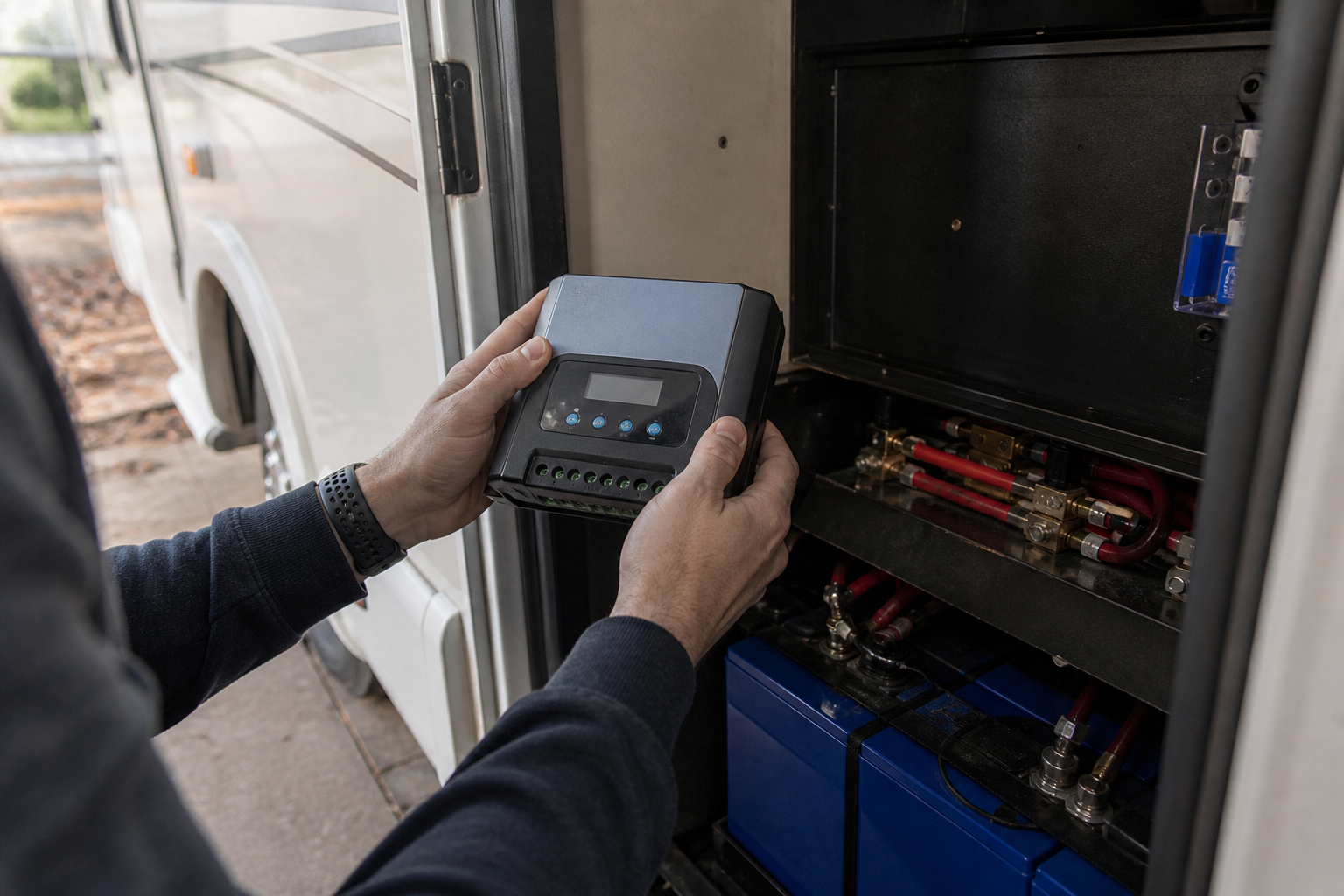
Next, size the controller to your array using simple math: divide your total panel wattage by your battery bank’s charging voltage to estimate maximum output current. Practical guidance for a 400W/12V system is a controller in the 30–40A output class, which leaves a little headroom. Modest over-paneling beyond the controller’s rated output is generally acceptable — MPPT controllers limit their own output current — but you must never exceed the controller’s maximum input voltage. When calculating input voltage for series-wired panels, use the panels’ open-circuit voltage on a cold morning, not their operating voltage on a warm afternoon, because panel voltage rises significantly in the cold.
One wiring note that affects controller choice: series strings raise voltage, which improves low-light harvest and allows thinner wire, but the whole string sags when one panel is shaded. Parallel wiring keeps voltage low and tolerates partial shade better, at the cost of heavier conductors.
With sizing settled, the brand decision mostly comes down to budget and how much you value ecosystem and support. If this is a primary system on a rig you’ll keep for years, buy the Victron SmartSolar variant one size up from your current array — the flexibility pays for itself the first time you add a panel. If you’re value-shopping, the Renogy Rover gets you most of the way there and pairs naturally with Renogy panels and kits. Owners of solar-prepped rigs who want dealer-backed simplicity should look at Go Power!, while true budget builds and secondary systems are well served by the EPEver Tracer AN. If you already run a standalone battery monitor and want quiet Victron reliability at a possible discount, price-compare the BlueSolar line against the equivalent SmartSolar model. And if you’re designing a large conversion where solar is your primary power source, step up to big-system hardware like the OutBack FLEXmax or the largest Victron variants.
On the Victron-vs-Renogy question specifically — the most common head-to-head in RV forums — the honest answer is that Victron wins on build quality, configurability, and long-term ecosystem, while Renogy wins on price and kit convenience. Neither is a wrong answer for a typical rooftop system; the wrong answer is buying an unknown-brand “MPPT” controller from a marketplace listing, because mislabeled PWM units sold as MPPT are a genuine problem at the bottom of this market.
Finally, think about battery chemistry. If you run or plan to run lithium (LiFePO4) batteries, prioritize a controller with a proper lithium charge profile or fully adjustable charge parameters, and set them to your battery manufacturer’s recommendations. Most modern MPPT lines support lithium in some form, but implementation quality varies — confirm the chemistry settings available on the exact variant you’re buying rather than assuming line-wide support.
Safety & Common Mistakes
- Never exceed the controller’s maximum input voltage. Series-wired panels add their voltages together, and cold weather pushes panel voltage well above the label rating. Calculate your string’s cold-morning open-circuit voltage before choosing a controller — over-volting is the most common way RVers destroy MPPT controllers.
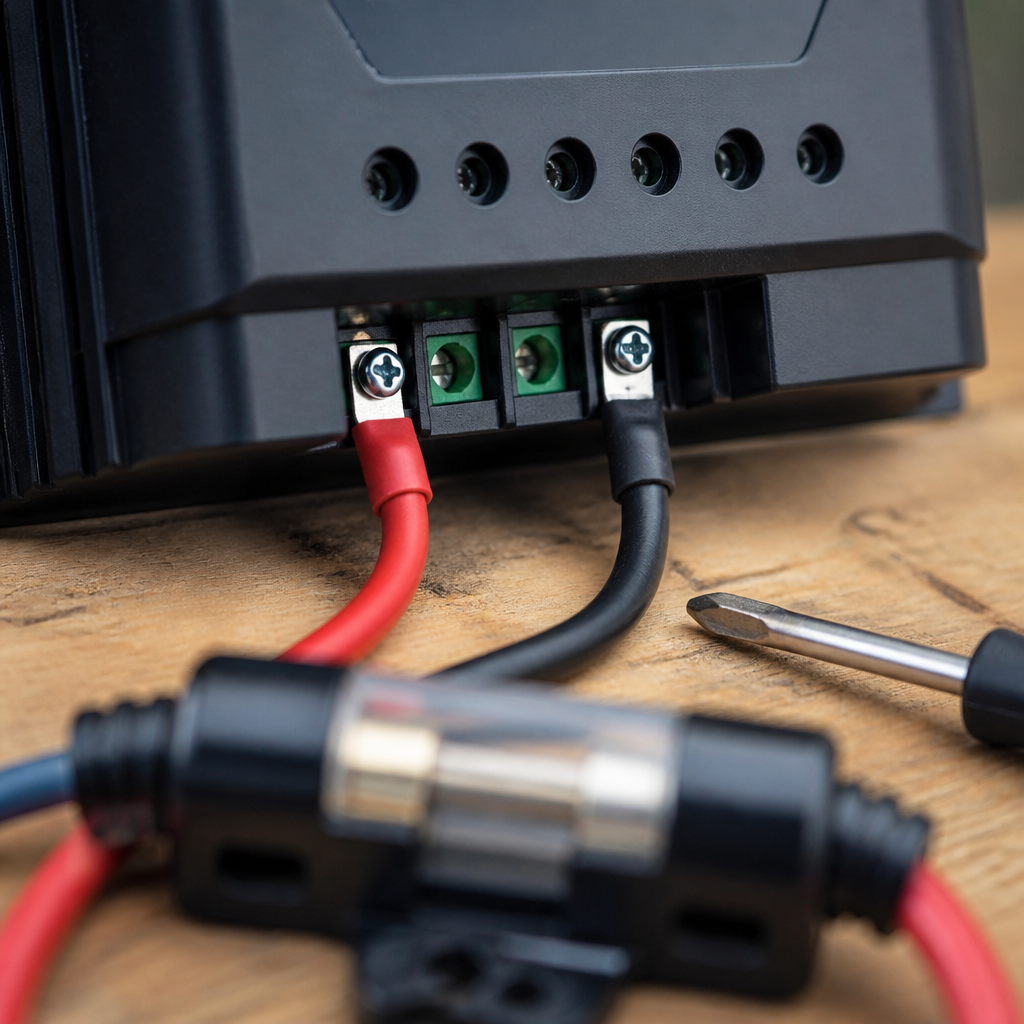
- Connect the battery before the panels. Most MPPT controllers need to detect battery voltage before accepting solar input. Wiring panels first (or disconnecting the battery while the sun is up) can damage the controller. Disconnect in the reverse order: panels first, battery last.
- Fuse both sides of the controller. Put appropriately sized fuses or breakers between the panels and the controller and between the controller and the battery, as close to the battery as practical. An unfused battery cable is a fire risk, not a shortcut.
- Don’t undersize your wiring. Long roof-to-controller runs at 12V-class currents cause real voltage drop, which costs harvest and heats wire. Size conductors (AWG) for the run length, and mount the controller as close to the battery bank as ventilation allows.
- Set the correct battery chemistry profile. Charging lithium on an AGM profile (or vice versa) undercharges at best and shortens battery life at worst. Configure the charge parameters to your battery manufacturer’s recommendations on day one.
- Give the controller airflow. MPPT controllers shed heat while working hard. Mounting one inside a sealed, stuffed cabinet forces it to derate output on exactly the sunny days you need it most.
This is general guidance, not a substitute for the controller manufacturer’s installation manual or applicable electrical codes.
FAQs
- What is the best MPPT charge controller for an RV? For most RVers, the Victron SmartSolar line is the top pick thanks to its reliability, configurability, and strong community track record. The Renogy Rover line is the leading value alternative, and Go Power! is the go-to for factory solar-prepped rigs that want dealer-backed simplicity.
- Is MPPT better than PWM for RV solar? Yes, in almost every real system. MPPT controllers convert excess panel voltage into additional charging current — meaningfully more harvest than PWM — with the biggest gains in cold weather and with series-wired or higher-voltage panels. PWM only makes sense for a single small maintenance panel.
- What size MPPT controller do I need for a 400W solar array? On a 12V battery bank, 400W of panels works out to roughly 30A of maximum charging current, so a controller in the 30–40A output class is the standard recommendation. Also check that your panel string’s cold-weather open-circuit voltage stays under the controller’s input-voltage limit.
- Victron or Renogy — which should I buy? Victron offers superior build quality, configurability, and ecosystem integration; Renogy delivers solid MPPT performance at a lower price and pairs conveniently with its own panel kits. Buy Victron for a long-term primary system, Renogy for a budget-conscious build.
- Can MPPT controllers charge lithium batteries? Most modern MPPT lines offer lithium (LiFePO4) profiles or fully adjustable charge parameters, but support varies by variant and firmware. Confirm the chemistry settings on the exact model you’re buying and match them to your battery manufacturer’s recommendations.
- Can I over-panel beyond the controller’s rating? Modest over-paneling is generally safe because MPPT controllers limit their own output current — you simply clip some peak harvest. The hard limit you must never exceed is the controller’s maximum input voltage, calculated from your string’s cold-morning open-circuit voltage.
Conclusion
Long-term keepers and expanding systems justify the Victron SmartSolar premium; budget builds are well served by the Renogy Rover or EPEver Tracer AN; solar-prepped rigs slot naturally into Go Power!; and big conversions belong in FLEXmax territory.
Your concrete next step: sketch your array — panel count, wiring layout, and total wattage — and calculate the string’s cold-weather open-circuit voltage and expected charging current. With those two numbers in hand, the shortlist above narrows itself to one or two variants, and you can order with confidence instead of guesswork.
Spot an error or an outdated detail in this guide?
Report it