Best Portable Power Stations for RV Camping: Top Picks
On this page
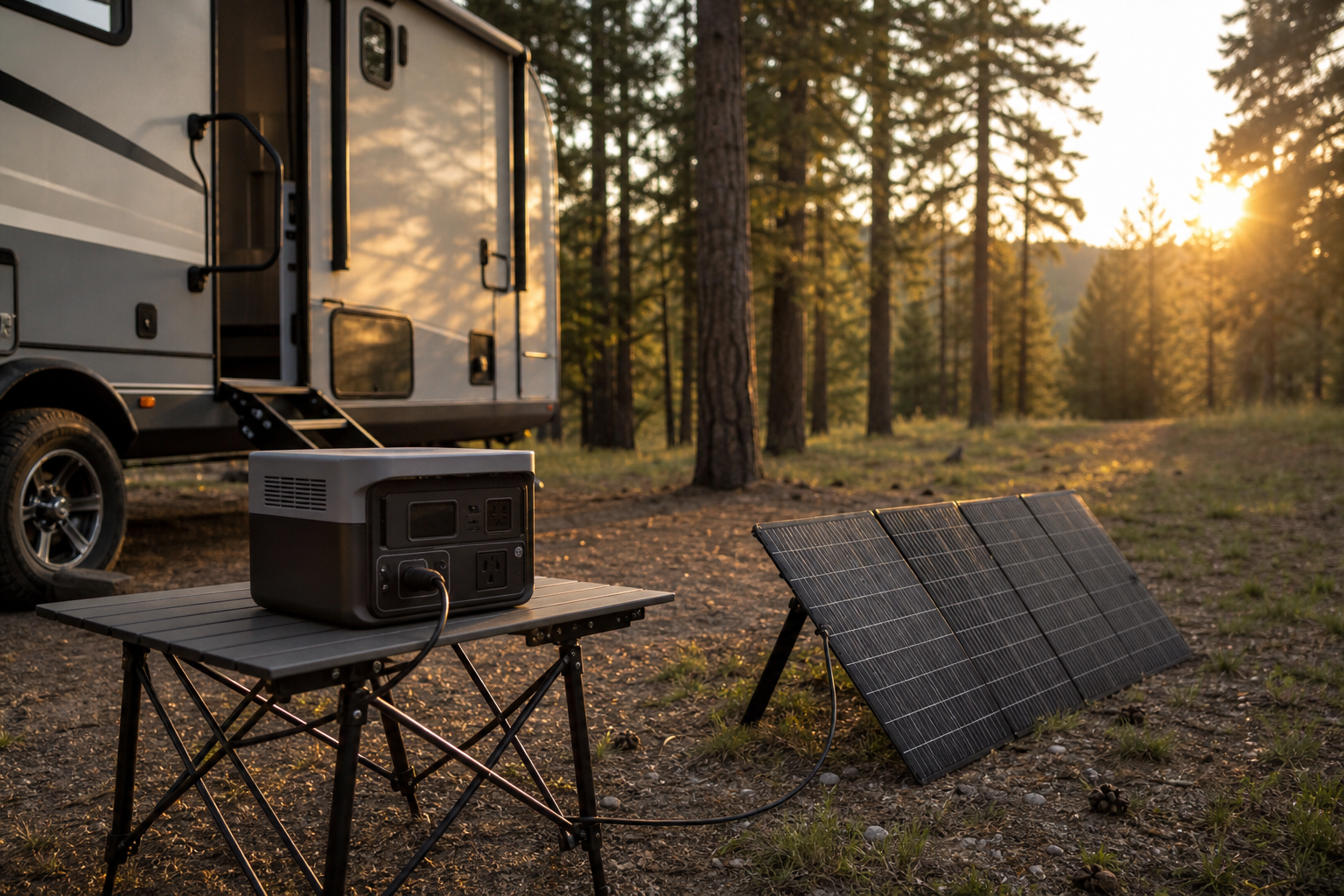
Boondocking for three nights with a 12V fridge, a CPAP, phone chargers, and a laptop is a very different power problem than plugging into a 30A pedestal — and it’s exactly the scenario where a portable power station earns its keep in an RV. The picks below are organized by use case, so you can match capacity, output, and portability to the way you actually travel instead of buying on brand name alone.
TL;DR
- Best Overall: EcoFlow Delta 2 — RVers who want fast recharging and flexible expansion in a mid-size unit
- Best Budget: Jackery Explorer 500 — Weekend campers powering lights, fans, and devices without a big spend
- Best for Boondocking: EcoFlow Delta Pro — Full-timers and long off-grid stays running larger appliances
- Best Lightweight: Jackery Explorer 300 — Weight-sensitive rigs and short trips with light loads
- Best Solar-Ready: BLUETTI AC200MAX — Shoppers building a solar-first off-grid RV power setup
Best Portable Power Station Picks for RV Camping
Every pick below is a lithium power station from an established brand with a real track record among RVers, van lifers, and overlanders. Rather than ranking them on a single scale, each one is framed around the camping style it serves best — because the right unit for a weekend state-park trip is rarely the right unit for two weeks of desert boondocking. Where exact specifications matter to your decision, treat the current product listing as the source of truth, since brands revise capacities, port layouts, and charging features between generations.
EcoFlow Delta 2
Best fit: overall for most RV campers.
The EcoFlow Delta 2 hits the sweet spot for the largest group of RV campers: people who camp off-grid a few weekends a month, run a mix of 12V and household loads, and don’t want to babysit a slow charger between trips. EcoFlow built its reputation on very fast AC recharging, and that matters more in an RV context than most shoppers realize. If you can top the unit up during a lunch stop at a café, a short generator run, or a single night at a powered site, you effectively multiply your usable off-grid time without carrying more battery.
The Delta 2 uses LiFePO4 (lithium iron phosphate) chemistry, which is the chemistry most RVers should prioritize. LiFePO4 cells tolerate heat better, hold up over more charge cycles than older lithium-ion NMC packs, and are more forgiving when stored partially charged inside a rig that sits in the driveway between trips. For a power station that will live in an RV — where interior temperatures swing hard — that durability is a genuine long-term cost advantage, not a spec-sheet footnote.
Its use-case fit: a couple in a travel trailer or Class B who runs a compressor fridge, charges laptops and camera gear, brews coffee occasionally, and wants the option to add expansion batteries later rather than buying the biggest unit up front.
The main trade-off is that mid-size units like this won’t run an RV air conditioner in any meaningful way, and heavy induction cooking will drain it quickly. Confirm the current output rating, expansion options, and solar input limits on the product listing before you commit, since these have changed between Delta generations.
Jackery Explorer 500
Best fit: budget pick for casual campers.
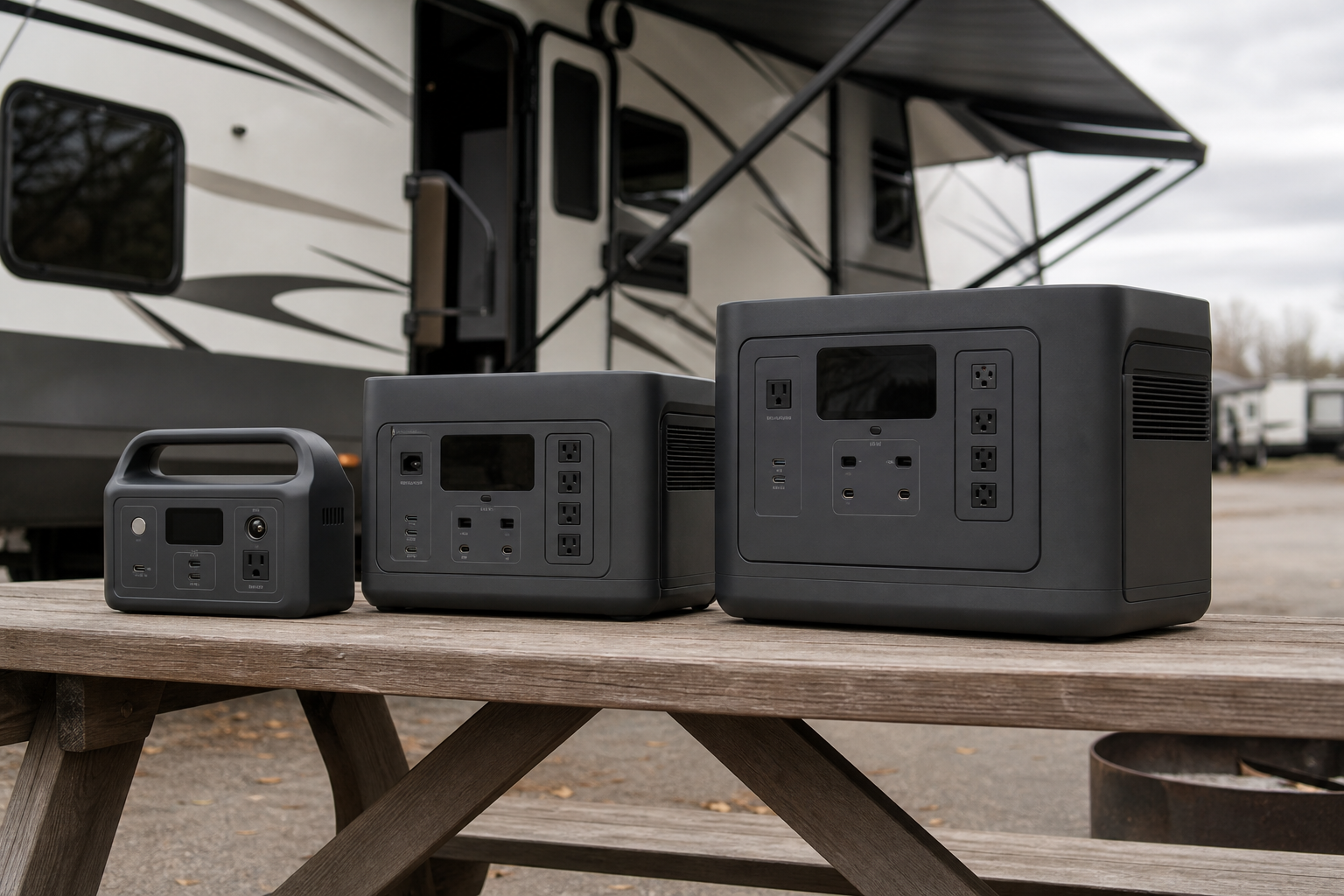
The Jackery Explorer 500 is the pick for RVers whose off-grid needs are honest and modest: LED lights, phone and tablet charging, a fan, a laptop, maybe a small 12V cooler for a night or two. Jackery is one of the most widely recommended names in the camping community precisely because its Explorer line is simple — a handle, a screen, a few ports, and no configuration to learn. For a family that mostly camps at powered sites but wants backup for the occasional dry-camping weekend, spending more buys capability that would rarely get used.
Where the budget tier demands honesty is on limitations. Smaller stations in this class typically use older lithium-ion chemistry rather than LiFePO4 (check the specific generation you’re buying, as Jackery has been transitioning newer models), the inverter won’t handle high-draw kitchen appliances, and recharge speeds are slower than the premium brands. None of that is a dealbreaker for light use — it’s simply the trade you make for the price. The Explorer 500’s real value proposition is reliability per dollar for low-demand campers, not raw capability.
Its use-case fit: weekenders, new RV owners testing whether off-grid camping suits them, and anyone who wants a grab-and-go unit that can also serve as home power-outage backup for phones, routers, and a lamp. If your load list includes a residential fridge, a CPAP with heated humidifier running all night, or any cooking appliance, step up a tier — undersizing is the single most common regret in this category.
EcoFlow Delta Pro
Best fit: High-Capacity pick for boondocking and Full-Timers.
The EcoFlow Delta Pro is the unit for people who treat their RV as an off-grid home base: full-timers, long-stay boondockers, and anyone camped on BLM land for a week or more at a stretch. In this use case, the math changes completely. You’re no longer asking “can it charge my phone” — you’re asking whether it can run a fridge continuously, absorb a morning coffee-and-toast surge, power an induction burner, and still have headroom for laptops and Starlink through a workday. High-capacity flagship stations like the Delta Pro are built for exactly that load profile.
The Delta Pro’s ecosystem is its real strength for RVers. It supports expansion batteries for scaling capacity as your needs grow, accepts substantial solar input for genuine off-grid sustainability, and offers multiple recharge paths so you’re never dependent on a single power source. High-output units in this class are also the only category with a realistic shot at running an RV air conditioner — though even then, only for limited stretches, and typically only when paired with a soft-start device on the AC compressor. If air conditioning off-grid is a hard requirement, verify soft-start compatibility and realistic runtime expectations before buying, because this is the most over-promised claim in the category.
The trade-offs are weight, bulk, and cost. Flagship stations are heavy enough that you’ll want a dedicated storage spot near the floor of your rig, not a cabinet shelf, and they represent a serious investment that only pays off if you actually camp off-grid frequently. For a full-timer, that investment often replaces a gas generator entirely — no fuel, no fumes, no noise complaints from neighbors at 7 a.m. For a twice-a-summer camper, it’s overkill.
Jackery Explorer 300
Best fit: lightweight option for weekend trips.
The Jackery Explorer 300 serves a use case the bigger units can’t: genuine portability. If you camp in a small trailer, a teardrop, or a truck camper where every pound and cubic inch is contested, a compact station you can carry one-handed to the picnic table changes how you use power. This is the unit for weekenders who need device charging, a light, a fan, and maybe a small CPAP for a night or two — and who value being able to move the power to where the people are, rather than routing extension cords.
It’s also a strong second station. Plenty of experienced RVers run a big base unit that stays put in the rig and a small unit like the Explorer 300 that travels to the campfire, the kayak launch, or the tailgate. Because it recharges from a 12V vehicle outlet while you drive, it can cycle through several charge-and-use loops on a single trip without ever touching your house batteries.
Be realistic about limits: small stations in this class are for electronics and small DC loads, not appliances. A compressor fridge will drain it in well under a day, and most AC kitchen gear exceeds what its inverter can deliver. Treat it as a personal power hub, not an RV power system, and it will feel like a bargain rather than a disappointment.
BLUETTI AC200MAX
Best fit: Solar-Ready power station.
The BLUETTI AC200MAX is the pick for RVers designing their power system around solar from day one. If your goal is to boondock indefinitely on sunshine rather than count down the hours on a single charge, solar input capability matters as much as battery capacity.
Its use-case fit: boondockers in sunny regions (the desert Southwest crowd especially), RVers who already own or plan to buy portable solar panels, and anyone who wants expansion-battery flexibility without jumping to the very top price tier. The AC200MAX supports expansion batteries, which lets you start with the base unit and scale up after a season of real-world use tells you what you actually consume — a smarter path than guessing your loads at checkout.
Watch the details on solar pairing. Voltage and amperage input windows differ between brands and generations, and mismatched panels are the most common source of “my solar isn’t charging” complaints in this category.
Anker SOLIX F2000
Best fit: Long-Term value seekers.
The Anker SOLIX F2000 (also sold as the PowerHouse 767 in earlier branding) targets RVers who think in years, not trips. Anker entered the power station market later than Jackery and EcoFlow but brought its consumer-electronics reliability reputation with it, and its SOLIX line leans hard on LiFePO4 longevity as the core pitch: buy once, cycle it for many years, and let the cost-per-camping-night fall over time. For a family that camps regularly through the season and wants a large, durable unit without stepping up to flagship pricing, it’s a compelling middle path.
Design-wise, the F2000 takes a suitcase-style approach with wheels and a pull handle — a genuinely useful touch in RV life, where “portable” often means dragging a heavy box across gravel from the truck bed to the awning. It offers a broad port selection for mixed households of devices and supports expansion for growing needs. Confirm current port counts, output ratings, and expansion compatibility on the listing, since Anker has iterated quickly across SOLIX generations.
Its use-case fit: seasonal campers and part-time RVers who want near-flagship capability, plan to keep the unit for the better part of a decade, and prefer a brand with a large support infrastructure. The trade-off versus EcoFlow is typically recharge speed and ecosystem breadth; the trade-off versus Bluetti is usually solar-input flexibility. If neither of those is your priority, long-cycle durability at a fair price is a perfectly good reason to buy.
Comparison Table
Scroll sideways to see every column.
| Search Target | Best Fit | What to Confirm Before Buying | Why It Might Fit | Watchouts | Where to buy |
|---|---|---|---|---|---|
| EcoFlow Delta 2 | Best all-rounder for regular weekend off-grid campers | Confirm current output, expansion options, and solar input on the listing | Fits owners who value fast recharging and the option to add capacity later | Mid-size units won’t run an RV air conditioner meaningfully. | Amazon ↗ |
| Jackery Explorer 500 | Best budget pick for lights, fans, devices, and light loads | Check which battery chemistry the generation you’re buying uses | Fits casual campers who want a simple unit with nothing to configure | Undersizing is the most common regret — step up for fridges or cooking. | _ |
| EcoFlow Delta Pro | Best high-capacity flagship for full-timers and long boondocking stays | Verify soft-start compatibility and realistic runtime if off-grid AC matters | Fits owners replacing a generator with expandable battery capacity | Heavy and bulky — plan a dedicated storage spot near the floor. | Amazon ↗ |
| Jackery Explorer 300 | Best ultralight unit for teardrops, truck campers, and short trips | Confirm your load list stays within small-inverter territory | Fits campers who carry the power to the picnic table one-handed | Electronics and small DC loads only — a compressor fridge drains it fast. | Amazon ↗ |
| BLUETTI AC200MAX | Best for solar-first setups built to live on daily sunshine | Match panel voltage and amperage to the unit’s solar input window | Fits boondockers who expand capacity after a season of real-world use | Mismatched panels are the top source of “solar isn’t charging” complaints. | Amazon ↗ |
| Anker SOLIX F2000 | Best long-term value for seasonal campers who keep gear for years | Confirm current port counts and expansion compatibility on the listing | Fits buyers who prioritize cycle life and wheeled portability over headline specs | Recharge speed and ecosystem breadth trail EcoFlow’s equivalents. | Amazon ↗ |
As an Amazon Associate I earn from qualifying purchases.
Which One Should You Buy
Start with your trip profile, not the spec sheet. If you mostly camp at powered sites and dry camp a few weekends a year with light loads, the Jackery Explorer 500 covers you at the lowest cost, and the Explorer 300 does the same for ultralight rigs where storage space is the binding constraint. Many RVers are better served by sizing around a simple load budget: daily watt-hour use, battery capacity, sun exposure, and how many cloudy days they want in reserve.
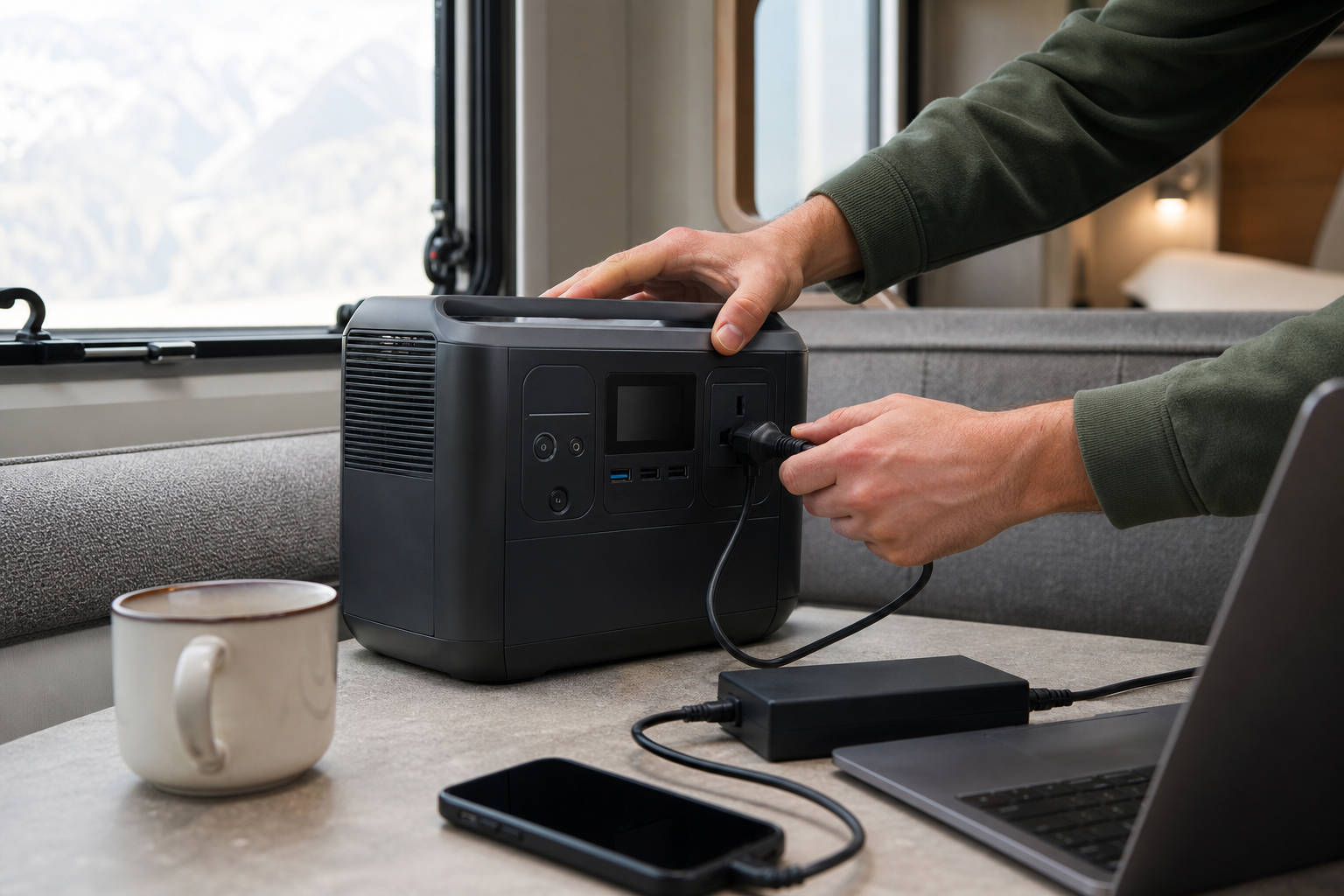
If you dry camp regularly and run a compressor fridge, laptops, and occasional kitchen appliances, the EcoFlow Delta 2 is the default recommendation. Its combination of LiFePO4 durability, fast recharging, and expansion-battery flexibility means it grows with you — buy the base unit now, add capacity later if a season of real use says you need it. That upgrade path is worth more than most shoppers give it credit for, because almost nobody accurately predicts their consumption before their first extended off-grid trip.
Full-timers and serious boondockers should look at the EcoFlow Delta Pro or the BLUETTI AC200MAX. Choose the Delta Pro if maximum output and ecosystem depth matter — it’s the pick if occasionally running an air conditioner (with a soft start) is on your wish list. Choose the AC200MAX if your strategy is solar-first: staking out panels every morning and living on sunshine. The Anker SOLIX F2000 splits the difference for buyers who prioritize long-term cycle life and easy portability over headline features.
On the perennial Jackery vs. EcoFlow question: the community consensus is that EcoFlow generally leads on recharge speed, output headroom, and expandability, while Jackery leads on simplicity, brand familiarity, and ease of use for non-technical buyers. Neither is a wrong answer. Buy EcoFlow if you’ll push the unit hard and value flexibility; buy Jackery if you want a dependable appliance you never have to think about. Whichever direction you go, size it with the method below.
That daily watt-hour total, plus headroom for inverter losses and cold-weather derating per your model’s documentation, is your minimum capacity target. Ten minutes with a notepad prevents the two most expensive mistakes in this category — buying too small and buying twice.
Safety & Common Mistakes
- Keep vents unblocked and give the unit airflow while charging and under load.
- Don’t run appliances beyond the inverter’s continuous rating.
- Charge and store within the manufacturer’s temperature limits — avoid hot, closed vehicles.
- Match solar panels to the unit’s input voltage and amperage window.
- Keep the unit off soft bedding and away from water.
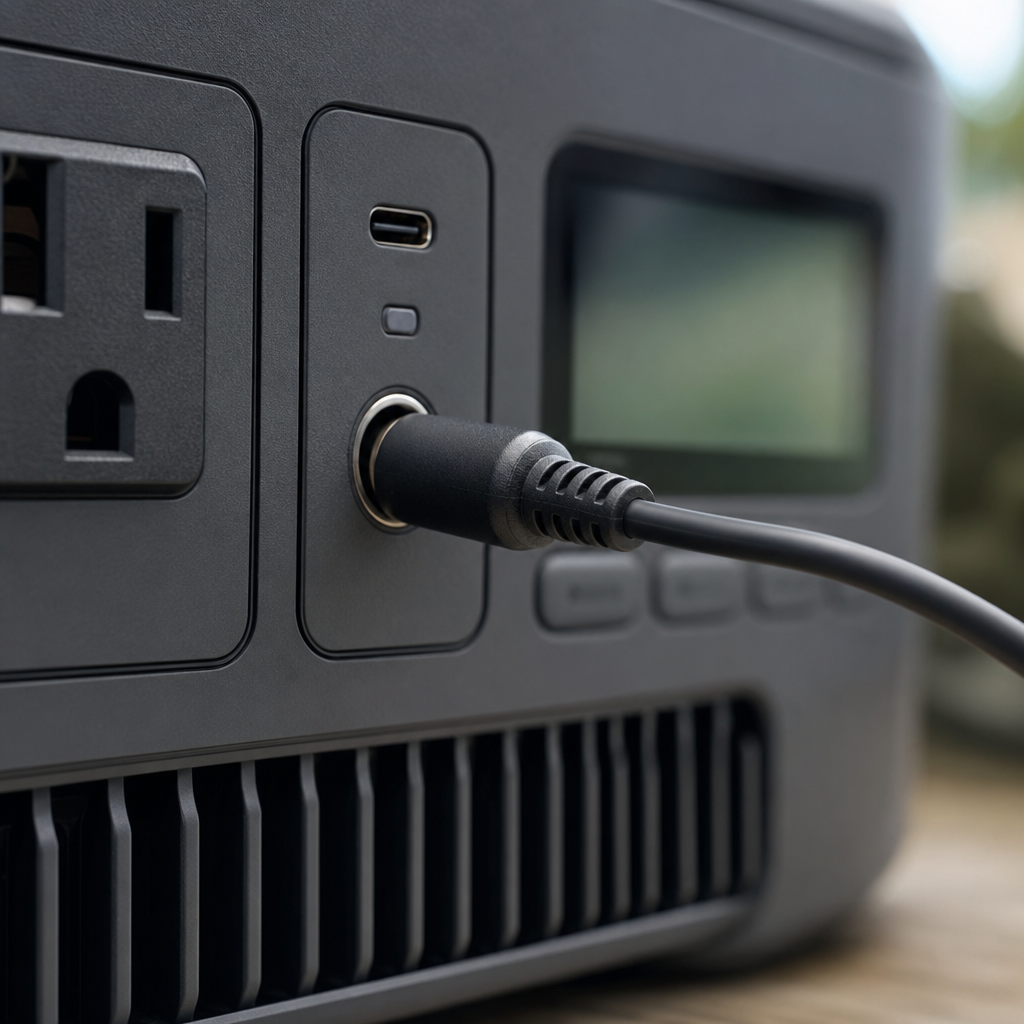
- Use the manufacturer’s cables and chargers, and inspect connectors before use.
FAQs
- Can a portable power station run an entire RV? A high-capacity unit can run most RV essentials — fridge, lights, fans, electronics, and occasional cooking — but air conditioning remains the exception, requiring very high-output models with soft-start compatibility and delivering only limited runtime. Most RVers run their essentials on the station and treat AC as a shore-power or generator task.
- What size power station do I need for RV camping? As a general guideline, weekend campers with light loads land in the 500–1,000Wh range, while full-time boondockers should target 2,000Wh or more. The reliable method is to add up your actual daily device watt-hours and buy with headroom for inverter losses rather than guessing.
- Is Jackery or EcoFlow better for RVs? EcoFlow generally offers faster charging, higher output, and better expandability; Jackery is known for simplicity and reliability. Heavy off-grid users tend to prefer EcoFlow, while casual campers are often happier with Jackery’s plug-and-play approach.
- Can I recharge a power station while driving? Yes — most models charge from a 12V vehicle outlet while you drive, and some brands offer dedicated alternator chargers for much faster on-the-road charging. Drive days are one of the best free recharge opportunities in RV life, so factor 12V charging behavior into your purchase decision.
- Are portable power stations safe to use inside an RV? Yes. Unlike gas generators, they produce no exhaust fumes or carbon monoxide, so they’re safe to run indoors. The main precautions are ventilation around the cooling fans, keeping the unit off soft bedding, and staying within the manufacturer’s temperature limits.
- What battery chemistry should I look for? LiFePO4 (lithium iron phosphate) is the better choice for RV use — it handles heat better and endures more charge cycles than older lithium-ion packs, which matters for a battery living inside a hot rig and cycling constantly. Confirm the chemistry on the current listing, as some brands still sell both types across their lineup.
Conclusion
The right power station for RV camping comes down to an honest trip profile: how many nights off-grid, which appliances truly run daily, and how you’ll recharge between uses. Shortlist by use case first — a lightweight unit for teardrop weekends, a mid-size expandable station for regular dry camping, or a flagship with serious solar input for full-time boondocking — then narrow by chemistry (LiFePO4 for anything living in a rig) and recharge speed.
Your concrete next step: spend ten minutes totaling the daily watt-hours of your actual devices, add headroom for inverter losses, and line that number up against the current-generation specs of your top pick — including solar panel pairing if sunshine is part of your plan. Do that, and whichever unit you choose will feel like it was sized for your trips, because it was.
Spot an error or an outdated detail in this guide?
Report it