Best RV Solar Panels for Boondocking: Top Picks
On this page
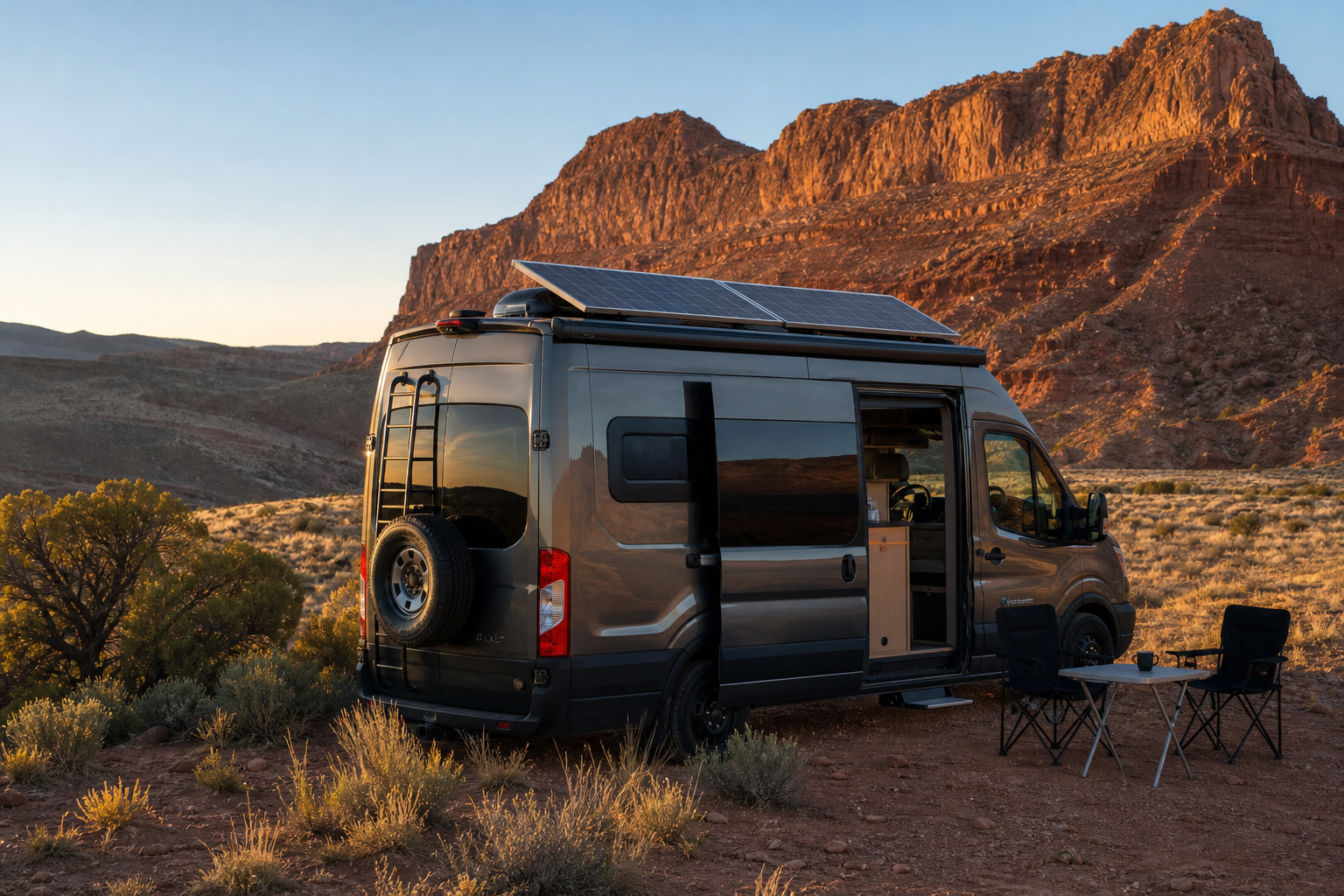
A pair of lead-acid batteries in a travel trailer will typically carry a frugal boondocker through one night — a fridge on propane, some LED lights, a furnace fan, and a phone charger. Stretch that to three or four nights off-grid, add a 12V compressor fridge or an inverter, and the math stops working without a way to put energy back into the bank every day. That replacement energy is the entire job of an RV solar setup, and the panel choices you make — rigid versus portable, wattage per panel, and how the array pairs with your charge controller — determine whether your batteries are full by early afternoon or chronically undercharged.
TL;DR
- Best Overall: Renogy Monocrystalline Solar Panel — Building a scalable roof-mounted boondocking array one panel at a time
- Best Budget: WindyNation Solar Kit — First-time installers who want a single-purchase starting point
- Best Portable: Jackery SolarSaga — Power-station users who park in the shade and chase the sun
- Best for Full-Timers: Rich Solar MEGA — High-consumption rigs that need serious daily harvest
- Best Flexible Panel: BougeRV Yuma CIGS Flexible Solar Panel — Curved roofs and weight-sensitive builds
Product Details
The picks below cover the three form factors that matter for boondocking — rigid roof-mounted panels, folding portables, and adhesive flexible panels — across budget tiers from starter kit to full-time build. Each writeup explains who the product fits, why it earns its slot, and the trade-offs to plan around before ordering.
Wattage variants, connectors, and bundle contents in this category change frequently across sellers and revisions.
Renogy Monocrystalline Solar Panel
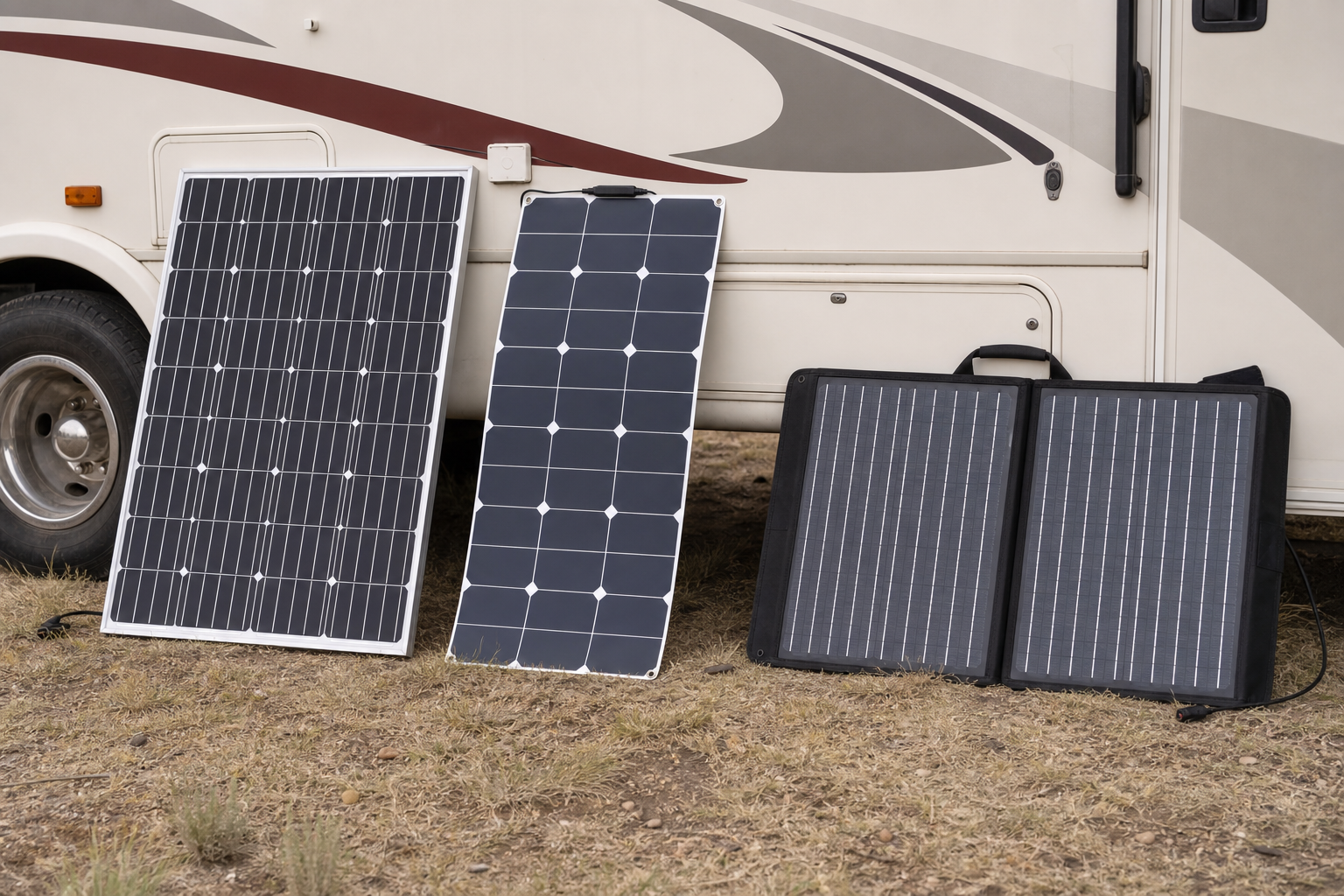
Renogy’s monocrystalline panel line has become something close to the default answer for RV solar, and for defensible reasons. The rigid, aluminum-framed form factor is the workhorse of roof-mounted boondocking systems: it tolerates highway vibration, hail, branch strikes, and years of UV exposure better than any flexible alternative. Monocrystalline cells also deliver more output per square foot than polycrystalline designs, which matters on an RV roof where every inch competes with vents, air conditioners, and antennas.
The practical appeal of this panel for boondockers is modularity. A common approach is to start with two panels and a properly sized charge controller, live with the system for a season, then add panels as your real-world consumption becomes clear. Component popularity varies by segment and price tier.
Trade-offs are the same ones every rigid panel carries. Roof-mounted panels charge automatically with zero setup, but they force you to park in the sun, which can make an RV interior brutally hot in the desert. They also generally sit flat, so winter sun at a low angle costs you output unless you add tilt mounts.
Jackery SolarSaga
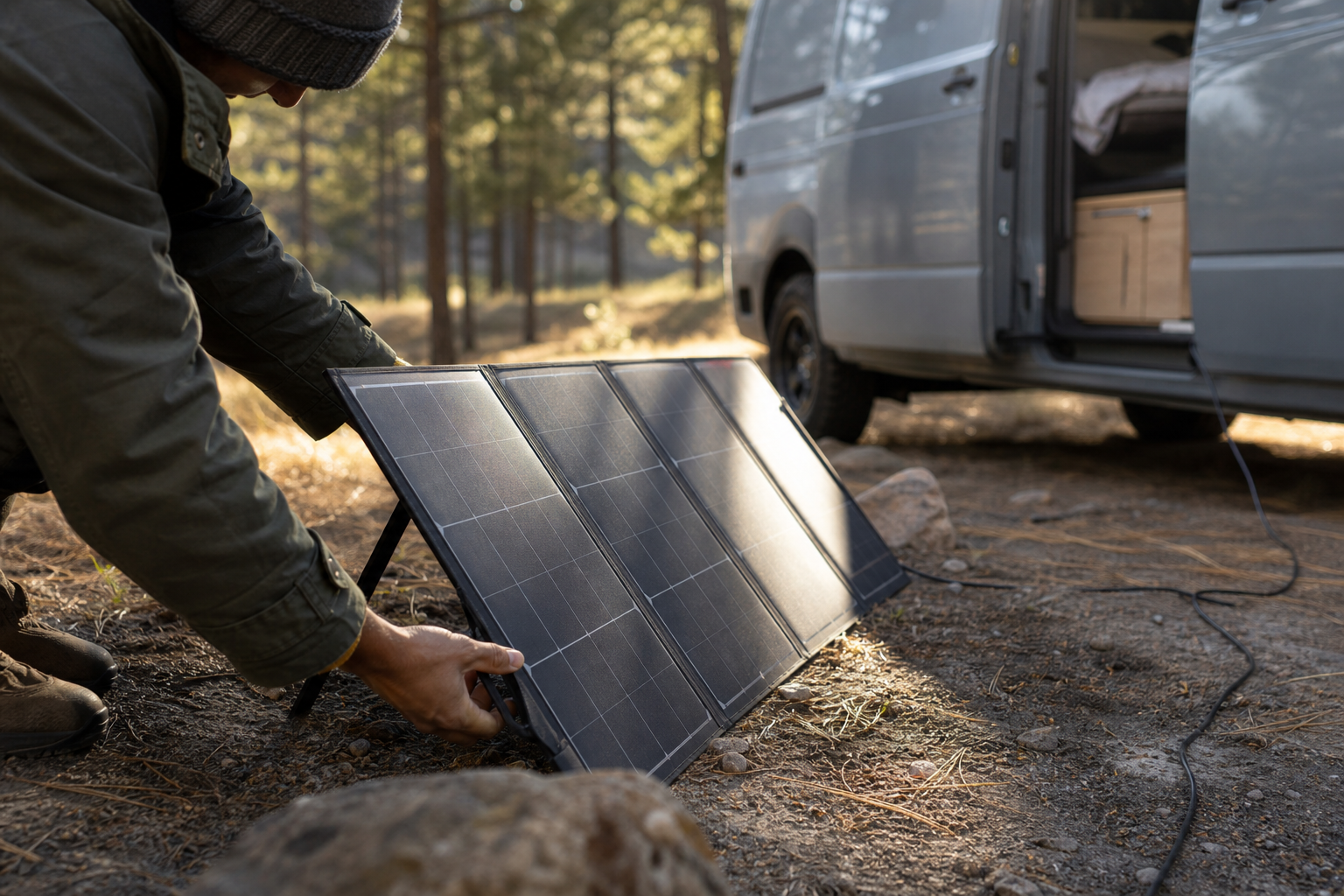
The SolarSaga line is Jackery’s folding portable panel family, designed first to feed Jackery Explorer power stations. For boondockers who run their electrical life off a power station rather than a hard-wired house battery bank — common in vans, truck campers, and smaller trailers — this is arguably the lowest-friction solar setup that exists. Unfold the panel, prop the kickstands, plug it in, and the power station’s internal charging electronics handle the rest. There’s no controller to buy, no roof penetration, and no permanent installation.
The portable format also solves the classic boondocking dilemma: shade. Roof-mounted arrays force a choice between a cool campsite and a charged battery. A folding panel on a long extension cable lets you park the rig under trees and place the panel out in full sun, repositioning it two or three times a day to track the sun’s arc. Boondockers who do this consistently report meaningfully better daily harvest per rated watt than a flat roof panel achieves.
Limitations are inherent to the format. Portable panels must be set out and stowed every time, they can walk away when you leave camp, and a gust of wind can flip an unsecured panel face-down. Connector compatibility is the other planning item: the SolarSaga is built around Jackery’s ecosystem, so if you intend to feed a different brand of power station or a 12V battery bank through your own controller, confirm the connector type and plan for an adapter.
WindyNation Solar Kit
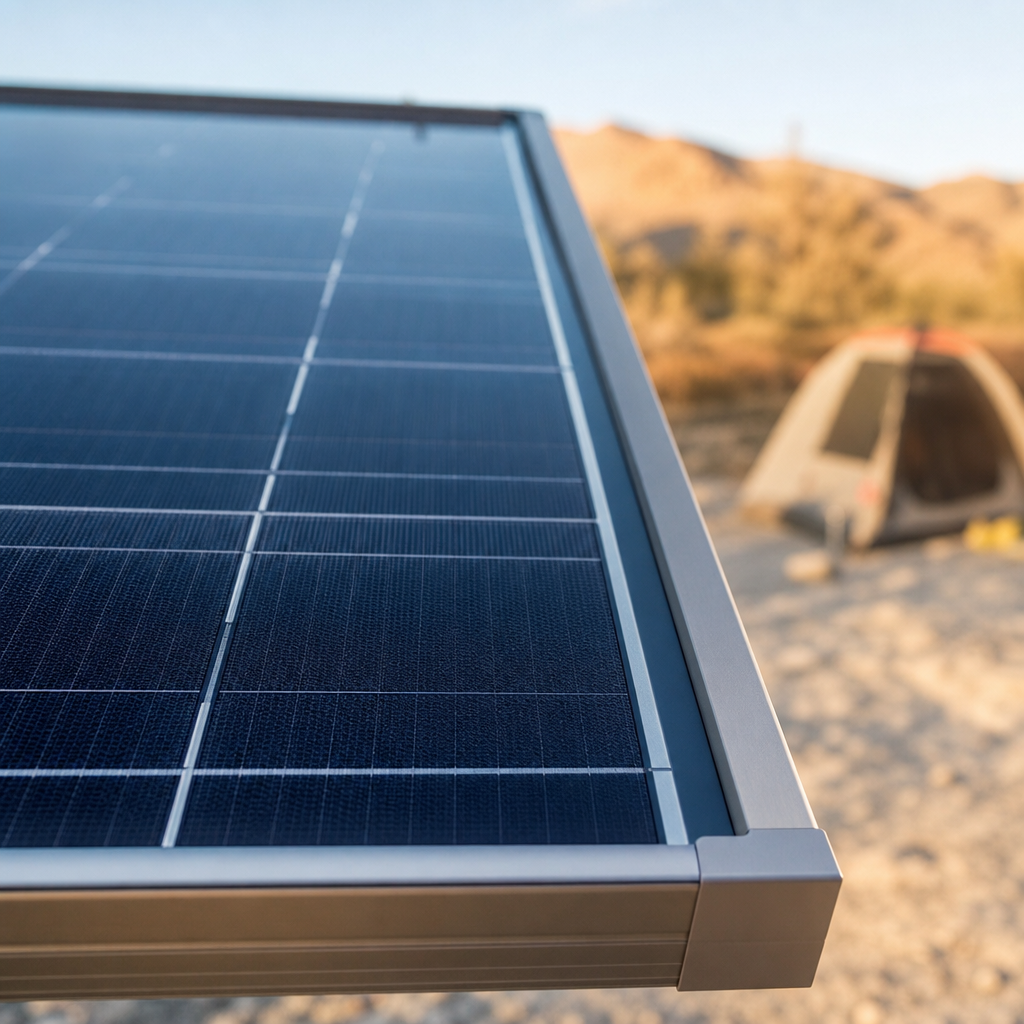
WindyNation’s solar kits target the buyer who wants one purchase decision instead of five. For a first off-grid system, matching a panel to a controller and selecting wire gauge can be a research project in itself; a packaged kit collapses much of that guesswork into a matched starting point. That’s exactly why kits dominate recommendations for beginners — the core components are chosen to work together, which removes the most common failure mode in DIY solar: mismatched pieces.
As a budget-tier option, the value proposition is straightforward: the lowest realistic cost of entry into roof-mounted RV solar that still produces a functional, expandable system. Boondockers who mostly run lights, a fan, a water pump, and device charging — with the fridge on propane — are well served by a modest starter kit, and can add panels later if a residential fridge or inverter enters the picture.
Go in with clear expectations. Budget kits typically pair panels with a simpler charge controller than premium systems use, which harvests somewhat less energy from the same panels — acceptable at small array sizes, more costly as you scale up.
Renogy Solar Suitcase
The Renogy Solar Suitcase takes the folding-briefcase form factor — two rigid panels hinged together with kickstand legs — and aims it at boondockers who charge a conventional 12V battery bank rather than a power station. Compared with fabric-style folding panels, the briefcase design uses framed glass panels, so it behaves more like a roof panel in terms of durability and output consistency, while still giving you the park-in-the-shade flexibility that makes portables so popular among boondockers.
This is the natural companion piece to a roof array, and many experienced boondockers run exactly that combination: a permanently mounted array that charges unattended, plus a suitcase panel deployed on shaded sites or in winter when low sun angles starve flat roof panels. Because the suitcase can be aimed and tilted directly at the sun, it often punches above its rated size relative to a flat-mounted equivalent, especially in the shoulder seasons.
Weight and stowage are the real-world costs. Framed glass briefcase panels are heavier and bulkier than blanket-style portables, so think through where the folded panel lives in transit and whether you’ll actually deploy something that size every stop. Configurations of this line have shipped in multiple versions over the years — some designed to connect straight to a battery, others intended to run through your existing controller — so check which configuration you’re ordering.
Rich Solar MEGA
Rich Solar’s MEGA line of rigid monocrystalline panels is aimed at people building bigger systems — full-timers, remote workers with high daily loads, and anyone trying to run a residential refrigerator, induction cooking, or occasional air-conditioning bursts from an inverter and a lithium bank. The line spans from RV-typical panel sizes up to large-format panels closer to residential dimensions, which lets you reach a given array size with fewer panels, fewer mounting brackets, fewer roof penetrations, and fewer cable runs.
Fewer, larger panels is a legitimately better architecture for big arrays: less wiring complexity, fewer connection points to fail, and simpler series/parallel design. The catch is that large-format panels demand a large, uninterrupted stretch of roof, which many RV roofs — dotted with vents, fans, and A/C shrouds — simply don’t have. Measure your actual available roof real estate, including clearance around obstructions and their shadows, before deciding between many small panels and a few big ones.
Shading behavior is the other design consideration at this scale. A shadow from an A/C shroud falling across one large series-wired panel can drag down a whole string, so panel placement and string design matter more as arrays grow. Buyers at this level should also plan a higher-voltage array with an appropriately rated controller rather than defaulting to basic 12V wiring.
BougeRV Yuma CIGS Flexible Solar Panel
BougeRV’s Yuma line uses CIGS thin-film cells rather than the crystalline silicon found in conventional flexible panels, and it exists to solve problems rigid panels can’t: curved Airstream-style roofs, pop-up campers and vans with strict weight ceilings, and installations where drilling into the roof is off the table. The panels are dramatically lighter than glass panels and can be adhered directly to the roof surface, which eliminates brackets, penetrations, and the wind noise of raised mounts.
CIGS chemistry brings a couple of behaviors boondockers care about. Thin-film panels tend to tolerate partial shading and high heat somewhat more gracefully than conventional crystalline flexible panels, which matters on a roof that regularly bakes and passes under branches. The trade-off is lower output per square foot than rigid monocrystalline, so a flexible array needs more roof area to match the same harvest — a real constraint on smaller rigs.
Longevity is the honest caveat for the entire flexible category. Flexible panels glued flat to a roof run hotter than air-gapped rigid panels, and heat is the enemy of both output and lifespan; the category as a whole has a shorter expected service life than framed glass.
What Wattage Do You Need?
Start from consumption, not from panel size. Add up your daily amp-hour draw: LED lighting and a water pump are trivial, a furnace fan on a cold night is moderate, a 12V compressor fridge is a significant around-the-clock load, and anything running through an inverter — laptops, CPAP machines, coffee gear — adds up fast. A solar array and battery bank should be sized together so the bank can absorb a good day’s harvest and still carry the overnight load.
Then apply the boondocking reality discount. Flat-mounted panels, short winter days, morning shade, and haze all cut into rated output, and on genuinely overcast days you may see only 10–25% of what the array is rated for. The practical rule: size the array for your worst typical day, not your best.
If you’re a weekender running the fridge on propane → a modest budget kit like the WindyNation package covers you. If you run a compressor fridge and work remotely → build toward the middle of that range with Renogy rigid panels. If you’re full-timing with an inverter carrying real loads → design a large array around Rich Solar MEGA-class panels from day one, because retrofitting a small system twice costs more than building it right once.
Roof-Mounted, Portable or Both?
Roof-mounted panels win on convenience: they charge every daylight hour with zero effort, including while you drive and while you’re away from camp. Their weakness is that they chain your battery charging to your parking spot. Portable panels invert the trade — more effort, more theft and wind exposure, but the freedom to camp in shade and aim panels directly at the sun, which is worth real output, especially in winter when the sun sits low.
If you camp mostly in open desert and grasslands → prioritize roof capacity and skip the daily setup ritual. If you favor forested sites or hot-weather shade → a portable like the Jackery SolarSaga (for power-station rigs) or the Renogy Solar Suitcase (for battery banks) should be the first purchase. Experienced full-timers overwhelmingly converge on the hybrid answer: a roof array sized for baseline loads plus one portable for shaded sites and short winter days. If your roof physically can’t take rigid panels — curved profile, weight limits, no-drill rules → the BougeRV Yuma’s flexible format is the workaround, accepted with its lifespan trade-offs.
Controller Type: PWM vs MPPT
The charge controller determines how much of your array’s potential actually reaches the batteries, and it’s the component budget kits most often economize on. PWM controllers are simple and cheap but effectively drag panel voltage down to battery voltage, wasting harvest. MPPT controllers track the panel’s optimal operating point and can recover on the order of 30% more energy from the same panels — a difference that compounds every day you’re off-grid.
Many RVers are better served by sizing around a simple load budget: daily watt-hour use, battery capacity, sun exposure, and how many cloudy days they want in reserve. Whichever you choose, buy controller capacity with headroom for the array you’ll eventually have, not just the panels in your cart today.
Comparison Table
Scroll sideways to see every column.
| Search Target | Best Fit | What to Confirm Before Buying | Why It Might Fit | Watchouts | Where to buy |
|---|---|---|---|---|---|
| Renogy Monocrystalline Solar Panel | Best when you want a rigid roof-mounted panel you can expand one panel at a time | Confirm the charge controller, connectors, and cable length match your battery setup | Fits owners building a permanent roof array that charges hands-free every day | Roof panels sit flat, so low winter sun cuts output unless you add tilt mounts. | Amazon ↗ |
| Jackery SolarSaga | Best when you already run a portable power station and want panels that pair with it | Confirm the connector and any adapter match your power station’s input | Fits owners building around a power-station ecosystem for modular charging | Pairing and chaining panels work only within the power station’s input limits. | Amazon ↗ |
| WindyNation Solar Kit | Best for weekend and occasional off-grid trips at a lower entry cost | Confirm what the kit includes — controller, cables, and stand — before you order | Fits budget-minded owners who want capable charging without paying for extras | Check the included controller and cables actually match your battery chemistry. | Amazon ↗ |
| Rich Solar MEGA | Best for full-time rigs and high daily loads that need serious harvest | Confirm panel dimensions fit your available roof space and your controller’s input rating | Suits full-timers building a large array with fewer, bigger panels | Large panels need long uninterrupted roof space; shade on one panel can drag a series string. | Amazon ↗ |
| BougeRV Yuma CIGS Flexible Solar Panel | Best for curved roofs, weight limits, and no-drill installations | Confirm the adhesive mounting suits your roof material and the panel sizes fit your layout | Fits rigs that can’t take rigid panels — glued flat with no brackets or penetrations | Flexible panels run hotter and have a shorter service life than framed glass. | Amazon ↗ |
| Renogy Solar Suitcase | A strong pick for chasing sun angle from a panel you fold away between stops | Check the controller type, connector style, and cable reach before you order | Suits campers who want adjustable, off-roof charging they can aim at the sun | The kickstand and frame add bulk, so plan where it rides and stores. | Amazon ↗ |
As an Amazon Associate I earn from qualifying purchases.
Which One Should You Buy
Six credible options only help if you can map one of them to your rig and your habits. The decision comes down to three variables: how much energy you actually consume per day, whether your camping style favors a permanent roof array or a portable you deploy, and what charging electronics will sit between the panels and your batteries. Work through those in order and the shortlist usually collapses to one or two picks.
Safety & Common Mistakes
- Check the panel’s open-circuit voltage in cold conditions against your charge controller’s maximum input rating before connecting.
- Confirm connector polarity and controller compatibility before charging a battery.
- Keep connectors off wet ground and inspect cable strain relief before charging.
- Route portable panel cables where they will not be tripped over, pinched, or driven over.
- Cover or disconnect panels while wiring — they produce voltage whenever light reaches them.
- Secure portable panels against wind and stow them before leaving the campsite.
FAQs
- How much solar do I need for boondocking? Wattage needs vary by daily loads, battery capacity, season, and how you recharge; calculate your daily watt-hours before choosing a size. Weekenders with propane fridges can live at the bottom of that range; full-timers with compressor fridges and inverter loads should build toward the top, since real-world harvest on flat-mounted panels always falls short of the rated number.
- Are portable solar panels worth it for RVs? Yes, particularly if you camp in shade. A portable lets you park the rig under trees and place the panel in full sun, and because it can be aimed at the sun it often out-harvests a same-size flat roof panel. The cost is daily setup and stowage, plus keeping an eye on wind and theft.
- Do RV solar panels work on cloudy days? They produce, but plan on only about 10–25% of rated output under heavy overcast. That’s why sizing for your worst typical day — and carrying enough battery capacity to ride out a gray stretch — matters more than peak-day performance.
- Should I get rigid or flexible panels for my RV? Rigid monocrystalline panels are the default: tougher, longer-lived, and better output per square foot. Choose flexible CIGS-style panels only when the roof forces it — curved profiles, strict weight limits, or no-drill situations — and accept that the flexible category runs hotter and doesn’t last as long.
- Do I need an MPPT charge controller? For any system beyond roughly 200 W, yes — MPPT controllers harvest meaningfully more energy than PWM from the same panels and allow higher-voltage series wiring that cuts cable losses. On a tiny starter setup, PWM is an acceptable temporary economy.
- Is a solar kit or individual components better for a beginner? A kit is the easier first step because the panels, controller, and wiring are matched, which eliminates the most common DIY failure: mismatched components. Bundle contents do vary by seller and revision, so confirm exactly what’s in the specific package you order before checkout.
Conclusion
Shortlisting the best RV solar panels for boondocking is really three decisions in sequence: size the array from an honest daily consumption estimate, choose the form factor your camping style actually supports — roof-mounted for set-and-forget charging, portable for shaded sites, flexible only where the roof demands it — and then make sure the controller between panels and batteries is up to the job, with MPPT strongly favored on anything you plan to grow.
For most buyers, that logic points to Renogy’s rigid monocrystalline panels as the roof foundation, the Jackery SolarSaga or Renogy Solar Suitcase as the shade-camping supplement, and Rich Solar MEGA panels for full-time-scale builds.
Spot an error or an outdated detail in this guide?
Report it