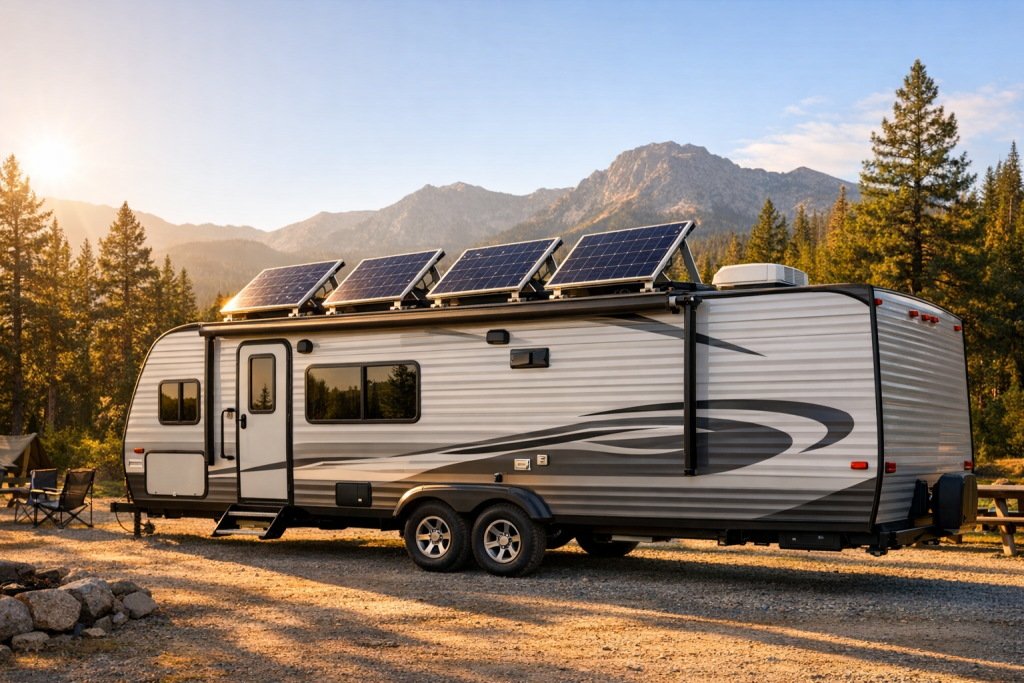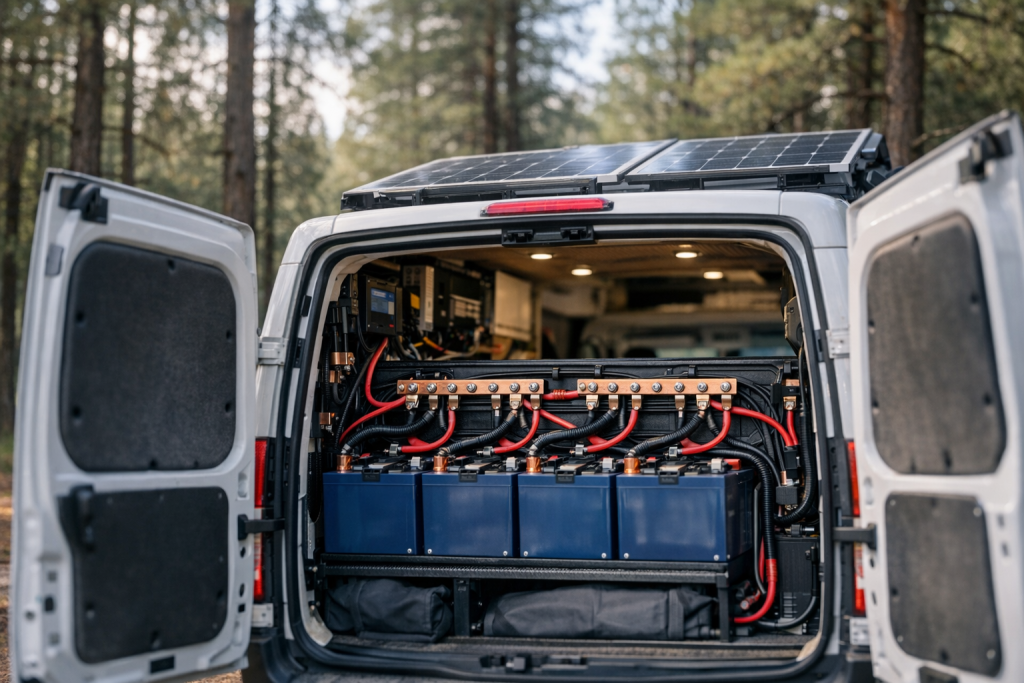
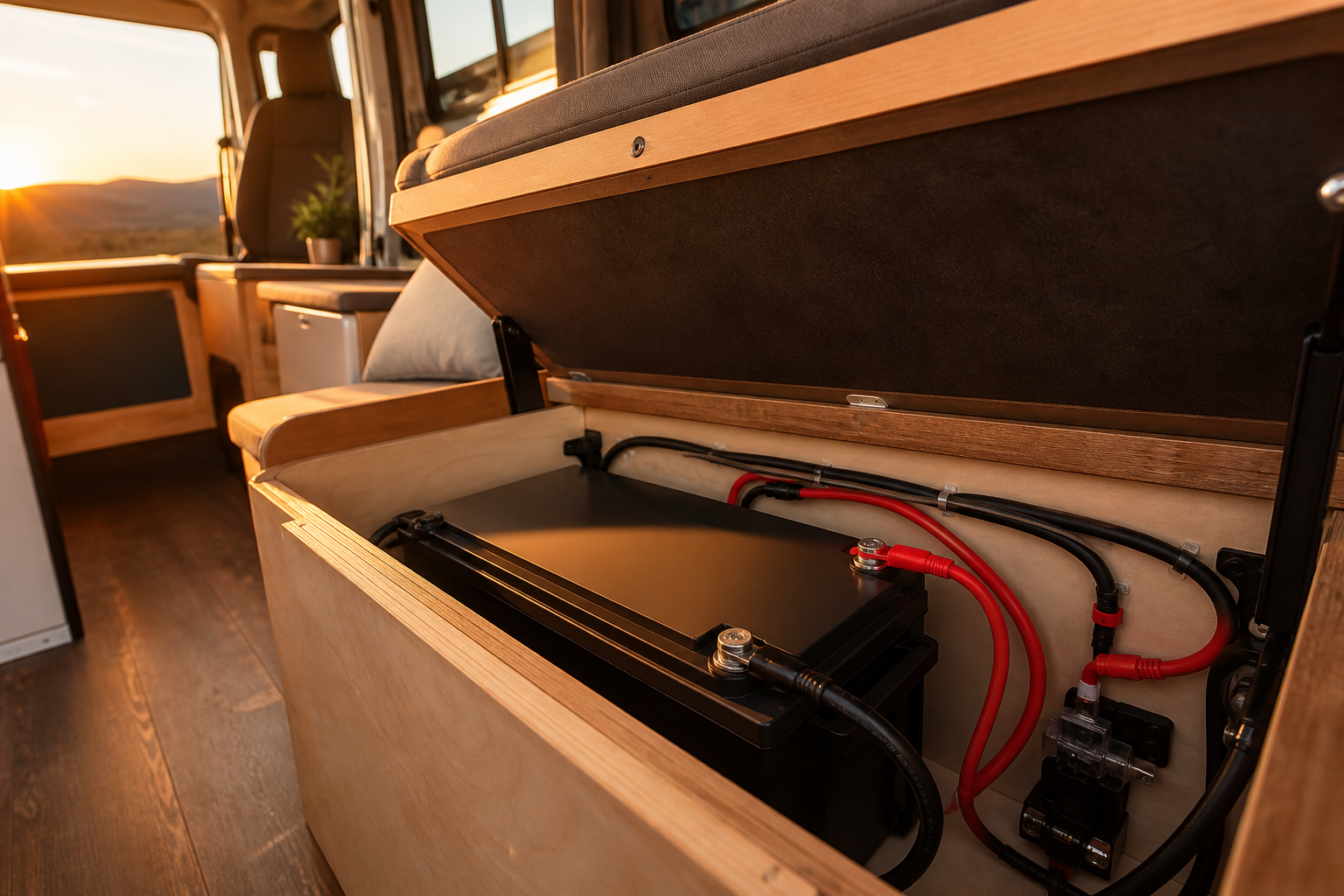
If your RV converter kicks on every night to babysit a tired lead-acid bank, or your usable power vanishes the moment the batteries dip toward half charge, a 12V 100Ah LiFePO4 upgrade is the single biggest quality-of-life improvement you can make to your electrical system. This guide organizes the best 100Ah LiFePO4 battery options for RVs by use-case — weekend boondocking, budget conversions, full-time living, solar-heavy rigs, and DIY builds — so you can match a battery to how you actually camp instead of chasing spec sheets.
The 100Ah 12V class is the de facto standard building block for RV house banks. It is the size most brands optimize for, which means the most competitive pricing per amp-hour, the widest availability, and the deepest pool of real-world user reports. Verify the battery’s physical size against your tray, hold-down, and cable routing before ordering. Because same-model LiFePO4 batteries can be paralleled, a 100Ah unit scales: one for a weekend rig, two for a boondocking couple, four for a full-time inverter setup. The picks below differ meaningfully in price tier, support model, durability positioning, and ecosystem fit — differences that matter more in practice than the small variations in their spec sheets.
TL;DR
- Best Overall: LiTime 12V 100Ah — Most RV owners who want everyday reliability at a mainstream price
- Best Budget: Redodo 12V 100Ah — Budget RV battery upgrades and first-time lithium conversions
- Best Premium: Battle Born BB10012 — Full-timers who want a long-established US brand behind their battery bank
- Best for Solar Builds: Renogy 12V 100Ah — Buyers assembling a single-ecosystem solar and charging setup
- Best for DIY Owners: SOK 12V 100Ah — Hands-on owners comparing long-term value and build quality
Best 100Ah LiFePO4 Battery for RV Picks
Every pick below is a 12V, 100Ah-class lithium iron phosphate battery aimed at RV house-battery duty. Each is framed around the camping scenario it serves best, because a battery that’s perfect for a weekend boondocker can be the wrong call for a full-timer running a residential fridge. The chemistry is the same across all six — LiFePO4 cells managed by an internal battery management system (BMS) that governs charging, discharging, temperature limits, and cell balancing — so the meaningful differences come down to BMS quality, build consistency, brand support, price tier, and feature variants such as low-temperature protection, self-heating, or app monitoring.
LiTime 12V 100Ah
Best for: the typical weekend-to-week-long RVer who wants proven value. LiTime (formerly Ampere Time) is one of the most frequently recommended names in DIY solar and RV communities, and its 12V 100Ah battery is the default answer for a lithium upgrade that works without premium-brand pricing. For the classic RV load mix — LED lighting, a 12V compressor fridge, a roof vent fan, water pump, and device charging — a single 100Ah LiFePO4 battery typically covers one to two days of dry camping. Because LiFePO4 makers rate far more of the nameplate capacity as usable than AGM manufacturers recommend for their chemistry, a 100Ah LiTime replaces roughly two conventional lead-acid batteries in usable energy while weighing far less as a chemistry class.
The trade-offs are the usual value-tier ones: an overseas-manufactured pack, and multiple similarly named variants, so check the exact SKU for the low-temperature and monitoring features you want. In daily use, the flat discharge curve is the tangible upgrade — a lead-acid bank sags under load, dimming lights when the water pump kicks on at half charge, while a healthy LiFePO4 battery holds voltage in the mid-13V range through most of its capacity, so the fridge compressor and fan motors run at intended voltage down to the last usable amp-hours. Once installed, set your converter to its LiFePO4 profile; a wrong profile is the most common reason a new lithium battery seems to underperform. If your habits grow, a second matched LiTime in parallel doubles the bank without changing the rest of the system, provided both units are the same model and close in age.
Redodo 12V 100Ah
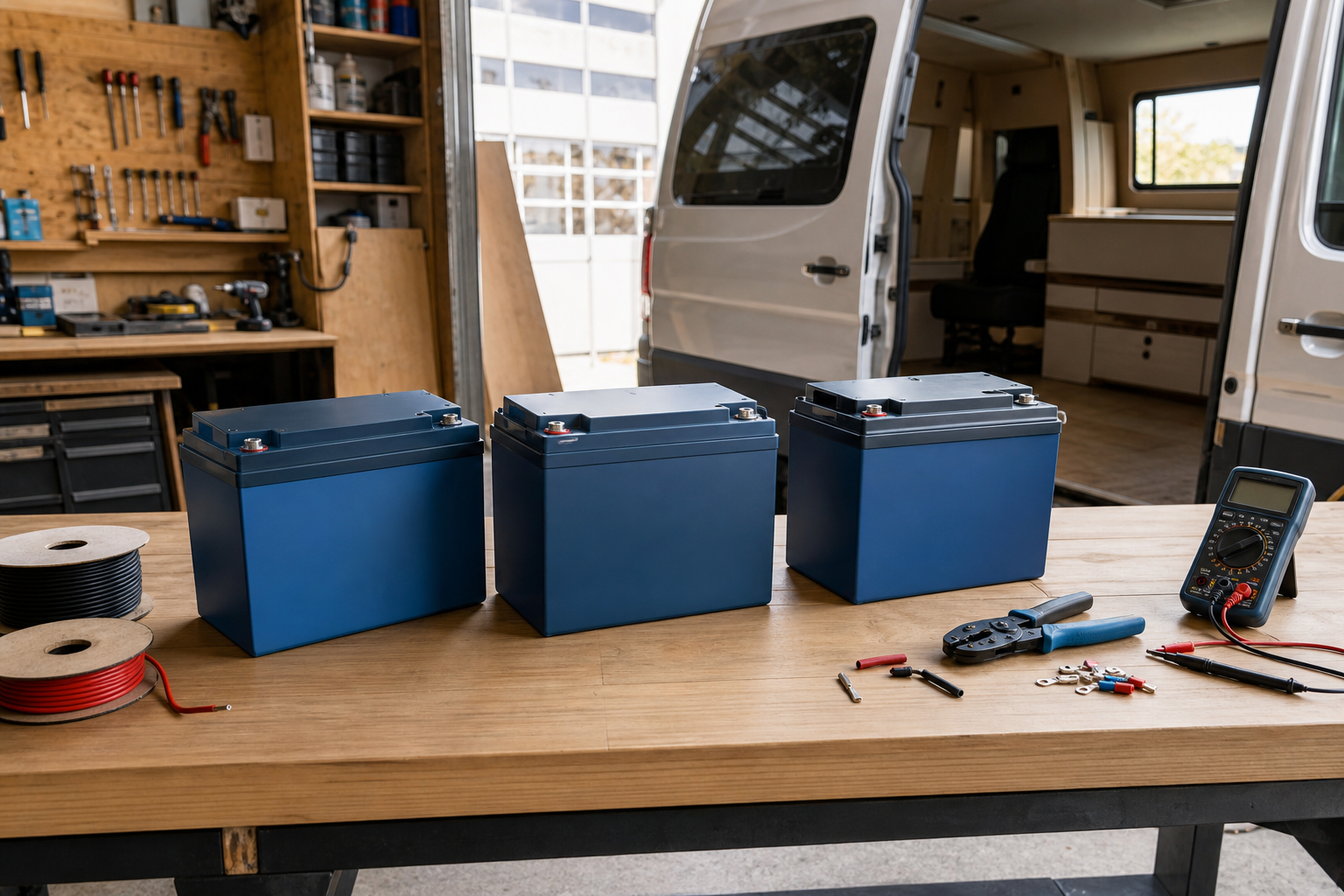
Best for: budget-first buyers and first-time lithium conversions. Redodo’s 12V 100Ah is widely regarded as one of the cheapest credible entries into RV lithium. If you’re converting a travel trailer that shipped with a single flooded lead-acid battery and the goal is to stop killing batteries and stop running out of power by 10 p.m., this is the lowest-cost path that still delivers deep usable capacity, flat voltage under load, and cycle life measured in thousands rather than hundreds. It fits seasonal campers taking five to fifteen trips a year with modest loads who would rather spend the savings on a lithium-capable converter or a solar panel.
Budget-tier value is really total-system value. A first conversion usually also needs a converter with a lithium charge profile, appropriate fusing, and ideally a shunt-based monitor; if a premium battery consumes the whole budget, those components get skipped and the system underperforms even with an excellent battery at its center. The trade-off with any bottom-dollar pack is margin — budget brands often use cells similar to premium ones but differ in BMS quality, quality-control consistency, and after-sale support. Hedge by capacity-testing on arrival, inside the return window: charge fully with a lithium-profile charger, then discharge through a known load while a shunt monitor or inline meter tallies amp-hours. Delivery close to the rated 100Ah gives you empirical confidence; a shortfall gives you documentation for a return. Either outcome beats discovering a weak battery on night two of a boondocking trip.
Battle Born BB10012
Best for: full-timers and anyone who values support, longevity, and a domestic brand. Battle Born Batteries, based in Reno, Nevada, is the long-standing premium name in RV lithium, and the BB10012 is its flagship 12V 100Ah unit. The case for the premium is straightforward: if your RV is your home, the battery bank is critical infrastructure. Full-timers cycling a bank daily — inverter loads in the morning, a CPAP overnight, a fridge around the clock — stress batteries far more than weekenders, and that’s where an established brand’s engineering, documentation, and human support team earn their keep. The obvious downside is cost: two or three budget 100Ah batteries often equal the price of one premium unit.
The duty-cycle math favors this tier for full-time use. A weekender might log thirty to fifty deep cycles a year; a full-timer can log three hundred or more, and it is in the deep-cycle-count regime where BMS design, cell matching, and thermal management separate batteries that quietly degrade from batteries that hold rated capacity. Battle Born also publishes unusually complete integration guidance — charge voltages, absorption times, alternator-charging advice, and supported series/parallel configurations — which reduces guesswork during install and troubleshooting, and standardizing on one premium brand now avoids mixing mismatched batteries when you expand to a 200–400Ah bank later. For a full-timer, a support line staffed by people who install these systems is worth real money when the alternative is diagnosing a dead bank from a remote campsite.
Renogy 12V 100Ah
Best for: RVers building a matched solar-plus-battery ecosystem. Renogy is best known for its solar panels, charge controllers, and DC-DC chargers, and its 12V 100Ah LiFePO4 line appeals most to buyers who want one brand across the whole power chain. For a typical boondocking setup — a couple hundred watts of roof solar, a charge controller, a DC-DC charger off the tow vehicle, and a 100Ah lithium house battery — sourcing everything from one catalog simplifies wiring diagrams, support calls, and charge-profile settings, because the components are documented to work together. Renogy sits mid-market: above the pure budget brands, below the premium US names.
The single-ecosystem approach pays off most during troubleshooting. When battery, charge controller, and DC-DC charger come from three vendors, any charging problem becomes a three-way finger-pointing exercise; when the chain comes from one catalog, the documentation uses consistent terminology, recommended charge parameters align across devices, and one support channel covers the path from panel to battery terminal. That coherence matters most on solar-heavy rigs, where the controller’s lithium profile and low-temperature behavior interact with the battery’s BMS daily. One caution: Renogy sells multiple 100Ah variants with different feature sets, so sketch the full system first — panel wattage, controller sizing, DC-DC amperage, wire gauge (AWG), and fusing — then select the specific battery variant that closes the gaps, rather than buying the battery first and retrofitting around it.
SOK 12V 100Ah
Best for: DIY-minded owners who care about build quality and long-term value. SOK has earned its reputation in DIY solar forums, where teardowns and long-term reports carry more weight than marketing. It occupies a middle position — priced above the budget tier, below the premium US brands — with an enthusiast following that treats it as the “smart money” pick. The fit is a couple building out a van or truck camper who plan to keep the rig for years and want a battery bank they understand; community documentation for SOK batteries is unusually deep, which matters when troubleshooting a charging issue in a campground with no cell service. The trade-off is distribution: narrower than the big Amazon-native brands, with stock and lead times that vary, so it rewards buyers who plan ahead.
“Build quality” here means things spec sheets never show. Independent teardowns evaluate cell grade and matching, busbar construction, internal wiring gauge, BMS component quality, and how securely cells are restrained in the case — the factors that determine reliability under vibration and repeated cycling. SOK’s standing in those evaluations is the core of its reputation: enthusiasts recommend it because the internals have repeatedly held up to scrutiny. The complementary habit is record-keeping — note the purchase date, run an initial capacity test, and repeat it every year or two. A battery whose measured capacity is tracked over time is one whose end-of-life can be planned rather than discovered, and the DIY buyer this pick targets is exactly the person likely to maintain that log.
Dakota Lithium 100Ah
Best for: rugged use and owners who prioritize durability over lowest price. Dakota Lithium built its name in fishing, powersports, and off-grid markets where batteries get bounced down washboard roads, and its 100Ah 12V LiFePO4 carries that rugged-duty positioning into the RV world. If your camping involves forest-service roads, four-season trips, or a truck camper that vibrates like a paint shaker, a durability focus is a meaningful differentiator among batteries that otherwise look similar on paper. Pricing sits above the budget tier; the value proposition rests on longevity and brand support rather than the cheapest cost per amp-hour.
Comparison Table
| Search Target | Best Fit | What to Confirm Before Buying | Why It Might Fit | Watchouts | Where to buy |
|---|---|---|---|---|---|
| LiTime 12V 100Ah | Best when you want the widest community track record at a value-tier price | Confirm the exact SKU carries the low-temperature or monitoring features you want | Fits owners who want a proven default and the option to add a matched second unit later | Several similarly named variants exist — match the SKU, not just the brand. | Amazon ↗ |
| Redodo 12V 100Ah | Best when a lithium-capable converter and fusing must fit inside the same budget | Confirm your converter or charger has a LiFePO4 profile before you buy the battery | Fits first conversions where total-system cost matters more than brand polish | Capacity-test on arrival inside the return window — budget packs vary in BMS quality. | Amazon ↗ |
| Battle Born BB10012 | Best when your charger and controller already support a lithium charge profile | Confirm your charger or converter supports the correct LiFePO4 charge profile | Fits owners whose charge sources are already set up for lithium | A lead-acid charge profile can under- or over-charge a lithium bank. | – |
| Renogy 12V 100Ah | Best when long-term warranty and responsive support matter to you | Confirm the warranty length and support terms genuinely cover your use | Fits owners who weigh long-term support against the up-front price | Thin warranty or hard-to-reach support can cost you later. | Amazon ↗ |
| SOK 12V 100Ah | Best when teardown-verified build quality matters more than shelf availability | Confirm current stock and lead time — distribution is narrower than the big Amazon brands | Fits DIY owners who keep a capacity log and plan the bank’s whole life | Plan the purchase ahead; stock and shipping windows vary. | Amazon ↗ |
| Dakota Lithium 100Ah | Best when your inverter and DC loads stay within the pack’s BMS current limit | Confirm the continuous and surge BMS current covers your inverter and DC loads | Fits builds whose peak draw stays inside the pack’s BMS limits | A high-draw inverter can trip the BMS if it exceeds the rated current. | – |
As an Amazon Associate I earn from qualifying purchases.
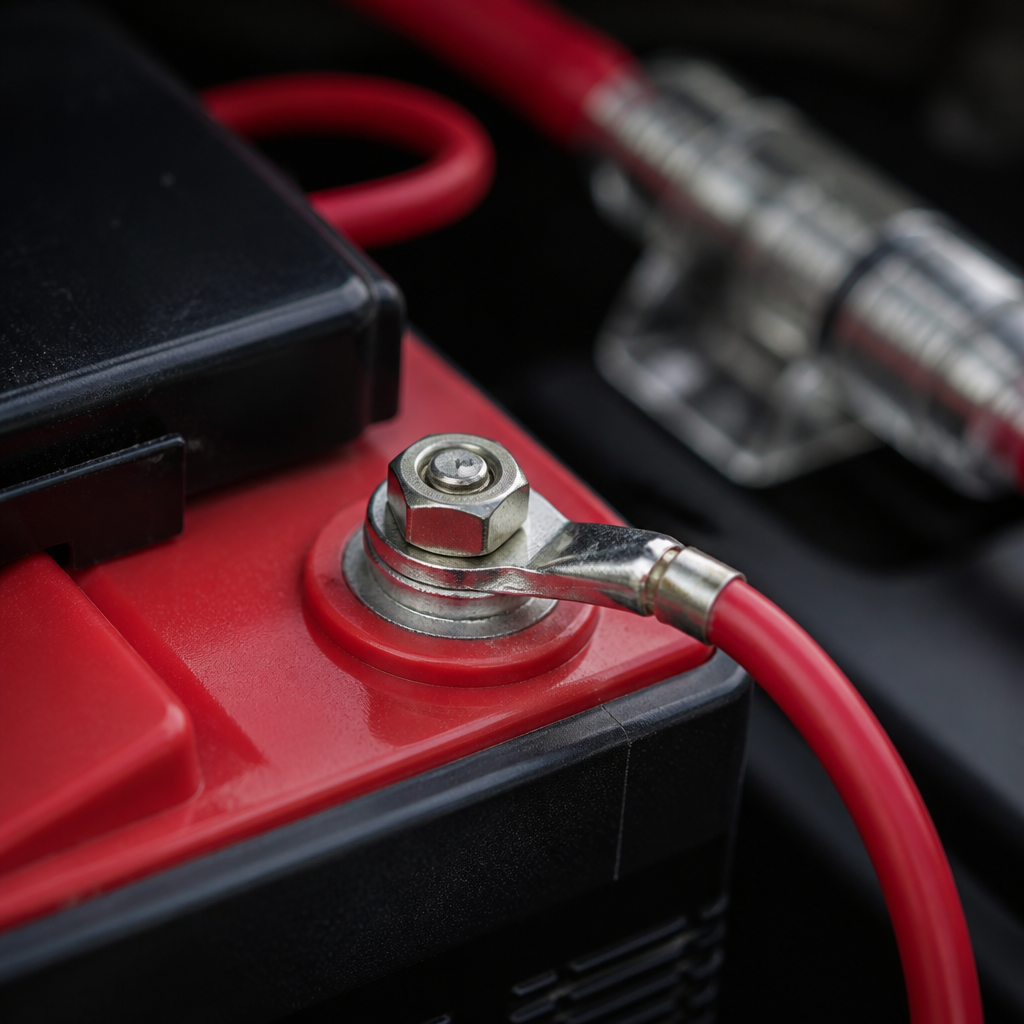
Which One Should You Buy
Start with your camping pattern, not the battery. A 100Ah battery at 12V nominal stores roughly 1,200 watt-hours. Because LiFePO4 manufacturers rate most of that nameplate capacity as usable — versus the roughly 50% depth of discharge lead-acid makers typically recommend — the bulk of it is genuinely available; confirm the depth-of-discharge guidance for the specific model you buy. Many RVers are better served by sizing around a simple load budget: daily watt-hour use, battery capacity, sun exposure, and how many cloudy days they want in reserve. Heavy inverter users, CPAP-plus-fridge overnights, or anyone boondocking three or more days without solar should plan on two batteries or a solar top-up from the start.
Sum the daily amp-hours: under 60Ah, one battery with occasional charging is comfortable; 60–100Ah, plan on daily charging or a second battery; above 100Ah, size the bank in multiples from the outset.
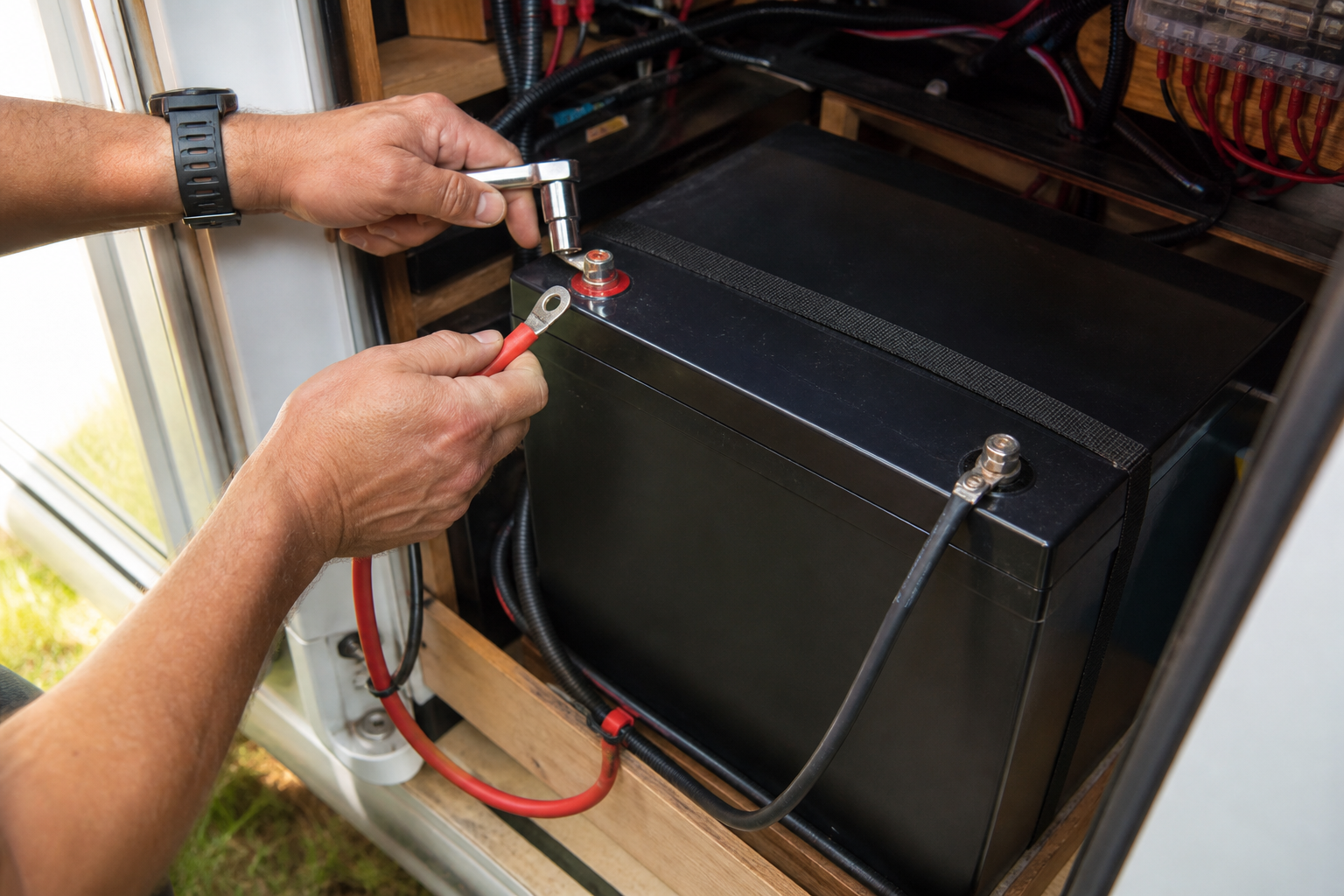
Budget for the system, not just the battery. A lithium-capable converter, a DC-DC charger if you charge from the vehicle, a properly rated fuse on the positive lead, and a shunt-based monitor are the supporting cast that lets any of these picks perform as advertised — skipping them is the most common way a good battery gets blamed for a bad install.
Best for weekend trips and first conversions → Redodo 12V 100Ah. The budget tier escapes lead-acid misery at the lowest cost; spend the savings on a lithium-capable converter or DC-DC charger, because a great battery fed by a wrong-profile charger will chronically undercharge.
Best for most people → LiTime 12V 100Ah. The value-tier leader with the deepest community track record is the safest default absent a specialized requirement, and it scales gracefully with a matched second unit later.
Best for full-timers → Battle Born BB10012. When the bank is daily-use home infrastructure, support, documentation, and longevity outweigh the price delta. Add a shunt-based monitor, since lithium’s flat voltage curve makes voltage-based state-of-charge guessing nearly useless.
Best for solar-centric builds → Renogy 12V 100Ah. One-brand ecosystems reduce integration friction. Sketch panel wattage, controller size, and DC-DC amperage first, then pick the battery variant that closes the gaps.
Best for DIY perfectionists → SOK 12V 100Ah for teardown-verified build quality on a decade horizon, and best for rough roads → Dakota Lithium 100Ah for vibration-heavy, four-season travel.
One cross-cutting check applies to every pick: Low-temperature charging limits vary by battery model and BMS design. Check the manufacturer specification before charging in cold conditions.
A second consideration is charging sources. Most RVs have three charge paths — shore power through the converter, the alternator while driving, and solar — and each must be lithium-aware. On shore power, the converter must reach a proper LiFePO4 absorption voltage and then drop to an appropriate float or stop; older lead-acid-only converters leave the bank perpetually at 80–90%. On solar, the controller needs a LiFePO4 preset or programmable setpoints. Walk through all three paths on paper before installation day; the batteries are far more alike than the charging infrastructure feeding them, and the infrastructure usually decides whether the upgrade feels transformative or disappointing.
Safety & Common Mistakes
- Charging with a lead-acid converter profile. Many stock RV converters never reach the voltage LiFePO4 needs for a full charge, so the battery works but never delivers rated capacity — and owners blame the battery. Verify your converter has a lithium profile, budget for a replacement if not, and confirm the profile is actually selected; many ship with the lead-acid setting active by default.
- Ignoring alternator charging limits. A deeply discharged lithium bank connected through a stock isolator will accept nearly all the current the alternator can produce for as long as charging takes, overworking it. Use an appropriately sized DC-DC charger so current draw is capped at a sustainable level.
- Mixing old and new batteries. Never parallel a new LiFePO4 battery with an old lead-acid battery, and avoid mixing lithium batteries of different brands, ages, or capacities; mismatched internal resistance causes uneven current sharing and uneven aging. Buy matched units together and follow the manufacturer’s stated series/parallel limits.
- Skipping fusing and torque checks. A 100Ah lithium battery can deliver enough fault current to weld a dropped wrench across the terminals. Fuse the positive lead close to the battery with a DC-rated fuse, use properly crimped lugs, cover exposed terminals, and re-torque connections after the first few trips.
- Trusting voltage as a fuel gauge. LiFePO4 voltage stays nearly flat across most of its range — 80% and 30% state of charge can differ by a couple tenths of a volt at rest. Install a shunt-based monitor that counts amp-hours in and out, and calibrate it by fully charging the bank periodically.
FAQs
- Is a 100Ah LiFePO4 battery enough for boondocking in an RV? Heavy inverter use, furnace-heavy winter trips, or longer stays call for a second matched battery or solar; an amp-hour audit of your specific loads is the most reliable sizing method. Battery capacity needs vary by daily loads, reserve time, inverter use, and recharge sources; calculate your daily watt-hours before choosing a bank size.
- Can I drop a LiFePO4 battery into my RV without other changes? Physically, often yes — but the most common mistake is keeping a lead-acid converter that never fully charges lithium. Verify the converter supports a LiFePO4 profile and that it’s enabled, and add a DC-DC charger if you charge from the alternator so it isn’t overworked by lithium’s high charge acceptance.
- Do LiFePO4 batteries work in cold weather? They discharge fine in the cold, but standard models block charging below roughly 32°F to prevent permanent lithium-plating damage. Winter campers should buy self-heating or low-temperature-capable variants and confirm the feature on the exact model ordered.
- How long will a 100Ah LiFePO4 battery last compared with AGM? Quality LiFePO4 batteries are commonly rated for thousands of charge cycles — often a decade or more of typical RV use — versus a few hundred deep cycles for AGM. Usable capacity per rated amp-hour is also substantially higher under manufacturer depth-of-discharge guidance, so lifetime cost per usable amp-hour usually favors lithium despite the higher purchase price.
- Are budget LiFePO4 brands like Redodo and LiTime reliable? Many budget brands use cells similar to premium ones; the differences show up in BMS quality, quality-control consistency, and support. Hedge by capacity-testing the battery immediately after delivery — full charge, measured discharge through a known load — while it’s still inside the return window.
- How do I size a lithium bank for my rig? Tally the daily amp-hour draw of your loads, multiply by the days you camp without charging. If the answer exceeds one battery, buy matched units of the same brand and model at the same time to avoid uneven current sharing and wear.
Conclusion
The best 100Ah LiFePO4 battery for your RV is the one matched to how you actually camp. Shortlist by scenario: budget conversions point to Redodo, all-around value to LiTime, full-time daily cycling to Battle Born, solar-integrated builds to Renogy, and DIY or rugged use to SOK or Dakota Lithium. Then qualify the system around the battery — a lithium-capable converter, a DC-DC charger if you charge while driving, and a shunt-based monitor turn a good battery into a great electrical system. These six picks are more alike in chemistry than they are different, which is precisely why the deciding factors are the ones spec sheets don’t show: support quality, build consistency, ecosystem fit, and how well the exact SKU matches your climate and charging habits.
Your concrete next step: measure your battery compartment and identify the exact SKU of your shortlisted pick, since cold-weather protection or app monitoring may exist on one variant but not its near-twin. Run the energy audit above to decide whether one battery or two is the right starting point, and confirm each charging path — shore, alternator, solar — has a LiFePO4-appropriate profile available. With fitment, sizing, and charge profiles squared away, a 100Ah lithium upgrade delivers substantially more usable energy than the lead-acid battery it replaces under typical manufacturer depth-of-discharge guidance, and its cycle life will likely span many seasons of camping — one of the rare RV upgrades that pays for itself in both convenience and replacement costs avoided.